David Blackburn

Gove starts the revolution

From our UK edition

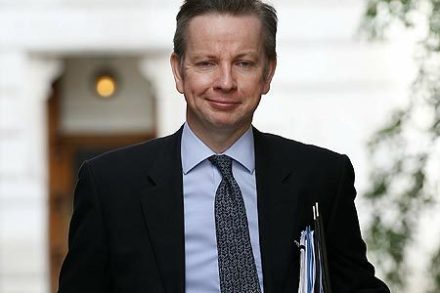
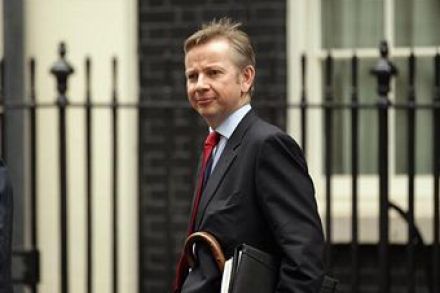
The Spectator has been a long-term fan of Michael Gove – indeed, we named him the single best reason to vote Tory at the last election. His ‘free school’ reforms are laudable and the emphasis on improving standards is imperative. Under the previous government, Britain slid down the international rankings of educational attainment. A tide of politically correct initiatives robbed teachers of their classrooms and discipline suffered. The post code lottery under which state education operates sentences the poorest and most vulnerable in society to rot in under-funded sink schools. Reform is both a moral crusade and a necessity if Britain is to continuing punching above its weight in the future.
PMQs Live blog | 24 November 2010

From our UK edition

VERDICT: Ed Miliband did well. He exploited the Cabinet divide on school sport and also illustrated how teachers are wary of Gove's plans. If anything, this reveals the complexity of the opposition facing Gove, and the extent to which it is ingrained, even within Conservative circles. There was also a withering and effective personal attack on Gove. Cameron laid out his government's stall: Gove (and arguably Cameron) will stand or fall by it. For once, Labour's opposition was very clearly delineated. So it should have been: courtesy of the long established system, state education is Labour's natural territory and many of its MPs and councillors cut their teeth running it in local government. Miliband was less assured with his second set of questions, on banking.

Obama stands firm on Korea

From our UK edition

There is no diplomacy with maniacs. North Korea has been the grip of one or another lunatic for 60 years; with the succession still unsettled, Pyongyang is now a salon for the insane. The escalation of posturing, violence and the nuclear programme is a brazenly mad strategy to bribe other countries in exchange for good behaviour; it’s piratical. The world’s geopolitics may be changing, but the US President remains supreme among leaders. Yesterday, Iain Martin argued that Barack Obama had to make a strong and unequivocal statement about the situation, at least to encourage China to reprimand its errant ally. The President did so.

The passing of a quiet great

From our UK edition

Hunter S Thompson’s dispatches from Vietnam have entered legend. Murray Sayle is less well known, but he too was in Vietnam as the war degenerated into bloody catastrophe, and he described it with award-winning panache for Harold Evans’ Sunday Times. Sayle, who died recently aged 84, was an inveterate adventurer and mild Quixotic. Born in Australia, he sailed to Britain in 1952 to save a doomed romance. Having failed to keep his woman, he found work as a leg-runner for the crime correspondent at The People. He published a cult autobiographical novel, A Crooked Sixpence, based on the experience in 1960. This was Fleet Street’s happy hour – that brief post-war period of carefree expenditure and extensive foreign reports.

Who will benefit from the Royal wedding?

From our UK edition

David Cameron is playing down the effect the Royal Wedding will have on the 5th May elections, especially the AV referendum. Fleet Street’s having none of it however. On the one hand, Benedict Brogan can already hear the pops of champagne corks in the No to AV campaign offices. He reasons: ‘One consequence of the Royal wedding will be to make it even more difficult for AV supporters to get their campaign motoring in time for the referendum.’ On the other, Alex Barker makes the case for the Lib Dems’ Yes to AV campaign. He has a three point-plan, centring on low turnout following reduced campaign time. This, he thinks, will benefit those concerned about the injustice of the current system, rather than its die-hard defenders.

A Royal Holiday

From our UK edition

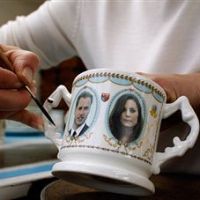
Kate Middleton and Prince William will marry on Friday 29th April at Westminster Abbey. I can scarcely contain my indifference, even at this early stage; but congratulations to them all the same. Number 10 has confirmed that the occasion will be marked by a public holiday. There is, you see, nothing like a right Royal bash and the darling buds of May to dispel the privations of austerity ahead of awkward elections and a referendum on 5th May. Then again, an Arctic breeze and intermittent hail will have the opposite effect.

Coulson to stay

From our UK edition

The indefatigable Paul Waugh reports that Andy Coulson plans to break Tom Watson’s delicate heart: the government’s communications director is not going to resign for whatever it is that he is alleged to have done. Pity poor Tom. Coulson may be an anonymous figure, certainly by comparison with Alistair Campbell, and the government may have problems articulating a growth strategy. But Coulson’s survival will warm the cockles of Tory MPs, who rely on him to uphold those issues the leadership ignores. Witness Coulson’s savage reprimand for Crispin Blunt over the prisoners’ entertainment plans.

Another coalition compromise, this time on immigration

From our UK edition

Agreement has been reached on the troublesome immigration cap. The BBC reports that skilled non-EU migration will be limited to 43,000. This is just a 13 percent reduction from this year’s cap and there are numerous exemptions to be made; notably, inter-company transfers will not be included when workers earn more than £40,000 per annum. This is a considerable moment for the coalition because the cap was thought unworkable. The Conservatives have their cap, a pep pill for the embattled Home Secretary.  But this is also a victory for Vince, who is being feted by businessmen across the airwaves this morning. Cable and May have also been praised by Migration Watch’s Andrew Green for formulating policy to tackle Britain’s net migration.

Cowen will seek a dissolution next year

From our UK edition

There has been much consternation and intrigue swirling around both Dublin and Westminster this afternoon about the near-collapse of the governing coalition in Ireland. The Greens, who support Brian Cowen’s Fianna Fáil-led government, pulled out; seeking a dissolution in the hope that it might save their skins from the fate that is likely (though not certain) to befall Fianna Fáil. If the government had collapsed, then IMF would have postponed the bailout. At least now Cowen can formulate a monetary plan, hopefully under the oversight of Ireland's international creditors, to free the country from its current extremis.

Time for the real Ed Miliband to speak up

From our UK edition

There is talk of Ed Miliband’s ‘New Generation’, but no indication of what it stands for. It has no clear views on the economy, student finance, defence and electoral reform. Despite his party’s lead in the polls, Ed Miliband is an inert political entity (and it did not help him that the party peaked in his absence). Tim Montgomerie has rightly diagnosed a leadership vacuum. Miliband is timid before a parliamentary party that did not select him, and is struggling to acclimatise to a political discourse that the coalition government is moving beyond the terse liturgy of left and right. So far, Miliband's banal default tactic has been to seek consensus.

From The Annals of the Gord

From our UK edition

This snippet from Anthony Seldon and Guy Lodge’s latest book merits repeating: ‘As Barack Obama waited in a cavernous building in London, he suddenly noticed Gordon Brown stomping towards him down a corridor, with a flurry of aides in his wake. Unfortunately — probably because he has a glass eye as the result of a rugby injury — the Prime Minister didn’t see the President. To the surprise of Obama and his entourage, the British premier was doing a passable impression of an erupting volcano. He was clearly furious about something his aides had or hadn’t done. It was hardly the behaviour anyone would expect of a G20 summit host, and the American President watched with growing disbelief.

Ireland’s crisis is the fault of Fianna Fáil, not just the euro

From our UK edition

In all likelihood, George Osborne will rise this afternoon to groans if not jeers. Britain looks set to lend Ireland £7bn as part of multilateral and bilateral bailouts. Many, particularly the Eurosceptic right, question our involvement, given our straitened financial circumstances and the apparent fact that Britain is sustaining the eurozone’s monetary and debt union, and will have to borrow to do so.     George Osborne has been adamant throughout: Ireland is too important to Britain’s recovery to risk collapse – British and Irish banks are closely linked, debts and borrowing are often co-dependent, trade is very profitable. That the bailout should strengthen the euro is a natural consequence of Ireland being a member of the euro.

Gove dilutes schools funding pledge

From our UK edition

Last week, the FT revealed that Michael Gove was planning to introduce direct funding of schools, a move that weaken local authorities’ grip on education funding. Theoretically, it is a central component of Gove’s plan to free schools from local authorities’ bureaucratic control in a bid to improve standards by creating a quasi-market. It was, as Gove’s aides have been at pains to express, ‘exciting’. But Gove denied the story on Andrew Marr this morning: the legislation will contain no such clause. The FT responded this afternoon, proving that Gove has diluted the legislation.

Unite turns back the clock

From our UK edition

Len McCluskey has won the race to lead Unite, Britain’s largest union. McCluskey will therefore have a major role in how the left respond to cuts in public spending. It would premature to label McCluskey but he comes with a reputation for militancy. He cut his teeth at the Transport and General Workers Union in the 80s and was a confidant of Derek Hatton’s. And he hasn’t forsaken childish things – being an integral figure in the long running and wholely counter-productive BA dispute. So, impeccable credentials for a man of the old left; akin to the roll call of Wellington, Sandhurst and the City for those on the right. But McCluskey must resist temptation.

Labour’s terror u-turn doesn’t lessen its authoritarianism

From our UK edition

It is a day for about turns. First, the Pope has taken a historic decision to approve the use of condoms to fight AIDS; second, Labour has vowed to change its position on terror legislation and law and order. The party feels its record in government has damaged its reputation as a guarantor of liberty. Generation Ed wants to make another break from the past. Ed Balls has masterminded a cunning sleight of hand. The proposal is nowhere near as dramatic as headlines suggest. Labour will support the government’s proposed reduction of detention periods from 28 days to 14, provided the police and security services are not impeded by the change. Balls also indicated that he could support the abolition of control orders if an alternative was found.

Progress towards an Afghan solution?

From our UK edition

Nato has agreed to the Afghan plan, or so they say. As Lieutenant-Colonel David Eastman says, Afghan security forces are deemed to be sufficiently capable for the handover to begin next year, as Obama and Petraeus hope. There are those who disagree - some doubt the Afghans, some doubt success itself. Nato secretary general, Anders Fogh Rasmussen may have to be added to that former group of dissenters. He said earlier today: ‘If the Taliban or anyone else thinks they can wait us out, they can forget it.’ The problem for those of Rasmussen’s thinking is that the Taliban can wait; Nato can’t.

There was more to Blair than a winning smile

From our UK edition

Following Sir Christopher Meyer's review of George Bush's Decision Points, here is the other half of the double act. The closest I’ve come to meeting Tony Blair was knocking into Michael Sheen on the street. I got no closer reading Blair’s memoir, most of which is beyond parody. Cherie Booth QC is a strong armed nocturnal adventuress; Anji Hunter is a bountiful babe; and Mr Blair is a would-be Casanova with a taste for premonitions and Schindler’s List. You barely notice New Labour’s reform programme under the torrent of erratic writing and bizarre digressions.

Nato – from the glass half empty point of view

From our UK edition

Nato leaders are in Lisbon and Daniel Korski has argued that the most successful military alliance in history isn’t done yet. Writing in the Independent, Patrick Cockburn gives an alternative. He contends that Nato will never recover from the Afghan mission, and he has three substantive points: 1). Nato's solutions are the problem. ‘It is not just that the war is going badly, but that Nato's need to show progress has produced a number of counter-productive quick fixes likely to deepen the violence. These dangerous initiatives include setting up local militias to fight the Taliban where government forces are weak. These are often guns-for-hire provided by local warlords who prey on ordinary Afghans.’ 2).