David Blackburn

Control Orders: a pyrrhic victory for the Lib Dems?

From our UK edition

Coalition is a tricky business, full of compromise and connivance. Emblazoned across the front page of the Sunday Times (£) is the news that Control Orders are to be scrapped. A victory for Nick Clegg, we are told, won to nurture wounded Liberal Democrats and preserve the coalition. The Liberal Democrat 2010 manifesto maintained that Control Orders would be abolished and many senior Liberal Democrats have been volubly opposed to Lord Carlisle’s report into Control Orders, which was understood to propose their retention. Certainly, Nick Clegg needs an outright victory on policy.

Coming in 2011: Hobbs, our chief of men

From our UK edition

To schoolboys of a probably now passed generation, Jack Hobbs was a hero to rank with Biggles; he also had the added bonus of being real. Leo McKinstry has compiled the first major biography of England’s greatest cricketer, an imperious, greedy batsmen still revered by cricket lovers more than fifty years after he died. McKinstry has delved into the archive to revive the human that has been obscured by the weight of timeless statistics. Hobbs’ life began in the grim surroundings of a Victorian slum in Cambridge, bleak origins from which talent and application freed him. His cricketing career began in the Edwardian era and ended with the advent of Bradman, his greatest statistical adversary.

Coming in 2011: A nation of shopkeepers no longer

From our UK edition

Sir Roy Strong is irrepressible. His latest venture is to ask: ‘What is Englishness?’ England is a nation in search of an identity. For centuries, Strong contends, Englishness was synonymous with what it meant to be British. He cites monarchy, democracy, imperialism, propriety and industry as defining totems of the national psyche. Those parochial facets of British history are moribund and their legacy largely irrelevant. What remains is English culture in the sense of its artistic heritage. England’s rural and artistic traditions, with their aestheticism, simplicity and healthy distrust of authoritarian structures and creeds, have been resurrected out of the listlessness of post-imperial decline and economic uncertainty.

Coming in 2011: A call to arms

From our UK edition

Jeffrey Sachs wants a revolution. The renowned economist has developed a Malthusian touch in The Value of Everything. He is adamant that resource scarcity is upon us and here to stay unless the globe transforms its consumption and production, radically. Beyond the doomsaying, Sachs’ book is a robust critique of the study of economics and the preoccupations of government. Mainstream economics and policy have obsessed about monetarism and fiscal policy since the early 80s, if not back to Keynes himself.

Coming in 2011: A desert that’s closer to home

From our UK edition

You can see it best through the window of a train, as you shuttle at that suburban-safe pace through the outskirts of major cities. A brown-field hinterland that is neither town nor country, occupied nor deserted, arid nor fertile. These are the Edgelands, the subject of Michael Symmonds Roberts and Paul Farley’s critique of what we term ‘wild’. With romantic attention to place and solitude, Edgelands describes the surreal beauty of disused industrial plants, exhausted mineral pits and landfill sites. First to industrialise and first to fade, Britain possesses the world’s most extensive post-industrial landscape, one which nature is struggling to reclaim. It is an eerie, dilapidated monument to consumption and decline.

Coming in 2011: Death in Florence

From our UK edition

Beware prophets and charismatics, warned Machiavelli. And he would know, having watched Savonarola’s brand of ascetic lunacy impede his political career, not to mention Florence’s prosperity and security. In his latest book, Paul Strathern revisits the city’s most effervescent period at the close of the fifteenth century, as princes, prelates and proles vied for its ‘soul’ at one of the ‘most important moments in Western history’. Whether Florence merits such prominence is open to debate, when Spain was acquiring the New World, anti-clericalism and new learning were stirring Reformation and the Ottoman Empire came close to crushing Christian civilisation east of Vienna.

Coming in 2011: A female Messiah

From our UK edition

Bethlehem was an odd venue for the birth of Christ; but not as odd as choosing Bedford for the New Jerusalem. Yet, in 1919, a widow named Mabel Baltrop, was declared to be the daughter of God by a group of women styling themselves the Panacea Society. They called her Octavia and she appointed 12 apostles who spread the word from Bedford to the globe’s four corners, founding a utopian communion followed by 130,000 people. The movement was observantly documented by devotees. This is the latest chapter in the history of the neo-spiritual boom that succeeded the slaughter in Flanders.

Coming in 2011: The Edge of Eden

From our UK edition

Can nation building defeat terrorism? Jack Fairweather asks this question at the outset of The Edge of Eden, a history of the wars in Iraq and Afghanistan. Admittedly, the question is rhetorical – having been answered by all too evident failures and the high cost in blood – but that doesn’t lessen Fairweather’s impact.   Fairweather was the Telegraph’s Baghdad correspondent and the Washington Post’s man in Afghanistan; this books commits a decade of strategic and political errors made to posterity's record. The account is high-political: an antidote to the foot soldiers’ memoirs that have emerged in recent years.

Coming in 2011: The man who ate his boots

From our UK edition

The history of British exploration is dominated by heroic failure. Robert Falcon Scott: defeated and died. George Mallory: probably defeated and died. Those two are the greatest, or at least the most famous of our imperial adventurers; the Victorian hero Captain Sir John Franklin is more obscure, though no less heroic. Prior to the construction of the Suez Canal, British seaborne commerce searched for a fast route to the East, preferably through the Arctic Circle. The hunt for the elusive Northwest Passage became a national obsession; the subject, even, of Coleridge’s Rhyme of the Ancient Mariner.  Expeditions became more frequent after the Napoleonic Wars. In 1845, the 59-year-old Franklin led a Royal Navy frigate in the most audicious attempt.

Ferdinand Mount’s and Philip Hensher’s books of the year

From our UK edition

Ferdinand Mount: Mark Girouard’s Elizabethan Architecture is a prodigy book devoted to the Prodigy Houses, those fantastical mega-palaces which reared up out of the placid landscape in the brief, dazzling period of Elizabeth’s ending and James’s beginning: Longleat, Hardwick, Burghley, Castle Ashby, Wollaton and Montacute. The English built nothing so breathtaking before or after. The illustrations are lovely, and so is the text: crisp, authoritative, with a touch of mischief. This is a ripe example of the Girouardesque, a glorious slab of a book. Si monumentum requiris, perlege. Going to very cold places is the idealist’s last resort. David Vann’s losers escape into the snow and solitude without, of course, escaping themselves.

Sam Leith’s and Lewis Jones’ books of the year

From our UK edition

Sam Leith: The book that I’ve found myself telling other people about most has been Through The Language Glass, Guy Deutscher’s gripping pop-science book about linguistics and neuropsychology, describing how language shapes our perception of reality. I also hope people look at the handsomely produced A Hedonist’s Guide to Art. I must confess an interest: I’ve contributed a couple of essays and it’s edited by a friend, Laura K. Jones. But it’s highly original, and stuffed with fascinating gobbets from contributors as diverse as Brian Sewell, Will Self, Gilbert & George and Genesis P. Orridge.

Cressida Connolly’s and Bevis Hillier’s books of the year

From our UK edition

Cressida Connolly: Polly Samson’s new collection of short stories, Perfect Lives is terrific. Funny, beautifully observed and often poignant, they’re the best thing Samson has produced yet. Whether she’s recording the minutiae of modern marriage or the flora and fauna of a riverbank, this is a writer who misses nothing. The Collected Stories of Lydia Davis was a revelation. The stories sound ghastly: some of them are less than a page long, few characters are given names and Davis approaches her subjects sideways and in sudden scuttles, crablike. But the effect is quite brilliant — wry, original and wholly unsettling. I can’t think of a book it would be more of a pleasure to be given.

Charlotte Moore’s and Marcus Berkmann’s books of the year

From our UK edition

Charlotte Moore: I revelled in David Kynaston’s Family Britain and am longing for the next instalment of this densely packed, non-judgmental social history of mid-20th-century Britain. Michael Frayn’s memoir My Father’s Fortune is exemplary; touching, funny, cleverly constructed and kind. I returned to Molly Keane’s Good Behaviour after 20 years and found it still perfect. Clara Claiborne Park, who died in July, was an American academic. The Siege, her book about life with her autistic daughter, diagnosed at a time when psychiatrists blamed autism on ‘refrigerator mothers’, was one of the earliest parental accounts, and remains one of the best.

Coming in 2011: Julian Barnes

From our UK edition

Julian Barnes is fast challenging William Trevor as the modern master of the short story. Barnes’ second collection of short stories, The Lemon, delved into life’s complexities and he dives deeper with this latest collection, Pulse. Each character is attuned to a ‘pulse’ – an amalgamation of a life-force and an Aristotelian flaw. They struggle against or thrive upon the submerged currents of life – touched by ambition, sex, love, health, work and death.        Barnes’ range of time and place is impressive, veering from the domestic to the exotic, from the contemporary to the historical – unsurprising given his success with fictionalising history in Arthur and George.

A.N. Wilson’s and Anne Chisholm’s books of the year

From our UK edition

A.N. Wilson: Stuart Kelly’s Scott-land: The Man Who Invented a Nation is a very engaging, highly intelligent conversation with its readers about what we owe to Walter Scott. His heritage is found not only in literature, but also in tourism, in the banking crisis (Kelly has some good things to say about The Letters of Malachi Malagrowther and their relevance to the crisis of 2008) and much more. The author is interested in everything, from Balmoral to the Wild West, from films to Hiawatha. I loved this book and heartily recommend it. To coincide with the anniversary of Tolstoy’s death, Rosamund Bartlett has written Tolstoy: A Russian Life.

What Kemp’s intervention says about local government

From our UK edition

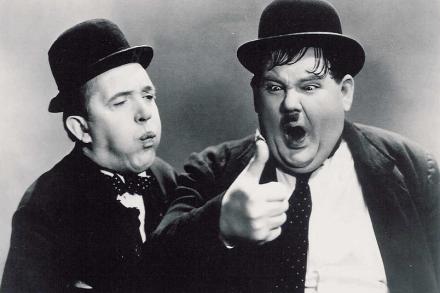
An original Liberal Democrat councillor from Liverpool called Richard Kemp has labelled Eric Pickles and Grant Shapps Laurel and Hardy. Kemp is adamant that savings cannot be made by efficiencies alone; cuts will affect councils' control of services. It’s a sharp observation. Indeed, he has located the precise point of the Localism Bill. Communities are being empowered; councillors are not. Pickles has introduced a radical agenda on which the dust will take time to settle. The Bill’s political genius is to devolve responsibility and enforce cuts without relinquishing financial control. At best councillors can fondle the purse; the strings remain largely out of reach.

Dissecting operation Coulson

From our UK edition

Tom Baldwin's inaugeration as Labour spin guru occasions Tim Montgomerie to appraise Andy Coulson. For many, Coulson has committed the spin doctor’s cardinal sin and become the story, and not just his more voluble opponents on the left. Tim rejects that analysis, but concedes that Coulson may drift to pastures new in 2011. Coulson’s record is quite impressive. He snared the tabloid press, and, together with George Osborne, ended Gordon Brown’s short honeymoon, exposing the Labour leader’s indecision with well-timed tax cut promises. The Election That Never Was spawned a far more enduring theme: Labour’s internal fissures and the timidity of its senior figures. If Coulson goes, that will be his legacy.

Paul Johnson’s and David Sexton’s books of the year

From our UK edition

Here is the second installment from the magazine. Paul Johnson: The book I relished most from 2010 was John Singer Sargent: Figures and Landscapes, 1883–1899. This is volume 5 in the catalogue raisonné being lovingly compiled by Richard Ormond and Elaine Kilmurray and published by Yale at £50. It contains a detailed account of Sargent’s greatest painting, ‘Carnation, Lily, Lily, Rose’, which took him two years, 1885–86, to complete and is now in the Tate. Also enjoyable was the latest instalment of The Collected Letters of Thomas and Jane Welsh Carlyle which covers the year October 1860–October 1861 and is volume 37 in this remarkable series — notable as always for the feisty letters of Jane.

Coming in 2011…

From our UK edition

Sebastian Faulks examines the history of the English novel through its most enduring, though not endearing characters. Faulks on Fiction returns to BBC Two with a Peter Greenaway-inspired title The Hero, The Lover, The Snob and The Villain. Mr Darcy, Robinson Crusoe, Chanu and John Self are all subjected to a session of Faulks’ post-modern psychoanalysis; an exercise designed to clarify the opaque English character.

Franzen on Franzen’s dark inner torments

From our UK edition

Judging by the critical reaction, Jonathan Franzen Freedom is a Marmite book. But, even those who love Franzen’s latest trip to the heart of America concede that The Corrections is a far superior book. The Corrections is a book of riveting scope, tempestuous depths and exact style: a convincing pretender to the title of ‘Greatest American Novel’. Franzen recognises that he may not surpass his earlier achievement. Much of what he has said in recent interviews has been, frankly, bland. His demeanour has not been wholly dissimilar to say, Jordan’s – I’ve a book to sell, let’s get on with it and kindly keep the banal questions to a minimum.