David Blackburn

The new faces of Tory euroscepticism

From our UK edition

Britain is avowedly eurosceptic. But euroscepticism is not homogeneous; there are different tones of disgust. Many decry further political integration; others oppose Europe’s penchant for protectionism; some are wary of the EU’s apparent collective socialism; a few are essentially pro-European but believe too much sovereignty has been ceded; others hope to redefine Britain’s cultural and political relationship with the Continent, as a bridge between the Old World and the Anglosphere; most see Brussels as an affront to elective democracy; and a handful just want out and vote UKIP. So it has always been – perhaps one reason why William Hague’s ‘ticking time-bomb’ has not yet exploded.
How to save libraries for the future

From our UK edition

The spending axe is descending on local government and libraries are poised to close. Campaign groups have mapped probable closures. There’s no key as to what each colour and symbol indicate, but that’s rather beside the point. In reality, the colossal waste in local government means that cuts can be implemented without damaging services. But councils play dirty when defending ‘their’ money, resorting to industrial action, unreliable bin collection and headline grabbing closures. Libraries fall into the latter category, and cherubic children will be hauled before cameras to cast the coalition in the most callous of roles. Of course, learning must never be hindered, especially if Britain is to weather the Asian economic onslaught.

Theatre to mark Western decline

From our UK edition

USO is not what it once was. The days of Bob Hope’s wisecracking have receded into the past, and ogled Playmates no longer sex their way across stages. The Pentagon has commissioned British theatrical talent to educate its troops about Afghanistan’s political culture and history. Performed by the Kilburn Tricycle Theatre, The Great Game is a 7 hour show about Afghanistan’s cycles of invasion, struggle and victory. Presumably if the grunts can withstand that, they can withstand anything. As Ben Macintyre notes in the Times (£), there is neither greatness nor beauty in the games that Western powers have played in Afghanistan.

Across the literary pages | 10 January 2011

From our UK edition

Here is a selection of pieces from the world’s literary pages this weekend. Writing in the New York Times, Michiko Kakutani lambasts the decision to remove the word ‘nigger’ from Mark Twain’s anti-slavery classic, Huckleberry Finn. ‘Haven’t we learned by now that removing books from the curriculum just deprives children of exposure to classic works of literature?

Affable Cameron invites you into his home

From our UK edition

Perhaps I’m alone in this, but David Cameron interviews better in print than he does on screen. He’s almost too polished on television. His supreme confidence and tendency to guffaw at his scripted jokes can grate. But in print his assurance has an affable, human quality. The Daily Mail has interviewed him today. Most of the piece is a lifestyle feature – Dave at home attending to Florence’s evening feed as he watches Newsnight. It is vacuous fare, but it strikes a brilliant contrast with Ed Miliband’s rout at the hands of the nation’s housewives on the Jeremy Vine Show, where there were echoes of Gordon Brown’s excruciating unease with the world beyond Westminster.

Sex gangs and the triumph of ignorance

From our UK edition

As Rod Liddle notes, there's a hell of a media storm raging over sexual abuse committed by men of Pakistani origin. Certain of the media's more craven elements have capitulated to the politically correct mantra that it's wrong to judge at all; and certain of the media's more reactionary outlets are entertaining blanket condemnations of the entire Pakistani community. Jack Straw has it about right. He told Sky News: 'There is a specific problem about a very small minority of normally Pakistani heritage men who are targeting young, vulnerable white girls.

Hughes’ social engineering crusade

From our UK edition

No wonder some backbench Tory MPs are apoplectic: courtesy of David Cameron, Simon Hughes has been elevated from soapbox to pulpit. Hughes' first statement as the government's university access adviser is to suggest that universities should limit their intake of students from private schools. He told the Guardian: 'I think my message to the universities is: You have gained quite a lot in the settlement. Yes, you've lost lots of state money, but you've got another revenue stream that's going to protect you. You now have to deliver in turn. You cannot expect to go on as you are. It has failed miserably.'   Hughes' appointment was controversial, another instance of well qualified, determined and loyal Tories being denied preferment to placate Lib Dem egos.

Coming in 2011: Wallander’s last case

From our UK edition

God, Sweden sounds gruesome. After the rampaging success of the Steig Larsson thrillers, Henning Mankell, the Godfather of Swedish crime fiction, has written a new book. Kurt Wallander, Mankell’s morose and insomniac homicide detective, makes his first appearance for a decade. It will also be his last. The Troubled Man is familiar ground for Mankell; familiar ground for Wallander. An unsolved disappearance, a savage murder and atmospheric Nordic woods, segueing into the themes of thoughtful detective fiction: friendship, betrayal and Europe’s gangrenous 20th century history. Kurt Wallander and George Smiley are fighting the same war albeit in different eras.

A tale of ego and hypocrisy

From our UK edition

Sarah Ellison has profiled Julian Assange and his relationship with the Guardian for Vanity Fair. Read the whole piece for each petulant tantrum, sordid disclosure and twist of hypocrisy, but here are the opening paragraphs to get you started. ‘On the afternoon of November 1, 2010, Julian Assange, the Australian-born founder of WikiLeaks.org, marched with his lawyer into the London office of Alan Rusbridger, the editor of The Guardian. Assange was pallid and sweaty, his thin frame racked by a cough that had been plaguing him for weeks. He was also angry, and his message was simple: he would sue the newspaper if it went ahead and published stories based on the quarter of a million documents that he had handed over to The Guardian just three months earlier.

Unpicking Miliband’s deceits

From our UK edition

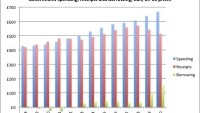
Ed Miliband has penned a combative but incredible piece in today’s Times (£). He makes two substantial points. First, that the coalition is deceiving people: Labour was not to blame for the deficit. And second, the coalition’s cuts package (in its entirety) is unnecessary. Oh what a tangled web he's weaved. His argument is a maze of conceits, sleights of hand and subterfuge, and he interchanges between debt and deficit at his convenience. But, occasionally, his position is exposed. As this Coffee House graph recalls, Labour built a substantial structural deficit prior to the economic collapse.

Winding down Control Orders

From our UK edition

David Cameron has reiterated that Control Orders are to be scrapped. He told an audience in Leicester yesterday: ‘The control order system is imperfect. Everybody knows that. There have been people who've absconded from control orders. It hasn't been a success. We need a proper replacement and I'm confident we'll agree one.’ Whether the new arrangement will replace both the name and the letter of the law remains to be seen, but the government is expected to lessen some of the more severe elements of Control Orders. When this story broke at the weekend, Cameron was happy to spin the reforms as a Lib Dem initiative, despite considerable Tory input. Not anymore.

The right has little cause for alarm

From our UK edition

It is to his credit that nuance is a word inimical to Lord Tebbitt. The unashamedly independent voice of the past has written a cutting piece about the coalition, the Lib Dems and the Oldham East by-election. He says: ‘A Lib Dem win would tilt the Coalition even farther Left and away from Conservative policies.’ Many Tory ministers joke that they thought themselves right wing until meeting their Liberal colleague. This is a radical government that many on the right can cheer.

Central government and local government lock horns over bin collection

From our UK edition

It seems that Cardinal Walter Kasper was right: parts of Britain are suggestive of the Third World. The Sun has been leading the tally-ho against council leaders in Exeter and Birmingham, who have allowed rubbish to lie in the streets for more than a month. And today, Local Government Minister Bob Neil joined (£) the fray, condemning councils for failing to deliver ‘one of the most basic services’. (He also mentioned executive pay, again.) Recalcitrant councils have issued a plethora of meteorological excuses, but these are mostly a distraction. Many councils managed to remove rubbish over Christmas; David Cameron commended them for their efforts.

What’s the word to describe 2010?

From our UK edition

The epic brouhaha on New Year’s Eve was ended by a defenestration. This left my love discombobulated. More than 10,000 users of Dictionary.com have voted for the word that best describes 2010. The five leading nominations were: discombobulate, defenestration, brouhaha, love and epic. ‘Epic’ won the poll, by just 40 votes. All of those words are deeply emotive, reflecting, I suppose, a year of political and economic cataclysm. Epic’s strictly poetic overtones have receded before over-use and misuse, as in ‘epic fail’ – a wonderfully pointed piece of slang. Discombobulate is one of those cherished rarities: an elegant Americanism.

Clegg and Cameron decouple

From our UK edition

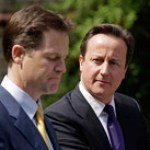
Cameron and Clegg are putting on a show for the in-laws. After mounting disquiet from the fringes of their respective parties, the two leaders are journeying to Oldham East to quash rumours of a merger and reaffirm that theirs is a marriage of necessity. David Cameron will travel north in due course. God knows what he will say? Presumably that he no longer wishes his partners well – get out there and biff ‘em, or words to that effect. On the other hand, Nick Clegg will declaim his lines today. His script is hyperbolic, replete with wishful fantasy about a ‘two-horse race between Labour and the Liberal Democrats’.

The Tories turn their fire on ‘lamentable’ Johnson

From our UK edition

Come back, you insufferable relatives, all is forgiven: the political class has devoted an afternoon to trading insults about who said what about VAT and when. However, there have been some intriguing exchanges amid the New Politics’ latest outing. First, Labour seems to be fighting the two coalition partners as a single entity in Oldham East. Cameron, Clegg and Simon Hughes have received equal measures of opprobrium this afternoon and all have been lumped together. This was always a danger, but, as Fraser noted, Clegg and Cameron invited the manoeuvre by uniting their parties’ central operations in the cause of government. If Cameron and Clegg don’t differentiate in the general, Labour won't in the particular.

January Book of the Month

From our UK edition

Julian Barnes is a modern master of the short story and his latest collection, Pulse, is to be published on Thursday. Already, it is attracting plaudits. Barnes allies structural simplicity with thematic diversity. Each character is attuned to a ‘pulse’ – an amalgamation of a life-force and an Aristotelian flaw. The range of setting is impressive, veering from the mundane to the exotic. One story sees Garibaldi court the distant figure of his future wife through a telescope, as his ship lies at anchor off the azure coast of Brazil; the great-man-in-waiting ponders destiny and desire in all their forms.

Boles beats his old drum

From our UK edition

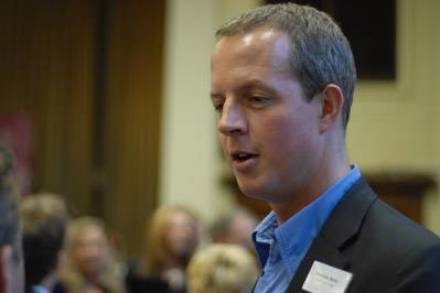
To accompany Fraser’s suggestion that Cameron and Clegg are planning a merger, it is notable that the ubiquitous Nick Boles has renewed his calls for a formal pact. Previously, Boles averred that Liberal Democrat ministers should be protected in three-way or Conservative-Liberal marginals. This time round, his argument is more philosophical. He told Radio 4’s PM: ‘The Coalition has enabled the Conservative party to be more radical than it would have been able to had it formed a government on its own with a small majority... Jacob Rees Mogg who’s a fellow MP who’s certainly not a sort of liberal Tory like I am in the sort of modernizing sense.

Miliband swings into action by warning of inflation

From our UK edition

The seasonal interlude has ended and Ed Miliband is sallying north to Oldham East. He will resuscitate old favourites from 2010: progressive cuts, fairness and a government bent of an ideological mission: but he will illustrate his point with reference to tomorrow’s VAT rise. Miliband will say: ‘Today we start to see the Tory-led agenda move from Downing Street to your street. At midnight VAT goes up, hitting people's living standards, small businesses and jobs. The VAT rise is the most visible example of what we mean when we say the government is going too far and too fast, because it's clear that it will slow growth and hit jobs.’ And he will add that the ordinary voter’s wallet will be £389 lighter by the end of the year, courtesy of the rise.