David Blackburn

Déjà vu | 21 January 2011

From our UK edition

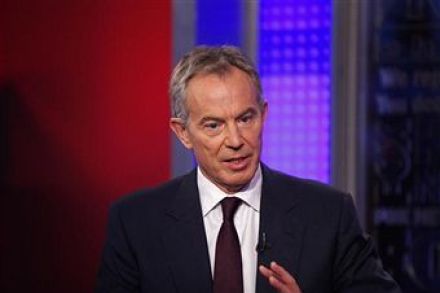
Tony Blair is beguiling the Chilcot Inquiry once again. He was majestic last time – quick witted, sincere and convinced. There was nothing in that benign hearing room to alter, as he might have put it, the ‘calculus of risk’. His ease was sufficient to crack subtle jokes at Gordon Brown’s expense, and most emerged from the hearing believing that Britain had actually been at war with Iran. He is already ploughing those same furrows, albeit with a barely audible note of impatience, irritated that these banal proceedings continue. Iran is the new Iraq, Blair says, and he publicly takes a ‘hard line’ against Tehran, just as his government, in its entirety, had done with Saddam Hussein.
Johnson resigns as Shadow Chancellor

From our UK edition

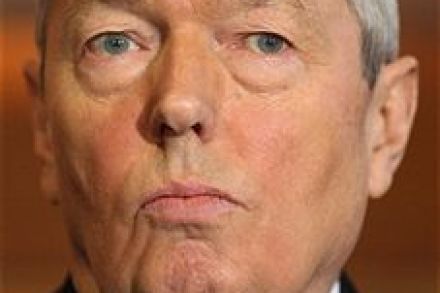
James Kirkup is reporting a rumour that Alan Johnson is to resign. More to follow. UPDATE: He has resigned. Sky News is reporting that Johnson has gone for personal reasons. That may be so - and because of the timing (the government was having the day from hell until ten to five this evening) I suspect that it is - but it will be a hard line to hold, given Johnson's fraught tenure and his very public disagreements with a leader he didn't back in the first place. A serious problem for Miliband, then, just as his fledgling leadership was beginning to pick up after Oldham.

Coming in 2011: David Lodge on H.G. Wells

From our UK edition

Literary biography is dead, long since in fact. Biographical works of literary figures are becoming a vogue. Arthur and George and the recent Tolstoy film biopic will be joined by David Lodge’s A Man of Parts. This is the life of H.G. Wells, as remembered by H.G. Wells, according to Lodge that is. No small task, not least because of the many potential pitfalls facing the writer as he tries to control voice and narration. Where does Lodge end and Wells begin? And vice versa.   Wells is a particularly daunting subject, riven with contradictions. A feminist womaniser, a Darwinist with intense religious convictions, a stylist who abandoned the literary novel – and that is to say nothing of his personal traits and talents.

Act 3 in the prisoner voting farce

From our UK edition

An ingenious man, John Hirst. First he achieved the considerable feat of committing manslaughter with an axe; and he has since proceeded to cause governments no end of trouble. The prisoner voting saga is nearing its end and a fug of ignominy is descending on the government. The BBC reports that the coalition is to dilute its policy of enfranchising prisoners serving less than four years. Now ministers will be seeking to enfranchise only those serving a year or less. This u-turn is the result of the alliance between Jack Straw and David Davis and the slew of assorted backbench dissent. Tim Montgomerie argues that this is yet another example of Downing Street’s inability to communicate with the parliamentary Tory party.

Where Warsi is right and wrong

From our UK edition

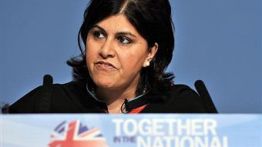
As ever, the headlines are more sensational than the speech, but marginally so in this case. Baroness Warsi has asserted that Islamophobia is rife and socially acceptable in Britain. It is a peculiarly crass statement for an ordinary politician to have made, but, then again, the gabbing Baroness is a very ordinary politician. Some of her speech is sensible, even unanswerable. She attacks the media and the arts for ‘the patronising, superficial way faith is discussed in certain quarters.’ Questioning faith is the natural and welcome adjunct of a free society, but specific criticism is morphing into general hostility.

Pressing for the prize

From our UK edition

The judges of the T S. Eliot poetry prize are in session. The prize is the most prestigious and the most lucrative poetry prize in Britain and this year the competition is comprised of luminaries. In fact, 'luminaries' doesn't do justice to this field of Nobel laureates, contenders for the poet laureateship and other acclaimed originals. The winner will be announced on Sunday. As light relief from the weighty matters of the times, the Today programme has asked each nominee to read their allotted poems.

The return of Chilcot

From our UK edition

The Chilcot Inquiry is back, and with bang not a whimper. In his opening statement, Sir John said: ‘There is one area where, I am sorry to say, it has not been possible to reach agreement with the government. The papers we hold include the notes which Prime Minister Blair sent to President Bush and the records of their discussions. The Inquiry recognises the privileged nature of those exchanges but, exceptionally, we sought disclosure of key extracts which illuminate Prime Minister Blair’s positions at critical points. The Cabinet Office did not agree this disclosure. On 10 December last year, in accordance with the Protocol, I asked the Cabinet Secretary to review that decision.

Davis and Straw unite against prisoner voting rights

From our UK edition

David Davis and Jack Straw have joined forces to resist the enforcement of prisoner voting rights, an emotive issue bequeathed to the hapless coalition by the previous government. Beside the obvious moral question concerning prisoners’ rights, Davis hopes to open a second front in the struggle over sovereignty with the European Union. He told Politics Home: ‘There are two main issues here. First is whether or not it is moral or even decent to give the vote to rapists, violent offenders or sex offenders. The second is whether it is proper for the European court to overrule a Parliament.’ Unless Davis has confused his articles, his second point is invalid. This decision has nothing to do with the European Court or the European Union.

MPs turn on PFI

From our UK edition

There is nothing like being wise after the event. The Public Accounts Committee has turned on the private finance initiative, saying there is ‘no clear evidence’ that PFI delivers more value for money and no evidence that taxpayers have shared the profits. The committee reported: 'There were instances where PFI may have been used where there was no evidence that it was the best procurement route. Local authorities and health trusts used PFI because there was no realistic alternative, not because it represented best value for money. The use of PFI and its alternatives should now be robustly evaluated. Looking back at PFI procurements, the government should also do more to find out where and why PFI works best and capture the lessons.

Let’s hope the paternity revolution stalls

From our UK edition

Nick Clegg’s announcement on the extension of paternity leave has been drowned by the cacophony surrounding NHS reform. The government is keen to describe itself as family friendly – with the exception of Vulgaria in Chitty Chitty Bang Bang, all government's do. Clegg hopes to bring flexibility to the workplace and relieve young mothers who would like to return to work. It’s an admirable aim, but there is only so far socially manipulative legislation can go before it becomes grossly counter-productive. David Frost, Director General of the British Chambers of Commerce, has made a strong case against further law. “Last week we saw changes to the default retirement age, in April we've got changes to the right to request flexible working.

Across the literary pages | 17 January 2011

From our UK edition

Here is a selection of pieces from the weekend’s literary pages. The Guardian profiles Neal Cassady, the inspiration for Dean Moriarty in Kerouac’s On the Road. ‘Carolyn Cassady opens the door to her pretty green cottage with a lipsticked grin and a shy handshake. She's 87, but looks a decade younger, dressed neatly in a lavender fleece with matching moccasins. The second wife of Beat muse Neal Cassady – the man immortalised as Dean Moriarty in Jack Kerouac's 1957 classic On the Road – Carolyn moved to London in 1983, and relocated here 10 years later. "I was brought up English," she says. "My parents were anglophiles and we had a whole lot of English customs at home. I made the break and I much prefer it.

Cameron’s public service reforms are still stuck in New Labour’s intellectual territory

From our UK edition

The man known to the Cameroons as ‘The Master’ casts a long shadow. David Cameron has re-launched his public service reform agenda and there was more of a whiff of Blair in the air. His speech was understated. He eschewed references to radicalism and appealed to continuity instead. The favoured phrase of the moment is ‘evolution not revolution’, and Cameron traced the lineage of his reforms to those of the thwarted Blair administration (and the market reforms of the Thatcher and Major years). He was so deep in New Labour’s intellectual territory that he was at pains to stress that the ‘spending taps have not been turned off’.

Too far, too fast?

From our UK edition

It is hubristic of David Cameron to talk of his ‘legacy’ at this stage in his premiership, not least because he invites criticism that the government’s public service reforms are going too far, too fast. The leaders of six health unions have reacted to the imminent publication of the Health and Social Care Bill with a concerned letter to the Times (£); they argue that price competition is divisive and that the reforms promote cost above quality. Dissent has spread far beyond the usual union suspects.

Purple Pritchard

From our UK edition

It’s a far cry from the egregious Tory right of Sayeeda Warsi’s imagination. Mark Pritchard, Secretary of the 1922 Committee, has looked at the result of the Oldham and Saddleworth by-election and has concluded that the Tories and Liberals may have to reach an arrangement for future by-elections. He said: "I think this has wider questions for other by-elections that will invariably come along over the next few years, and that is whether we have an open discussion now over whether we have some sort of close co-operation with the Liberal Democrats in Westminster by-elections...a quid pro quo type of arrangement.

Ditching Clegg won’t help the Libs

From our UK edition

Despite the brave smiles, the senior Lib Dems are wearing long faces. Matthew Parris considers (£) the collapse of the Conservative vote in Oldham East and Saddleworth as a disaster for the Lib Dems, their own vote sustained by an influx of Tory voters. The Tories may not recover that support, but that does not ease the Liberal Democrats’ dilemma. Parris observes: ‘Privately Nick Clegg will have drawn from this the only sane conclusion, but it is one that I’ve found the Liberal Democrats strikingly reluctant to discuss. It is that in the seats where his party stands a chance next time, it must either re-engage the sympathies of its former supporters who are defecting to Labour, or it must throw itself upon the mercies of Tory sympathisers.

Cameron hopes to lessen fuel woes

From our UK edition

Today saw the latest Cameron Direct event, and the Prime Minister defended his government’s position of bankers’ bonuses and Europe, and he devoted a section to profess the fortitude of the coalition itself. But Cameron realises that he needs to offer positive news, both to a country acclimatising to austerity and to a party that has broken out in a rash of ill-temper. Fuel duty was his chosen tonic. There were no commitments, but Cameron promised to review the level of duty or road tax as part of the March budget. This lends a little weight to the rumours that fuel duty and/or road taxes might be cut or a fuel duty stabiliser introduced to cheer anxious motorists and avert the threat of strikes.

The man who wrote To His Coy Mistress

From our UK edition

As Austen notes in this week's discovering poetry blog, Andrew Marvell was highly political. The eroticism of To His Coy Mistress is anomaly in a largely political canon, founded in a political life. Marvell was a professional protégé of Milton, Secretary to the Republic, and he was a potent though anonymous critic of the Restoration monarchy; his longest poem, Last Instructions to a Painter (1667), is a satire on fetid Caroline corruption, which he perceived to be polluting the body politic.    His political career began in the autumn of 1650, when he began to tutor the daughter of Sir Thomas Fairfax.

The doyen of literary London

From our UK edition

John Gross, the literary lion of his generation, died on Monday. The Spectator will publish a piece commemorating his life and work tomorrow. In the meantime, here is a selection of extracts from the deluge of adoring obituaries. The Telegraph: ‘Once described as “the best-read man in Britain”, Gross was probably best known among his literary peers for his first book, The Rise and Fall of the Man of Letters: English Literary Life since 1800 (1969), a racily entertaining romp through the history of literary criticism and its practitioners which won the Duff Cooper Prize and established its author’s reputation as a man whose huge erudition was matched by a well-developed sense of humour.

Clegg: time to air our differences

From our UK edition

Why vote Lib Dem? Even Nick Clegg is now asking that question. After 8 months of broken pledges, deep cuts and atrocious polling (due to reach its nadir tomorrow in Oldham East and Saddleworth), Clegg worries that his party is losing its identity. Speaking to the Guardian, Clegg reveals that he hopes to arrest decline by expressing publicly his private differences with David Cameron. This is not defiance from Clegg but a statement of positive intent. Taking brave decisions, he says, has proved that the Liberal Democrats can govern and that coalition works; the government’s strength is sufficient to withstand disagreement. That’s all very well, but Clegg needs more than mere differences: all politicians have their differences.