David Blackburn

The world according to Alistair Darling

From our UK edition

There was a time when  "http://blogs.wsj.com/iainmartin/2010/04/30/alistair-darling-labours-caretaker-leader-in-waiting/">commentators on the right thought that Alistair Darling may become Labour leader, such was the respect he commanded. Alone among Brown’s Cabinet, Darling rose above the ideological opportunism and infighting to emerge with his reputation enhanced. Darling is ready to tell of his part in New Labour’s downfall. This morning’s Independent "http://www.independent.co.uk/news/people/profiles/alistair-darling-we-were-two-hours-from-the-cashpoints-running-dry-2245350.html">previews the book by interviewing the former chancellor.

Cuts are inspiring innovation

From our UK edition

The Big Society’s health is recovering. Despite the fevered clamour about library closures, some councils and communities are being positive about re-organising their services. After wide consultation with schools and local people, Wandsworth council has saved the York Gardens library in Battersea. Volunteers have agreed to form a ‘staffing mutual’ to run the library, this move is being supported by the £10m fund that the DCLG has allocated to cover the start up costs for nascent staff mutuals. In addition to that, two local schools have hired spare rooms on the premises to use as additional classrooms and both intend to maintain the library’s internet facilities with full public access. The private sector is playing its part too.

Ellroy formidable!

From our UK edition

James Ellroy has been awarded the French Order of Arts and Letters by French Culture minister Frederic Mitterand. According Le Point, Mitterand venerated Ellroy as a ‘master of dark dreams and counter history, truly one of the great names of modern literature’. In turn, Ellroy paid homage to French literary culture, citing Stendhal, Proust, Camus, Sartre, Beauvoir and Genet as writers without whom he could not have written as he does.    Mitterand’s broad assessment of Ellroy is scarcely mind-blowing, but never was the phrase ‘master of dark dreams’ better applied. As Time once put it, 'Ellroy rips into American culture like a chainsaw in an abattoir’, which perhaps explains why his books are so popular in France.

Time to bury the hatchet?

From our UK edition

Who says irony is dead? The Four Barrow Hunt and the Countryside Alliance are holding a fundraising auction in April. The lots are largely predictable: a subscription to the Telegraph, a French holiday home and a cured fox pelt. More surprising is the signed copy of Tony Blair’s A Journey, with its comparatively brief account of the 700 hours of parliamentary time he devoted to banning fox hunting. What, you may ask, would the good folk of the Four Barrow want with that memoir? Time to bury the hatchet? Perhaps. But, equally, Blackadder’s assessment of the magazine ‘King and Country’ is recalled: 'Ah, yes, without question my favourite magazine; soft, strong and thoroughly absorbent.

Milburn on Lansley’s health reforms

From our UK edition

Andrew Lansley’s health reforms have never been in the rosiest of health; but, as Pete observed yesterday, the current malaise may leave permanent damage. Paul Waugh has been speaking to Alan Milburn and the modernising former Health Secretary’s words speak volumes about Lansley's trails: "I'm amazed they allowed themselves to get into talk about privatisation and cuts. Having originally said this was a revolution they're now saying it's just evolution of Labour's reforms. Politically, it doesn't make sense. "Look, a managed form of competition is fine. The problem is that the lynchpin of the reforms was GP commissioning. "It's a good idea to get family doctors to be aware of the financial consequences of their decisions. So that's a tick.

It’s an Orange world

From our UK edition

Susan Hill once wrote that ‘a prize is a prize and when it is a lucrative and highly publicised prize, it matters a lot in the book world. Not many affect sales directly and hugely but one which now does is the Orange Prize for women writers.’ This year’s Orange Prize longlist has been released. There are some familiar faces on it. The Booker nominated Room, by Emma Donoghue, is on the list. Natalie Fast reviewed this strange and discombobulating story for the book blog in the autumn and the Bookseller reckons it stands a shot at glory. Previous Orange Prize winner, and regular contributor to the Spectator, Joanna Kavenna has been nominated for The Birth of Love, a many stranded but clear narrative through different times and places.

Labour divided on electoral reform

From our UK edition

John Healey has become the most senior shadow cabinet minister to declare that he will be voting no to AV. In a pugnacious article for the Independent, the Shadow Health Secretary describes the proposed system as a ‘perverse’ leg-up to extremists and one that will make Nick Clegg a permanent kingmaker. He added that he had not been ‘persuaded that AV is an upgrade to the voting system’. This is a small but important intervention. Until now, Labour’s contribution to the no campaign had been a procession of ghosts from former regimes: messrs Reid, Blunkett and Prescott being the most prominent of these heavyweight has-beens.

The EU wants concessions out of Ireland

From our UK edition

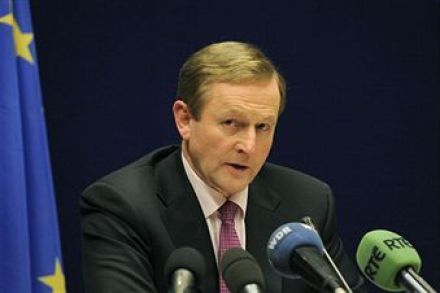
The mood in Dublin is febrile, despite the gloom of 14 percent unemployment. Everyone has advice for Enda Kenny on how to revive the Celtic Tiger. This morning, 17 prominent businessmen and public figures submitted A Blueprint for Ireland’s Recovery to the Department of the Taoiseach. The Irish Times reports that the authors propose deeper spending cuts and greater efficiency in the public sector. This is a different approach from influential Irish Economist Colm McCarthy, who argued on Sunday that ‘fiscal stringency is not enough to resolve the crisis’ because the banking restructure (contained within the IMF/EU bailout) is ‘impractical'. Enda Kenny, it seems, agrees with McCarthy, which is why he went to Brussels last week to renegotiate the 5.

Cameron’s ill-advised spat with Sir Humphrey

From our UK edition

David Cameron’s assertion in his spring conference speech that his officials are “enemies of enterprise” has aggravated the Sir Humphreys of this world. Paul Waugh, Ben Brogan and James Kirkup all have excellent spin-offs from Sue Cameron’s account of the smouldering atmosphere at a recent meeting of permanent secretaries. And Iain Martin puts it succinctly on Twitter: ‘Duff politics attacking civil service, down the ages a lazy excuse for ministers not mastering their depts.’ Beyond Iain’s point about inept ministers, this incident also seems typical of Number 10’s frequently faulty communications strategy, which so exasperates departmental special advisors.

A 6 point guide to Hutton’s proposals

From our UK edition

The future of the public sector has become a tale of two Huttons. Last week, John Hutton disclosed his pension plans and today Will Hutton’s submitted his final recommendations on pay. He makes six substantial points. 1). He has resisted calls to link senior public sector pay with the Prime Minister's. He told broadcasters this morning: “I think the Prime Minister's is a completely arbitrary salary. He took a pay cut in the first place and there's no shortage of people coming forward to be Prime Minister. There's no problem of recruiting and retaining a Prime Minister. If you're trying to hire someone to do child protection services in Haringey...

Livingstone: Londoners won’t know what I’m planning until after I’m elected

From our UK edition

Ken Livingstone was out on the stump in Croydon yesterday. So far, Livingstone has not made any election pledges; his entire campaign has been founded on his past record as London Mayor. So, when can Londoners expect to hear what Red Ken plans to do, and how he intends to fund it? 6:30 into this interview with the Mayor Watch website, he said: “On the morning after the election, I’ll let you know.” Thirty seconds later, he repeated himself for clarity's sake.

A model council

From our UK edition

Councils from Liverpool to Bromley have cut voluntary sector funding; but Reading Borough Council is defying the trend. It will increase its voluntary sector funding by more than £200,000 in 2011-12. This will be achieved by transferring £956,000 in loose grants to strict revenue contracts, which deliver greater value for money. This is part of a wider administrative rationalisation that raised an extra £181,000 for local groups, which will now apply for cash on a clearly specified basis to ensure that frugality survives the current efficiency drive. An efficiency drive was certainly needed.

Miliband: I won’t share a stage with Clegg

From our UK edition

Ed Miliband has been on Sky, talking about the alternative vote and Nick Clegg. The normally consensual Miliband was in strident mood. He said: ‘I want to win the AV referendum because I think it is important to reform our politics and I think it will make for a more accountable democracy and one where more votes count. The problem is Nick Clegg is the last thing we need to win this referendum.’ Earlier this morning, Miliband also urged Clegg to ‘lie low for a bit', after the latter's office allegedly derailed a joint event on AV between Miliband and Charlie Kennedy. Miliband may be dabbling in the Leader of the Opposition’s stock-in-trade of curt throwaway lines, but this could signify a policy shift.

Across the literary pages | 14 March 2011

From our UK edition

Strand magazine is to publish a recently discovered short story by Dashiell Hammett, 'So I Shot Him'. ‘He gave us both Sam Spade and Nick and Nora Charles — so for a generation of readers, Dashiell Hammett more or less defined both "hard-boiled" and "suave." Not bad, that. Now, from the long-deceased author of The Maltese Falcon and The Thin Man, comes a never-before-published short story: "So I Shot Him." It's suspenseful, full of secrets no one's telling, and — according to Andrew Gulli, editor of the mystery magazine that's publishing the story — somewhat more than what you might think of as vintage Hammett. "Vintage in that you have the great vivid characterization that Dashiell Hammett is so famous for," Gulli tells NPR's Robert Siegel.

The growing clamour for intervention

From our UK edition

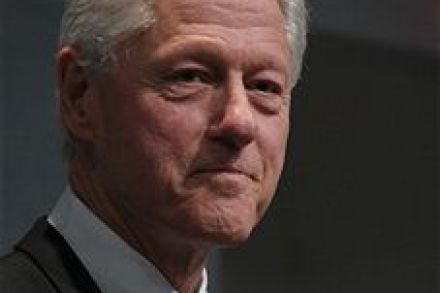
In the last two days, Nato and European leaders have declared that Gaddafi must go, but both have baulked at taking unilateral action. Their reticence has sparked a response from those in favour of intervention. Speaking in Brussels today, David Cameron said that situation on the ground may be getting worse and that Europe and the West in general “must be ready to act if the situation requires it”. Liberal interventionist Bill Clinton went further. Speaking at the Women in the World summit, he said: “I wouldn’t do it if they [the rebels] hadn’t asked… [But] it’s not a fair fight. They’re being killed by mercenaries.

The art of letter writing

From our UK edition

Letter writing has entered the campaigner's repertoire. The slow debate about the alternative vote has been quickened by the occasional thunderer in support or condemnation from assorted businessmen, politicians and philosophers. This morning, some historians have urged the public to vote no. Writing to the Times (£), they say: ‘Sir, Our nation’s history is deeply rooted in our parliamentary democracy, a democracy in which, over centuries, men and women have fought for the right to vote. That long fight for suffrage established the principle of one man or woman, one vote. The principle that each person’s vote is equal, regardless of wealth, gender, race or creed, is a principle to which generations of reformers have dedicated their lives.

What is happening to the Conservative party?

From our UK edition

Mark Wallace has been passed some very interesting information about local Conservative associations. He writes: ‘Apparently Andrew Feldman reported (at a meeting this morning) on a study CCHQ has carried out into the effectiveness of local Conservative Associations. In a “mystery shopper” exercise, CCHQ wrote to over 300 associations under the guise of being a person who wanted to join up, and asking how to do so. Over half of the letters received no response at all, which is bad enough. Weirdly, a handful who wrote back saying the applicant would need to pass a membership interview before they could join the Conservatives.

To strike or not to strike?

From our UK edition

The situation in Libya is still uncertain, but the fog of war is clearing to expose a depressing picture. Forces loyal to the Gaddafi regime are conducting a successful offensive. The Times’ Deborah Haynes confirms reports (£) that Zawiya has fallen and rebels have been forced from the oil town of Ras Lanuf. William Hague has spoken to Mahmoud Jabril, Special Envoy of the Libyan Transitional Council. The Foreign Office has issued a communiqué on the conversation and some of Jabril’s emotional concern escapes the bland text. In the words of the Foreign Office, he wants ‘the West to act to hinder Qadhafi's ability to inflict further violence on the Libyan people, including through a no fly zone.

Learning to love the city

From our UK edition

The author Megan McAfferty once said: ‘New York is an ugly city, a dirty city. Its climate is a scandal, its politics are used to frighten children, its traffic is madness, its competition is murderous.’ That could have been said of any city. Our literature suggests that urban life is grubby or abject in some way. Blake famously wrote of industry corrupting the earth. The grime and menace of Dickens’ London in Oliver Twist is recalled by photographs of the slums that ooze from Sao Paolo, Mumbai or some nameless Chinese metropolis. The Waste Land tells of comfortable people commanded by the ‘dead sound on the final stroke of nine’, captives of unreal cities.

The threat of a general strike increases

From our UK edition

As expected, John Hutton’s review of public sector pensions has recommended that final salary schemes end. Hutton was across the broadcasters this morning, explaining that he was reflecting an “inescapable reality”: “The solution to this problem is not a race to the bottom, it's not to hack away at the value of public service pensions. It’s to manage the risks and costs sensibly. The responsible thing to do is to accept that because we are living longer we should work for longer.” Beside realism, Hutton’s guiding principle has been fairness.