David Blackburn

In defence of Martin Amis

From our UK edition

Martin Amis is tired of London. He is emigrating to America again – this time for good, probably. In an interview with Ginny Dougary in last Saturday’s Times, Amis explained that his reasons are personal. There was a mournful tone to his answers, a sighing resignation that contrasts with the verve of those he gave at his zenith, such as these to the Paris Review. Amis may be a balding controversialist, whose chutzpah and cocksure vanity graze the self-regarding. But if he is through with Britain, then that is our funeral because we would have lost the most singular stylist of the post-war era. By his own admission, Amis is a ‘voice writer’. Plot, form and character are secondary to register.
It’s happening in Monterrey

From our UK edition

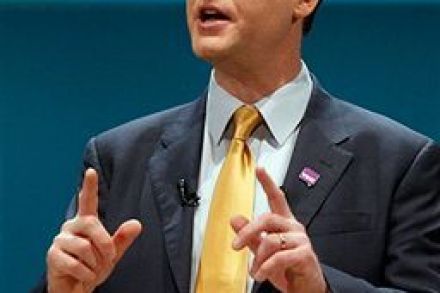
Nick Clegg is in Mexico, striving to build a trade relationship. The Guardian reports that Clegg will address the Mexican Senate, in Spanish. He will concentrate on praising the education sector, which he hopes to export. There are also plans to open British universities to affluent Mexicans, and Clegg is being accompanied by four universities vice chancellors and David Willetts. At the moment, trade between Britain and Mexico, the world’s 14th largest economy, is negligible – Clegg claims that Britain accounts for less than 1 percent of rapidly developing Mexico's imports. There are huge opportunities to expand.

Allowing localism to flourish

From our UK edition

David Orr, Chief Executive of the National Housing Federation, and 551 local councillors have written to the Times (£) warning that short-term cuts to care charities will bequeath deeper medium-term costs. They say: ‘Local councils face a difficult spending situation. However, cutting services for the vulnerable does not make financial sense. Without early identification and support, vulnerable individuals will reach crisis point as their needs become more severe, leading to greater pressure on acute health services, the criminal justice system and carers.’ The spending settlement in local government is stringent and some services are being necessarily affected: even model councils like Reading have cut some of its education services.

Cameron’s Libyan double standard

From our UK edition

After the Libyan blood money scandal at the LSE, inquiries were bound to be made about other universities. Robert Halfon, the Conservative MP for Harlow, has exposed how Liverpool John Moores University (LJMU) agreed to contracts with Gaddafi’s Libya worth at least £1,272,000.00. (He has since been threatened with a defamation suit for pointing this out, but that’s for another time.) He raised the issue in parliament and the Prime Minister replied: ‘I think that there are lessons to be learned. As I have said, I think that it was right (of the previous government) to respond to what Libya did in terms of weapons of mass destruction, but I do not think that the way in which that response was handled was right.

Across the literary pages | 28 March 2011

From our UK edition

The Telegraph profiles Jennifer Egan, whose A Visit From the Goon Squad is well tipped to win the Orange Prize. ‘A Visit from the Goon Squad is a work of imaginative energy and charm, and it deserves to win Egan many converts this side of the Atlantic. So much the better if those converts went on to explore some of the back catalogue, which takes in five books of great talent and surprising range. Given the vigorous experimentation in the later work, the apparent traditionalism of Egan’s first two books is striking.

Lawson: don’t do it George

From our UK edition

Lord Lawson has given George Osborne’s Budget an A-minus. Writing in today’s Times (£), the former chancellor said that his successor ‘got the big questions right’ by sticking to deficit reduction and assisting hard-pressed taxpayers where he could. The only blemish was the carbon price floor for the energy sector, which Lawson describes as ‘nothing less than an anti-growth strategy’.  Also, Lawson warns Osborne against uniting income tax and national insurance. Unsurprisingly, Mrs Thatcher’s great reforming chancellor looked into this measure and is convinced that it is a non-starter. ‘This superficially attractive reform, which is by no means a new idea, was known in the Treasury in my time as NICIT.

Marching with no alternative

From our UK edition

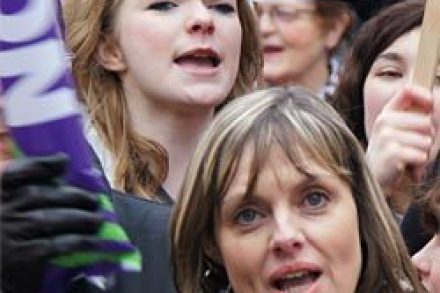
Thousands have converged on London today, to march against the monolithic evil of 'cuts'. They have not stated an alternative, a fact that led Phil Collins to write an eloquently savage critique in yesterday's Times (£). That the protesters are incoherent beyond blanket opposition to the government is not really an issue: as this morning's lead article in the Guardian argues, the Hyde Park rioters of 1866 weren't brandishing drafts of the Second Reform Bill. But it's intriguing that Ed Miliband has decided to address this rally, thereby endorsing it. The Labour party hierarchy recognises that it is taking an enormous and perhaps totally unnecessary risk. First, Ed Miliband's oratory is not in the same league as that of Michael Foot, Jim Callaghan and Harold Wilson.

Merkel is running out of patience with the eurozone

From our UK edition

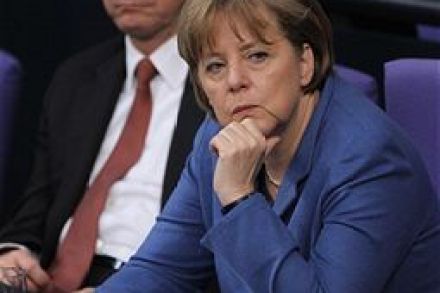
Like an unseasonal Atlantic gale, the Portuguese sovereign debt crisis has blown in to ruin the latest EU summit. This meeting was intended to mark the beginning of the end of the eurozone crisis. Instead, the ponderous European Union has been overtaken by events, with grave consequences. Already speculation about contagion is rife: Spain, Malta* and Italy are now being spoken of in hushed and exasperated tones. The Economist’s Charlemagne correspondent reports that several countries are now wary of the monetary pact that Germany is demanding for delving deeper into its pockets, because they do not want to be accused of surrendering sovereignty.

Brat pack forever

From our UK edition

There are two prevailing views on Charlie Sheen: he has never fulfilled his potential, and he has never had any to fulfil. Either way, the meltdown of glorified soap star has received disproportionate attention - most of it a mix of faux-sympathy, awkward chuckling and superior disgust. However, Bret Easton Ellis has torn it all up in a column at The Daily Beast. The Empire is losing, says Bret. Charlie is… winning. If you're not put off by Easton Ellis' sweary drawl, I urge you to read the unabashed piece in full. But here's an excerpt: 'It's thrilling watching someone call out the solemnity of the celebrity interview, and Charlie Sheen is loudly calling it out as the sham it is.

Cleggballs

From our UK edition

Amid allegations of Clegg being a Tory stooge, this Brown-esque mic-boob is likely to run. It'll also be reprised at the next election, whoever leads the Liberal Democrats. Hat-tip: Channel Four.

Saving the high street bookshop

From our UK edition

The bell seems to be tolling for the high street bookshop. The HMV Group, which owns Waterstone’s, has issued its third straight profit warning. Waterstone’s is supposedly on target for this financial year, but 11 of its branches were forced to close across the UK and Ireland in February alone and the company has conceded that it can’t compete in the mass market. Therefore, managing director Dominic Myers has decided on a strategy that challenges readers to escape the ‘stifling homogeneity’ of Dan Brown and Katie Price. The latest campaign will push 11 exciting first time novels on a public that largely ignores new novelists. Admirable though this plan may be, it is accompanied by the whiff of panic.

Ishiguro’s creative friendship

From our UK edition

Kazuo Ishiguro has written screenplays, but baulks at adapting his own novels. Faber and Faber are publishing Alex Garland’s script for the film, Never Let Me Go, which went on general release last week. Ishiguro has written the introduction to the edition of his friend’s script. It is a quietly evocative meditation on friendship, creativity and collaboration. Here it is for readers of this blog: Perhaps you’ve heard that the cafés of North-West London, especially in its leafier districts, are filled with writers in earnest discussion about their work. This of course is largely myth.

Across the literary pages | 21 March 2011

From our UK edition

The Telegraph has an exclusive extract from Henning Mankel's latest book, the last to feature Kurt Wallander. 'When Wallander arrived at Ystad police station, there was a message waiting for him at the front desk, from Martinsson. Wallander swore under his breath. He was hung-over and felt awful. If Martinsson wanted to speak to him the moment he arrived, it could mean only that something had happened that required Wallander’s immediate presence. If only it could have waited for a couple of days, he thought. Or at least a few hours. Right now all he wanted to do was to close the door to his office, unplug his phone and try to get some sleep with his feet on his desk.

Gaddafi calls for a ceasefire, again

From our UK edition

Sky News has footage of officials of the Gaddafi regime (if that's not too grand a phrase) saying that the Colonel has called his armed forces to a ceasefire. This announcement has come after a day of intense air attacks on targets across Libya, including in Tripoli, where anti-aircraft guns have been called into action. It also follows the Arab League's sudden crisis of confidence, which Gaddafi may have seen as a chance route to safety.  Statements from the MoD and Foreign Office suggest that the allies have not been perturbed by Amr Moussa's reservations. The bombing is expected to continue. But perhaps this ceasefire, if it is honoured, will make the US, France and Britain scale back their offensive operations.

The Arab League puts a spanner in the works

From our UK edition

According to Sky’s Tim Marshall, the Arab League is to meet in emergency session to discuss events in Libya. It seems that some of its members are opposed to the action being taken by the French, which it believes exceeds the remit of the UN Resolution for a no-fly zone. The bombing of tanks in particular has raised the ire of its General Secretary Amr Moussa. The Arab League’s assent was crucial to obtaining the Resolution, so Moussa’s reservations are significant – although quite what he thought he was agreeing to in the first place is anyone’s guess. Moussa is a probable candidate in the forthcoming Egyptian presidential election, so perhaps Sarkozy is not the only leader using Libya for personal gain.

The allies converge on Gaddafi

From our UK edition

George Osborne appeared on the Andrew Marr show this morning to introduce the Pledge of his Budget magic trick. But Marr and his viewers wanted talk about the show of military strength over Libya. Osborne reiterated that the government is committed to enforcing the UN Resolution and had no plans to deploy ground troops at this stage. He refused to rule out the use of British ground forces in the future. Privately, officials are trying to dispel the perception that the UN Resolution forbids the use of Special Forces commandos to assist the bombing campaign. The Resolution does not permit an occupation, but it would be very surprising if covert operations were not already being planned against Gaddafi's military installations and logistical infrastructure.

Paris summit spells trouble for Gaddafi

From our UK edition

After today's discussions in Paris, the international coalition against Gaddafi is building. The AFP reports that, in addition to France and Britain, Norway, Belgium, Denmark and the Netherlands will be joined by Qatar and other Arab forces. Silvio Berlusconi has moved to quash reports that Italian aircraft are already engaged, saying that Italy will provided bases but no aircraft at this stage. David Cameron has emerged from the summit in Paris to make a statement in support of President Sarkozy and his words were equally severe: "Colonel Gaddafi has made this happen. He has lied to the international community, he has promised a ceasefire, he has broken that ceasefire. He continues to brutalise his own people. "And so the time for action has come.

French planes take to the skies as Sarko talks tough

From our UK edition

And so it starts. French News Channel BFM reports that French fighter jets are airborne over Libyan skies; al Jazeera corroborates the report, adding that these are reconnaissance missions. By the sounds of things, French military sources are briefing international agencies, adding to the sense that the domestically troubled President Sarkozy wants to capitalise on his sudden international prominence. Sarkozy has just been speaking outside the summit meeting in Paris, which he hosted as Chairman of the G20 and G8. His words were stern: "In Libya, a civilian population which is passive which requires nothing further than the right to choose itself its destiny finds itself in danger of life. We have a duty to respond to its angst-ridden call.

Gaddafi defiant as the international coalition prepares his noose

From our UK edition

https://www.youtube.com/watch?v=WJl8s8DSYvQ The fog of war lies thick in Benghazi this morning. There are reported explosions and gunfire and Sky News is showing footage of a Soviet-era fighter jet combusting in mid-air over the city; it is not clear if the aircraft was the victim of anti-aircraft fire, air-to-air combat or technical malfunction. Equally, it is unclear if the international coalition's campaign has begun – leaders will meet in Paris today to finalise diplomatic agreements before mobilisation, but defence analysts say that French and Italian aircraft could already be patrolling Libyan skies.      The Gaddafi regime has been typically deranged in response.

Does Sarko deserve more credit than Cameron?

From our UK edition

Just as the British press is venerating David Cameron in the aftermath of last night’s UN resolution, so too the French press is praising President Sarkozy. In fact, the whole administration is basking in his reflected glory. Le Figaro describes Sarkozy’s and Prime Minister François Fillon’s roles in obtaining the UN Resolution and preparing the French military for action; the Defence minister also receives a hearty appraisal. Even the Presidency’s determined adversaries have expressed more than grudging respect. The left-wing newspaper Libération applauds Foreign Minister (and grand old man of Gaullism) Alain Juppé’s success in bringing the fractious United Nations to resolution.