David Blackburn

17,000 servicemen to go

From our UK edition

The MoD has released its plan for redundancies. The numbers and plan were leaked at the weekend, but here are some details: 1) There will be 17,000 redundancies – 7,000 from the army and 5,000 each from navy and RAF. The first tranche will be notified by commanding officers in September 2011. 2) Some of the reductions are expected to be achieved through not filling vacancies and slowing recruitment, but it is estimated that 11,000 jobs will be lost by April 2015. 3) This is a compulsory programme, but the MoD hopes that the majority of losses can be met through volunteers. Volunteers will serve a 6-month notice period, non-volunteers will serve a 12-month notice period.


Losing control | 4 April 2011

From our UK edition

The future of the Health and Social Care Bill is a test of Craig Oliver. For months there has been a steady drip of quiet critiques of the bill; but some Liberal Democrat grandees have suddenly broken cover and burst into open dissent. David Owen and Shirley Williams have called for the bill's implementation to be slowed and for consultation to re-open. Both are especially concerned that private sector involvement will expose the NHS to competition law, which they believe would be detrimental to the NHS.

Across the literary pages | 4 April 2011

From our UK edition

Though not strictly a weekend literary supplement, the Flavorwire has 19 pictures of achingly sharp authors working at their typewriters. They include Tennessee Williams, John Cheevor, Slyvia Plath, Francoise Sagan and William Faulkner.   A.C. Grayling was on the Today programme this morning, debating his secular Bible, The Good Book, with the Canon Chancellor of St. Pauls. Grayling has also given an interview to Decca Aitkenhead in the Guardian, where, among other things, he expands on secular morality, spiritual understanding and the importance of language.    ‘He insists that his new book does not belong in the same canon as Dawkins's The God Delusion and Hitchens's God Is Not Great. "No, because it's not against religion.

Rescuing Lansley’s reforms

From our UK edition

The fate of Andrew Lansley's NHS reforms is attracting apocalyptic headlines. A report in the Times (£) declares that a ‘last-ditch’ salvage is underway; the FT carries an editorial in similar tone, and the Guardian devotes its front page to David Cameron’s attempt to save face. Over at Conservative Home, Jonathan Isaby relates how the strategy will unfold. The principles of the bill will remain intact, but it will be delayed using the ‘natural pause’ in parliamentary procedure. During this time, the details of the bill be scrutinised and the government will also use this time to reiterate its view that these reforms are necessary for the NHS to manage an ageing population and rising costs.

A month to go and still none the wiser

From our UK edition

It’s supposed to be the day of rest, but there’s no rest for the wicked. The two sides of the alternative vote referendum have been exchanging blows all day. It seems the pro-AV camp have purged black poet Benjamin Zephaniah from some of their leaflets. Apparently, Zephaniah is all present and correct on leaflets sent to London addresses; but he has been apparently replaced by Tony Robinson in those sent to Sussex and Cornwall. The No campaign has described its opponents as “ashamed” of Mr Zephaniah’s colour, and the Yes campaign said the allegation was a “new low”. It’s six of one and half of dozen of the other, and we’re still no better informed about either system.

Northern Ireland unites, sort of

From our UK edition

A man hunt is underway for the perpetrators of yesterday's murder in Omagh, and the administration at Stormont and the PSNI have presented a united front against antediluvian dissidence. Meanwhile, Martin McGuinness, the deputy first minister, is accused by groups associated with the DUP and the Traditional Unionist Voice of having attended an illegal march commemorating the IRA last October. Sectarianism is still rife.

Trouble with the big society

From our UK edition

A gaggle of academics have written to the Observer to condemn the Arts and Humanities Research Council (AHRC) for accepting £100m from the government. The AHRC is conducting research into the big society, and the allegation is that the settlement was conditional, an allegation which is denied.  Doubtless the 69 signatories are dons of the tweedily conservative variety, but their objections perhaps explain why Cameron’s flagship policy is so mistrusted. They write: ‘When academic research is used to promote party political ideologies its quality and value decline. It also threatens democracy and the constitution. While academic work may be partly paid for out of public funds, this ought not to be the same thing as working for the government.

Death on the road to Brega

From our UK edition

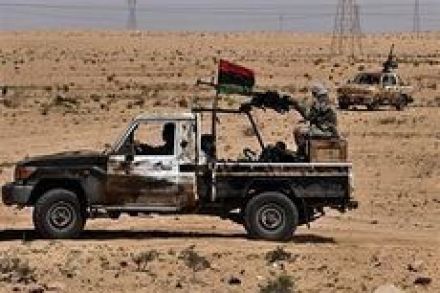
NATO has accidently bombed a rebel convoy on the road to Brega. Casualties are understood to have been heavy and, judging by footage, the rebels at the scene are pretty exercised: lots of angry tears, outraged rhetoric and shooting in the air.  An emotional  response is understandable in the aftermath of tragedy, especially in the fraternal fever of rebellion. However, the response does reveal something about the rebels’ military sense and capability: firing guns in the air without thought to what may be above is symptomatic of the martial indiscipline hampering their efforts.

BREAKING: Car bomb explodes in Omagh, County Tyrone

From our UK edition

Not clear as yet if there have been any casaulties. More to follow. Reports are sketchy, but it seems that the blast took place in a residential road, away from the crowded central shopping areas that were the scene of the bloody atrocity committed 13 years ago.  The bomb was planted underneath the car of a local Catholic PSNI officer .The officer is critically wounded.  This act is very likely to have been perpetrated by extreme Republican dissidents; and it follows a trend of Republican/gang violence against police in the province, a battle for which London and Stormont allocated more than £240 million last month. UPDATE: DUP MP Jeffrey Donaldson reports that the officer has died.

Planning to ruin Lansley’s party

From our UK edition

How can Nick Clegg recover from defeat in the AV referendum? Andrew Grice considers the question in his column and reveals that Clegg is not too bothered about AV: his sight is trained on a bigger prize. ‘A U-turn in the controversial NHS reforms to hand 80 per cent of the budget to GPs and scrap primary care trusts (PCTs). Mr Clegg is convinced that there must be big symbolic changes to the NHS and Social Care Bill.  That would not be good news for Andrew Lansley…He knows that Mr Cameron will demand some changes and is prepared to see a few technical amendments to the Bill during its passage through Parliament…Mr Clegg's worry is that the public would not notice fine-tuning.

Clearing up after the storm

From our UK edition

The recession has made Britain's banks less competitive and they should be broken up, concludes the Treasury Select Committee. As the banking system spiralled towards oblivion in 2008, the market became more concentrated. ‘The financial crisis has resulted in significant consolidation of the UK retail market. Well known firms such as HBOS, Alliance & Leicester and Bradford and Bingley have either exited the market or merged with rival firms. A large number of building societies have merged, undermining the diversity of provision in the sector. Whilst these ‘rescues’ were necessary in order to preserve financial stability, the consequence has been to reduce competition and choice in the market.

From the archives – a notable desertion

From our UK edition

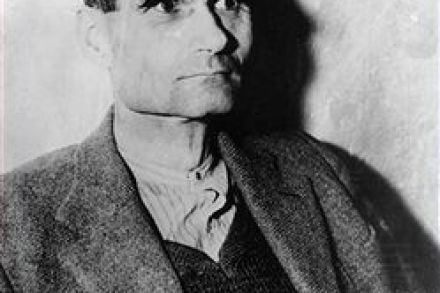
An obvious comparison can be drawn between Moussa Koussa and Rudolf Hess. It is intriguing but easily overextended. While Koussa’s sense of self-preservation is palpable, Hess’s flight at the high tide of Nazism remains unfathomable. Back in May 1941, a onetime prominent Nazi and man of letters called Dr Hermann Rauschning, a controversial oddity in his own right, analysed the Hess mystery for the Spectator. (Incidentally, the British secret service file on Hess will be released in 2016.) The Rudolf Hess Mystery, 16 May 1941 The flight of Rudolf Hess to enemy country in the middle of the war is more than a lost battle for Hitler.

To ban a book

From our UK edition

There is much howling and gnashing of teeth in India at the moment. Pulitzer Prize winning journalist and author Joseph Lelyveld has written a book about Gandhi, which, it is alleged, portrays Gandhi as having homosexual and racist tendencies. When in South Africa, Gandhi lodged with a German body-builder and architect, Hermann Kallenbach. Lelyland quotes Gandhi’s in a letter to Kallenbach saying: ‘How completely you have taken possession of my body’ and ‘this is slavery with a vengeance.’ In his correspondence from that period, Gandhi referred to black Africans as ‘kaffirs’; Lelyveld mentions this contoversy also.

Shaky dealings are damaging the reputation of Britain’s universities

From our UK edition

A delegation from Durham University flew to Kuwait in February to build what it termed ‘academic partnerships’. They succeeded. On Monday afternoon, Durham University announced the formation of the ‘Al-Sabah Programme in International Relations, Regional Politics and Security.’ In an internal document sent to academic staff, the Vice-Chancellor, Professor Chris Higgins, revealed that that this seat had been ‘funded personally by Sheikh Nasser Al-Sabah of Kuwait’, the Kuwati Prime Minister, and that the ‘£2.5million endowment will support the Al-Sabah Chair, associated research and two PhD studentships in perpetuity’. Al-Sabah has made what is politely termed a singular contribution to democratic traditions.

How to encourage the others

From our UK edition

Lord Malloch Brown has inverted Voltaire’s maxim on the execution of Admiral Byng: treat Moussa Koussa well to encourage the others. Most of this morning’s papers expect further defections from the Gaddafi regime ‘within days’. These defections are expected to come from Gaddafi’s civil administration; the Colonel’s military and security arms remain fiercely loyal. The Foreign Office refuses to give a ‘running commentary’ on events, but the confidence of its officials is ill-disguised. It is increasingly apparent that Tripoli is spiralling into desperation and that the fetid regime is fracturing. The Guardian reports that an aide of Saif al-Islam Gaddafi, Mohammad Ismail, has been in London.

Irish banks in a worse state than was thought

From our UK edition

Robert Peston called it: the Irish banks are mired. The latest round of stress tests has been conducted and the headline figure is that the Irish banks face a shortfall of 24 billion euros. A major recapitalisation will follow and it’s likely that more institutions will be taken under state control. Ireland is also likely to ask for more cash from the EU. These tests were based on conservative criteria, where the Irish economy contracted by 1.6 percent this year, unemployment peaked at 15.8 percent and there was a cumulative collapse in property prices of 62 percent. It’s grim in Ireland, but not that grim: most forecasters are predicting GNP growth of around 1 percent in 2011.

A weekend away

From our UK edition

The weather for the weekend looks bad, so usually a jaunt to Oxford, the dankest place on earth, would be ill advised. But this weekend is different. The undergraduates are long gone for Easter and the Sunday Times’ literary festival is in town from Saturday 2 April until Sunday 10th April. The headline speakers are King Abudullah of Jordan, Kazuo Ishiguro, A.C. Grayling, Michael Frayn, Karen Armstrong, David Starkey and Gilbert and George. The list of other speakers is equally impressive: Phillip Pullman, David Nicholls, David Lodge, Edna O’Brien, John Julius Norwich, P.D. James, Colin Dexter, Nigel Lawson, Prue Leith and Matthew Parris. Tickets are still available, so click here for more information.

The first rat abandons ship?

From our UK edition

Moussa Koussa, one of Gaddafi’s closest henchmen, has given himself up in Britain. He left Tripoli supposedly on a diplomatic mission, but arrived in Britain declaring that he “no longer wanted to serve the regime”. This development suggests that the regime is crumbling and pundits opine that the balance has now tipped against Colonel Gaddafi. It has also emerged that President Obama has authorised covert support to be given to the hotch-potch rebellion, which may yet prove decisive. Gaddafi will now have to make do without Koussa’s skill and clout, which may pose the Colonel a problem if he needs diplomacy to save his neck. However, Gaddafi’s blitzkrieg is still charging east.

Rebel setbacks create an almighty headache for NATO

From our UK edition

The Auk and the Desert Fox ride again. As in 1941-2, the military position along on Libya’s northern coastal road is extremely fluid. After the celebrated rebel gains over the weekend, Gaddafi has counter-attacked without remorse. Skirmishes escalated yesterday and now the rebels are in full retreat (£) from the strategically vital oil town of Ras Lanuf, running from Gaddafi’s superior onslaught. It's apparent that the rebels need heavy arms to secure their gains, let alone beat Gaddafi. As Pete noted yesterday, the west is (rightly) wary of such a move and there’s nothing to suggest that Arab states are any less reluctant.