David Blackburn

There’s supposed to be a ‘cost of living crisis’, Ed. Will free gym use solve it?

From our UK edition

There was much excitement on Tuesday night when Labour's Pat McFadden, a former business and employment minister, appeared on Newsnight and said: 'I want to see a Labour Party that takes wealth creation every bit as seriously as its fair distribution. I’m all for justice and fairness in the work place. But you have got to create wealth too.' Tory spinners set to work. ‘Miliband needs to show that wealth creation matters,’ they said. ‘Even his supporters are critical.’ Tory spinners would say that, wouldn’t they? McFadden was merely one disgruntled voice (and with some form). But the chorus of concern has built over the last 24 hours; encouraged, no doubt, by the improving inflation, employment and wage numbers.
Would the word ‘NATO’ make Vladimir Putin think twice?

From our UK edition

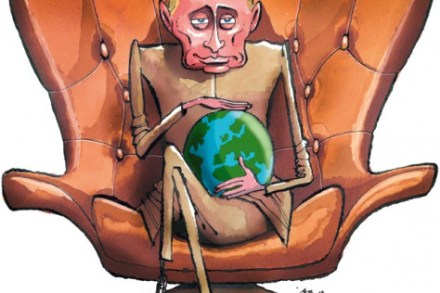
Russia, Ukraine, the European Union and the United States will meet in Geneva later today in order to find a solution to the confrontation in eastern Ukraine. There is not much hope of success. The Obama administration has been lowering expectations, so too the Foreign Office. Kiev’s heavy-handedness in eastern Ukraine has embarrassed the western allies; not least because the military deployment yesterday exposed Ukraine’s inherent weakness: government forces were either incapable or reluctant to enforce Kiev’s writ in the east of the country. There were further violent clashes overnight. Kiev says that 3 ‘Russian separatists’ were killed and 13 wounded when trying to seize a military installation on the Sea of Azov.

Foodbank statistics present problems for the coalition – and for Labour

From our UK edition

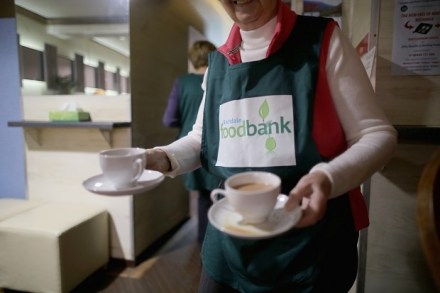
Despite the stream of very good economic news (as described by Fraser and James), you won’t catch ministers saying that the crisis in living standards is ‘over’ because there is plenty of evidence to the contrary. The Trussell Trust, the Christian charity, has today published new statistics on food bank use. The headline figure is shocking: “913,138 people received three days’ emergency food from Trussell Trust foodbanks in 2013-14 compared to 346,992 in 2012-13”. The trust says that this is merely ‘the tip of the iceberg’ because the figures do not account for other foodbank providers. There is also, the trust says, no way of estimating how many people are too ashamed to use a foodbank and prefer to go hungry instead.

Brains on a lithographic slab

From our UK edition

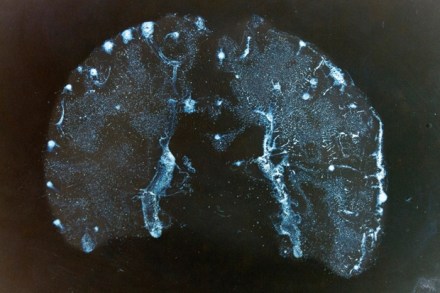
The Blyth Gallery is situated in the Sherfield Building, deep in the South Kensington campus of Imperial College London. The Sherfield Building is a labyrinth of concrete, linoleum and glass. Its atmosphere is oppressively institutional. You walk around to the percussion of slamming fire doors and the click-clock of unseen footsteps. The air carries the faint scent of yesterday’s boiled vegetables. It’s an unprepossessing place. The gallery is up on the fifth floor, in an anteroom between the lobby outside the central lifts and the Seminar and Learning Centre. There is no natural light. The floor is bare. The walls are white. A partition splits the room in half.

Nigel Farage faces down ‘Establishment’ plot

From our UK edition

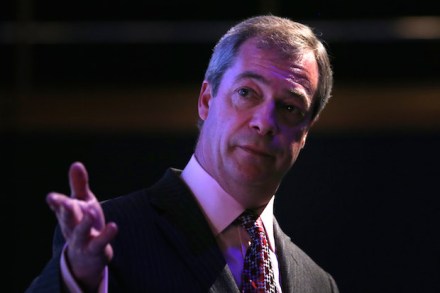
This morning's edition of The Times reported (£) that Nigel Farage could face a probe into claims, apparently lodged by a former UKIP official, that nearly £60,000 of ‘missing’ European Union funds have been paid into his personal bank account. Mr Farage denies the allegations in strong terms and has invited EU officials to examine his expenses. This is not the first time that UKIP has faced allegations about fiddled expenses. Yet none of the mud has stuck. There are two reasons for this: nothing has been proved and few people appear to understand how the European parliamentary expenses system works (there is, for example, a less than clear distinction between expenses and allowances).

Will Philip Hammond challenge the SNP’s conceits?

From our UK edition

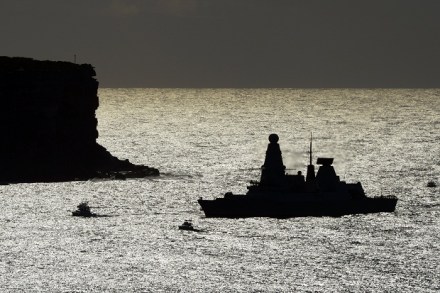
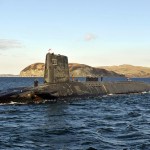
First Sea Lord Admiral Sir George Zambellas has said, in the Telegraph, that the sum of the Royal Navy’s parts is not greater than its whole. Scottish independence, he says, would weaken the naval power of the nations of the British Isles. Sir George also appeals to our shared naval history – nearly a third of Nelson’s men at Trafalgar were Scottish, the Grand Fleet was stationed at Scapa Flow and the Soviet menace was monitored from bases in Scotland. The positive, emotive arguments done, Sir George issues a warning to Scottish voters.

The potential of shale – in the fight against climate change…

From our UK edition

The United Nations’ Intergovernmental Panel on Climate Change published a report earlier this morning which contains a remarkable insight. Ottmar Edenhofer, head of the IPCC working group, told a press conference that shale gas might work as a bridge between fossil fuel dependence and renewable energy. (The report also mentions carbon capture and storage, nuclear and biofuels alongside shale as alternative energy sources.) The IPCC is not endorsing shale or rejecting renewable energy, far from it; but it is saying that shale could be a short term measure in the long-term battle against climate change.

Philip Hammond and David Mundell expose lack of political grip at heart of government

From our UK edition

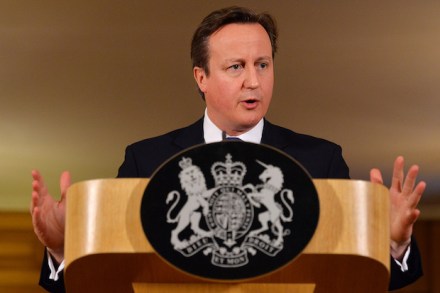
Was it Philip Hammond who told the Guardian that Britain would discuss a currency union with an independent Scotland? Fleet Street is asking that question after the Defence Secretary said: ‘There will be nothing non-negotiable; everything will be on the table... You can't go into any negotiation with things that are non-negotiable. You can go with things you intend to make your principal objectives in a negotiation and, when you have issues about which you are not prepared to be flexible, invariably you have to give way on other things in order to achieve your objectives.

Ukraine increases mistrust and misinformation between Russia and the West

From our UK edition

The tense situation in Ukraine has escalated overnight. A deadline has passed for pro-Russian agitators to vacate government buildings in eastern Ukraine or face military action. There is no indication that the agitators have retreated. Meanwhile, reports from Kiev suggest that the government is trying to raise volunteer militias – perhaps in an attempt to avoid deploying the country’s armed forces, which would antagonise Russia. Last night a special session of the UN Security Council, called by Russia, was the scene of disagreement between Russia and the western powers. Ukraine and the western powers say that Russia is behind this unrest; as Vladimir Putin tries his hand at provatskiya (as described by Anne Applebaum in the Spectator recently).

Downing Street has forgotten that its business is politics

From our UK edition

The Sunday papers resound with the sound of Tory MPs thinking aloud about how to deal with ill-discipline: principally expenses and harassment. On harassment, the Sunday Times reports the 1922 Committee is considering its own regulation plans after deciding that placing the complaints procedure in the hands of whips might lead to scandals being ‘hushed up’ because politics would win out over justice. Committee chairman Graham Brady has said: 'We have taken independent advice and had preliminary conversations with Acas [the Advisory, Conciliation and Arbitration Service] about how an appropriate grievance procedure might best be structured.' On expenses, Douglas Carswell and Zac Goldsmith make the case, yet again, for voters to be given powers of recall over MPs.

Sajid Javid’s first task is to recognise that the price of a cultural asset lies in its value as art

From our UK edition

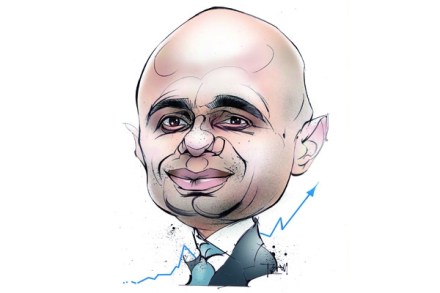
The suggestion, made by the poet Michael Rosen and others, that Sajid Javid is not sufficiently cultured to be Culture Secretary is as ludicrous as it is pompous. The secretary of state does not write poetry – even bad poetry. He decides how best to make the arts flourish, both as a source of spiritual value and revenue. Therein is a challenge – one that his predecessors have failed to meet. The nadir of Maria Miller’s lamentable ministerial career was not her recent non-apology or even the episode which saw her advisor appear to threaten a newspaper. No, it was the speech on culture in the age of austerity she gave last summer.

The art of data

From our UK edition

When you’re next waiting for a train at King’s Cross, don’t waste time window shopping on the concourse. Instead, pop round the corner to the British Library to see Beautiful Science: Picturing Data, Inspiring Insight (until 26 May). It’s not an enticing name for an exhibition, I grant you. But the show is beguiling: small, thoughtful and free. As ever with the British Library, the viewer is treated to rare historic publications. Robert Fludd’s The Great Chain of Being (1617) is particularly memorable for its depictions of the ‘tree of life’, a diagram that encapsulates what this show is about: data representation as a means of storytelling, as artful and beautiful as the finest novels and poetry in the library’s collection.

Silk vs The Good Wife

From our UK edition

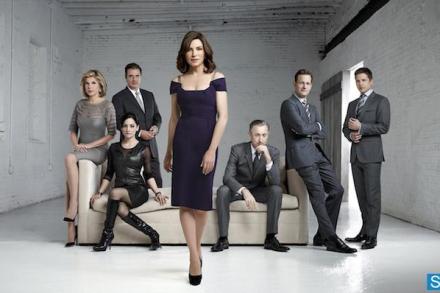
American TV drama trumps British TV drama – it’s a well-worn but unfair cliché. It’s not that British drama is necessarily bad – some of it is very good – it’s that American drama is often better. Compare and contrast Silk (BBC One) and The Good Wife (CBS/More4). Neither show is a blockbuster. Both are law/political office dramas: a staple of TV networks down the years, from the dog days of Judge John Deed all the way back to the glories of Rumpole. Viewers love the format of these wig and gown shows: a question is raised and resolved in every episode, while a wider, character-driven drama rumbles on for years. Each generation adds its own factors to the basic equation: Silk and The Good Wife are concerned primarily with female lawyers.

#ToryBingo could still benefit the Conservatives

From our UK edition

Isabel and Sebastian are right: #ToryBingo is embarrassing. The advert was crass to the point of being idiotic. The use of the word 'they' rather than 'you' to describe 'hardworking people' was sloppy. The episode has taken some of the gloss off an otherwise shiny Budget. It is, emphatically, bad PR. That said; I don't imagine that the Tories will be too displeased by the furore. #ToryBingo has given a huge amount of exposure to two Budget measures that would otherwise have been buried beneath the pension announcement: the Tories have cut tax on bingo and duty on beer.

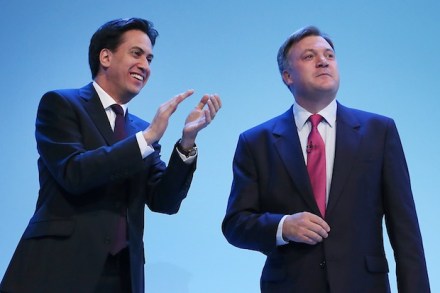
George Osborne and Ed Balls play it like it’s 2010

From our UK edition

George Osborne and Ed Balls have gone head-to-head in the media – the former in The Sun on Sunday and the latter in The Sunday Mirror. The two also appeared on the Andrew Marr Show. Neither man said anything new, at least not in terms of the grand narrative, which is scarcely surprising because the electoral cycle is at the stage where new ideas do not have time to gestate. This is especially true of the chancellor. Osborne has been under pressure to raise the threshold at which people pay the 40p rate. Osborne made it very clear to Andrew Marr that the government’s tax threshold reforms had benefited 25 million people; indeed, he spoke of his pride about this reform and reiterated that it suits 40p rate payers as well as low income earners.

Polling worries for Miliband – and for Cameron

From our UK edition

There’s been much hullaballoo this afternoon over a Populus poll that shows a Labour lead of one point. The usual caveats apply (it’s just one poll!); but, nevertheless, this sample adds to the sense that Ed Miliband is in difficulty. There is, incidentally, only 419 days to go until election day. If the Populus poll was disappointing, then this projection compiled by Stephen Fisher of Oxford University could have Miliband reaching for the scotch: ‘Forecast Election Day Seats: Con : 307 Lab : 285 LD  : 31 Con largest party, but short of a majority by 19’ A dismal prospect for Labour; but there are also worries for the Tories because they are not yet benefitting from Miliband’s malaise and the economic recovery.

George Osborne’s last chance: 40p…or childcare?

From our UK edition

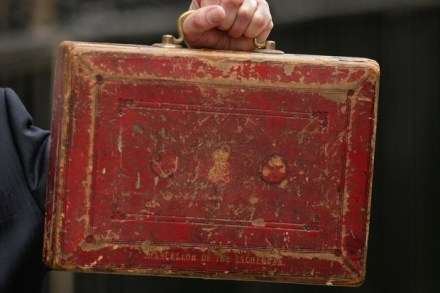
Next week’s Budget is the last chance for George Osborne to make a ‘game-changing reform’. Backbench Tories have been clamouring for Osborne to reduce the number of people paying the 40p rate - in the hope that this will secure middle class votes. Lords Lawson and Lamont have added their august voices to that camp. And UKIP joined the fray this afternoon by pledging, according to the Telegraph, to raise the 40p threshold to £45,000. Without denying that the 40p rate has become a serious issue (our own Melanie McDonagh takes a dim view of the government for having lowered the threshold), The Spectator proposes a simpler and politically more inclusive reform option: childcare.

Ed Miliband’s non-policy EU policy

From our UK edition

‘You only offer a referendum if you want to ratify your existing policy,’ a Tory veteran told me this morning while discussing Ed Miliband’s recent referendum announcement. The Tory illustrated his point with reference to the Major government’s row over a proposed referendum on the single currency. He said that the pro-European side of the argument ran from a referendum, fearing that the public would say ‘no’ to EMU. His logic was: there isn’t time to change minds during a referendum campaign, so the public backs the status quo.

Our own folly may yet lead us to a second dishonourable Yalta

From our UK edition

'He was back after less than two years’ pilgrimage in a Holy Land of illusion in the old ambiguous world, where priests were spies and gallant friends proved traitors and his country was led blundering into dishonour.' Those words are taken from Officers and Gentlemen, the second volume in Evelyn Waugh’s Sword of Honour, his trilogy about the second world war. The words describe the disillusion of the protagonist, Guy Crouchback, as Britain sides with Soviet Russia to defeat Hitler: an alliance with an atheist tyranny to defeat an atheist tyranny, an alliance that led to the betrayal – perhaps necessary – of Eastern Europe at Yalta.

Crimea, Russia and the power of ‘provokatsiya’

From our UK edition

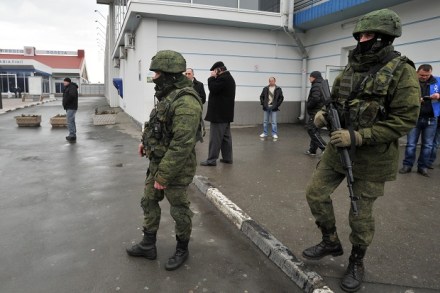
What to make of the appearance at two airports in Crimea of armed men wearing uniforms without insignia? The airports are strategically placed – Belbek near Sevastopol, and the main airport outside Simferopol, the regional capital. Obviously, an airport is a vital piece of local infrastructure that provides an entry point for reinforcement and supply; their possible seizure by unidentified troops is a very serious business. Authorities in Crimea insist that the armed personnel belong to the Russian Black Sea fleet, and that this is a ‘military invasion and occupation’.