David Blackburn

Take a look at John Maynard Keynes’s armchair

From our UK edition

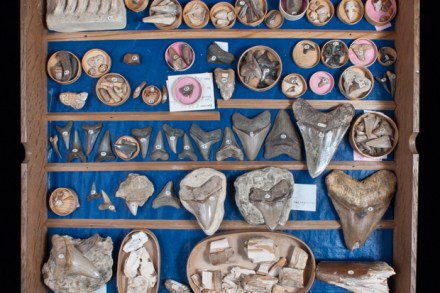
Discoveries: Art, Science and Exploration at Two Temple Place (until 27 April) is like a giant cabinet of curiosities. Maps, gizmos and memorabilia are spread across two floors of this glorious high-Victorian building on the Embankment. There are drawings from doomed polar expeditions, bones and teeth of fish from the Woodwardian Collection (see above), early botanical diagrams, hoards of medieval gold, the loot of empire (the Sufi snakes-and-ladders board in ebony and mother-of-pearl is memorable) and John Maynard Keynes’s armchair. The exhibits are drawn from the eight museums of the University of Cambridge. Much is made of the fact that this is the first time the university’s museums have collaborated — not bad for an institution that is 800 years old.

Golf in the Algarve

From our UK edition

My second tee shot soared high and straight, then hurtled down towards the lake; a repeat of my first. I didn’t hear the disheartening plop this time because the breeze had shifted and now moved loudly through the pines that surrounded us. ‘Keep buggering on,’ said my old man, cheerfully. This course, Quinta do Lago South, was much too hard for us, so no shame in failure. I looked again at the 15th green. It was not much larger than a postage stamp, with water to the front and treacherous ground to the rear. ‘KBO,’ the old man repeated as my third ball followed its forebears into the deep. The Algarve is a dangerous place for occasional golfers. The heat, so pleasant on the outward nine holes, begins to sap one’s strength by the tenth.

Why is there no God in the British Library’s latest exhibition?   

From our UK edition

Georgians Revealed: Life, Style and the Making of Modern Britain at the British Library (until 11 March) would have you believe that the religious life was not a feature of Georgian Britain. God is an invisible force in this exhibition and the viewer has to know a fair amount about the period’s history to see Him at work among the exhibits. Josiah Wedgwood’s famous anti-slavery medallion is shown; but there is nothing about the non-conformist religious tradition that inspired him and other abolitionists. The decision to ignore that religious past means that the viewer cannot learn about the century-long tension between the established Church of England and the other protestant churches; the resolution of which helped to form the basis of our tolerant, liberal society.

How I felt when I stepped inside the Hadron Collider

From our UK edition

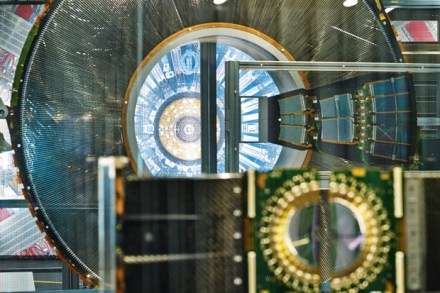
I have a new party piece. I can explain, with a degree of clarity and precision, how the Hadron Collider at Cern works and what it is looking for. I can’t claim credit for this feat of exposition myself; as any science teacher who had the misfortune to encounter me at school would testify. I owe everything to Collider: step inside the world’s greatest experiment, an exhibition at the Science Museum (until 6 May 2014). Collider shows how the contents of a cylinder of hydrogen and 27 kilometres of magnetic subterranean tubes are changing humanity’s understanding of life, the universe and everything. Why is gravity so weak that even you or I can defy its laws with our puny muscles? Are there more than three dimensions?

Does Libya need a lesson in devolved government?

From our UK edition

Recent news from Libya has not inspired confidence. Terrorism, riots, murder, a temporarily kidnapped prime minster, oil stuck at export terminals – it’s a dispiriting litany of apparently unconnected events. Yet careful study of the region’s history and the aftermath of the uprisings against Colonel Gaddafi suggest that peripheral forces in Libya are, as they often do, resisting impositions from the centre. That is the central thesis of a collection of essays The 2011 Libyan Uprisings and the Struggle for the Post-Qadafi Future, edited by Jason Pack of Cambridge University. Pack & Co argue that the Libyan uprising was not homogenous.

Did slavery never go away?

From our UK edition

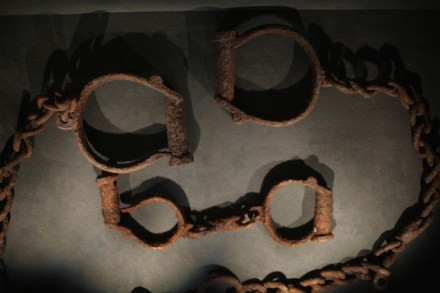
There is blanket media coverage of ‘London’s shame’ – the news of the escape of three women who had been held as slaves in Lambeth for 30 years. The women were trapped in domestic servitude, which means that there is no sexual dimension to the crime. I suppose we be must thankful for small mercies; but, as everyone is right to say, a slave is a slave is a slave. Indeed, the incarcerators allowed their captives to leave the house from time to time, which implies that the slaves were controlled by psychology rather than shackles. It's a sickening thought because it's difficult for charity workers, law enforcement and ordinary members of the public to recognise servitude that exists in plain sight.

Mass destruction in an age of mass media

From our UK edition

Catalyst: Contemporary Art and War at the Imperial War Museum North (until 23 February) is alone worth a trip to Manchester. The exhibition shows how artists living in the age of mass media have explored conflict in the age of mass destruction. The most successful works are not those that ‘make a statement’ but those which address the viewer, usually by embarrassing their indifference and inspiring empathy. Taysir Batniji’s ‘Gaza Homes’ is a set of mock estate agents’ particulars for bomb-damaged houses. Captions about ‘well appointed’ rooms, ‘airy living space’ and ‘beach access’ are a joke in bad taste.

Hurrah for Andrew Strauss

From our UK edition

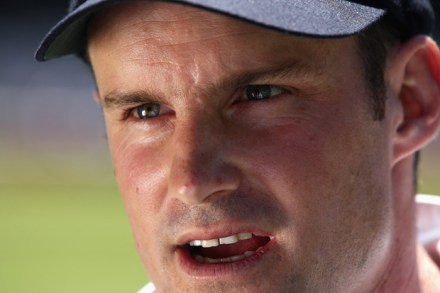
Andrew Strauss is a serious man and Driving Ambition (Hodder, £20, Spectator Bookshop, £18) is a serious book. It looks like most other sporting autobiographies: there are heroes, jokes and solecisms aplenty. Yet it is also the Bildungsroman of a determined bloke making the most of his talents. Strauss rejects the truism ‘You make your own luck’; but in his case, I’m not convinced. He matured as an adolescent when his contract with Middlesex County Cricket Club was threatened. Then he conquered mental frailty to make a career-saving century for England against New Zealand in 2008. There was lots of graft in between. It was his personality principally that turned the England team from a demoralised rabble in 2009 into an irresistible host by 2010.

Philip Hammond sees off John Baron’s Army Reserve amendment

From our UK edition

The debate on the Defence Reform Bill extended far beyond the proposed amendments. There was much discussion about the future of the armed forces, both regular and reserve. But these digressions into strategy masked a fierce political battle, which the Defence Secretary Philip Hammond won thanks to a masterly performance at the Dispatch Box. The Defence Reform Bill aims to increase the strength of the Army Reserve (AKA the Territorial Army) from 19,000 to 30,000 by 2018 in order to cover personnel cuts to the regular army, the strength of which is to fall to 82,000. 25 Tory MPs signed an amendment tabled by John Baron (Conservative, Basildon and Billericay).

Labour’s welfare worries exposed by one cheeky headline. The Tories should exploit this

From our UK edition

The Telegraph carries a story under the title ‘Labour: We'll scrap benefits for under 25s’. This has sent Labour supporters into mild panic. The party’s welfare spokesman, Rachel Reeves has said: ‘This is not and will not be our policy.’ ‘It’s not our plan.’ ‘It is totally not my position!’ Mark Ferguson, editor of Labour List, the grassroots website, says: ‘That all sounds pretty clear to me.’ While George Eaton of the New Statesman, who is close to the Labour leadership, has made some calls, and concluded: ‘Is Labour planning to scrap benefits for under-25s? [T]here is a definitive answer: no.’ So there you have it.

Tory rebels and government are fighting yesterday’s wars

From our UK edition

Philip Hammond, the defence secretary, has a battle on his hands. 20 or so Tory MPs have signed John Baron’s amendment to the Defence Reform Bill. The bill aims to increase the strength of the Army Reserve (what you and I know affectionately as the Territorial Army) from 19,000 to 30,000 by 2018 in order to make up for personnel cuts to the regular army, the strength of which is to fall to 82,000. The Tory rebels worry that missed recruitment targets and rising costs prove that the plan is in trouble. As one of them puts it to Coffee House, 'Recruiting is in chaos. CAPITA has failed in the out-sourcing and no one is joining the Reserves. [Government] needs to answer what will happen if the 30,000 reserves don't materialise?

After Mid-Staffs, the NHS needs whistleblowers – and whistleblowers need protection from the public

From our UK edition

It is impossible, I would have thought, to have heard Debbie Hazledine’s account on the Today programme of her late mother’s mistreatment at Mid Staffs Hospital and not to have thought ill of the hospital in question. An institution in which such callousness thrived for so long must have few friends left, you might imagine. And yet the strangest thing about the Mid Staffs scandal is the defensive feeling it has inspired. The ‘Save Mid Staffs’ campaign has been vocal at points, while Julie Bailey, the Mid Staffs whistleblower, appears to have been persecuted. In front of this backdrop, a debate about what should happen to wards in failing hospitals has morphed into a full-on slanging match about the future of the NHS.

Free Enterprise Group tells George Osborne: ‘Don’t play safe’

From our UK edition

The Chancellor’s Autumn Statement is looming on the horizon, and the Free Enterprise Group, the loose alliance of backbench Tory MPs, laid out its proposed economic reforms at the Institute for Economic Affairs earlier today. The group sees the economic recovery as an opportunity to address some of the underlying challenges in the British economy before the general election. The group urged the Chancellor not to play safe, and proposed seven stimulatory tax cuts to benefit those on low and middle incomes: the so-called ‘squeezed middle’. 1). Create a single VAT rate of 15% – revenue neutral (Kwasi Kwarteng) 2). Move the majority of the cost of green levies onto general taxation with the aim of abolishing those taxes in the long run - £2.

Denis MacShane pleads guilty to expenses fraud

From our UK edition

The expenses continues to cast a long shadow. Denis MacShane entered a guilty plea at the Old Bailey this morning. As the Press Association reports: 'The ex-MP admitted false accounting by putting in fake receipts for £12,900 of "research and translation" services. He used the money to fund trips to Europe, including to judge a literary competition in Paris.' MacShane will be sentenced on 19 December, and he has been granted unconditional bail. All sentencing options remain open to the court. MacShane says that he did not profit personally from the claims; but concedes that he made a 'grotesque mistake'.

David Cameron’s crackdown on child porn is not over yet

From our UK edition

Parliament returns from a three day break today, but the headlines this morning are dominated by the international crackdown on online images of child abuse on the 'dark internet'. Technology companies have made significant progress since July, when David Cameron urged them to do more to eradicate these ‘depraved and disgusting’ images. For example, 200 employees of Google have been targeting 100,000 search terms in order to locate pictures of child pornography. YouTube engineers have found a way to identify videos created by and for paedophiles, and Google and Microsoft have been collaborating to identify pictures of child pornography.

Nick Clegg’s mantra: You can’t trust Labour or the Tories ‘on their own’

From our UK edition

‘On their own’ – those are  Nick Clegg’s watchwords for the 2015 election. His speech on the economy last week was spun as ‘one of his strongest attacks ever on the Labour Party’; but, while Clegg certainly did say that Labour would seriously damage your wealth, he remembered his mantra: 'So don’t be fooled again: you cannot afford Labour. Let loose in government on their own they would wreck the recovery – costing jobs, driving up interest rates and undermining the growth needed to cut tax bills and fund public services. They cannot be allowed to undo all of the sacrifices that have been made and everything that has been achieved – the British people would pay the price.

Sachin Tendulkar is among the very greatest sportsmen, but heroes are made to be surpassed

From our UK edition

It was the sort of summer’s day that makes you glad to be alive; but we were watching the telly. We would not normally do this. If the weather was fine, we would play games of catch on the lawn: my 4-year-old self hurling any object that came to hand at my 78-year-old grandfather. The old man would leap about for my amusement, often careering into my parents’ sacred flower beds. He would pooh-pooh my father’s concerns about the wisdom of these exertions, and ignore my grandmother’s distress over the ruin of ‘yet another pair of trousers’. My delight would urge him to even greater theatrics when their backs were turned.

The return of the family doctor?

From our UK edition

Ministers have described the deal on GP contracts, negotiated by the government and the British Medical Association (BMA), as a return to the days when GPs were family doctors. Certainly, it is a step in that direction. The contract, which will come into force next April, revives the personal link between doctor and patients aged 75 or over, and makes GPs responsible for out of hours care.