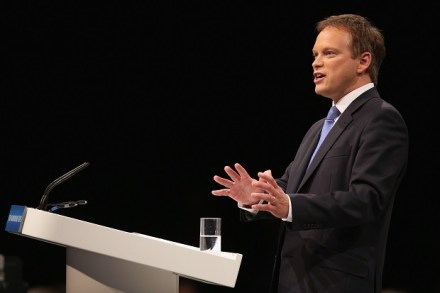
Nicky Morgan and Tristram Hunt respond to the ‘Trojan horse’ schools report
From our UK edition
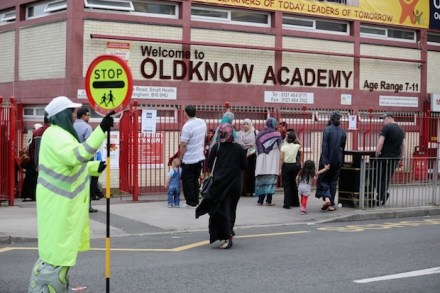
Nicky Morgan described the findings of Peter Clarke’s report into the Birmingham schools scandal as ‘disturbing’, and laid out how she plans to respond.
From our UK edition
Nicky Morgan described the findings of Peter Clarke’s report into the Birmingham schools scandal as ‘disturbing’, and laid out how she plans to respond.
From our UK edition
David Cameron has made a statement to the House of Commons about the destruction of MH17 over eastern Ukraine. He was quick to say that even those who shot down flight MH17 would not have intended to commit such an atrocity. But, nevertheless, he excoriated Russia. 'A conflict that could have been curtailed by Moscow has instead been fomented by Moscow,' he said. He went on say that there is evidence that Russian weapons have found their way into the hands of pro-Russian separatists in Ukraine.


From our UK edition
Nicky Morgan came to parliament today to praise Michael Gove, not to bury him: 'It is a privilege,' she said, 'to follow him in this role.' Her first outing as Education Secretary was an unqualified success. She plodded amiably where Michael Gove had dazzled; but, nonetheless, she was effective. The Opposition launched a well-orchestrated attack on the issue of childcare costs and availability. Morgan repelled it with ease using a selection of statistics, studies and policy initiatives. She also sought to empathise with working parents.

From our UK edition
George Osborne has been in retail mode this morning, selling his pension reforms and explaining how pensioners can unlock their life’s savings. The Chancellor has said that the Treasury will work with the Citizen’s Advice Bureau, Age UK and other organisations to provide pensioners with the best possible impartial guidance to transform their retirement. Interested parties can consult the Treasury for more details. listen to ‘Osborne: Russia sanctions would be an 'economic hit' for the UK’ on Audioboo Osborne went on to add that this was what the pension reforms are ‘all about’.
From our UK edition
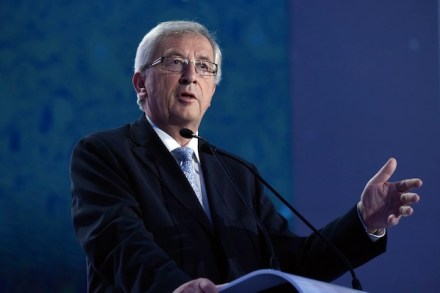
Jean-Claude Juncker delivered a speech to the European Parliament this morning. Its content was, from the British government’s perspective, provocative. Juncker had one watchword: integration: and a clear idea of how to achieve it. He expressed belief in: Tax harmonisation (especially on corporate tax rates) Integration of capital markets Energy integration and the diversification of energy supply 300bn euros extra spending and a commitment to the 'social market' A financial transaction tax No new member states for 5 years (how about that, Mr Salmond?) The euro as a unifying force across Europe Freedom of movement In some respects it was a slightly strange speech for Juncker, a man of the centre-right, to have given.
From our UK edition
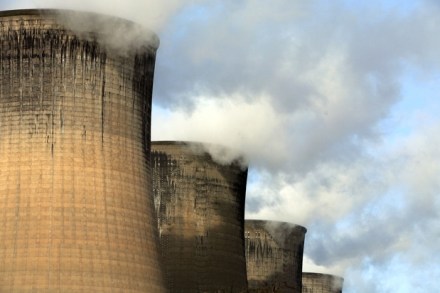
‘Energy is the single biggest issue facing Jean-Claude Juncker,’ remarked a seasoned Eurocrat to me earlier this week. Europe’s energy infrastructure is decrepit and insular. Rates of cross-border interconnection, for example, remain very low – at just 8 per cent of their production capacity on average across the union according to the FT. The Commission’s 2030 energy package aims to raise the average rate of interconnection to 15 per cent — part of a string of targets designed to complete the single market in energy. Alas, it’s going to take more than a target or two. The level of investment required is enormous (more than 1 trillion euros by the Commission’s estimate, of which only 5.8bn has been found for 2014-2020).
From our UK edition
11 p.m., Saturday 14 June. Football fans gather before the TV in anticipation of England vs Italy. There is quiet, save for the click and hiss of fresh lagers being opened. Football and beer are indivisible. The football was forgettable, and so — in most cases — was the lager. When was the last time you guzzled Carlstellabourg and were conscious of taste? You drink lager without noticing it. Craft beer is another matter. You can’t help but notice it — and not always in a good way, as a panel of eight seasoned drinkers discovered on the night of the England-Italy game. While waiting for kick-off, they worked their way through 15 British craft beers, and marked each against their ideal branded lager.

From our UK edition
‘I don’t know why energy companies invest in Britain,’ said a former energy minister to me a couple of weeks ago. He was referring to the lack of progress on shale exploration (more of which later), but he might easily have been talking about the politicisation of energy prices. In case you haven’t heard, Ofgem, the energy regulator, has written to the Big Six energy firms to ask them to explain why the fall in wholesale prices over the past 12 months has not been passed on to the consumer. Another political row has broken out, with politicians on all sides claiming that the energy market is dysfunctional. They have cause to do so.
From our UK edition
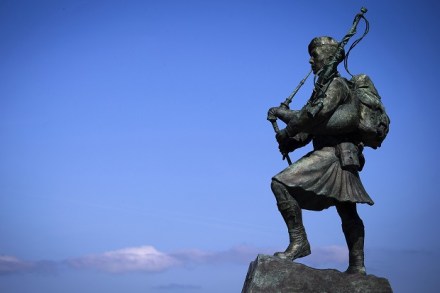
Bill Millin landed on Sword Beach as part of 1st Special Service Brigade in the second wave. He exited the landing craft, and found himself in three feet of water. Shells and mortar fire broke around him, and several machine guns traversed the water’s edge. The man next to him was shot in the face and slipped beneath the surface of the sea. Millin continued to wade towards the shore, taking care to lift his weapon above his head. His weapon was his set of bagpipes. Millin’s commander, Lord Lovat, who was commonly regarded as a ‘mad bastard’, ordered him to strike up a tune to rouse the troops. Millin inquired if he was to march up and down the battlefront, as was the tradition for pipers.
From our UK edition
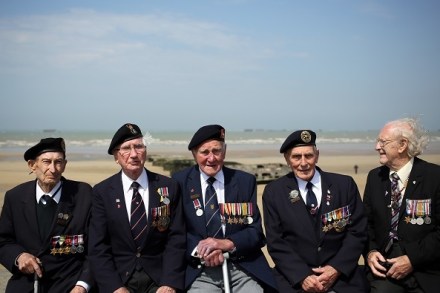
70 years have passed since, in the words of General Dwight D. Eisenhower, 'Allied naval forces, supported by strong air forces, began landing Allied armies on the northern coast of France.' Operation Overlord, or D-Day as the invasion is known to posterity, was astonishing in every sense; not least because weather conditions on 5/6th June 1944 were far from ideal to execute an amphibious landing against a well-entrenched enemy. Even military men were surprised by the comparatively light casualties (4,413 killed); many had anticipated a bloodbath. Major General Sir Frederick Barton Maurice (a retired soldier who later turned to teaching military history at the University of London) wrote in the Spectator at the end of August 1944: 'The campaign of Normandy is unique.
From our UK edition
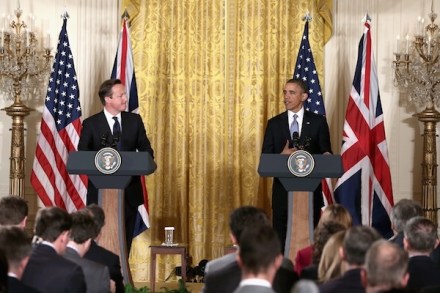
Maybe it's a special relationship after all. President Obama has given David Cameron and the Better Together campaign a rhetorical boost this afternoon. At a press conference held at the G7 in Brussels, the president said: ‘With respect to the future of the United Kingdom, obviously ultimately this is up to the people of Great Britain. ‘In the case of Scotland, there is a referendum process in place and it’s up to the people of Scotland. ‘But I would to say the United Kingdom has been an extraordinary partner to us. From the outside at least, it looks like things have worked pretty well. ‘We obviously have a deep interest in making sure one of the closest allies we will ever remains a strong, robust, united and effective partner.
From our UK edition
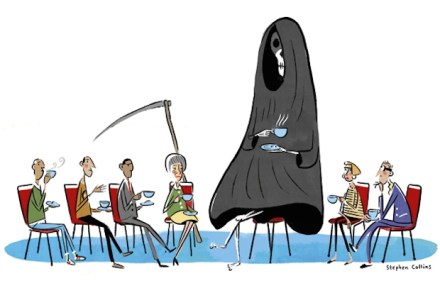
listen to ‘The Death Café’ on Audioboo Spectator readers who were listening to the Today programme this morning would have experienced the sense of déjà lu from a segment on ‘death cafés’. These events, where people talk about mortality over a macchiato and a Danish pastry, have interested Spectator writers for some time. Last July Mark Mason visited a ‘death café’ and remarked how refreshing it was to hear people use the ‘D-word’. The cafes are for taboo-breaking rather than mourning. Mark found that people had been drawn to them because society is so reluctant to talk about death, which is strange when one considers that death is life's only certainty.
From our UK edition
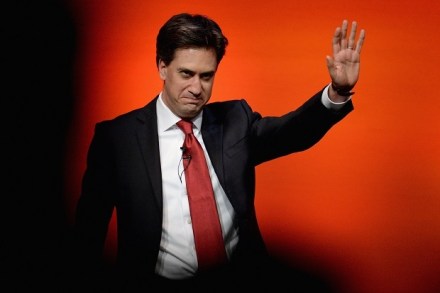
Ed Miliband visited Airbus this morning, where he gave a clear headline message on immigration: never again will Labour abandon people who are concerned about immigration. Alas, he became less clear the more he spoke. At various points in an interview with The World at One earlier this afternoon, Miliband described immigration as a “class issue”; a concern of those people who are not getting a fair chance or those who are being undercut by cheap foreign labour exploited by predatory bosses. This fits neatly into his pre-packaged narrative about the evils of the modern market economy.
From our UK edition
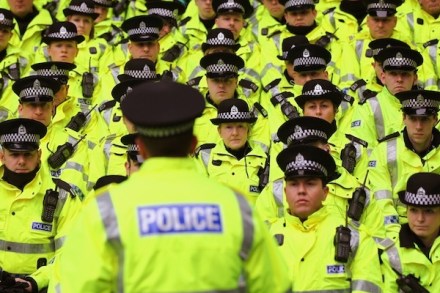
The Police Federation is in the firing line this morning, and not before time. The federation sounds like something out of Rebus. The allegations of ‘endemic’ bullying and ‘cruel and gratuitous’ acts contained in Sir David Norrington’s report, and the subsequent parliamentary inquiries, date back over at least 8 years. With delicious irony, some of those allegations have been made against the federation’s equality and anti-bullying officers. The officers dispute the claims and say that the complaints were resolved on an informal basis some years ago; but you wouldn’t bet against further investigation in this atmosphere. The central finding of these reports is that the rank and file of the police detests the “coppers’ union”.
From our UK edition
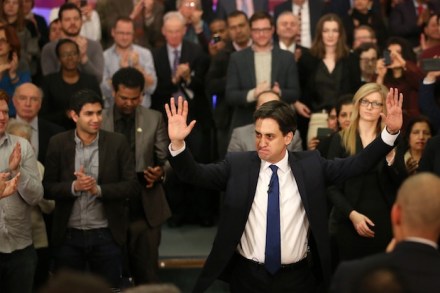
David Axelrod has parachuted into London to give Ed Miliband a ‘makeover’. Miliband needs all the foundation and blusher he can get; but a trip to the battleground in Newark might have been a more productive starting point for Axelrod: Labour’s greatest problem is its strategy, or lack of one. Newark has huge significance for the Tories – a chance to recover from their likely drubbing at the local and European elections, an opportunity to put Ukip to the sword and a way to build momentum towards next year’s general election. The party is well organised on the ground. A strong base of activists and councillors is operating out of five local campaign offices.
From our UK edition
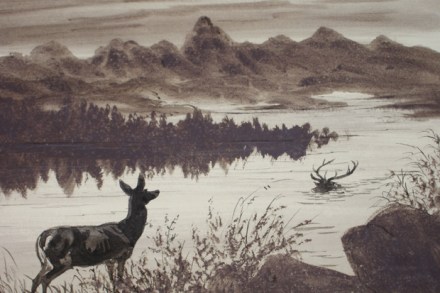
Soldier scribes are rare, soldier artists rarer still, and soldiers who can write and draw rarest of all. General Henry Hope Crealock (1831–1891) was one such polymath. He scribbled and doodled as he fought his way around Victoria’s empire. He was a decorated veteran of the Siege of Sebastapol, the Second Opium War, India and the Anglo–French march on Peking in 1860. In the Anglo–Zulu War of 1879 (Rourke’s Drift and all that) Crealock commanded First Division and sent sketches of the campaign to the Illustrated London News. His work provides an invaluable account of the history he helped to forge. After retiring in 1884, Crealock spent his declining years stalking deer in the Highlands.
From our UK edition
Rory Stewart, the colourful and interesting Tory MP, has been elected as chairman of the Defence Select Committee. Stewart is a formidable appointment. He is knowledgeable on defence and foreign policy matters: having served as a diplomat in Iraq and Afghanistan. He has written widely of his experience and insights, and has taught related subjects at Harvard University. He is well-regarded by serving soldiers, many of whom speak highly of his views on counter-insurgency and the work of his charity Turquoise Mountain Foundation. He has, however, taken his head ‘out of the mountains’ of Afghanistan – and sees that security threats have taken new forms, such as cyber security, human rights abuses and the economically unstable, densely populated coastal regions of the world.

From our UK edition
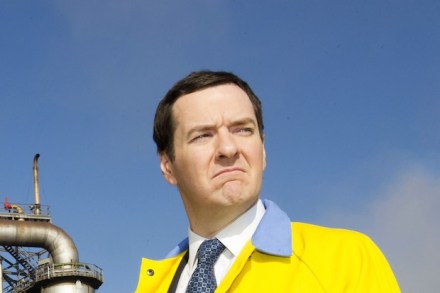
The Bank of England’s inflation report will be published later this morning, which will reveal how strong the bank believes the recovery to be. All eyes will be on its estimate of the remaining ‘slack’ in the economy, which will govern policy on interest rates. The bank’s Monetary Policy Committee has already said that the bank may have to raise rates earlier than expected if strong growth is creating inflationary pressure. City analysts appear to be working on the basis that rates will increase in the first quarter of next year; but there are rumours that the decision might have to be brought forward to the last quarter of this year, such is the speed of growth.
From our UK edition
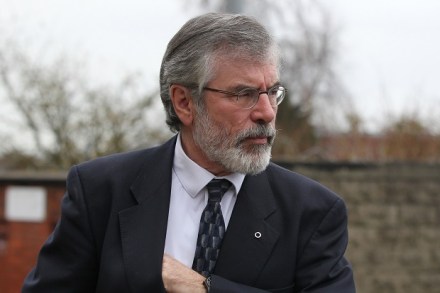
Sinn Fein President Gerry Adams presented himself to police this evening and was arrested in connection with the murder of Jean McConville. McConville was abducted from her home in Belfast by the IRA in 1972. Her body was discovered on a beach in County Louth in 2003. Adams has always denied any involvement in Mrs McConville’s death, and has frequently offered to help the Police Service Northern Ireland with their inquiries. In an official statement released this evening, Sinn Fein said: ‘Last month Gerry Adams said he was available to meet the PSNI about the Jean McConville case. That meeting is taking place this evening.’ There have been a number of other arrests in connection with the McConville case recently.
From our UK edition
listen to ‘Podcast special: Grant Shapps interview’ on Audioboo.