David Blackburn

Across the literary pages | 22 August 2011

From our UK edition

Hilary Spurling and Tatjana Soli have won the James Tait Black prize. The award is prestigious, for being decided by scholars and students of literature. Soli won for her debut novel, The Lotus Eaters, which is set during the dying moments of the Vietnam War as a group of western journalists survey the decline. The protagonist, Helen, finds herself in the country after her brother was killed in action. Helen shuns the assorted gonzos in Saigon and goes native. The book received rave reviews, notably from Janet Maslin the New York Times. Hilary Spurling, a one-time warden of this parish, won the biography prize for her book, Burying the Bones: Pearl Buck in China.


Through the gates of Tripoli

From our UK edition

After a summer of discontent, David Cameron must be counting his blessings this morning. He has broken his holiday because Colonel Gaddafi is about to fall. Rebel forces swept into Tripoli's Green Square overnight and members of the regime were captured as Gaddafi’s militia vanished into the night. Gaddafi’s son Saif al-Islam, who was being groomed as his successor, fell into rebel hands; the International Criminal Court is in touch with his captors. Another Gaddafi family is also understood to have been detained. Of the Colonel himself, though, there is no sign. Rebel forces are moving to encircle Tripoli, cutting off his line of retreat. Rebel spokesmen told the Today programme that they want to take Gaddafi alive in order to try him.

At the gates of Tripoli

From our UK edition

The end is nigh for the Mad Dog, or so reports suggest. After what Alistair Burt described as ‘substantial’ NATO bombing overnight, rebel ground forces began to lay siege to the Libyan capital this morning. According to ABC, the assault has come at three points around the capital. It was a concerted effort by all accounts, although Sky’s Alex Crawford reveals that the rebels have since retreated from Tripoli’s western gate. It’s unclear whether the decision was made out of choice or necessity. Gaddafi's splenetic outbursts of defiance continue, but the regime is visibly shaken. Backed by a montage of smiling children, Moussa Ibrahim appeared on state TV this afternoon to call for another immediate ceasefire and the withdrawal of NATO forces.

Human rights wrangle

From our UK edition

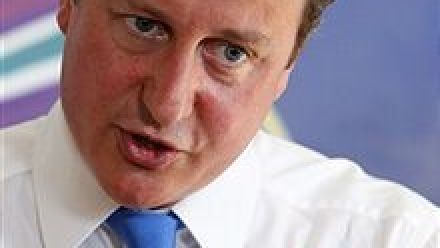
A set-to has broken out this morning over the Human Rights Act. David Cameron has declared that he is going to fight the Human Rights Act and its interpretation. Cameron writes: ‘The British people have fought and died for people’s rights to freedom and dignity but they did not fight so that people did not have to take full responsibility for their actions. So though it won’t be easy, though it will mean taking on parts of the establishment, I am determined we get a grip on the misrepresentation of human rights. We are looking at creating our own British Bill of Rights.

Blair on the riots

From our UK edition

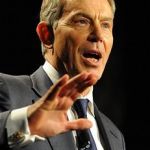
Tony Blair has dropped in to write an article on the social context to the recent riots. It’s insightful, especially as a testament of his failings in government. At the close of his premiership, he says, he’d realised that the acute social problems in Britain’s inner cities were “specific” and could not be solved with “conventional policy”. So much for ‘education, education, education’, Blair’s favoured solution was a mixture of early intervention on a family by family basis to militate against the “profoundly dysfunctional” upbringings these young people endure and a draconian response to antisocial behaviour. Alas, he was forced from office for before implementing the plan.

Tensions rise in the Middle East

From our UK edition

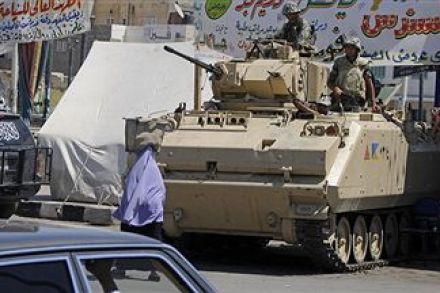
The escalating crisis in Gaza and Sinai is worrying. Egypt is to recall its ambassador to Israel after 3 security personnel were killed in confused scuffles after an Israeli bus was bombed near the Sinai border; the Israeli embassy in Cairo has also been the scene of ill-tempered demonstrations and vandalism. Israel denies responsibility for the three deaths. Meanwhile, the Egyptian army is also conducting operations against Islamist militants in the increasingly lawless Sinai desert. Finally, the Arab League has called an emergency meeting after Israel retaliated to 30 rocket attacks by launching stiff operations in Gaza.

The war on Britain’s streets

From our UK edition

Police in Birmingham have released this extraordinary footage of people firing shots at lines of police officers during the riots. As Iain Duncan Smith says in this week's magazine, the riots were a wake-up call. This video shows what looks like gangs, about three dozen of them in masks, not just trashing buildings but discharging firearms at unarmed police. The West Midlands chief constable, Chris Sims, released the footage this morning and said he believes there is a "concerted and organised attempt" to kill or injure police.

Starkey: the problem is the breakdown of national identity

From our UK edition

Public Enemy Number One, the unlikely figure of Dr David Starkey, is back in the papers; this time writing in the Telegraph to meet the cacophonous heckles that followed his appearance on Newsnight. Starkey begins with a viperous assault on Ed Miliband’s view that his comments were “disgusting and outrageous”, pointing out that black educationalists Tony Sewell and Katharine Birbalsingh broadly agree with him. Starkey then goes on to restate his position. The summer of discontent has revealed the “different patterns of integration at the top and bottom of the social scale.

From the archives – the great debt deceit

From our UK edition

The news that the national debt is even larger than it appears ties a knot in the stomach, limiting, as it does, the state’s ability to cut taxes. Andrew Tyrie has called time on the PFI bonanza, but in many ways this intervention comes too late. Back during the financial tempests in the autumn of 2008, my colleagues Peter Hoskin and Fraser Nelson revealed the scale of Gordon Brown’s deceit over PFI. The great debt deceit, Fraser Nelson and Peter Hoskin, The Spectator, 20 September 2008 A few months before the general election which brought New Labour to power, Geoffrey Robinson had David Davis to dinner in his flat overlooking Hyde Park.

Reversal of fortune in Libya, but the old questions remain

From our UK edition

There has been a dramatic turnaround in the military situation in Libya. The rebels are now within 30 miles of Tripoli and the consensus is that Colonel Gaddafi’s days are numbered. The rebels have taken the strategically vital town of Zawiyah, which lies on the road between Tunisia and Tripoli, upon which Gaddafi relies for supplies. The town’s oil refineries are also of crucial importance in this conflict. With his communications shorn, the noose appears to be tightening around the Colonel’s isolated throat. This turn of events has taken observers by surprise. Just two weeks ago, Westminster types were blithe in their assertions that the end was still far off.

Calling time on the PFI bonanza

From our UK edition

The most ostensibly boring things often turn out to be of critical importance. PFI falls into this category. The Treasury Select Committee has demanded substantial and immediate reform of the scheme. The committee's report lambasts the government for overusing PFI to keep costs off departmental balance sheets and calls for much greater transparency to ensure value for money. An estimated £67 billion is immersed in projects currently, while the Office for Budget Responsibility says that outstanding debts would add £35 billion to the already distended national debt if they were included on balance sheets. But these are only estimates conjured from the dark, which is why figures you might see in the press often vary.

A black anniversary

From our UK edition

Even after 10 years, Afghanistan still has the capacity to shock. Details of the attack on Kabul are vague, but it seems that a posse of Taliban fighters dressed in “military garb” walked into the offices of the British Council and the United Nations; three people were killed in the ensuing explosions and fire-fights between security forces and insurgents. As I write, reports suggest that one Islamist is still alive and shooting in the British Council, while other explosions have been heard across the capital this morning. Taliban spokesmen have confirmed that they had carried out the attack to mark the 92nd anniversary of Afghanistan’s independence from Britain.

The markets rout

From our UK edition

The recent rally on the markets is now the most distant memory. Stocks continued to fall today amid concerns about the European sovereign debt crisis, negligible growth figures in the developed world and cooling Asian economies. Robert Peston has an excellent account of the causes and effects of the latest rout. Banking stocks were brutalised, with Barclays and RBS both shedding more than 10 per cent of their value, with Lloyds and HSBC not far behind. Continental banking stocks were similarly mauled, with Soc Gen losing 12.34 per cent and Commerzbank being shorn of 10.42 per cent of its value. But the unease spread across exchanges as investors put their money in the safest havens.

The end of an era | 18 August 2011

From our UK edition

I entered the Harbour Bookshop in Dartmouth in search of warmth. I had been camped on Dartmoor for a couple of nights, taking part in a cadet weekend, back in the days when I believed the army might be my vocation. Dartmouth is several miles from the Dartmoor National Park and a section of 13 year old boys dreaming of being men marched off the park onto the quiet road that led to Totnes and then followed the broadening line of the river Dart to the sea. This being England in the height of summer, the rain was falling horizontally. After 10 miles or so of this relentless tempest, the boys would be men no longer. Finally, a bedraggled troop of latter day Just Williams traipsed into Dartmouth in search of warmth and teacakes.

Lambs to the slaughter

From our UK edition

Who are the forgotten victims of the economic malaise that has beset the West? Martin Vander Weyer’s business column in a recent issue of the Spectator is a lament for the middle classes. The modest fruits of their honest labour are being quietly obliterated by forces they cannot hope to resist. The piece is infused both with empathy and no small measure of anger at those responsible. Here is an extract: ‘What horrors. As I write, the FTSE 100 index has dived below 5,000 for the first time since last July, the mood of the London investment community darkened by the sense that civilisation is breaking down.

The annual A-levels helter-skelter

From our UK edition

The Gap Year has been declared dead. It’s A-levels day today, and the annual scramble for university places has been intensified ahead of next year’s tuition fees rise. According to this morning’s Times (£), the last count had 669,956 pupils sprinting after 470,000 vacancies. An estimated 50,000 students with adequate grades will not enter higher education this year as many universities have raised entry requirements to manage increased demand. This means that competition during clearance will be even more stiff than usual, particularly as universities will offer many fewer clearing places according to various surveys. Needless to say, UCAS’ website appears to have collapsed under the weight of this unparalleled interest.

Anatomy of a blockbuster

From our UK edition

Behind fashion as usual, I’ve finally read One Day, the runaway success by David Nicholls. To be honest, I was slightly underwhelmed by the time I finished it. The combination of too much hype and the excruciating plot contrivance in the closing pages left me unsatisfied – irritated even. But, I’m largely nit-picking. It’s an extraordinary achievement to have created so much public affection with a book, especially one so slight. One Day is good clean fun; it’s not Madame Bovary. Its success, I think, lies is Nicholls’ adept use of set pieces to drive both plot and character, and his brilliance with dialogue.

This isn’t just any solution; this is an M&S solution

From our UK edition

Banks and financial institutions endured a painful day’s trading, following Angela Merkel and Nicolas Sarkozy’s announcement yesterday that the Eurozone should adopt a ‘Tobin tax’, a charge on financial transactions. Once again, M&S chose piecemeal changes over the grand structural scheme desired by markets. The Tobin tax was just one proposal of three. The other two were: to create “genuine economic governance of the Eurozone” under, for the moment, EU President Herbert van Rompuy. The second: to impose a ‘Golden Rule’ on the budgets of Eurozone members. The ‘Golden Rule’ will bind national parliaments to agree to limits on national debt levels and impose statutory requirements on mastering budget deficits.

Riot sentencing row brews

From our UK edition

David Cameron promised that looters would feel the full force of the law. Courts have been sitting round the clock holding defendants on remand and issuing stern sentences. This is causing disquiet in some circles. Lib Dem MPs complain that the government has overacted, incapable of resisting the temptation to take draconian decisions without adequate scrutiny. Tessa Munt told the Guardian that the government’s approach “smacks of headline grabbing by Conservatives, not calm, rational policy-making.” Lady Hamwee also told the paper that it would be a “great pity if what [the justice secretary] Ken Clarke has been doing – finding a better way of sentencing – was to be undone.