David Blackburn

From the archives: Cowards colluding with terrorists

From our UK edition

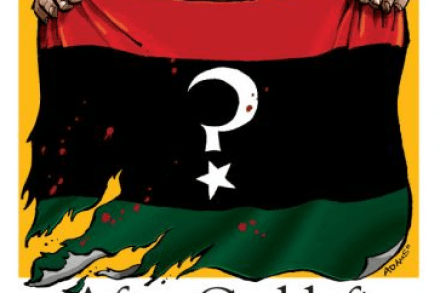
The Libyan National Transitional Council has obtained official recognition from numerous countries this week, but the African Union has refused to acknowledge it. Speaking earlier this afternoon, South African President Jacob Zuma said that ongoing fighting has created a “fluid” situation. The union also said that it wants “an all-inclusive transitional government” incorporating members of Colonel Gaddafi’s administration, which is a bizarre requirement given that so many of the NTC are former Gaddafi stooges: Chairman Jalil, for instance, was Libya's Justice Minister between 2007 and 2011.

Bernanke delays decision on QE3

From our UK edition

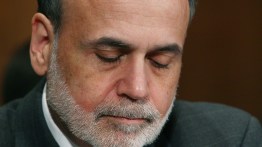
Federal Reserve Board Chairman Ben Bernanke has signalled that there will be no Quantitative Easing until next month’s Federal Open Market Committee meeting, which has been extened to two days. Markets have been anticipating Bernanke’s speech all day and many traders were expecting some discussion of further easing. But Bernanke has declined them, saying that now is not the time for these issues as the summer's economic storms continue to blow across the globe and their effects on America remain unclear. His comments came soon after the news that American growth is being downgraded to 1 per cent this year, further hitting the markets’ confidence.

Cable falls prey to a Brown trap

From our UK edition

The Telegraph carries a story that will enrage the right and unnerve businesses. Business Secretary Vince Cable has agreed to introduce a controversial EU directive to award agency workers the same rights as full time employees. This means that agency workers will be entitled to full holiday pay, maternity leave and so forth, as well as awarding temporary workers equal redundancy rights and basic pay. The Treasury hopes to raise an additional £332 million a year through taxes on higher wages, but that will depend on these regulations having a positive effect on the Labour market. Businesses say that this will dramatically increase their costs and they warn that they will have to cut jobs. With growth at a meagre 0.

Clegg paints the world yellow

From our UK edition

Nick Clegg laughed-off the dousing of blue paint he received in Glasgow yesterday, like one of Noel Edmonds’ unwitting victims. Today, Clegg has turned into the grinning douser: drenching his coalition partners in yellow paint by saying that the European Convention on Human Rights will not be watered down. Writing in the Guardian, Clegg says that the Conservatives are right to seek operational reform of the European Court of Human Rights, but the common ground ends there. He says that “the Human Rights Act and the European convention on human rights have been instrumental” in preventing injustices from council snooping to the misuse of DNA records and that the incorporation of human rights into domestic law was a “hugely positive step”.

Need Libya be another Iraq?

From our UK edition

“It’s not over yet.” That has become the government’s Libyan mantra, delivered with a tone of sombre sobriety. However, James Kirkup reports that, in private, ministers are cock-a-hoop, already dreaming of photo-ops and triumphant flyovers. You wonder what Ed Llewellyn makes of the celebrations. Allegra Stratton has written a revealing profile of David Cameron’s chief-of-staff, ‘the most powerful man you rarely hear about’. Llewellyn is a foreign policy expert, a veteran of tours in the Balkans and the Far East. Stratton says he is: ‘Discreet personally and cautious politically, he will have insisted on megaphone caution from the PM and his cabinet ministers who duly took to the airwaves.

New immigration figures

From our UK edition

The Conservative wing of this government is on a quest to reduce net migration to, in the words of David Cameron, the “tens of thousands from the hundreds of thousands”. Liberal Democrat ministers may have dragged their feet on the issue, but there are serious doubts about whether Cameron's policies will have any real effect. As Fraser revealed last week, the coalition is struggling to secure a substantial reduction in immigration, with foreign born workers continuing to fill many jobs in Britain. This poses a threat to IDS’ welfare reform plans, as well as an electoral quandary for the Tories.  New migration figures for the period from 2009 to the present have been published today.

Treasury agrees Swiss bank tax

From our UK edition

First came the Germans and then came the Brits. The UK Treasury has secured an agreement with authorities in Zurich to tax the assets of UK citizens held in Swiss banks to reduce on tax avoidance and stamp out evasion. The deal will follow the lines of that which Switzerland made with Germany last month. The FT has details: 'Taxes on future income will be withheld at a rate of 48 per cent, corresponding to the top 50 per cent rate that now applies to Britain’s highest earners. A one-off levy of between 19 and 34 per cent will be applied to all Swiss accounts held by UK residents, with the exact percentage to be determined by the size of the deposit and how long it has been maintained.

France’s rich: tax us more

From our UK edition

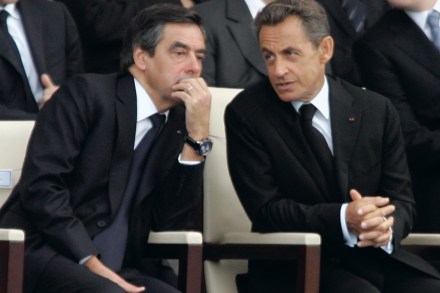
Nicolas Sarkozy and Francois Fillon are delivering emergency economic measures today, in order to ward off the ravening credit rating agencies that are questioning France's AAA rating. As a prelude to this act of political drama, a group of France’s super-rich sent a letter to the government urging it to tax them more. In the spirit of solidarity, they said, they were willing to make a “special contribution” to ensure that France’s budget deficit was brought under control. This Gallic gesture might surprise some Anglo-Saxons and it's rather touching. But it's is pre-emptive in many ways.

Mandelson and the Lib Dems’ dilemma

From our UK edition

The Prince of Darkness has made a rare foray into the light of public life. He uses an article in today's Times (£) to do a little waspish mischief about the coalition and the Liberal Democrats. He writes: ‘The Lib Dems are beginning to behave like an internal opposition. Staking out positions in the media, drawing public lines in the sand and making threatening noises when something is not to their liking is not the way to address their political problems of the past year. These led to their trouncing in the May elections and the AV referendum.

The riots, Whitehall and universality

From our UK edition

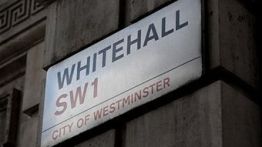
Away from the excitement of Libya and Colonel Gaddafi’s singular definition of ‘tactical retreat’, the post-riots debate continues. The government has announced that unemployed offenders will have to work a minimum 28 hours in their communities for four days per week and spend a fifth day looking for a job. This is part of the plan to bolster the Community Payback Scheme, signalled by Nick Clegg last week. Crispin Blunt, the prisons minister, has described the riots as a “one-off” and said it was vital that community sentences were sufficiently firm and constructive to “break the cycle of crime and encourage a law-abiding life.

The fallout from the DSK affair

From our UK edition

It was an eventful day in New York yesterday. The rape case against Dominique Strauss-Kahn collapsed and, soon after, an earthquake struck that corner of the States’ eastern seaboard — thankfully there have been no reported deaths and damage appears to have been light, although there were fears about the safety of an ageing nuclear plant after the tremors. Medieval chroniclers might have drawn equivalence between the two events: the natural disaster being the judgement of God on the human drama in court. DSK was the premier contender for the Socialist presidential nomination to fight the despondent Nicolas Sarkozy, a battle he might have won.

The end of Gaddafi?

From our UK edition

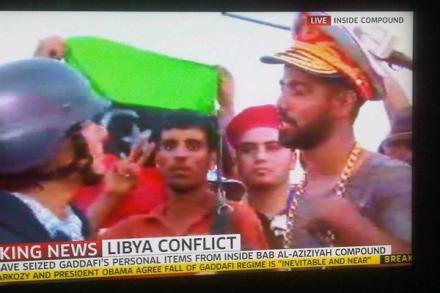
Pictures across the world's news channels currently show hundreds of Libyan rebels standing in the first perimeter of Gaddafi’s compound at Bab al Aziziya. A statute of the colonel has been pulled down, its head decapitated, and rebels are taking pot-shots at the other icons of his tyranny, including a clenched bronze fist clutching a US fighter jet. Gaddafi himself remains hidden from view, lurking perhaps in the tunnels beneath his compound or in another part of the city. He may, of course, be dead or fled, but the CIA says they suspect he is still pinned down in the country.

Going into the language

From our UK edition

The Oxford English Dictionary and the Collins Dictionary have both published their new shorter versions. A crop of words has been defined and introduced, replacing those words that are now deemed to be obsolete. This is the age of the social network. ‘Re-tweet’ has been officially recognised by both dictionaries as a noun and a verb. It has been joined by an additional definition of ‘cougar’, a noun to describe an older women seeking sex with a much younger man, and ‘Textspeak’, a noun to describe the truncations and abbreviations that are used in text messages, many of which have gone into the language: Lol, WTF, M8 and so forth, as well as the mock-Jamaican patois that has become so infamous in light of the recent riots.

A grateful nation

From our UK edition

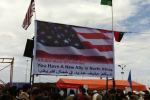
This picture from Libya is doing the rounds on the internet this morning. Italian, French and British flags are also being hoisted in Benghazi. This spontaneous display of gratitude suggests that some of the Libyan rebels won't forget who saved them from annihilation. It's something of a PR coup for NATO; a sign that there is life in the alliance and that it can still be a force for good.  On the other hand, reservations about the character of the Libyan rebels as a whole and the fragility of the present political situation remain. John R. Bradley has a piece in today's Mail, reiterating the points he made in the Spectator some time ago.

Further tension in the Eurozone

From our UK edition

The Eurozone’s political crisis is deepening. Further to the news that individual member states were seeking their own bilateral deals with Greece to insure their taxpayers’ money from default, the FT reports that disagreements are emerging over how these deals should be conducted. Holland objects that Finland’s accord with Athens relies on Greece using EU bailout funds as collateral. “The Netherlands is no supporter of this proposal,” Jan Kees de Jager, the Dutch finance minister, said. “It is not compatible with the principle of equal treatment of all euro countries.

Saif al-Islam Gaddafi: We’re winning

From our UK edition

Despite the claims of rebels and the International Criminal Court yesterday, Saif al-Islam is not in captivity, not any longer at any rate. He drove to the Rixos hotel, where western journalists and a handful of US Congressmen are incarcerated, in the early hours to give a press conference. “We’re winning,” he said in that insouciant, cultured manner of his — the effect ruined only by his unkempt beard. NATO spokesmen have been across the airwaves this morning, saying that the military situation in Tripoli is confused but the outcome of this battle is not in doubt. NATO commanders insist that they are not pursuing regime change, a claim that causes an involuntary snort of irony.

From the archives: the perils of bringing Gaddafi to trial

From our UK edition

Mustafa Abdel Jalil, the leader of the National Transitional Council, has indicated his hope that Colonel Gaddafi will be tried in Libya. But the far reaching tentacles of the International Criminal Court may claim Gaddafi from the Libyan people. Judge Richard Goldstone, former chief prosecutor at The Hague, told the BBC World Service earlier this afternoon that those who capture Gaddafi “will be under an obligation to put him on an airplane and send him to The Hague.” Meanwhile, the internationally renowned human rights lawyer Philippe Sands was less certain. He told the World Service: “It shouldn't be assumed that anyone is automatically going to The Hague…There are still a range of different possibilities.

Middle East round-up

From our UK edition

Reuters is reporting that Libyan rebels have taken control of Libyan state TV – one of the last organs to remain in Gaddafi’s hands. It’s another indication that the dictator’s position is increasingly hopeless; although it appears that one of his sons may have been ‘liberated’ by resurgent loyalist forces. So there’s a glimmer of life in the Mad Dog yet and, plainly, the fanatics will fight to the last bullet, as they promised to do at the outset of NATO’s campaign.  The sudden fixation with Libya has marginalised some other stories in the region.

Stumbling towards fiscal union

From our UK edition

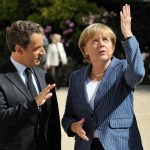
Angela Merkel must tire of repeating herself. Eurobonds are “exactly the wrong answer” to the European debt crisis, she said yesterday for the umpteenth time. She added that they would “lead us to a debt union not a stability union”, a free-for-all funded by German taxpayers. She concluded that “greater commitment” from the 27 member states of the European Union was required to stabilise the situation. Her comments would have, perhaps, placated her mutinous coalition in Germany, which is virulently opposed to Eurobonds and expensive integration.