David Blackburn

Inflation threatens safe-haven Britain

From our UK edition

Britain is in no immediate financial threat, said George Osborne in his speech to the House. It was a firm restatement of the position he established in an article for the Telegraph earlier this week. Most importantly he said, the markets look favourably on Britain’s recovering public finances and the liquidity of British banks.   Meanwhile, economic convulsions continue outside the chamber amid marked unease about France’s AAA status and the apparent global slowdown. Despite yesterday’s vote of confidence from credit rating agencies, France’s CAC 40 has fallen today (at the time of writing). Predictably, French banks and financial institutions fared worst; with Soc Gen, Credit Agricole, Axa and BNP Paribas.
Coalition united in restoring law, order and property

From our UK edition

David Cameron’s convictions are best expressed in anger. Cameron exuded an air of the patrician yesterday with his righteous moral certainty. This may have made some observers squirm, but others would have seen this seething performance as the essence of leadership in crisis. Cameron is likely to sustain this tone in parliament today. He will say that there is a “sickness” in our society and set out his plan for curing the malaise. The political class has already offered the government a panoply of options to pursue, but the coalition is expected to stand by its current course of education and welfare reform; if anything, these riots confirm their necessity.

Merkel’s quandary

From our UK edition

Storms have gathered over Angela Merkel’s summer. The FT reports that she faces a revolt in the Bundestag over the recent Greek debt deal. Some members of the Christian Democrats, her own party, and the Free Democrats, the junior partner in her governing coalition, will oppose the proposed expansion of the EFSF. Disparate political dissent has solidified around the European Central Bank’s decision to recommence buying Spanish and Italian government bonds, which will devalue sacrosanct German bonds. This is just one subject covered in a typically extensive Vanity Fair  examination of current German attitudes to politics, money and the Eurozone.

Calling all would-be editors

From our UK edition

The communications revolution has gone viral in Britain this summer. The recent riots and looting appear to have been co-ordinated by smart phones and social networking sites. Gone, it seems, are the days when hoodlums fomented insurrection with a combination of furtive messages and indiosyncratic tic-tac.      I doubt that facilitating mass disorder was quite how Steve Jobs et al envisaged their genius being used, but perhaps they will be better pleased by how their inventions are reviving the worlds of literature and academia.

London slept as violence spread across England

From our UK edition

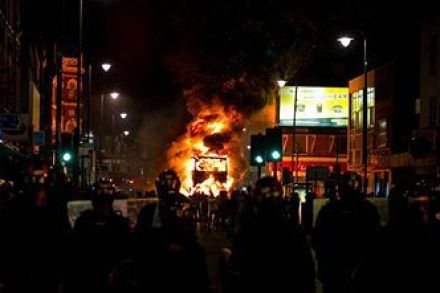
The presence of 16,000 police officers in London deterred looting, but violence spread in provincial towns across England, with tragic consequences. Riots in Birmingham left three men dead after a car ran them over; police are treating the incident as a murder. There was also disorder in Salford, Manchester, Gloucester, West Bromwich and Nottingham. Each separate incident was characterised by the same pattern of events: looting, muggings, arson and confrontation with the police. Once again, the Molotov Cocktail was a favoured weapon, and one assumes that the deprived rioters stole the expensive fuel required to make them.

Bookshops escape the looters’ mayhem

From our UK edition

This morning’s Bookseller observes that, with one or two exceptions, bookshops have escaped from being looted during the recent London riots. Independent shops and high street retailers alike remain largely unscathed; even those situated in Croydon and Hackney, where criminality was particularly acute yesterday. Electrical shops and sports clothing vendors have, of course, fared less well. The damage to retailers and tourism in London is going to be extensive, further undermining Britain’s fragile economic recovery. I will leave readers to draw their own conclusions about what all of this says about the looters and their apologists, although the video above should sway undecided minds.

Syria and Libya overshadowed by London riots as Boris comes home

From our UK edition

President Assad’s tanks are still doing murder on the streets of Syrian, but the dictator’s isolation grows. After weeks of prevarication, several Gulf States have closed ranks against the Syrian regime. Saudi Arabia, Bahrain, Jordan and Kuwait have all recalled their ambassadors from Damascus, and King Abdullah of Riyadh has led the Arab League’s condemnation of Assad’s ‘death machine’. Better late than never, the international consensus says. Compassion for the oppressed is not a familiar trait among Arabian princelings, but their reticence on this occasion was particularly surprising given that Assad’s Syria is no friend of the Arab League, preferring to side with Iran in most things.

Eurozone maintaining the status quo

From our UK edition

As Pete has noted, George Osborne has been making headlines while braving rollercoasters in California. The chancellor's view that the Eurozone must accept ‘the remorseless logic of monetary union that leads from a single currency to greater fiscal integration’ marks the moment when the British government began to campaign for a two-tier Europe, which would allow Britain to sit on the periphery of the union. No doubt a wry smile will have danced across Bill Cash’s lips, because this arrangement was first envisaged by the Maastricht rebels all those years ago.   The Eurozone, however, appears intent to remain on its current course of half measures.

Across the literary pages | 8 August 2011

From our UK edition

Might Albert Camus have been murdered by the KGB? Italian newspaper, Corriere della Sera, has details of a new theory. Here is a translation, courtesy of the Guardian. 'The theory is based on remarks by Giovanni Catelli, an Italian academic and poet, who noted that a passage in a diary written by the celebrated Czech poet and translator Jan Zábrana, and published as a book entitled Celý život, was missing from the Italian translation. In the missing paragraph, Zábrana writes: "I heard something very strange from the mouth of a man who knew lots of things and had very informed sources. According to him, the accident that had cost Albert Camus his life in 1960 was organised by Soviet spies.

An American context for UK defence cuts

From our UK edition

Yesterday’s defence select committee report provoked stern critiques of the government’s defence policy from Alex Massie and Matt Cavanagh. It is hard to dissent from Matt’s view that Cameron, Fox and Osborne will be defined to some extent by how they handle the defence brief, which, as Alex points out, also proved to be Gordon Brown's undoing.  It is also clear, as both Matt and Alex say, that the SDSR suggests that Britain is entering a period of ‘strategic shrinkage’, in terms of the size of the defence establishment at any rate. A political squall has erupted over this, but it’s worth pointing out that western countries are narrowing their military horizons.

Barroso behind the times

From our UK edition

There were rumours flying around Whitehall this morning that the EU leadership was feeling the strain from yesterday’s rise in Spanish and Italian borrowing costs. Both stand rather too close to 7 per cent for comfort, and the price of insuring against sovereign default in the two countries also soared to its highest level in two weeks. The limited progress made after the Greek deal of 21 July seems to have been undone. In fact, the problems stem from the piecemeal deal to allow Greece to selectively default. As I wrote at the time: ‘The European Central Bank has declared that it is happy to allow this and will continue to accept government bonds in the event of sovereign default.

Cable accentuates the coalition’s differences, but not without risk

From our UK edition

The Liberal Democrats are in something of a purple patch at the moment, dominating aspects of government policy in the media. Last weekend, Danny Alexander broke his usually modest mould to stand square behind the 50p rate, in contrast to Boris Johnson and George Osborne. The debate encapsulates the current vogue for the coalition partners to accentuate their differences. Today, enter Vince Cable pursued by a mansion tax. In an interview with the Telegraph, the Business Secretary concedes that the 50p rate is not a permanent fiscal instrument, but its removal (after 2015 when the income tax threshold has been raised to £10,000) will require a concession from the Conservatives.

Capital punishment to be debated in parliament?

From our UK edition

Sir George Young has graced the pages of the Daily Mail this morning, arguing that MPs cannot ignore the clamour for a debate on the death penalty, as examined in depth by Pete last weekend. The Leader of the House’s intervention is the greatest indication yet that parliament will discuss the issue for the first time since the passage of the Human Rights Act in 1998. This has not come as a bolt from the blue. A string of e-petitions will mature soon and capital punishment is expected to be near the top of the list, as it always is when the public is asked for its opinion.

Government split over policing the internet

From our UK edition

Business Secretary Vince Cable was on strident form this morning, pledging to drop controversial web-blocking from the government’s plan to tackle internet piracy. But his Conservative colleagues at the Department for Culture, Media and Sport (DCMS), Ed Vaizey and Jeremy Hunt, disagree. Ed Vaizey, the minister responsible for the creative industries, is to chair a meeting on 20th September with internet service providers, copyright holders and other stakeholders, and web-blocking is on the agenda. Originally, the government proposed blocking broadband access at addresses (both real and virtual) where illegal downloads took place.

Sickly Mubarak in court

From our UK edition

As an accompaniment to the unique photo-history of the Egyptian revolution currently being shown on the Books Blog, here is Channel 4's latest footage of the invalid Hosni Mubarak being brought to trial. This is a momentous moment in Egypt's rebirth as a nation, but one denuded of dignity if these images are anything to go by.

Moving slowly towards the future

From our UK edition

Yesterday’s leak of Vince Cable’s response to the Hargreaves report into the Digital Economy Act (DEA) set tongues wagging. The headline was as expected: ‘web-blocking’, the practice whereby copyright infringers are barred from internet access, will be dropped because it is unworkable. In line with Hargreaves’ recommendations, Cable also plans to remove restrictions on using copyright material to create parodies, which is excellent news for Downfall enthusiasts. And he will rationalise copyright law to legalise supposedly forbidden practices like copying CDs onto an i-Pod. Finally, Cable has permitted an exception from copyright for data mining for research purposes.

Going global | 2 August 2011

From our UK edition

Here’s some news that you may have missed from last week: World Book Night is to be extended to America. The American arm will be led by Carl Lennertz, currently with Harper Collins, and former head of marketing at Foyles, Julia Kingsford, is to become chief executive of the whole charity. The organisers hope that World Book Night is going to live up to its name and make the love of reading and books a global experience. The event opened in Britain earlier this year and it was an unqualified success. The spectacle of thousands of people donating 1 million books to strangers on Britain’s streets was extensively featured in newspapers and trailed heavily on BBC 2 and Radio 4. A few dissenters growled beneath the fanfare.

Pickles lands a small blow for growth

From our UK edition

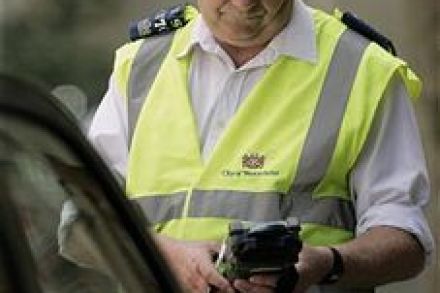
Eric Pickles’ decentralisation revolution continues, with the announcement that Whitehall is relinquishing control over car parking restrictions in town centres. From now on, town halls will decide how much space will be devoted to parking and at what price. It is hoped that this will stimulate commerce in the localities by improving the experience of high street shoppers.      This, I concede, is not the most thrilling news ever to have graced these pages. But it is quite significant nonetheless. It was understood that Pickles was unlikely to achieve this objective, due to Whitehall’s intransigence.

Petrol woes set to continue

From our UK edition

Despite small falls in petrol prices last month, the consequence of a supermarket price war according to the AA, motoring becomes ever more expensive. Political campaigns have opened as pressure builds at the pumps; and these campaigns have been co-opted by influential organs such as the Sun. The government has reacted: taking part in the International Energy Agency’s decision to release reserves onto the market to counter those members of OPEC that connive to sustain high oil prices. The government has also relaxed some of its windfall taxes on companies operating in the North Sea.