David Blackburn

The strange case of the extra £5bn

From our UK edition

Strange things are happening between Whitehall and Birmingham. After the IMF downgraded its growth forecast for Britain yesterday, the BBC reported that some government were considering spending an additional £5bn on capital projects: transport links, broadband, housing and so forth: as a stimulus to ward off possible recession. The implication was that the Liberal Democrats were in favour of changing Britain’s economic course and the Conservatives were not. Chris Huhne appeared on Newsnight and quashed the story (30 mins – 33 mins). He said he didn’t recognise the £5bn figure and said there was “no such plan”, but conceded that the government would have to be “imaginative and creative…to get growth going”.

Tories hit back at Huhne and his policies

From our UK edition

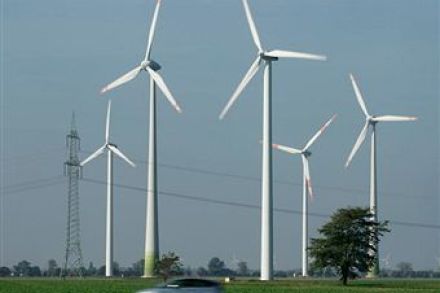
Chris Huhne can always be guaranteed to grate. Several Conservatives have cracked wry smiles at the energy secretary’s comments about the “Tory Tea Party tendency”. Mark Pritchard quipped that plenty of senior Lib Dems would soon be at leisure to throw their own tea parties and John Redwood dismissed Huhne’s cant as conference high-jinks. Redwood went on to challenge Huhne’s policies. Speaking to Sky News, he said he was “happy to hear ideas” about “promoting more competition”, pointing out that competition might reduce prices. Then he added that Huhne “has also got to understand it is his policies that are driving costs of electricity up in Britain because we are choosing to generate it in a very expensive way.

Clegg’s allies turn on Farron

From our UK edition

James wrote at the weekend, Nick Clegg's Orange Book allies fear Tim Farron, the Lib Dem President and standard bearer of the social democrat wing of the party. Yesterday, Farron said that the coalition would "end in divorce" in the months running up to the next general election. That provocative comment followed the barnstorming speech that Farron gave on Saturday, in which he labelled Nick Clegg as the "Leader of the Opposition". Quentin Letts has echoed the views of many party foot soldiers by saying that this was a leadership pitch for the future by the Party President. Unsurprisingly, the leadership has moved to quash Farron.

Clegg wants to communicate

From our UK edition

Communication, communication, communication: that appears to be Nick Clegg's new political mantra. Speaking to the Today programme earlier this morning, the Lib Dem leader said: "If there is a legitimate criticism to be made of our government, it is that we haven't articulated that there are things we can do". He made the same point repeatedly during yesterday's impressive Q&A with activists: 'We need to explain, over and over again, what we have managed to achieve in power: the increased the income tax threshold, the pupil premium, the triple lock guarantee for pensioners … Above all we need to say that there is nothing progressive about being bankrupt. Have we communicated that message successfully? No, clearly not.

Italy in the firing line

From our UK edition

Markets sank into negative territory this morning, following Standand&Poor’s downgrade of Italy’s credit rating. (Although they have since recovered.) The agency cut Italy’s rating from A+/A-1+ to A/A-1; it also kept its outlook as negative. The agency’s reasoning is hardly surprising: growth is negligible, debt is unsustainable and Silvio Berlusconi’s inert government appears incapable of arresting the crisis. Frail economics and supine politics, those twinned threats to prosperity, have struck again. The implications to the Eurozone, and the world economy, are obvious. An economist in Nomura’s Sydney office told Reuters, “It only adds to the contagion risk over Greece and has encouraged the flight to safety in markets here.

Europe looms its head to threaten the coalition and the Tories

From our UK edition

The Telegraph’s splash on Europe indicates that the issue, which proved so toxic to the last Conservative government, has risen again. Writing a stern op-ed for the paper, serial rebel and anti-Cameroon Mark Pritchard calls for a referendum. This will have irritated Downing Street no end, which is understood to have hoped that the whip-sanctioned Eurosceptic grouping that has formed around George Eustice might have contained the party’s factious elements. But some disgruntled MPs on the right privately say that last week’s well attended meeting of Eustice's group turned into something of a disappointment. The insistence that an exit from the EU was off-limits for the moment was apparently met by a singular lack of enthusiasm in some quarters.

Osborne’s £12bn question

From our UK edition

The FT makes for grim reading this morning (£). The paper claims to have replicated the Office for Budget Responsibility’s methodology and it has found that the structural deficit is £12 billion larger than was thought. If this is true, and coalition ministers are scrambling to deny it, then George Osborne is unlikely to have virtually eliminated the structural deficit by the end of this parliament, his avowed aim. The strategic implications are clear: the 2015 election would become a much tougher prospect for the Conservatives, as Osborne might to struggle to present them as the party that delivered the economy from disaster. There have been clear indications that all is not well on the economic front, mainly as a result of global economic slowdown.

The Lib Dems’ war on wealth

From our UK edition

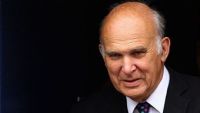
Vince Cable will address the Liberal Democrat conference later on today. Tim Farron's indulgent speech yesterday is a tough act to follow, but Cable has chosen a subject to titillate delegates: curbing high executive pay, bolstered by the popular mantra of no more reward for failure. He signalled his intention yesterday in an interview with the Sunday Times, with further details in the Guardian. The Business Secretary will try to ensure that workers and shareholders are represented at directorial level. He will also strive to diversify the membership of remuneration committees to include union reps and low grade employees.

Teather pledges to double the pupil premium

From our UK edition

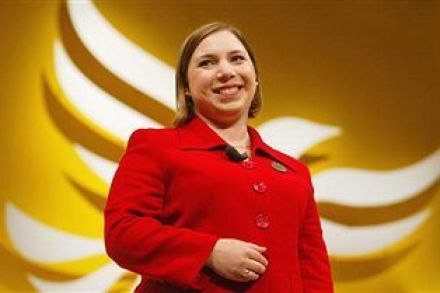
Assorted acolytes from the teaching unions are padding around the Lib Dem conference, fomenting discontent around activists who are opposed to the coalition’s adoption of academies and free schools. Officials from NASUWT and the NUT have pricked the airwaves with tales of concern and frustration. Education minister Sarah Teather addressed the conference earlier this morning and she was unrepentant. She eviscerated Labour’s record on education and, by extension, the system that has been dominated by the teaching unions. She also pledged to double the pupil premium next year to £1.25 billion, which will allow schools to increase their expenditure on tuition, parental support, after school clubs and so forth.

Clegg on Marr, a few highlights

From our UK edition

Nick Clegg was in combative mood on the Andrew Marr show earlier this morning; he railed against the press and the Daily Mail in particular. It wasn’t exactly an illuminating session, but here are some highlights: Clegg on the Mail: “Can I put this mildly? I really wouldn't believe a word you read in the Daily Mail. This is the paper that called me a Nazi. They and other papers have got a bee in their bonnet about the coalition. They come up with drivel every single day. I'm in this because I believe it's the right thing to do...I want to see us succeed in the coalition and beyond...Miriam supports me...” Clegg on his leadership: “Absolutely. I intend to serve well beyond one term. There you go. Daily Mail wrong.

Laws and Hughes spar as Danny and Vince tease the hall

From our UK edition

The two conflicting wings of the Liberal Democrats are perhaps embodied by Simon Hughes and David Laws. Their political and strategic differences have surfaced in this morning’s Observer, where Hughes gives an interview to say that the Liberal Democrats have to rein in the “ruthless” Tories, and David Laws argues in an op-ed that the “Liberal Democrats must not serve as this government’s brake, but its engine.” That tension needn’t be destructive. As Lord Rennard wrote yesterday the Lib Dem’s long-term strategy is to prove that coalitions work and the junior partner can be both a driving and tempering force on the senior partner.

The Lib Dems celebrate their achievements

From our UK edition

Sandals are being rattled in Birmingham this morning. The Liberal Democrat conference opens to a chorus celebrating the party’s achievements in government. Nick Clegg tells the Independent that “Liberal Democrat fingerprints” are all over flagship coalition policies on schools, welfare, pensions, banking reform and the NHS reforms. He says of the latter that the Liberal Democrats have tempered the Conservatives. Clegg will reiterate this point at a rally later this afternoon. Despite news that the Liberals seek an electoral accommodation with the Conservatives, senior party figures are at pains to accentuate their differences with the Tories.

Hughes implies that the 50p rate could be dropped

From our UK edition

The 50p rate is dominating the media backdrop to the Lib Dem conference. Simon Hughes has made the latest intervention, telling Sky News that the wealthy could and should be taxed in other ways if the 50p rate was “not very tax efficient”. He emphasised the importance of fairness by adding that you “don’t start (tax cuts) by taking the tax away from those who have the broadest shoulders.” Hughes’ position mirrors that of Clegg, as detailed in an interview with the Independent. This episode is a further indication that the economic arguments against the 50p rate are beginning to hold sway.

Making the NHS a battle ground

From our UK edition

Lord Rennard, the Lib Dems’ former chief executive and campaign supremo, is a frequent attendee at Westminster events. He usually makes just one point: the party’s polling may be poor, but the situation can be saved. Rennard points out that the party was delivered from disaster in 1997, thanks to targeted campaigning and a successful scheme to differentiate the party from Labour and the Tories. That campaign should be the model for the next one, which Rennard believes has already begun. He has elaborated on these ideas in the Guardian. He writes: ‘I always told candidates to think as much about the psychology of Maslow's "hierarchy of needs" as any market research.

From the archives: The doomed euro

From our UK edition

It was doomed from the start; that’s the prognosis of those who think that the single currency’s crisis is near terminal, such are its structural and political weaknesses. People warned that it could be thus when the Euro was first launched. Bruce Anderson was among them:  Had Mr Blair been braver, he could have been in on this week's euro euphoria, Bruce Anderson, The Spectator, 9 January 1999 The combined political will of 11 nations - or at least of their political elites - assured an easy birth for the euro. But the euphoria should not deceive us.

Abbas pitches for a Palestinian state

From our UK edition

As Daniel wrote this morning, the Middle East peace process has returned to the headlines. Palestinian President Abbas has called for Palestine to be granted full membership of the United Nations, adding that the Palestinians had “legitimate right” to full membership. Abbas added that he remained committed to working with Israel, but said that negotiations had reached “an impasse, a dead end due to the stubborn policies of the Israeli Government that reject commitment to reference of negotiations based on international legitimacy.” This announcement would appear to have made Britain’s diplomatic position no less uncertain. Just as before, Britain’s position will depend on the precise wording of the resolution.

Osborne: I know what it’s like to be in business

From our UK edition

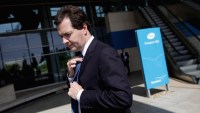
George Osborne spoke to Telegraph’s Festival of Business this morning and he gave a speech that was dominated by the issue of growth, or rather its absence. He reiterated the tax cuts and entrepreneurial relief measures first unveiled in March’s Budget. Osborne didn’t limit himself to his list of accomplishments. It was an empathetic speech. He related his memories of the “ups and downs” of his father’s business, the drapers Osborne&Little. He acknowledged the pressures of running your own enterprise in conjunction with a busy family life; a constant struggle that is exacerbated during hard times. “I know the kinds of pressure you are under,” he said.