David Blackburn

Eric’ll fix it

From our UK edition

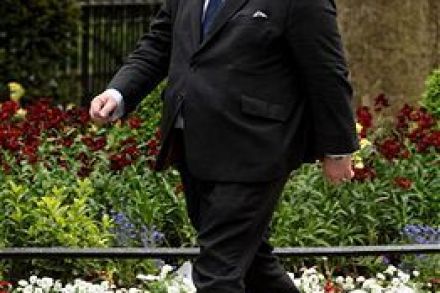
The papers report that Eric Pickles has beaten Caroline Spelman: bins will be collected on a weekly basis. Back in June, James reported how the DCLG and DEFRA were opposed to Pickles’ plan and that Spelman, who once advocated weekly collections in Opposition, had gone Whitehall native. It was a test, James said, of the government’s ability to master its civil servants. Pickles was very closely associated with the pledge and the impasse threatened to damage his burgeoning reputation in office. Now he is gloating in his hour of victory. “I may make passing reference to the scheme in my speech,” he told the Today programme in that garrulous manner of his.
Gearing up for the Tories

From our UK edition

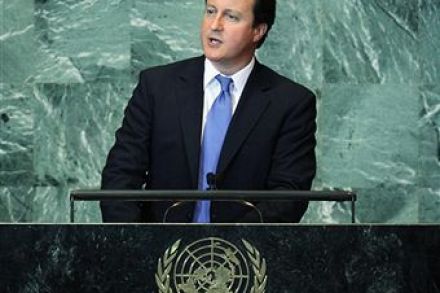
Westminster is preparing for the Tory conference and Ben Brogan reports that a confident mood pervades the blue camp. The positive briefings have begun. The Guardian reveals that the speed limit on motorways is to be raised from 70 MPH to 80 MPH. This is a victory for Transport Secretary Philip Hammond over recalcitrant forces in Whitehall and the Health and Climate Change Secretaries. The Guardian adds that several welfare announcements will be made. It’s also likely that there’ll be further initiatives relating to the riots, perhaps inspired by Labour’s concerted assault on law and order. Meanwhile, the Eurozone crisis continues. Angela Merkel passed the controversial expansion of the EFSF this morning.

Miliband’s revealing Scottish gaffe

From our UK edition

Ed Miliband can’t name the candidates for leader of the Scottish Labour Party. Miliband’s discomfort during his excruciating BBC interview is fairly amusing. But, as James Kirkup notes, the Scottish Labour Party is a serious issue. It is the only check on Alex Salmond, which makes it essential to the future of the union. And it’s important for Labour’s electoral recovery, not that you’d realise that listening to the senior party. As I revealed on Sunday, Labour shadow minister Ivan Lewis displayed extraordinary complacency about Scotland at a fringe event, implying that Labour will return to power in Holyrood as a matter of course, no effort required. Miliband’s ignorance only compounds that sense.

Clegg: Let’s stick together

From our UK edition

All eyes are on Berlin, where Angela Merkel is trying to convince her supporters in the Bundestag to vote through the expansion of the EFSF. She is expected to succeed, thanks to the votes of the social democrat opposition, which may prove to be the final nail in her political coffin. Markets in Paris and Frankfurt have made cautious gains so far  in expectation of Merkel winning the vote. Elsewhere, Nick Clegg will give a speech in Warsaw about the future of the Eurozone and the European Union. His speech has been trailed in the Guardian. He will say:  'We cannot accept arrangements that would privilege the eurozone as a decision-making body over the European council.

The guilty men’s misplaced loyalties

From our UK edition

Here's Peter Oborne in mid-season form on Newsnight last night, drawing on the book he previewed in his essential cover piece in last week's issue of the Spectator, The Guilty Men. The spokesman from the European Commission makes a statement that exposes Brussels' current helplessness, but his comment about the post-war era reveals what many pro-Europeans on the continent feel: the EU's greatest achievement is to have secured peace and prosperity across a continent that had been at war for most of the previous 1,000 years; wars that obviously assumed terrible dimensions in the 20th Century.

The paymasters’ conference

From our UK edition

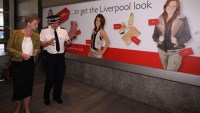
What a lot of unions there are. I walked around the exhibition stands at the Labour conference yesterday afternoon and counted 10 stalls devoted to trade unions: 10 displays out of the 72 that weren’t directly associated with the Labour Party in one of its guises. The unions' stands were unlike the ramshackle boxes of lesser campaigners that clung to the walls of the conference centre; as the pictures above and below attest, they took centre stage to match the grand baronial pavilions at a medieval fair. This tells you all you need to know about who is lobbying the Labour Party at present. Although perhaps lobbying is the wrong word, given that the Brothers’ fill roughly 85 per cent of Labour’s coffers.

Reclaiming the Big Society

From our UK edition

Yvette Cooper says no to elected police commissioners. The Shadow Home Secretary gave her speech to the Labour conference this morning and, in addition to launching an independent review into policing (which has been welcomed by senior police officers), she defined her opposition to the government's flagship police reform.  Britain can ill afford the £100 million pounds cost of elected commissioners and the reform threatens to politicise the police by concentrating power in a single person without sufficient checks and balances. From the applause in the hall, you'd have thought that the whole party was behind her. But not every delegate agrees.

The existential threat to the EU

From our UK edition

Away from the Liverpool, the Eurozone crisis continues. Market confidence appeared to be growing after European leaders sketched a debt recapitalisation deal for Greece over the weekend. Shares in deeply exposed French banks rallied for 2 days when they were assured that their losses in Greece would be covered by the expanded EFSF. But, 48 hours of gathering calm has been broken by news of a split over the fledgling debt deal (£). Domestic political pressure in Germany and Holland seems to have forced those countries to insist that private sector interests take their share of losses in Greece, a sign that these governments are reluctant to ask their taxpayers for money to sustain the single currency and, of course, bad bank debts.

What Fleet Street made of Miliband’s speech

From our UK edition

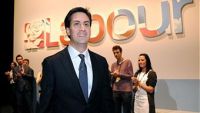
Ed Miliband has been across the airwaves this morning, explaining that the values outlined in his speech yesterday will inform Labour’s policy direction over the next four years – a statement that calls to mind a crude saying regarding Sherlock Holmes. He is doing this because most commentators agree that his speech was incoherent. Here is a selection of the reaction in this morning: The Times’ leading column (£): ‘Generally he did better with his attacks than with phrases that sought to describe his vision. His larger problem — that people have difficulty seeing him as prime minister — is unlikely to have been affected much by this performance.

Labour turns up the heat on health reform

From our UK edition

The exodus from Liverpool has begun, following Ed Miliband’s speech. This means that there will be scant coverage of the events that occur hereafter. Shadow Health Secretary John Healey recognised this and gave an interview to this morning’s Guardian in order to highlight the speech he will make tomorrow. Healey is clear, as Ed Miliband was earlier this afternoon, that the government’s NHS reforms are a costly disaster and betrayal of the British people. Healey adds that they also threaten David Cameron, who has made “promises he is now breaking”. It’s good political posturing on a ‘Home’ issue for Labour.

Labour wants to be the party of law and order

From our UK edition

Andy Coulson was right to worry about the coalition’s law and order policies: Labour is trying to outflank the government from the right. Sadiq Khan and Yvette Cooper have cut assured figures at fringe events at this year’s conference, sensing that the government’s cuts to the law and order budget will imperil one of Labour’s positive legacies: substantially reducing reported crime (by 43 per cent according to Sadiq Khan) between 1997 and 2010. A strange atmosphere pervades the law and order fringe: the name ‘Tony Blair’ is spoken of with something approaching respect and it is met with scattered applause. Blair’s memory is profane to this incarnation of the Labour Party, a grinning devil to be exorcised.

Ed’s “something for something” society

From our UK edition

Fraser’s already commented on the welfare angle of Ed Miliband’s keynote speech to the Labour party; the welfare proposals are part of a broad analytical sweep that can be reduced to the catchphrase, ‘the something for something society’. Miliband’s vision of society will reward those who work and abide by the rules at the expense of those who do not – those who loot, who fiddle expenses, those who pursue short-termism in business. According to the Guardian, he will also emphasise the importance of social mobility and equality. To that end, he will encourage universities to take more people from disadvantaged backgrounds.

Labour yet to find an answer to EU immigration

From our UK edition

Ed Balls’ choreographed apologies earlier today included the acknowledgment that “we should have adopted tougher controls on migration from Eastern Europe”. He first adopted this stance during last year’s leadership election, when he offered an undeliverable but popular objective to court the ‘Gillian Duffy tendency’, who had turned away from New Labour. What began as classic opposition politics is now the party line, with Ed Miliband telling delegates yesterday, “We got it wrong in a number of respects including understating the level of immigration from Poland, which had a big effect on people in Britain.

The green threat to growth

From our UK edition

Luciana Berger is a frequent speaker at this year's conference and her creed is simple: tax energy use to tackle climate change. But, journey along the Mersey, from the glamorous fringe events held on Liverpool’s well rejuvenated quays to the post-industrial wasteland that lies beyond and you discover a different breed of Labour MP. ‘Is the green economy a threat to growth?’ asked Ellesmere MP, Andrew Miller at a seminar earlier this afternoon.

Labour and the forces

From our UK edition

The main event at the Labour conference this morning has been a long debate on Britain's place in the world, featuring Douglas Alexander, Harriet Harman and Jim Murphy - shadow foreign secretary, shadow DfID secretary and shadow defence secretary respectively. The debate touched on liberal intervention, soft power and human rights; there was even a video message from Aung San Suu Kyi. But Murphy's extended homily on the military covenant was the centre piece of the discussion. Murphy revealed a plan to allow servicemen to join the Labour party for just £1 and he also pledged to defend the pensions of retired servicemen and their widows from cuts, saying that reducing payments was "simply wrong".

Welfare worries

From our UK edition

Away from Liverpool, the big stories of the day are the markets’ reaction to the putative Eurozone deal, which has been mixed so far, and the Telegraph’s splash about the progress of the Universal Credit, the coalition’s flagship welfare reform. The scheme is designed to simplify the benefits system and save circa £5 billion a year by reducing the scope for claims to be duplicated and errors made; it is a crucial cog in the coalition’s plan to make work pay. James Kirkup reports that the Treasury has apparently put the credit at the top of its “to watch” list of government projects that are at risk of running over schedule, over budget or failing to be launched at all.

Exploiting a conservative moment

From our UK edition

Away from the resurrection of David Miliband, other Labour modernisers convened at the Progress rally earlier this evening. These weren’t just any old party hacks; they were grandees: Douglas Alexander, Tessa Jowell, Caroline Flint, Liam Byrne and Jacqui Smith to name a few: and the audience was reverential. They were discussing The Purple Book, the latest contribution to the debate about Labour’s future. The central thesis of the book is that the state is passé. As Jowell put it, “People are much more sceptical, much more hostile to the idea of the state spending their money on their behalf.