David Blackburn

A Labour attitude to Scotland

From our UK edition

As a coda to James' post on Labour's attitude to Scotland and the Union, it's worth relating this little snippet from Ivan Lewis MP at a fringe event earlier this evening. Lewis said that, despite the SNP's current high-flying poll ratings and the need for Labour to learn lessons north of the border, "most Scots don't want independence". The upshot is that some in Labour think that the party will return to power in Scotland as a matter of course and minimal effort is required to reverse losses. Given the situation in Edinburgh, descibed so vividly by Hamish Macdonell, Lewis' complacency is quite striking.
Labour’s tuition fee gambit

From our UK edition

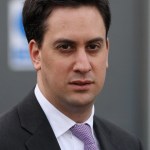
As James noted earlier this morning, Ed Miliband said that Labour may go further with its policy capping tuition fees when it reveals its manifesto later this parliament. Shadow universities minister John Denham has since said that a graduate tax remains the party's long-term aspiration. Denham's comments muddies the already dark waters on the issue: first Miliband opposed a hike in fees, now he seems to recognises that they must rise but should be capped, and at the same we're told that the aspiration is a graduate tax. Liam Byrne has added a further confusion by saying that the top 10 per cent of graduates will pay "a little more" to meet the costs of the cap.

Leadership at last?

From our UK edition

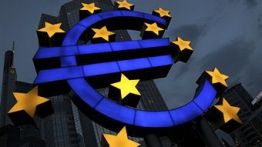
Most of today’s papers carry reports of a deal to relieve the European sovereign debt crisis. The details are varied, but it seems that 50 per cent of Greek debt will written off and the currency will be allowed to remain within the single currency. This means that banks that are exposed to Greek debt will incur potentially ruinous losses. The EFSF mechanism will probably be extended to cover those losses and guard against contagion. Estimates vary, but it seems the fund will have to increase to somewhere around 2 trillion euros if the mounting crises in Italy and Spain are to be contained. Britain's exposure remains unclear at this stage.

Labour tries to make its mark

From our UK edition

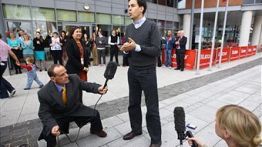
Global events may soon relegate Labour conference to the News in Brief sections of newspapers, especially as it appears that G20 finance ministers are preparing for Greece to default and for contagion to spread to other parts of the Eurozone. So, the Labour leader has wasted no time as Labour conference opens. In interviews with the Observer and the Sunday Mirror, he revives his tactic of presenting himself as an insurgent, the man to "rip up the rulebook”. He makes a pledge or two: the headline grabbing idea is a cap tuition fees at £6,000 per year, paid for by reversing a planned corporation tax cut on the hated banks.

Searching for an alternative

From our UK edition

The Labour conference has started badly for Ed Miliband, with David Blunkett criticising the party for allowing the Tories to define the national economic debate. Blunkett was concurring with shadow foreign secretary Douglas Alexander’s view that the Tories had been successful in “framing a public language that made more sense of the economic crisis”. To be fair to Miliband, he made the same point in his recent interview with the New Statesman, but he is yet to provide a coherent or credible alternative to the government’s policies. So, inquiring eyes turn on Ed Balls (and today’s Mail relates another alleged tale of his part in our economic downfall). The shadow chancellor has written an article on economic policy for the Guardian.

Medvedev clears the way for Putin

From our UK edition

President Dmitri Medvedev has named his successor: one Vladimir Putin. Reports from Moscow say that Medvedev will step aside and support the man he succeeded in elections next March. This turn of events is not particularly surprising and Putin is a certain victor: as Pavel Stroilov revealed on Coffee House last week, Putin has been practicing that singularly Russian art of eliminating the opposition. Stroilov also warned Western governments against falling into Putin’s embrace. Russia is forecast to grow very quickly in the next 30-odd years, retaining its spot in the G7 according to PwC’s recent research paper, The World in 2050.

Osborne’s dire warning

From our UK edition

This morning’s headlines are apocalyptic: “Global economy on the brink”, “Six weeks to save the Euro”, “Collective action needed now”. The unifying theme is the lack of leadership in the Eurozone: someone must grasp the nettle, say external politicians and commentators. Meanwhile, Charles Moore points out, with typical understatement, that Europe is leaderless by nature: no one is in charge and that is its tragedy. Moore doesn't mention the European President, who could, conceivably, offer direction and insist on fiscal discipline; but Herbert Van Rompuy is yet to meet that challenge. You wonder if someone of Tony Blair’s international standing might have succeeded where Van Rompuy has so far failed.

From the archives: On liberal wars

From our UK edition

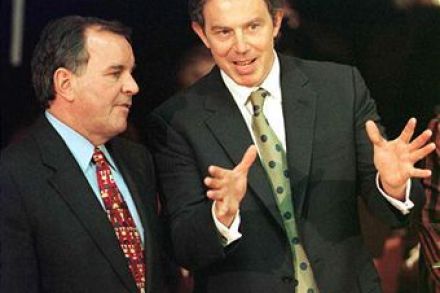
David Cameron’s speech to the United Nations yesterday was, among other things, a defence of liberal intervention. It reminded numerous observers of Tony Blair’s famous speech in Chicago in, the setting for the so-called Chicago Doctrine that guided his foreign policy thereafter. The Spectator said surprisingly little about Blair’s speech, perhaps because it wrote the following 5 days before the speech was made on 22 April 1999. End this liberal war, The Spectator, 17 April 1999 We can now see how liberals start wars, and wage them. First, they notice on television that people are being ill-treated or murdered.

Exorcising the devil…

From our UK edition

Ed Miliband is busy trying to shift both his party and the centre ground to the left. To that end, he announced his support for the Palestinian bid for statehood, which, as Martin Bright notes, was an attempt to distance himself from the legacy of Blair, and to a lesser extent Brown, by supporting a definitively left-wing cause. The British Opposition’s view on Palestinian statehood is utterly immaterial to the Middle East peace process, so the announcement was merely a presentational ruse, a reminder that Miliband is unlikely to talk about substance until Liam Byrne has published the party’s policy review later this year.

New blow to European integration

From our UK edition

A spectacular row has broken out in Europe. Bulgaria and Romania have been denied access to the Schengen area after Finland and the Netherlands vetoed their inclusion. The Romanians pre-empted the decision over the weekend by banning Dutch flower imports on the grounds that they harboured dangerous bacteria. This decision won't disrupt the continuity of European life because Bulgaria and Romania already have access to the single market; so, in this case, the Schengen rules would mainly pertain to customs checks rather than freedom of movement. But this is of enormous symbolic importance because it rejects Jean Monnet's mission of ever closer union.

Ed of many colours

From our UK edition

Philip Collins has an essential column in this morning's Times (£), as a prelude to the Labour party conference. His theme is the many colours of Ed Miliband: he has been Red Ed, Blue Ed, Purple Ed, Green Ed and doubtless there will soon be Yellow Ed. Miliband has to be just one colour. Collins writes: 'Take a bit of green, a bit of red, a bit of blue, a bit of yellow and a bit of purple, mix them all up in a big splodge and what do you get? You get Brown.' The spectre of Brown evidently looms large in the minds of men like Collins, for whom the New Labour cap still fits (£).

Corporatism, comms and civil servants

From our UK edition

David Cameron renewed his calls for global action for growth last night and it seems that the work begins at home. The Times reports (£) that 50 of Britain’s largest companies will be given direct access to ministers and officials. Corporate bodies will be designated an “account director”, who, despite what that title might suggest, is a cabinet minister rather than a junior advertising exec. The scheme is not yet finalised, but it seems that the labour will be divided thus: ‘Vince Cable, the Business Secretary, will act as what officials are calling “an account director” to Britain’s oil and gas giants Shell, BP and BG.

Cameron’s foreign frustrations

From our UK edition

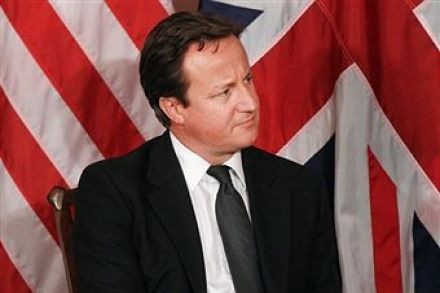
David Cameron’s much trailed speech to the UN is tinged with frustration. He will say, “You can sign every human rights declaration in the world but if you stand by and watch people being slaughtered in their own country, when you could act then what are those signatures really worth? The UN has to show that we can be – not just united in condemnation, but – united in action acting in a way that lives up to the UNs founding principles and meets the needs of people everywhere." That seems to be a fairly thinly veiled reference to the global community’s indifference to oppression in Syria.

Ed’s opportunity

From our UK edition

Ed Miliband is the man to rip up the rulebook. He uses the phrase half a dozen times in an interview with the New Statesman. Ever since the phone hacking saga climaxed in July, Miliband has been busy posing as an insurgent against the Establishment; the politician who refused to fawn to Rupert Murdoch. His version of events is utterly specious: he was happily quaffing News International’s champagne at the beginning of the summer. But that is immaterial. Miliband has recognised an opportunity to redefine his faltering leadership. Despite his stern rhetoric, Miliband says very little about policy to the Statesman beyond promises of a VAT cut and a few other baubles. A separate interview with Progress is equally devoid of concrete policies.

Battling it out over Brown’s legacy

From our UK edition

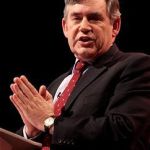
Gordon Brown is back in the news this morning, or rather his legacy of debt is (an issue examined in depth by Pete and Fraser in 2008). The disastrous £12.7 billion NHS computer project is to be scrapped and, more important than that, the Telegraph reports that the care budgets at 60 hospitals are being squeezed by the costs of repaying PFI contracts totalling more than £5.4 billion. Andrew Lansley has taken to the airwaves to explain that Labour left the NHS with an “enormous legacy of debt”; he was keen to point out that no hospitals were built under PFI before 1997, so that there was no doubt where blame should be apportioned.

What Clegg failed to mention

From our UK edition

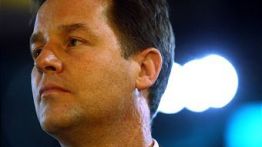
Nick Clegg’s speech will be remembered for its visceral attack on Labour. But it was remarkable for other reasons, notably for what he neglected to say. Clegg said next to nothing about his government’s flagship education and welfare reforms. Only the increase in the pupil premium budget received a mention, as did the new ambition to send “at risk” children to a two week summer camp. This oversight was odd, especially for a leader who talks so much about social mobility.

The Lib Dems warn the Tories over Europe

From our UK edition

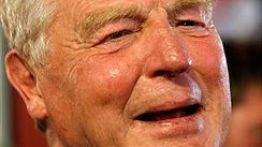
The Lib Dems have just had a brief Q&A on foreign affairs. Paddy Ashdown and defence minister Nick Harvey gave staunch their support to the Afghan Mission, but confessed to having misgivings. Ashdown described the Bush administration's strategy as an "absolute model of how not to intervene, both militarily and politically". This failure, Ashdown said, ensured that a "victor's peace" is now beyond NATO's grasp. Harvey admitted that NATO's political progress in Afghanistan remained "very slow" despite ISAF's recent military success; this is scarcely surprising given the litany of bombings and assassinations over the course of the summer. The debate touched on the need to forge new trade relationships and Britain's role as an "aid super power".

Clegg’s chance to lead by example

From our UK edition

Nick Clegg will deliver his keynote speech to the Liberal Democrat conference later this afternoon. It has been substantially trailed this morning, despite competing for airtime with Nick Robinson's story about the injection of an extra £5 billion of capital spending into the economy. Similarly to Monday's Q&A with activists, Clegg is expected to defend the government's deficit reduction plan and insist that Britain can resist dire global economic trends. It remains to be seen whether Clegg will concentrate on the rest of the government's programme, especially its radical public service reforms. There is some concern in pro-government circles that he will not.