David Blackburn

What did Fleet Street make of Cameron’s speech?

From our UK edition

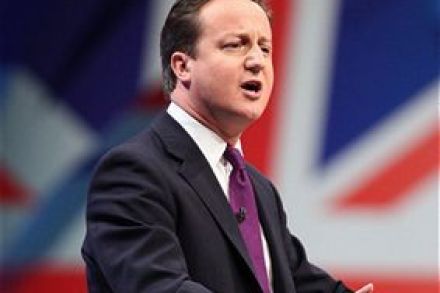
Not a lot is the short answer. Many commentators argue that the speech failed to match the gravity of this moment in time; that it was safe; that it was not prime ministerial. Steve Richards believes that Cameron was timid, choosing to reassure rather than challenge. He writes: ‘Yesterday in his address David Cameron did Ed Miliband an unlikely favour. He made Miliband's seem deeper and substantial. The Labour leader's address last week was poorly structured and delivered, yet compared with Cameron's it had an argument and was at least an attempt to address the scale of tumultuous change sweeping across Britain.
Liam Fox plays his hits

From our UK edition

The party faithful (and lobbyists) have their favourites. The conference hall rose in applause when Liam Fox sat down, having delivered his speech. This might have been a tricky engagement for Fox, who is overseeing substantial cuts to the defence budget, which might, conceivably, have angered activists. He has also been under pressure from Jim Murphy, who is described by some in government as the opposition’s ablest shadow minister. Fox, however, prevailed by giving a true blue speech aimed squarely at the audience in the hall.  The gruelling strategic defence review was necessary, he said, because deficits threaten national security – a line he’s used before.

Cameron wants to offer the “right” leadership

From our UK edition

As flat as flat champagne — that’s the verdict on this year’s Tory conference, which is ironic given that the two year ban on champagne was lifted this year. Bruce Anderson argues that the dour atmosphere is intentional. These are serious times for sombre politics, not the frivolity occasioned by a conference at a seaside resort. David Cameron’s first objective, Bruce says, is to reassure the country and present himself as a leader for a crisis. Cameron’s conference speech has been widely trailed by most news outlets this morning. Tim Montgomerie has a comprehensive overview of the speech. Cameron’s first challenge is to emote: these are "anxious times” for ordinary people, he will say.

Grieve tucks into May

From our UK edition

A fringe debate on the Human Rights Act hosted by the Tory Reform Group might not have been a crowd puller. But yesterday’s feline foul-up and the presence of Attorney General Dominic Grieve, a firm advocate of human rights, ensured the event was a sell-out. If Grieve had been advised against deepening internal animosity on the 'cat flap' furore, he ignored the direction. The TRG’s Egremont blog quotes Grieve as saying: "We need to have a rational debate. We must be more productive than just going for the ‘meow’ factor." Then he added: “The judicial interpretation and case workload of the European Court ought to be a concern for the UK and other European countries.

The Tory split over the ECHR

From our UK edition

Ken Clarke is speaking at a Daily Telegraph fringe event and he was quick to play a few of his favourite European games in response to Theresa May’s assault on the Human Rights Act and the European Court of Human Rights. Nick Watt reports that Clarke claims May did not brief of her examples of the HRA being abused. And he cast doubt on their veracity: according to Lucy Manning, Clarke jovially challenged May to substantiate her claim that a criminal was not deported on human rights grounds because they happened to own a cat. This may seem like fun and games, but it reveals the tension over the HRA and the ECHR that exists within the Tory party, in addition to that which dominates the coalition.

The human rights smokescreen

From our UK edition

Today’s papers resound with the news that Theresa May is resisting Liberal Democrat opposition to close the loophole over the “right to family life”, Article 8 of the European Convention on Human Rights. This change, it is argued, will ensure that foreign criminals are deported so that the courts protect, as David Cameron put it, “the United Kingdom”.  The announcement is a carefully choreographed step to differentiate the Tories from the Liberal Democrats.

What Fleet Street made of Osborne’s speech

From our UK edition

The abiding image of this conference may be the sight of Steve Hilton apparently shepherding the turbulent Andrew Tyrie into a booth, from which Tyrie emerged singing George Osborne's praises. "A huge step forward…you can some consistencies," he said, which was an endorsement of sorts. What did everyone else make of it? As you can see, David Cameron looked morose at times, but the mood in the hall oscillated between sobriety and quiet optimism, matching Osborne's blend of austerity and promise for the future. Fleet Street is similarly conflicted: no paper gives him an unqualified endorsement, but no paper entirely rubbishes him either. The Times concludes (£), as Tyrie did on Saturday, that Osborne is strong on austerity and weaker on growth.

Osborne’s serenade

From our UK edition

As James said, Osborne’s speech was a potent blend of economics and politics. One passage in particular stood out politically: when Osborne referred to those who booed when Ed Miliband mentioned Tony Blair during his speech. He said: ‘You know, there was a time when Labour seemed briefly to realise that to win elections it had to accommodate itself to the real world, stop being anti-business, make peace with middle Britain. Not now. It's over. Once they cheered Tony Blair, now they boo him. I fought three elections against Tony Blair, and I know the damage he did to our country. But it wasn’t just him they were booing last week. They were booing the millions of voters who once turned to Labour because they thought Labour had changed.

Across the literary pages: Nasty edition

From our UK edition

In a non-fiction special, The Paris Review talks to the New Yorker’s Janet Malcolm about malice, anger and the importance of noticing small things. ‘Malcolm: Although psychoanalysis has influenced me personally, it has had curiously little influence on my writing. This may be because writers learn from other writers, not from theories. But there are parallels between journalism and clinical psychoanalysis. Both the journalist and the psychoanalyst are connoisseurs of the small, unregarded motions of life. Both pan the surface—yes, surface—for the gold of insight. The metaphor of depth—as in depth psychology—is wrong, as the psychoanalyst Roy Schafer helpfully pointed out.

Full text of Osborne’s conference speech

From our UK edition

Today, all around our country – indeed, all around the world – people are anxious, worried about their jobs, their families, how they’re going to pay the bills.   I come to you with words of resolve, determination, confidence and belief.   Belief that the British people will overcome this challenge as we have overcome so many before.   Together, we will ride out the storm.     I don’t want anyone to underestimate the gravity of the situation facing the world economy.   But I also don’t want anyone to think that the situation is hopeless; that there is nothing we can do.   Yes the difficulties are great.   But we should be careful not to talk ourselves into something worse.

Osborne, the caring chancellor

From our UK edition

George Osborne is pursuing the Tesco strategy: every little helps. In his conference speech today, he will announce that he has found £805 million to freeze council tax next year, which will save taxpayers £72. Not a lot, you might think – and that’s Labour’s view – but the chancellor is adamant that he won’t “stand on the sidelines” while living standards contract. Substantial tax cuts have been ruled out by Osborne, but he is expected to make further announcements on benefits. Last week, it was rumoured that he would reverse changes to child benefit for a parent who earned around £42,000 per year.

Shapps sharpens the Right to Buy

From our UK edition

It’s a day for growth initiatives. In addition to those described earlier, George Osborne has announced that Whitehall’s annual underspend will be reinvested into capital spending projects. The emphasis on infrastructure echoes Danny Alexander’s statements during the Lib Dem conference, when the Treasury secretary disclosed that existing programmes would be brought forward and funded by recalibrating budgets. So there seems to be agreement between the two parties about bolstering the coalition’s growth strategy in a certain way, which may explain why the Tories are so determined to resist pressure to introduce politically awkward tax cuts. Grant Shapps has also been elaborating on the changes to the Right to Buy.

Hague: No deficit funded tax cuts

From our UK edition

William Hague’s just been on Dermot Murnaghan’s Sky show. They shot the breeze for a bit, gabbing about foreign affairs and the recent targeted assassinations on Taliban and al Qaeda leaders, then the conversation moved on to tax cuts as an economic stimulus. Hague laughed off the suggestion, saying that the US is in its current crisis because for years it has concentrated on offering tax cuts rather than controlling its deficits. Britain will not make that mistake, he said. ‘No deficit funded tax cuts’ was a line first pursued by David Cameron ten days ago in a speech to the Canadian parliament (although, as Fraser has noted, it has its roots in the 2005 leadership contest and Oliver Letwin’s opposition to “unfunded tax cuts”).

Gabbing about growth

From our UK edition

Growth is the word on Tory lips at present. David Cameron responded to Andrew Tyrie’s criticism when he arrived in Manchester yesterday evening, saying that the government has “an incredibly active growth strategy”. And there has been some ‘action on growth’ in the last 24 hours. The right-to-buy is being resuscitated. And the coalition has announced that it will release thousands of acres of publicly owned land to build 100,000 houses and support 200,000 jobs by 2015. The plan will be paid for by selling houses later down the line; the government hopes that the taxpayer will make a profit under this scheme. This reform might stoke the already over-heated fire between the government and the National Trust over planning reforms.

Tyrie’s blast spices up pre-conference

From our UK edition

Treasury Committee Chairman, Andrew Tyrie, has shaken the nascent Tory conference with a coruscating statement about the government’s growth plan and general legislative programme. He writes, in a detailed policy document for the Centre for Policy Studies that is political in its emphasis as much as it is economic: ‘There is much to do, and it is not just a question of gaps in policy. A coherent and credible plan for the long-term economic growth rate of the UK economy is needed.

Lansley’s trials

From our UK edition

Andrew Lansley will arrive in Manchester having been chased up the M6 by a flurry of negative stories about his NHS reforms. The Guardian has gone to town on the news that the Lords Health Committee has expressed concern about Lansley’s plan. Their reservations stem from Shirley Williams’ concerns about the diminished role of the secretary of state; she worries that this will dilute accountability over the health service, which she views as unacceptable given the vast sums of money the secretary of state controls. The Lords will debate these matters later this month and amendments are expected to be tabled. Elsewhere, the British Medical Association has also fired another salvo at Lansley, calling for the Bill to be scrapped.

From the archives: Plan B for Boris

From our UK edition

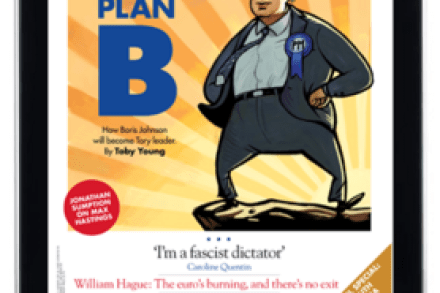
The great pastime of Tory MPs is leadership speculation. Who’s up? Who’s down? Who’s in? Who’s out? Who succeeds Cameron? Simple, says Toby Young in our cover piece this week, it has to be Boris. Toby’s confidence in Boris is such that he once bet Nigella Lawson £15,000 that blond bombshell would lead the party one day. Subscribers can read about that story here, and non-subscribers can subscribe to the Spectator for just a £1 an issue. In the meantime, here’s a cover piece from the archives on this same theme: Boris is hot on Dave’s heels.

Osborne mulling child benefit u-turn

From our UK edition

Eric Pickles makes no bones that his bin policy is aimed at Middle Britain, and the Tories may soon announce more measures to butter up that vital electoral constituency. The Times reports (£) that Cameron and Osborne are seriously considering a u-turn on their controversial cut to child benefits over families in which parent earns more than £42,475, which is due to be introduced in January 2013. George Osborne apparently never does anything unless it yields a political dividend and this is an intriguing development, if it materialises. It reiterates that the Tories know they have a woman problem; identified by Melanie McDonagh in a magazine cover piece earlier this summer.

Tories pray for no more from Europe

From our UK edition

Tory strategists had hoped to keep Europe off the agenda at this year's party conference, but they seem to have failed already. The European Commission's threat about welfare claims has forced IDS into action. Ben Brogan reports that the work and pensions secretary was nothing short of visceral in his contempt for the "land grab", which will apparently cost £2.5 billion a year. But, IDS's rage is quiet compared to John Redwood's, who asks "Why won't he [William Hague] get on with renegotiating the UK position [in Europe]?" Next is the EU's Agency Workers Directive, which comes into force tomorrow.