David Blackburn

The Costa shortlists

From our UK edition

The shortlists for the Costa Awards were announced on Front Row last night. A list of the books competing for the £30,000 prize is below. The judging panels will meet between now and mid December, and the individual category winners will be announced on Wednesday 4th January 2012. The final awards ceremony will then take place on Tuesday 24th January.
Interview: Andrew Feinstein’s Shadow World

From our UK edition

Andrew Feinstein is a former South African MP and member of the African National Congress (ANC). He served as the chairman of the parliamentary public accounts committee and resigned in 2001 when the ANC refused to conduct an investigation into the notorious 1999 South African Arms Deal. He has recently published an exhaustive study of the global arms trade, titled The Shadow World. He spoke to the Spectator about the corruption he has uncovered, the damage it is doing to democracies around the globe and the way ahead.     Why did you write this book now? I've been researching it for almost five years, since my first book on a specific arms deal in South Africa.

Across the literary pages: remembrance edition

From our UK edition

The weekend’s literary pages sounded the Last Post in honour of Remembrance Sunday. The re-release of Sir Andrew Motion’s collection of war poems, Laurels and Donkeys, is being feted by critics. And Motion read from the book at a party in Oxford on Friday night, a memorable experience for those who witnessed it.  The former Poet Laureate also took part in a discussion about new war literature for the Guardian, together with Michael Morpurgo and Luisa Young. The events of the Great War have now, for the most part, passed out of living memory and into history.

A mark of respect

From our UK edition

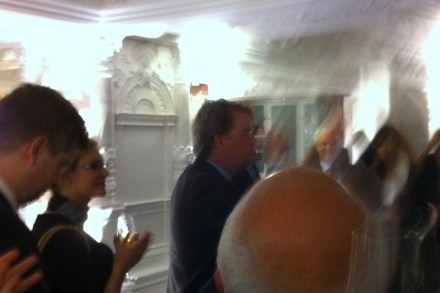
The Divinity School at the Bodleian library was the setting for the Clutag Press's 10th birthday party celebrations this evening. Several of Clutag's authors from down the years convened to read excerpts of their work to a large public audience. Andrew Motion was the star attraction, although you wouldn't have known that from his unassuming manner. Motion read two items from his recent collection of war poems, Laurels and Donkeys, in honour of Armistice Day. The first related to Private Harry Patch, the last British veteran of the Trenches to die. The second was inspired by the death of Lt. Colonel Rupert Thorneloe, who was killed by a roadside bomb in Afghanistan two and half years ago.

Shining light on a dimly lit world

From our UK edition

Edward IV was a conflicted man. He was a prodigious boozer and wencher, and a voracious reader and thinker. The bon vivant founded the English Royal Library: an assortment of illuminated books from England and continental Europe, some of which were bound before the Norman Conquest. It was a treasury of 100s of years of English and European history. The library grew throughout the Tudor and Stuart periods, before George II bequeathed it to the nation in 1757. The collection is now held in the British Library in London, where Royal Illuminated Manuscripts: from King Athelstan to Henry VIII opened this morning. It is a captivating visual show that provides glimpses of medieval kings at work and at play.

The art of fiction: Armistice edition

From our UK edition

A change from the usual format this week, as it is Armistice Day. This clip is taken from a documentary made in conjunction with Simon Armitage’s 2008 war collection, The Not Dead. The veteran is quoting from Armitage’s poem, ‘The Malaya Emergency’. It speaks for itself. Later today, Radio Four’s afternoon play will be devoted to Andrew Motion’s new volume of war poetry.

A woman with a cause or two

From our UK edition

P.D. James has already said a great deal about her love of Austen, her love of the mystery genre and her new book Death Comes to Pemberley. She was in London earlier this evening, talking again about how her enthusiasms became manifest in a book. She is a self-effacing and hugely erudite speaker; a natural raconteur, you might say. Few authors could offer a more thoughtful analysis of the art of fiction, but the evening was memorable for her personal reminiscences. James embodies the sweep of very nearly a century of British political and cultural life. When asked to reflect on 50 years in print, she said: “England has changed. Everything has changed. Extraordinary.

Vikram Seth shows the way

From our UK edition

Literary festivals are a very big deal in India, if Vikram Seth is to be believed. Seth made an impromptu appearance at the Mumbai literary festival last week. “The whole thing was pretty chancy. I was supposed to be in England for the launch of The Rivered Earth yesterday. I was in Mumbai for the first exhibition of my sister’s works. Anil Dharker (the festival director) plucked me off the air and got me on the cheap," he told the First Post. If Seth really delayed his return to England in favour giving a recital in the Tata Hotel, then it reveals something about his professional and personal priorities. Seth tells Ed Smith, in an interview with today’s Times (£), that he feels most at home “in India”.

Watch this space, Amazon

From our UK edition

Yesterday, American bookstore Barnes & Noble launched its latest crusade against the Kindle. At a special conference at its New York headquarters, it unveiled the ‘Nook’ tablet to a raucous fanfare. The Bookseller reports that “everything about the press conference was an aggressive counter-punch to its main rival and its tactics”. The Kindle was compared to a “vending machine”, while the Nook was said to offer customers a better service. The technology press is fairly impressed with the Nook.

Briefing note: Richard Bradford’s Martin Amis biography

From our UK edition

Richard Bradford styled his biography of Martin Amis as ‘The biography’, an odious gesture that would tempt fate on even the busiest day. Are there any scoops? With the exception of a few mild indiscretions from Christopher Hitchens — no, there are not. Early in the piece, Bradford thanks Amis for his ‘co-operation’, which amounted to five face-to-face interviews. That spirit of co-operation dissolved into acrimony at some stage, and the publication of this book has been marred by difficulties and delays.  What are the critics saying? It’s a stinker, they say as one. On these pages, Sam Leith observed that Bradford struggles to describe Amis’ writing, which is a drawback for a literary biography.

To Her Majesty the Queen

From our UK edition

The regally refurbished St. Ermin's Hotel in Westminster hosted a party this evening in honour of Robert Hardman and his new book, Our Queen. Hardman, a veteran royal correspondent, broke from the exhausting canapés (which were inspired by George VI and the Queen Mother’s hearty wedding breakfast - lobsters, black pudding, chicken and an array of fish), to talk about his book and the monarchy. Hardman's thesis, which he previewed in the Spectator a few weeks ago, is that the Queen has overseen the most dramatic reform of the monarchy since the French Revolution.

Across the literary pages: tell me lies

From our UK edition

Tomorrow is E-Day: the publication of Umberto Eco’s latest novel, The Prague Cemetery. The book concerns the fictitious Protocols of the Elders of Zion and how they were still accepted even after being exposed as a fabrication in 1921. This is natural territory for Eco the semiotician. He told the Times (£): 'I always had an interest for the problem of lying, fakes and forgeries from the semiotic point of view. It’s a fundamental human activity to lie more than to tell the truth. The problem of the Protocols fascinated me. Just because of its capability to resist any form of proof and criticism, it means that it’s a text that is able to touch the deepest prejudice in the human soul.

Eugenides: I’m more Hillbilly than Mr Greek

From our UK edition

Don’t believe the pseuds. You don’t have to be clever to read Jeffrey Eugenides’ The Marriage Plot. The novel is his first since the Pulitzer Prize winning Middlesex in 2002 and on one level it is terribly, terribly clever. The central character goes to university, where she studies the intricate marriage plots common to many nineteenth century novels before becoming embroiled in an intricate marriage plot of her own. Eugenides plays with form and reveals his characters through the books they read. Like I said, it’s clever. I’m much too ill-read and ill-bred to appreciate Eugenides' dazzling literary range, which, I’m told by wiser owls than me, surpasses that of T.S. Eliot in The Waste Land.

The art of fiction | 4 November 2011

From our UK edition

Here is the late and incomparable Kurt Vonnegut giving a short lecture on stories and relativity. This video was apparently used in American high schools in the ‘80s and with good reason: displaying narrative as a graph is a brilliant way of examining structure and character development. You could go beyond Vonnegut’s rough demonstration and draw a graph with multiple lines, each representing a major character in a book. One is up at a particular moment, driving another down in consequence. Such an approach might make some pupils relate to the densely plotted novels so beloved of the education system.

Literary pornography, with Will Self

From our UK edition

The Gallery at Foyles hosted the launch of the latest issue of Granta earlier this evening. The magazine teems with illustrations by the Chapman brothers, which gives away the theme: horror. Contributors Will Self and Mark Doty were the guests of honour and they discussed their essays. Self spoke of the nature of blood in Dracula, and Doty of Walt Whitman’s correspondence with Bram Stoker, which was apparently all about repressed homosexuality – who’d have of guessed? Perhaps it was the dramatic subject matter, but conversation soon moved onto Self’s illness, which was fascinating. He is afflicted by Polycythaemia, a rare blood disease, and he disclosed that he is being bled as a treatment.

Book of the Month: Horowitz’s Holmes

From our UK edition

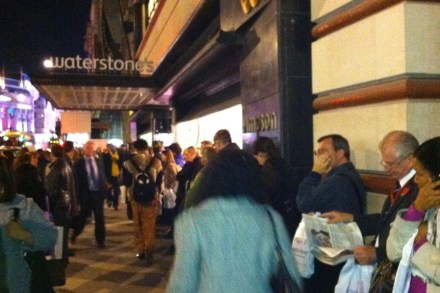
The launch of Anthony Horowitz’s new Sherlock Holmes book, The House of Silk, went swimmingly. You might say it was elementary, if you couldn’t resist the temptation to talk Holmesian. Many could not. An astonishing number of people turned out for the exclusive book signing this evening at Waterstone's Piccadilly, which had been turned into 221B Baker Street. Leather armchairs stood idle, punch cartoons hung on walls and a violinist scratched away at Bach. Only Mrs Hudson was missing. Not all of the punters were the shabby second hand book dealers who usually pollute these events, begging for a scribble to increase the value of their goods.

Across the literary pages: murder edition

From our UK edition

There was an unintentional theme to the weekend’s literary pages: murder, in some shape or form. There are fictions, histories and real life whodunits to choose from, if crime is your guilty pleasure. First up: Death in Perguia, a comprehensive account of the Kercher case written by the Sunday Times’ John Follain, who covered the investigation and trials for that paper. Stephen Robinson reviewed the book for the Sunday Times (£) and observes that Follain ‘has produced an excellent account of the tragedy and the very Italian drama that followed.

The art of fiction

From our UK edition

<a href= "http://vimeo.com/30774612" _fcksavedurl= "http://vimeo.com/30774612">NBCC Reads at Center for Fiction: On the Comic Novel</a> from <a href="http://vimeo.com/user2300381">NBCC</a> on <a href="http://vimeo.com">Vimeo</a>. America’s National Book Critics Circle discussed the comic novel last week. Here is a video of their discussion, which ranged from Tom Jones to A Visit from the Goon Squad. Interesting to note Beth Gutcheon’s observation that so many of the novels mentioned are first novels.

How the British came to love Picasso

From our UK edition

Picasso once told Roland Penrose, his friend and biographer, that he left Barcelona in 1900 to go to England, the home of his idols Edward Burne-Jones and Aubrey Beardsley. It took Picasso 19 years to get here, when the Ballet Russes took him to London to design its production of Le Tricorne. In honour of that history, next year Tate Britain and the English National Ballet will collaborate on a Picasso exhibition, examining his influence on British artists and his relationship with the British public. Judging by the preview, which was held this morning in the studio Picasso used on Floral Street in Covent Garden, the show merits a visit.

A tale of church and state

From our UK edition

Last Saturday, Phillip Pullman addressed library campaigners at a convention in London and declared war on the “stupidity” of nationwide library closures. Pullman’s presence brought the Church of England to mind, merely as a counter-point to his often very public atheism. How has the established church responded to the end of community libraries and the education services they provide? As part of a wider national picture, Anglican priests have, at the suggestion of their parishioners, offered help to campaigners in Bolton, where 5 libraries are to close, and in Brent, where 6 libraries are to close. Letters have been written on the vicarage’s headed paper; petitions have been signed; and churches have hosted publicity events.