David Blackburn

Booker time

From our UK edition

The Press Association is reporting that Matthew Crawley (AKA Dan Stevens) will be on the Booker panel next year. Sir Peter Stothard is the chairman of the judges and he will be joined by broadcaster and historian Amanda Foreman and academics Dinah Birch and Bharat Tandon. That's a heavyweight list. Even Stevens counts as a critic, having just launched an online literary magazine called The Junket. Stothard said, 'We have two of Britain's finest professional critics, with expertise in novels from the 18th to the 21st century, a distinguished actor who is also an accomplished literary critic and an historian who is one of the most successful biographers of our time.
A date for your literary diary

From our UK edition

Faithful readers of the Spectator will recall that Jeffrey Bernard was frequently ‘unwell’, usually after having dropped by the Coach and Horses in Soho. Bernard is not the only writer to have darkened that particular pub’s towels. A procession of inky soaks has stumbled through its doors over the years: Dylan Thomas, Daniel Farson and generations of Private Eye staff to name but a few. Next year, on 7th February, this famous pub will host a new literary event: The Omnivore’s Hatchet Jobs of the Year. The Omnivore’s aim is to promote ‘honesty and wit in literary journalism’ by awarding a prize to the author the ‘angriest, funniest, most trenchant book review of the year’.

Across the literary pages: Poetic justice edition

From our UK edition

Protest and poetry have occupied the literary pages in recent days. The TS Eliot Prize has been rocked by the withdrawal of two nominees, Alice Oswald and John Kinsella, who objected to the prize’s hedge-fund sponsor. The Books blog will examine this curious issue throughout the week; but, for now, here’s Geoff Dyer and William Skidelsky debating the topic. Skidelsky: To me, it was striking that neither poet appeared to find anything much out about Aurum. For them, apparently, the dread words "hedge fund" were enough. Do either of them actually know anything about what hedge funds do? Bankers are often accused, rightly, of arrogance, but there's a kind of snobbishness, too, in the way that some artists wrinkle their noses up at the mucky dealings of business.

The art of fiction: Graham Greene

From our UK edition

A slight change of form this week, here is a news obituary of Graham Greene (apologies for the disturbance early in the film). Greene’s reclusiveness might, I suppose, be key to the art of fiction. Piers Paul Read says that Greene’s privacy was essential if he was to continue observing the world, as writers should. On the other hand, Greene’s outspoken politics made him visible even when in solitude. The clip asks the fatuous but infectious question, is he a great writer? Auberon Waugh says yes. Anthony Burgess says no. Read says yes, but only as a novelist of doubt. Personally, I’ve always been struck that Greene wrote both the majestic Power and the Glory and the slightly staid The End of the Affair.

Hammond: New front opening in Afghanistan

From our UK edition

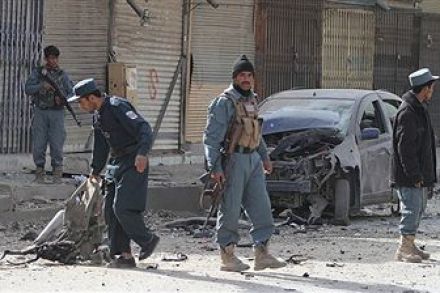
Defence Secretary Philip Hammond was in the Commons this afternoon, discussing, among other things, the spate of attacks on Shia Muslims in Afghanistan. At least 59 people have been killed in sectarian atrocities over the last week or so, a chilling a new pattern of violence as Western powers begin to contemplate withdrawal. Hammond denied that there is a link between the forthcoming transition and these attacks. Instead a ‘new front’ is opening in Afghanistan. What is this new front? Hammond was vague, but Lahore-based journalist Ahmed Rashid explains, in tomorrow’s edition of the Spectator, that the sectarian attacks are the hallmark of a now desperate al-Qaeda.

Cameron attacked from all sides on Europe

From our UK edition

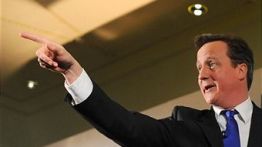
David Cameron’s usual insouciance gave way to something approaching shouty panic as Europe dominated exchanges at PMQs. 8 Conservative MPs, all of them hostile to varying degrees, asked questions about Cameron’s intentions at the Brussels summit on Friday. This may not have surprised him, but the word around the Commons tearooms is that Cameroons are blaming Speaker Bercow for calling so many antagonistic MPs to their feet. It looked like a co-ordinated attack; and it's no surprise that an opportunistic Boris has since taken to the airwaves renewing his call for a referendum. Cameron’s article in this morning’s Times may have been intended to quell disaffection by looking decisive, but it seems to have had the opposite effect.

Cameron’s plan

From our UK edition

Much ado about a Cabinet split over Europe this morning. The Financial Times has interviewed Ken Clarke, whose europhile instincts are well known — something he shares with the senior Lib Dems. Clarke tells his eurosceptic colleagues not to expect powers to be repatriated from the EU at Friday’s summit. Meanwhile, David Cameron has written a piece in today’s Times (£), reiterating that he will veto any treaty that damages British interests. He also says that his ‘requests will be practical and focussed’. And therein, apparently, lays the split. The word ‘requests’ might open the possibility of repatriation.

Cameron ramps up his rhetoric

From our UK edition

The Conservative backbench disquiet on Europe has been building over the last few days, forcing David Cameron to quell the disaffection. He said earlier this evening: ‘When I go to Brussels I will be there to defend and promote British Interests, and the most important British interest right now is to sort out the problem in the Eurozone that is having the chilling effect on our economy that I have spoken about. That obviously means Eurozone countries doing more together and if they choose to use the European Treaty to do that than obviously there will be British safeguards and British interests and I will be there to protect that.

Lobbying for a lobbyists’ register

From our UK edition

“I certainly think it’s a serious problem and I described it when we last discussed this as a canker on the body politic and I would stay with that,” said Jesse Norman on the World at One earlier today. The Bureau of Investigative Journalism’s sting, splashed by this morning’s Independent, of executives from lobbying/PR firm Bell Pottinger boasting of their influence over the prime minister has renewed the debate about regulating the lobbying industry, with calls for a public register to be established. Downing Street has outright denied the allegations, which do sound rather far-fetched. Bravado is, of course, the currency of thin-air merchants. The objection is not to the bragging (how else can one tout ‘influence’?

Back to square one | 6 December 2011

From our UK edition

Benedict Brogan has some bad news from the engine room of public service reform. ‘I'm told Downing Street is starting all over again on public service reform. Will Cavendish, one of the key people guiding policy in No10, has been put in charge and told to assemble a new team of officials that will put together what effectively is a response to the white paper. The last 18 months, according to those close to the debate, were a waste of time. We'll have to see whether the principles Mr Cameron set out 10 months ago still apply.’ Those principles are that the ‘state will have to justify why should it ever operate a monopoly’ on public services, as Cameron once put it.

Mutiny in the air

From our UK edition

David Cameron’s European problems seem to be mounting. The usual suspects — Carswell, Redwood, Jenkin et al — have been only too happy to take the airwaves and talk of this ‘great opportunity’ to repatriate powers. Those sentiments are growing across the backbenches. The Guardian quotes an ally of Iain Duncan Smith saying that he and his friends ‘do not accept the prime minister's argument that the changes will only affect the eurozone. Of course the changes will have an impact on Britain.’ The mounting disquiet appears to have been created, to an extent, by the PM hedging his bets and lowering expectations.

The referendum question Pt. 2

From our UK edition

Earlier this morning, Number 10 briefed that fiscal union in the eurozone would not trigger a referendum in this country because sovereignty will not be transfered from London to Brussels — a pre-requisite for any vote. The problem for Cameron is that some of his backbenchers say there should be a referendum. Bernard Jenkin was on the Daily Politics earlier, insisting that fiscal integration marks a new era in the history of the Eurozone, which he dubbed ‘Maastricht Plus’. On the other hand, some eurosceptic backbenchers caution that now is not the time to hold a referendum — stability in the eurozone is the order of the day.

Raab’s early hits

From our UK edition

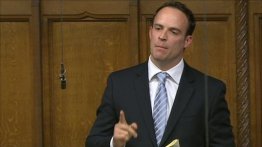
The Commons will debate the UK’s controversial extradition treaty with the US and the European Arrest Warrant later today. The debate has been brought by Dominic Raab MP. He was on the Today programme this morning, explaining that he wanted to introduce a ‘forum clause’ to the UK-US treaty. Forum is a principle that could apply in cross-border cases like Gary McKinnon’s, which Raab has been championing. Raab wants to end the ‘sort of haggling between prosecutors behind closed doors’ that governs extraditions at present, and reform the process by placing it before open court in Britain. He argues that numerous other countries enjoy such an arrangement with the US, why shouldn’t its ‘stalwart’ British allies?

Across the literary pages: Great reputations

From our UK edition

The poet Christopher Logue has died aged 85. The obituaries make for fascinating reading. For instance, did you know that the author of War Music also edited Pseuds’ Corner and collated the True Stories column in Private Eye? Or that he was an occasional actor? Aren't some people almost too blessed? Perhaps, but Logue's beginnings were difficult. He joined the Black Watch in 1944 and was court martialled during a fractious tour of Palestine in 1946; he was imprisoned. Determined to write, he travelled to Paris in the early ‘50s, where he fell in with the expat writers’ crowd: that band of artistic Anglo-Saxons who fled the suffocating British Isles after the war. His career as a poet was very slow.

Improving the health of the nation

From our UK edition

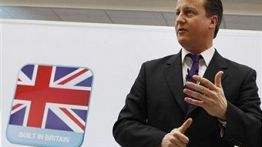
Britain’s future prosperity, we are frequently told, lies in scientific discovery, so it's odd that David Cameron has not given a major speech on it as prime minister until now. He will talk later today about the need to deregulate pharmaceutical licensing to encourage private investment in public health. He views the life sciences sector as a vital source of future economic growth. The PM will announce four new initiatives.

Putin’s party takes a hit

From our UK edition

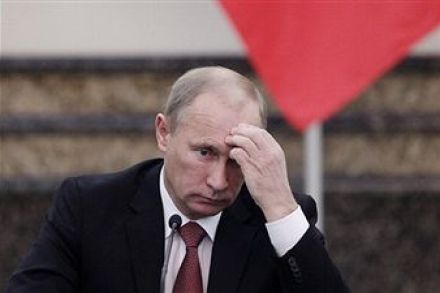
Vladimir Putin’s party has taken a hit in Russia’s parliamentary elections. Reuters reports that the United Russia party took 48.5 per cent of the votes, down from 64 per cent in 2007. These results are far from reliable: the BBC reports Russia’s independent election monitoring group has already recorded more than 5,300 complaints of malpractice. But television pundits have been keen to present this election as a referendum on the Russian prime minister, as he paves his way back to the Kremlin. Whatever the precise result, though, the early picture suggests that Putin’s subversive opponents – described by Pavel Stroilov in these pages earlier in the year – have weathered persecution to knock the Muscle Man.

Worrying developments in the Middle East

From our UK edition

It’s been an eventful , if worrying afternoon in the Middle East. First, the initial Egyptian election results confirm the expectation that Islamist parties would dominate the first round of elections: they've taken more than 50 per cent of the vote. Douglas Murray wrote a Spectator cover story two weeks ago on how the Arab Spring is turning to winter; it is required reading. Events in Iran are much more disturbing, though. Iran claims to have shot down an US drone in the east of the country and added further threats about further retaliation for the incursion.

The referendum question

From our UK edition

As French and German officials make final preparations ahead of tomorrow’s meeting on fiscal union, it’s worth reconsidering the coalition’s triple referendum lock. James Kirkup has an incisive post on the issue, describing a potential government split. The division was evident on TV this morning: Iain Duncan Smith told Dermot Murnaghan that a referendum would be held ‘if there is a major treaty change’, while Nick Clegg told Andrew Marr that only ‘an additional surrender of sovereignty from us to Brussels’ can spark a vote. Kirkup argues that IDS reflects the broader sceptic position on the Tory backbenches: that the PM has promised a vote on all substantial treaty changes.