David Blackburn

Cameron on the defensive

From our UK edition

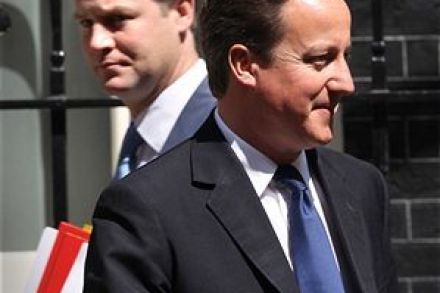
‘As things stand, I don’t believe Jeremy Hunt broke the ministerial code,’ said David Cameron to Andrew Marr earlier this morning. But the prime minister reiterated that he would act if new evidence came to light when Jeremy Hunt gives evidence to the Leveson inquiry. Cameron also indicated that he would not wait until Leveson reports in October to punish a breach of the ministerial code. And if Leveson does not clear up the issue, then the Hunt case would be referred to Sir Alex Allan. ‘I know my responsibilities,’ Cameron said time and again. In addition to putting Jeremy Hunt on probation, Cameron took the opportunity to defend his own conduct with News Corp executives.
A weekend to forget for the blue team

From our UK edition

The Conservatives get a battering in tomorrow’s papers. Jeremy Hunt graces the front pages of the Observer and the Indy. The Sunday Express has an Angus Reid poll that finds 82 per cent of ordinary voters think the coalition is out of touch. The Mail on Sunday has given space for Ed Miliband to attack David Cameron. And Boris has told the Sunday Telegraph that now is the time for more tax cuts (he also refers to George Osborne as ‘the jaws of death’). Needless to say, Boris is bucking the national trend – still the favourite to win London, although it's bound to be close.

Cameron sits tight on Hunt

From our UK edition

Downing Street has indicated that it will not pre-empt the Leveson inquiry by investigating the Culture Secretary’s role in the News Corp takeover of BSkyB. The government is keen to avoid calling a private inquiry that will, in the words of Tory deputy chairman Michael Fallon, ‘cut across’ the judicial inquiry. Hunt will appear under oath next month to lay out all evidence pertaining to the takeover, including all emails and texts sent to his then special advisor, Adam Smith. A Downing Street spokesman said that the Prime Minister ‘will of course’ act if Hunt’s evidence suggests he was in breach of the ministerial code. Downing Street has moved after the Leveson inquiry rebuffed its plans regarding Jeremy Hunt.

IDS turns up the volume on welfare cuts

From our UK edition

Iain Duncan Smith is quietly spoken. His interview with today’s Times (£) is a case in point. The political elite are ‘distanced’ from the people, he says. The Leveson inquiry is there to ‘clean the house’. The job of government is to govern well, not be loved. The ‘omnishambles’ will pass because David Cameron has 'the capability to pull himself and us all through'. But, amid these placid notes, is a subito fortissimo. The welfare secretary sets himself against George Osborne’s wish that a further £10 billion in welfare cuts be found by 2016. He says: 'This is my discussion with him... My view is that it’s not [all going to come from welfare]...

Leveson shows his teeth

From our UK edition

The Leveson inquiry has rebuffed the government’s suggestion that it should decide on the probity of Jeremy Hunt’s actions during the notorious BSkyB bid. The inquiry says that alleged breaches of the ministerial code do not fall within its remit. A spokesman for the inquiry also quashed Nick Clegg’s claim that ‘we've already got an agreement Jeremy Hunt will go to the Leveson [inquiry] pretty quick.’ An inquiry spokesman said that it would not be fair to bring forward Hunt’s appearance. The Culture Secretary will appear in the middle of May. These developments are an embarrassment for David Cameron, emphasising that he has not called an inquiry into the Hunt affair.

Interview: Eliza Griswold and the clash of civilisations

From our UK edition

Nigeria is called ‘God’s own country’, and well it might be because no one else is on its side. Eliza Griswold, who has spent several years exploring religious divisions in the country’s interior, tells me that billions of oil dollars are embezzled each year, leaving the vast majority of the population to fend for themselves on a couple of dollars a day — that’s to say nothing of the millions of unemployed vagrants. The government oscillates between inertia and rapacity, so competing religious organisations have emerged in its place. But while religious communities provide legal services and schools, they can also incite sectarian violence as Nigerians contest their country’s dwindling resources.

The art of fiction: Bram Stoker’s Dracula

From our UK edition

‘Oh yes, Dracula,’ said a colleague. ‘Two splendid bits at either end, and 200 boring pages in the middle.’ It was exaggeration, but only slight. Dracula sags in the middle, but that is a reflection of the knockout opening and conclusion. Film adaptations have the luxury of cutting out the fat to concentrate on Jonathan Harker’s torment at the hands of the Count and the exploits of the League, while also emphasising important plot details like flesh, flesh and flesh.   This is a year for literary anniversaries. Lawrence Durrell is in danger of being lost to posterity, and Dickens remains inimitable. But while you might struggle to identify the essential Dickens novel, there is no such problem with Stoker.

Would you like these books on your shelves?

From our UK edition

Penguin has launched a new design for the Penguin English Library. The press blurb says, ‘Each cover is a crafted gem, they’ll look and feel lovely in your hands.’ And they do. Steal into a bookshop in the next couple of days and hold one. The covers are individual and relevant to the book — Far From the Madding Crowd has a symmetrical series of bees set against a honeyed background — and the paper, though very thin, has a smooth lacquer that makes your fingers slide over the pages. The problem is the spines. The blurb says: ‘with a distinctive evolution of the famous Penguin orange spines they’ll striking on your shelves.’ They certainly will. The arrival of the first batch of books has set tongues wagging in the office.

The Spectator’s review of Dracula, 1897

From our UK edition

It is fitting that Bram Stoker is more celebrated in death than life. This week marks the centenary of his death. Numerous events have been held in his honour. It’s a typical jamboree. Horror writer Stewart King has explained how Stoker’s legacy is being sustained by a new wave of vampire fiction, which, for those who’ve been locked in an eerie for the past decade, has proved wildly popular. Vampires also remain popular in academic circles. The Times Higher Education reports that numerous professors convened for a Stoker centenary conference, where they lamented the modern assault on the gothic tradition.

Tales from the publishing world

From our UK edition

An elderly woman receives a phone call from a once eminent publishing house. The nice man on the phone tells her that his company is going to reprint her deceased father’s books. Wonderful news, she says — delighted that her old man is not quite dead and buried yet. Hope for us, she thinks. The publisher adds that they want a party to mark this important literary event, a proper knees up with champagne and canapés. She’s all for this. What generosity, she thinks. Then they say that want to make a small contribution to the party costs, maybe fifty quid. Traditional publishers are in extremis. Print continues to collapse; eBook sales are not covering losses.

Birthday present from the Bard

From our UK edition

St. George’s Day, 23rd April, is Shakespeare’s birthday. You may get a present, if you are in the right place at the right time. World Book Night, the event where enthusiasts give a book to passers-by, will take place this evening. The organisers hope that 2.5 million copies of 25 books will be given away by 78,000 volunteers in the United States, Britain, Germany and Ireland. This massive undertaking is laudable, even though the selection of books is wholly unimaginative. Martina Cole, Audrey Niffenegger and Bernard Cornwell may not need more readers, but their best-selling pot-boilers might get more people reading. Like all the best things in life, one book leads to another.

Across the literary pages: Facing death

From our UK edition

Man has conquered his inhibitions to talk about everything other than his own demise. Death is, famously, the last taboo — and, judging by many of the reviews of Philip Gould’s When I Die: Lessons from the Death Zone, we are no closer to breaking it. The novelist Justin Cartwright describes himself as ‘racked with doubt’ about the correct response of the reviewer of a book that charts a man’s preparations for death from oesophageal cancer. He goes on to ask seven questions on that theme and gets no closer to an answer. Meanwhile, the author Richard Holloway admits (£) to being ‘disturbed by the desperation with which we have become a culture that will do almost anything to keep death at bay.

From the archives: Lords reform could kill the coalition

From our UK edition

Why is Lords reform such an explosive issue? The subject should induce narcolepsy, but even loyal Tories are threatening to launch a rebellion against it that will make the Maastricht revolts look like child’s play. Subscribers to the Spectator will remember the James Forsyth article which first argued that Lords reform was an irreconcilable difference that was likely to break the coalition partners. In light of the last 24 hours, it’s worth revisiting: Irreconcilable differences, James Forsyth, The Spectator, February 25th 2012  It has become clear over the last few weeks that we are witnessing the beginning of the end of the coalition.

Cameron remains adamant on Lords reform

From our UK edition

Despite last night’s threats, David Cameron remains personally committed to the cause of reforming the House of Lords. The coalition is also resisting calls for a referendum on the reforms, saying that it is ‘not persuaded of a case of having one’. Their view comes despite reports that the joint committee and banks of Tory and Labour MPs want a referendum. The pressure on David Cameron, of course, pulls both ways. On the one hand, his backbenchers are vowing to prepare ‘off the scale’ rebellions that are ‘worse than Maastricht’. On the other hand, are the Lib Dems. In a show of strength that bordered on hubris, Lord Oakeshott said earlier today that his party expects all coalition MPs to vote for the bill.

The EU against new booze

From our UK edition

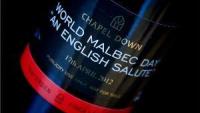
You don't expect to find so much politics in a booze mag, but there’s an intriguing story in a recent edition of the Drinks Magazine. Relations between Britain and Argentina have been very fraught of late, so the good folk at Chapel Down, the internationally renowned vineyard in Kent, decided to promote peace and goodwill by importing Malbec grapes from Argentina to make a special English wine, called 'An English Salute', to mark World Malbec Day, which took place on Tuesday. The vineyard planned to sell the wine in Gaucho, the chain of Argentine-themed steakhouses.

The art of fiction: April showers, Thomas Becket and Geoffrey Chaucer

From our UK edition

April showers break the long March drought, and bring pilgrims to Canterbury; to the shrine, or what remains of it, of St Thomas Becket. There are several historic routes to Canterbury: the Pilgrim’s Way, which runs along the Downs escarpment from Winchester through Sussex and Kent. And there are more modern paths, such as the Via Francigena, which begins in Rome. Canterbury Cathedral’s website says that the pilgrimage from Rome has grown popular in the last ten years, which attests to the revival of interest in English medieval saints and the present strength of Catholic faith. Pilgrims have been coming to Canterbury since before the canonisation of ‘the turbulent priest’ in 1173, two and a half years after his murder in 1170.

The tablet wars

From our UK edition

The London Book Fair (LBF) is not much to write home about, although there is something about the spectacle of Chinese apparatchiks shooting the breeze with what appear to be battalions of enhanced women from Eastern Europe. But, LBF is the latest theatre in the tablet wars. The saga of Waterstones and the Barnes&Noble Nook continues. The companies have apparently agreed to enter partnership, after months of secret deliberations which were conducted in anything but secret. However, any official announcement has been pushed back until the summer. This deal has been dragging on for nearly a year, during which time the opposition has gone from strength to strength. In that time, the very swish Kobo has been launched in Britain through WHSmith.

Prize puzzles

From our UK edition

There was drama at the Pulitzer Prize last night. No fiction prize was awarded for the first time in 35 years. The judges were unable to reach a decision in the race between David Foster Wallace’s The Pale King, Karen Russel’s Swamplandia! and Denis Johnson’s Train Dreams. Literary bigwigs in America have expressed shock. Jane Smiley — who won the prize in 1992 for her reimagining of King Lear, A Thousand Acres — sent an email to The Press Association saying, 'I can’t believe there wasn’t a worthy one. It’s a shame. But sometimes a selection committee really cannot agree, and giving no award is the outcome. Too bad.' Meanwhile, John Lewis Gaddis took the biography award for his life George F.