The war in Iran has entered its second week. Despite constant American and Israeli bombardment and heavy losses on the Iranian side, with much of the leadership killed, the regime in Tehran is shaken but still stands. It looks less and less likely that the Islamic Republic can be brought down by bombs alone.
On Monday, the Assembly of Experts elected Mojtaba Khamenei as the new supreme leader. He is perhaps the last man to sue for peace, considering the Americans and Israelis killed his father, the former supreme leader, Ali Khamenei, just over a week ago.

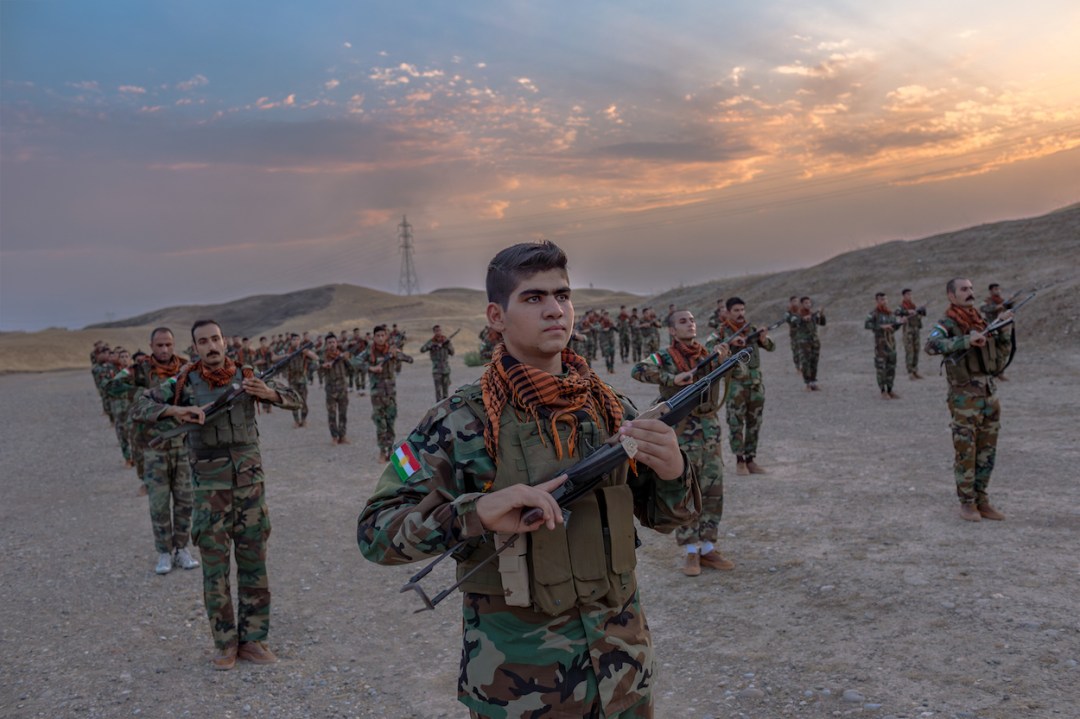
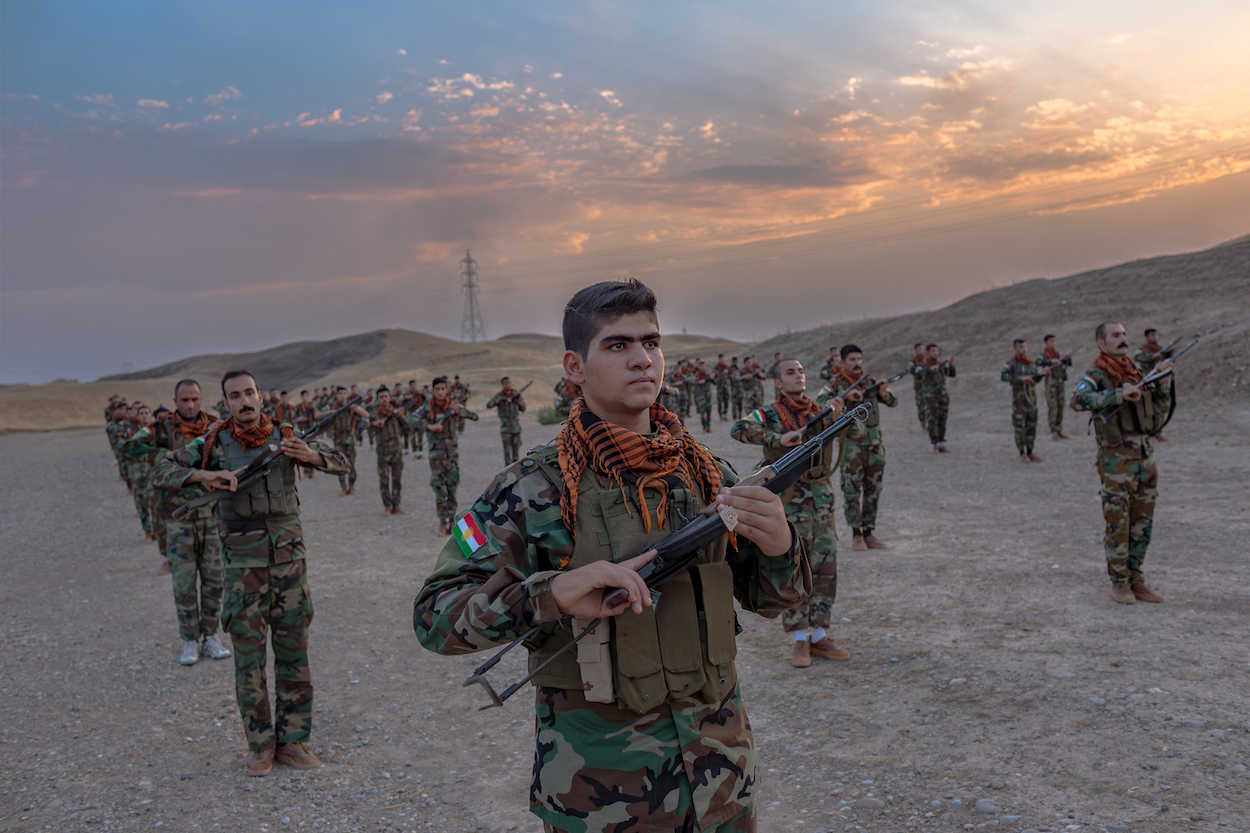
Amid all this, several reports came out suggesting the US is considering aiding Iranian Kurdish opposition groups to launch a ground offensive from Iraq. Six armed Kurdish factions recently formed a coalition with the specific aim of toppling the Islamic Republic.
The Kurdistan Freedom Party (PAK) and the Komala Party of Iranian Kurdistan from the new coalition have both denied receiving any aid from the US or having crossed the border. But they say they are ready, even if the decision has not yet been taken.
‘As of this moment, none of our forces have entered Iranian territory, and all such claims are merely rumours and media propaganda,’ says Omid Taheri, a member of the central committee of Komala. ‘We are closely monitoring developments and events, we are prepared, and we are ready for potential scenarios. Although the Islamic Republic has repeatedly targeted us with attacks, we have so far made no decision to carry out a ground operation and have exercised restraint.’
‘There is a degree of caution that these Iranian Kurdish parties are exercising. They understand the stakes are really very high and there isn’t room for any adventurous sort of blunder to be made here,’ says Muhammed A. Salih, non-resident senior fellow at the Foreign Policy Research Institute and an expert on Kurdish and Middle Eastern regional affairs.
Salih believes a ground offensive still might very well happen: ‘These are Iranian Kurdish political parties. Their political ambition lies within the borders of Iran. If the opportunity presents itself whereby they would think that the regime is either on the verge of collapse or is so weakened that it would not be able to retaliate in any significant manner, that might very much incentivize them to go back.’
There have been signs that preparations for a Kurdish ground offensive are underway. US and Israeli jets heavily targeted the Islamic Revolutionary Guard Corps (IRGC) and other military points in the Kurdish areas near the Iraqi border. In response, the IRGC launched several drone and missile attacks against the bases of the Kurdish coalition in Northern Iraq. PAK was the first group to suffer a fatality.
‘Jalal Rashidi (aka Kawan) was from Saqqez, 38 years old,’ says Hana Yazdapana, the head of PAK’s external relations. ‘He has been with PAK for 12 years since the war with Isis. He was one of our dearest friends. He was the training commander. The new peshmerga were trained by him.’
The word peshmerga is used by several Kurdish groups for their armed fighters. It literally translates to ‘those who face death’.
It is difficult to gauge exactly how strong the Kurdish groups are. PAK says it has around a thousand troops in Iraq. Komala declined to specify. The six parties all together are still likely in the thousands, rather than tens of thousands.
PAK and Komala are confident that they could ‘mobilise tens of thousands of people within a short period of time’
This is a small force compared to the Iranian army, which has well over half a million active military personnel. Yet they are still the most organised armed Iranian opposition group. What is more, both PAK and Komala are confident that they could ‘mobilise tens of thousands of people within a short period of time’ – if a major offensive is launched. Some groups, like PAK, have experience not just in guerrilla warfare against the regime, but also in fighting against Isis with American support.
There are also some misgivings among the Kurds about trusting Washington. During the Gulf War in 1991, President George H. W. Bush encouraged the Kurds to rise up against Saddam Hussein. But when the Iraqi army helicopters suppressed the rebellion with napalm and chemical weapons, US fighter jets were ordered not to intervene.
In Syria, Kurdish groups were the US’s main partners in defeating Isis, losing more than 10,000 fighters. But last January, when the new Islamist government in Damascus launched a major offensive against them, the Americans once again stood back and watched as the Kurds lost all their territory.
President Trump also appears to have cold feet about arming the Kurds to enter Iran. ‘We’re very friendly with the Kurds, as you know, but we don’t want to make the war any more complex than it already is,’ he told reporters on Saturday. ‘I don’t want the Kurds going in. I don’t want to see the Kurds get hurt, get killed.’
At the end of the day, it will be the Kurdish groups that decide whether to take the risk and launch a full-scale offensive. But as things stand, the regime remains too strong for it to be worth the gamble.




Comments