Daniel Thorpe

Daniel Thorpe is an Istanbul-based journalist covering politics and economics in Turkey and Eastern Europe

The Besiktas nightclub fire was tragically inevitable

From our UK edition

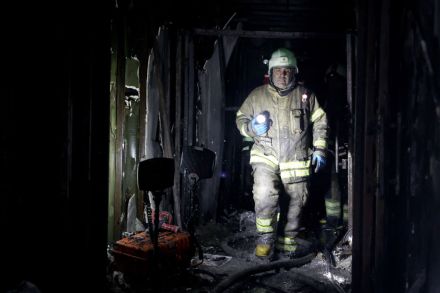
At least 29 workers died and two were seriously injured yesterday in a fire at an Istanbul nightclub. The Masquerade club is in the basement of a 16-storey building in the Turkish city’s Besiktas district, known for its nightlife, and was being renovated. Nine people have been arrested in connection with the blaze. The fire has shone a spotlight on the dangers to construction workers in Turkey. Last year, almost 2,000 died in workplace accidents. Trade unions and opposition parties have long accused the government of failing to enforce safety regulations in order to maintain economic growth and attract foreign companies.
Is this the beginning of the end for Erdogan?

From our UK edition

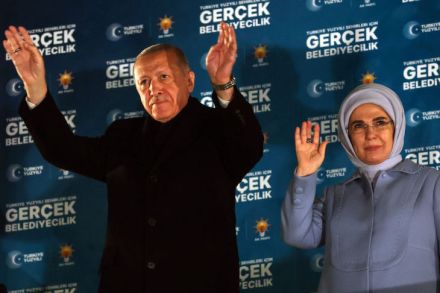
President Erdogan’s political star rose when he won the local elections in Istanbul exactly 30 years ago. ‘The one who wins Istanbul wins the whole of Turkey,’ he once said. His famous sentence is now back to haunt him. People already talk about ‘the beginning of the end’ for Erdogan In Istanbul yesterday, tens of thousands of people gathered to celebrate not Erdogan but Ekrem Imamoglu, the opposition’s incumbent mayor, in municipal elections. Despite the fatigue from last year’s general elections, over 78 per cent of Turkey’s 61 million-strong electorate turned up to cast their votes yesterday. Their backing for Imamoglu was resounding: his Republican People’s Party (CHP) performed spectacularly, securing 37.

Will Erdogan ever get to grips with Turkey’s sky-high inflation?

From our UK edition

Inflation and the cost-of-living crisis dominates the agenda in Turkey, ahead of local elections at the end of March. Year-on-year inflation reached 67 per cent in February, according to the Turkish Statistical Institute, breaking a 15-month record and puncturing hopes that high interest rates would put a lid on rapidly increasing prices. For years, president Recep Tayyip Erdogan was a bitter opponent of high interest rates. ‘Interest rates are the reasons, inflation is the result,’ he roared regularly at political rallies, defying traditional economists. He cites Islamic traditions whereby high interest rates amount to usury, to justify his unorthodox monetary policies.

Is Orban’s family policy coming unstuck?

From our UK edition

Hungary’s governing Fidesz party is in crisis over an issue it has staked its credibility on: the defence of the traditional family. One of the ministers who pioneered Viktor Orban’s family policy and served as president of Hungary, Katalin Novak, has been forced to resign over a paedophile scandal. Novak resigned on 10 February after a story revealed she had pardoned a man convicted of covering up sexual abuse cases of children at a state orphanage. Judit Varga, the former minister of justice, who signed off the pardon last April, was also forced out. Varga had been due to lead Fidesz's list in the upcoming European parliament election.

Erdogan’s debts are piling up

From our UK edition

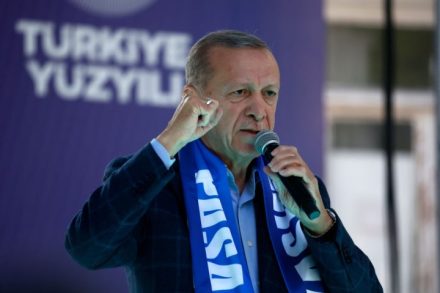
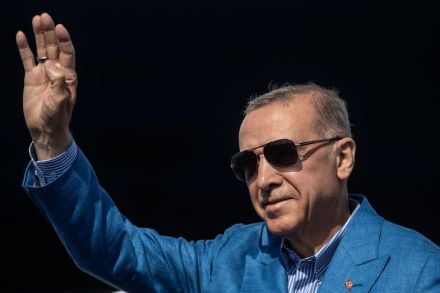
President Erdogan once again emerged victorious in Sunday’s presidential elections. In the highly contested race, he secured 52 per cent of the votes, beating his rival Kemal Kilicdaroglu by four points. With challenges mounting from his previous terms, the next five years will be one of the most challenging for President Erdogan. The biggest and most immediate crisis he is facing is the Turkish lira. Since the beginning of the economic crisis in 2018, the lira has lost over 450 per cent of its value against the US dollar. In the run-up to the elections, the Turkish Central Bank burned billions of dollars to keep the Turkish lira from sliding past the psychological 20-dollar mark.

How president Erdogan defied the odds – again

From our UK edition

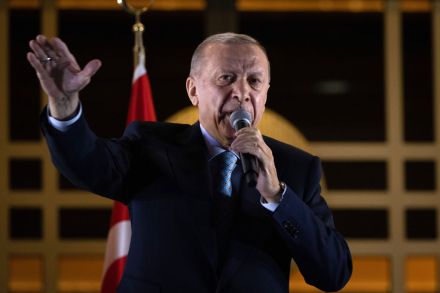
The results of yesterday’s election have come as a sobering shock for many in Turkey. Although president Erdogan fell just short in the first round of the 50 per cent he needed to automatically secure another term, a parliamentary majority remains within his grasp. Erdogan is now expected to comfortably win the run-off. Even before the counting was finished, he delivered a victory speech in Ankara on Sunday night. If Erdogan surpassed expectations, the opposition significantly underperformed. In the lead-up to the election, numerous polls suggested that the joint presidential candidate, Kemal Kilicdaroglu, held a lead of up to five points over his rival, giving him a good chance of winning in the first round.

Erdogan is unlikely to go quietly

From our UK edition

The Turkish election is just hours away, and an opposition victory seems more likely than ever under president Erdogan's rule. Everywhere from cafés to the civil service, from social media to newspapers, the big question on everyone's lips is whether Erdogan will concede after 21 years in power. Fears of escalation and violence on the streets are high. As Turkey's electoral system is old-fashioned and analogue, irregularities and small-scale fraud are common, especially in rural areas. However, the system leaves little to no room for mass election fraud. Losing an election does not necessarily mean the end of a strongman In the 2019 local elections, the opposition Republican People's party (CHP) won in Istanbul by a small margin of a few thousand votes.

It would be foolish to rule out an Erdogan victory

From our UK edition

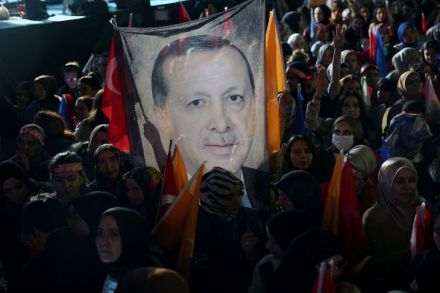
With only a few days to go until Turkey's election, the opposition continues to lead in most polls. But there is a growing feeling in Turkey that president Erdogan might defy the odds and win again. A striking image of a rally in Istanbul – Erdogan's biggest so far – shows Turkey's leader continues to enjoy popular support. The ruling Justice and Development Party (AKP) claimed that 1.7 million people showed up at the decommissioned Atatürk airport for the event on Sunday; supporters were bused into the rally from across the country. While independent fact-checkers pointed out that the real number is likely less than half the number claimed, this rally showed that victory for the opposition is far from certain.

Is this the man who could topple Turkey’s president Erdogan?

From our UK edition

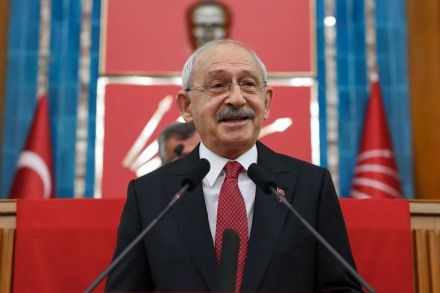
After months of negotiations and a week of drama, the Turkish opposition bloc has announced Kemal Kılıçdaroğlu, the leader of the Republican People’s Party (CHP), as their joint presidential candidate. The general election in May looks set to be the biggest challenge president Erdoğan has faced since coming to power in 2002. An unusual scene unfolded in Ankara on Monday night. A huge portrait of Atatürk, the radically secular founding father of modern Turkey, fluttered in the breeze over the headquarters of an Islamist party. Outside, thousands gathered, chanting the name Kılıçdaroğlu, a politician from a religious minority, the Alevis, who have faced persecution for most of the Turkish Republic’s 100 year history.

Syrian earthquake survivors are being scapegoated in Turkey

From our UK edition

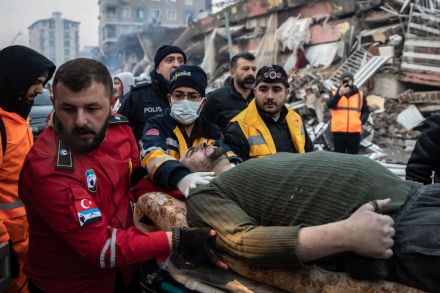
It's been over a week since the devastating twin earthquakes struck Turkey and Syria and the death toll continues to rise. The number of known casualties has passed 30,000 and tens of thousands more are injured. Hundreds of thousands people have lost their homes. Alongside the plight of the Turkish population, Syrian refugees in southern Turkey have suffered a second disaster. Turkey hosts over 3.6 million Syrians who fled their country's civil war. Almost half a million live in the Hatay region, which was the worst hit by the quakes.  Amidst the overwhelming tragedy, there are moments of joy: three elderly members of the Gezer family were brought out from the rubble in the old town of Antakya by Turkish and Thai rescuers. They had been trapped for at least 135 hours.

Thousands may still be trapped under the rubble in Turkey

From our UK edition

Five days after Monday’s massive earthquakes, the combined death toll in Turkey and Syria has passed 20,000. Local aid workers say around one-third of the casualties are in the Hatay province. The regional capital, Antakya, built on the ancient city of Antioch, is a popular tourist destination famous for its cuisine and cosmopolitan multi-ethnic atmosphere. Many of the mosques, churches, and synagogues in the city’s picturesque old town were also destroyed. On the third morning after the earthquake, a thick layer of smoke settled in the valley where Antakya lies – a residue from the fires the survivors built to keep warm during the freezing night. On the fourth day, many neighbourhoods started to smell of corpses. Thousands are still thought to be under the rubble.

Time is running out for Turkey’s earthquake victims

From our UK edition

The confirmed death toll from the two huge earthquakes which struck southern Turkey and northern Syria on Monday has now passed 9,000. Aid officials fear the final toll could reach 20,000. Rescuers continue to work around the clock to save people, but many locals are angry over the inadequate response from the Turkish authorities. Antakya is the capital of the Hatay province, wedged between Syria in the east and the Mediterranean in the west. The earthquake completely devastated the city, flattening whole neighbourhoods. Around half of the upper-end apartment buildings along the city’s main Atatürk Boulevard have collapsed. Forty-eight hours after the first quake, residents are still cut off from electricity and gas.

Where are the rescuers? Turkey’s earthquake death toll rises above 4,000

From our UK edition

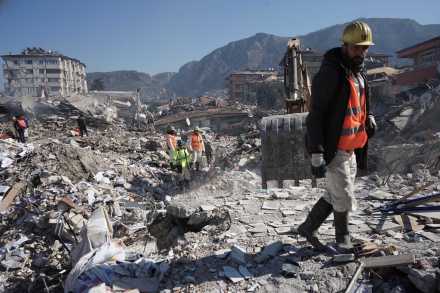
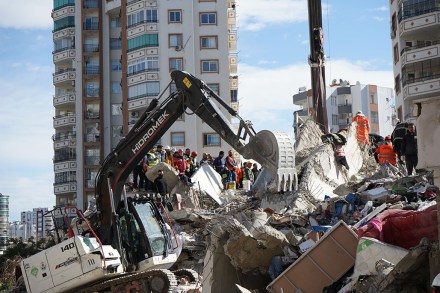
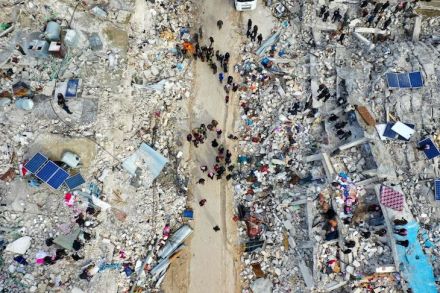
Turkey is reeling after a massive 7.8 magnitude earthquake killed more than 2,900 people and left hundreds more injured. More than 1,400 people in northern Syria are also believed to have been killed. The quake, which struck near the city of Gaziantep in southeast Turkey in the early hours of Monday morning, was felt as far away as Lebanon and Jordan, on the far side of the Mediterranean. Another quake of 7.6 magnitude struck the nearby Kahramanmaraş region a few hours later at 13.27 local time (10.27 GMT), according to the Turkish Disaster and Emergency Management Presidency (AFAD). The images and video emerging from Turkey, showing flattened buildings and piles of rubble, are devastating.