Daniel Swift

A mirror to the world

[audioplayer src="http://feeds.soundcloud.com/stream/260046943-the-spectator-podcast-obamas-eu-intervention-the-pms.mp3" title="Lloyd Evans and Dr Daniel Swift discuss how Shakespeare died" startat=1008] Listen [/audioplayer]Who’s there? Shakespeare’s most famous play opens with this slightly hokey line, and the question remains for his countless audiences, biographers and scholars. Who was this man? What makes his works so apparently endless? Like the plays, his life is studded with riddles. Even the basic facts are slippery and over-determined. We do not, for example, know the date of Shakespeare’s birth. His baptism was recorded at Stratford on 26 April 1564, and since it was customary to baptise newborns quickly, it has been accepted that his birthday was 23 April.
Wonderful waffle

It is hard to explain the contents of Karl Ove Knausgaard’s vast series My Struggle because not much happens. Or rather: a lot of things almost happen. In these strange and unquantifiable books, which feel like a spiritual autobiography but read like trashy fiction, Knausgaard recounts his ambiguous relationships with his brother and parents and wives; he describes terrible-sounding meals which he cooks (he eats a lot of pasta with dubious sauces) and the rambling, incomplete conversations he has with acquaintances. He discusses books he has read and books he would like to write. He goes out, meets girls, gets drunk, feels sorry for himself, and then goes back to his desk.

Casual, funny, flirtatious, severe

When The Waste Land first appeared, there were rumours that it was a hoax. It seemed so strange: 400 lines in many languages, and even the sections that were in English looked as if the author was only teasing. ‘Twit twit twit’ ran one line: ‘Jug jug jug jug jug jug.’ Eliot’s long poem was published first in Criterion in October 1922, and then in an American magazine the following month. Eliot had also sold the rights to publish it as a book, but his publishers feared that the poem alone was too short. To make it a little longer, Eliot added half a dozen pages of sporadic notes. The notes Eliot added are as odd as the rest of the poem. They give a handful of helpful references while denying others.

These I have loved

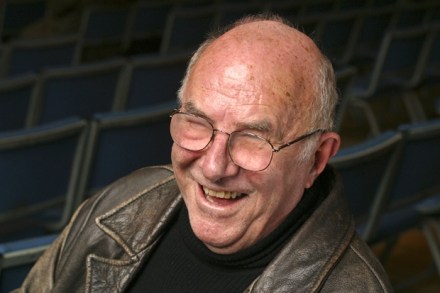
In the preface to his great collection of essays The Dyer’s Hand, W.H. Auden claimed: ‘I prefer a critic’s notebooks to his treatises.’ Auden’s criticism is like that: a passage of insights instead of a single sustained argument, and the same is true of Samuel Johnson, whose works are a pleasure to read for the feeling of the pressure of a great mind at play. Clive James belongs in this company. His new book Latest Readings is a kind of reading diary: a collection of short essays, each prompted by one book or a handful he happens to be reading. They are not in any logical order or sequence, but are given unity by two things: one biographical, the other stylistic.

Reducing poetry to a science

Is it possible to tell a good poem from a bad one? To put the question another way: are there objective, even scientific, standards for evaluating literature? Helen Vendler has no doubts. Her spiky new collection of essays begins with the insistence that it is possible to prove how one poem is ‘superior’ to another, and ‘those who suppose there are no criteria for such judgments merely expose their own incapacity’. That’s a bold claim, but in her hands, literary criticism is a science, and anyone who disagrees with her judgments is put sharply in their place.

A little loving irony

It doesn’t mean much to say that Renata Adler’s journalism isn’t as interesting as her novels — almost nothing is as interesting as Renata Adler’s novels. In 2013, the American publishing house New York Review Books reissued her two slim novels Speedboat and Pitch Dark. These had been cultish hits when they were first published, 30 years earlier, and it was easy to see why. They are excellent skewers of the complacency and pomp of American society and fashion: funny, manic, memorable and made up of tiny, brilliant scenes. ‘Her husband had invented a calorie-free spaghetti from seaweed,’ she writes of one party guest: ‘He was the world’s yet unacknowledged living authority on seaweed and its many uses. She was quite eloquent about it.

‘What will they do when I am gone?’

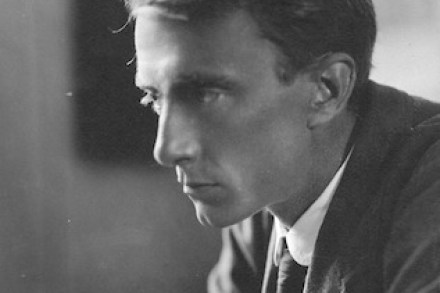
Edward Thomas was gloomy as Eeyore. In 1906 he complained to a friend that his writing ‘was suffering more & more from a silly but unavoidable nervous interest in the children’s movement in and out of the house’. The following year, he noted, I have no ‘interests’ at all, and marriage, he said, is ‘continually encrusting the soul’. To be fair, his life was a torment — depression, worrying about and writing for money, a miserable marriage — and perhaps most cruel of all he was denied the comfort we have, as later readers, of knowing that it will all turn out all right in the end. His was a messy life which found an elegant ending: with the writing of a handful of perfect poems, and then an abrupt death.

Tom Eliot — a very practical cat. Did T.S. Eliot simply recycle every personal experience into poetry?

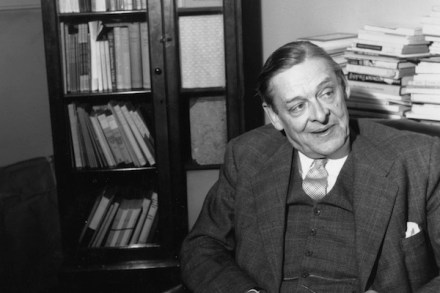
The musical Cats reopened in the West End in December, with a judge from The X Factor in the lead role. The music is by Andrew Lloyd Webber and the songs are, of course, by T.S. Eliot. Eliot died 50 years ago this year, and retains a curious kind of fame, which encompasses West End musicals and scholarly collections of his letters, lovingly published by Faber (most recently, Volume 5: 1930–1931. At 800 pages, this is for true Eliot-fanciers only). In 1948, a line from one of his poems was used in an ad for Esso petrol (‘Time future contained in time past’). In 1956, he gave a lecture on literary criticism in a baseball stadium in Minnesota, and 14,000 people turned up to listen. He was and remains a strange, paradoxical figure: a famous serious poet.

‘One warm night in June 1917 I became the man who nearly killed the Kaiser’

The traditional story told about the first world war is that it changed everything: that it was the end of the old world and the beginning of the modern age, and that art and poetry could never be the same again. So it is refreshing to find, not far into Lance Sieveking’s amiable and haphazard memoirs, the claim that ‘I didn’t realise it at the time, but in 1919 I was a comparative rarity: a complete young man, a man with two arms, two legs, two lungs, two eyes.’ He had fought in the war, and came home unscathed, and that was that. Airborne: Scenes from the Life of Lance Sieveking is a slightly otherworldly book: a collection of agreeable stories drawn from a colourful life, all told with good humour and very little fuss. It reads like a document from a lost time.

Hamlet’s Dreams: The Robben Island Shakespeare, by David Schalkwyk – review

The so-called ‘Robben Island Bible’ is one of the holy relics of Shakespeare criticism. It is a copy of a 1970 edition of Shakespeare’s complete works, kept by a political prisoner on Robben Island, the notorious island jail off Cape Town, during the 1970s and 1980s. The possession of such a book was against the rules, but its owner, Sonny Venkatrathnam, convinced the guards that this was a Bible, and inside the prison it functioned as something like a holy text. The inmates passed around the collection of plays and poems, and 34 signed their names next to a favourite passage. Apartheid was founded upon division. In sharing the Robben Island Bible among themselves, these prisoners used Shakespeare to found their own community.

Dazzling puzzles

Halfway through his new book about Shakespeare’s sonnets, Don Paterson quotes W.H. Auden. Auden was one of Shakespeare’s great commentators and he firmly warned against reading the sonnets as simple statements. ‘It is also nonsensical,’ Auden wrote, ‘to waste time trying to identify characters. It is an idiot’s job, pointless and uninteresting.’ Halfway through his new book about Shakespeare’s sonnets, Don Paterson quotes W.H. Auden. Auden was one of Shakespeare’s great commentators and he firmly warned against reading the sonnets as simple statements. ‘It is also nonsensical,’ Auden wrote, ‘to waste time trying to identify characters. It is an idiot’s job, pointless and uninteresting.

Magnificent killing machine

Lancaster: The Second World War’s Greatest Bomber, by Leo McKinstry Leo McKinstry’s Lancaster: The Second World War’s Greatest Bomber offers more than is promised by the title. As in his last book, Spitfire: Portrait of a Legend, McKinstry has taken an iconic airplane and, in telling its history, gives not only the technical dimensions of its invention but also the myths that came to surround it. He relies heavily upon the recollections of airmen, quoting interviews and their unpublished memoirs alongside a traditional narrative of engineering and combat. This new book is less a simple history of the Lancaster than a broader history of the second world war from the perspective of a single weapon. The Lancaster began as a failure.

A love story

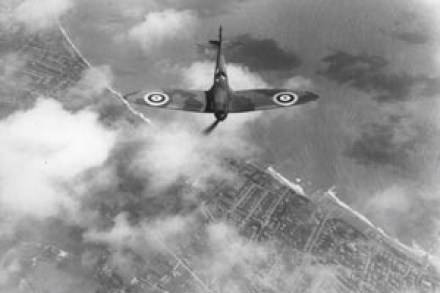
The pilots called it ‘the Spit’, ‘my personal swallow’, ‘a real lady’, or, simply, ‘the fabulous Spitfire’. It was not a perfect machine. Due to its long nose, forward visibility during take-off was poor; it was freezing cold in the cockpit, and so small that the pilot did not have room to wear a bulky flight suit. He had to make do with chamois leather gloves and wool socks. Yet all who flew it marvelled at its grace and power, and it was equally adored by those on the ground.