Daniel McCarthy

Daniel McCarthy

Daniel McCarthy is a US columnist for The Spectator and is the editor of Modern Age: A Conservative Review.

How John McCain lost the Republican Party

From our US edition

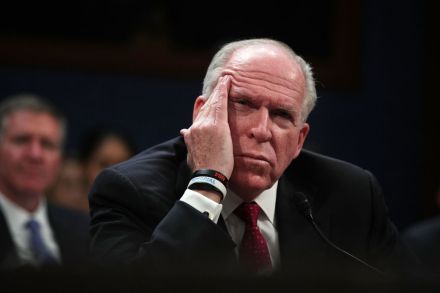
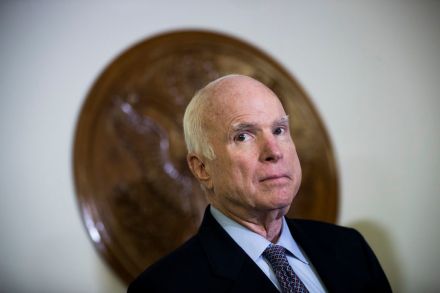
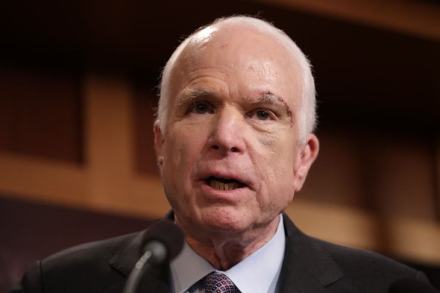
John McCain is dying, and with him is dying a Republican Party that was never born. The Arizona senator has to be understood in relation to the GOP because he has never really been the “maverick” that pundits made him out to be after his first White House bid eighteen years ago. Before then, he was seen as a reliably conservative Republican, albeit a more hawkishly internationalist one than was the norm for the GOP in the Bill Clinton era. Those were the days when Republicans like George W. Bush swore on an oilman’s bible that they were against “nation building.” McCain was more honest about his interventionism, which made him the neoconservatives’ first choice in 2000.

Anarchy in the White House — it’s a good thing

From our US edition

The John Kelly era in the Trump White House is drawing to a close. No one expects the chief of staff to hang on much longer, though if Rex Tillerson’s protracted exit from the State Department is any kind of precedent, Kelly may linger for weeks, even months. The end is in sight nonetheless: tales abound of the president circumventing his chief of staff to talk to people Kelly has banned from the Oval Office. The president evidently feels hemmed in by Kelly, who in turn, according to recent leaks, thinks the president is “an idiot” and “unhinged.” Kelly denies using those words. Even if Trump believes him, though, the fact that other people think the chief of staff described the president that way is damaging enough. Trump has little reason to keep Kelly on.

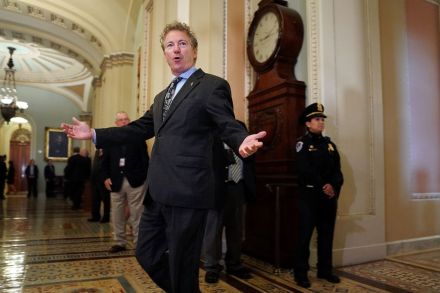
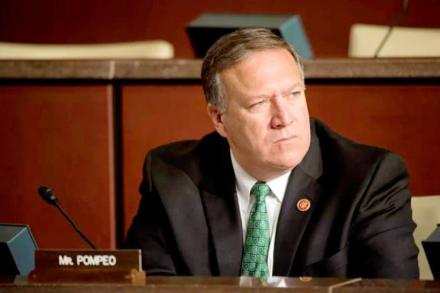
Why did Rand Paul endorse Mike Pompeo?

From our US edition

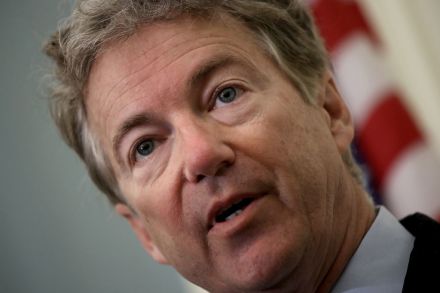
Rand Paul’s whole aim in foreign policy is to keep the U.S. out of unnecessary, unwinnable conflicts in which there is everything to lose and nothing gain. So why are some of his supporters angry at him for staying out of just such a conflict with President Trump over Mike Pompeo’s nomination for secretary of state?Pompeo is much more of an interventionist and national-security statist than Paul, who unsuccessfully opposed Pompeo’s earlier nomination to head the CIA. Paul had threatened to join Democrats to stop Pompeo’s State Department nomination from being reported out of committee. But at last he relented, and it’s not hard to see why.

The war party is ready for its next campaign: Haley 2020

From our US edition

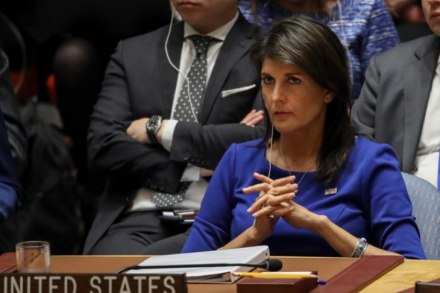
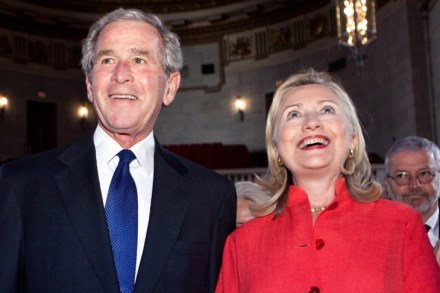
Nikki Haley is at war with Donald Trump. She may be his ambassador to the United Nations, but she wants to set a foreign policy all her own, closer to the global interventionism of George W. Bush or Hillary Clinton than to the muscular but restrained foreign policy that Trump campaigned on in 2016. Her differences with the president were on stark display this week, as she first announced sanctions against Russia that Trump had not approved, then shot back at the new director of the national economic council, Larry Kudlow, when he offered a diplomatic interpretation of her mistake. Kudlow ascribed her off-message remarks to “some momentary confusion,” to which Haley responded, “With all due respect, I don’t get confused.

Paul Ryan is out, and a new congressional Republican Party is waiting to be born

From our US edition

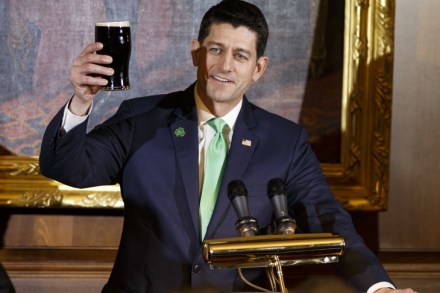
Paul Ryan is only the fourth Republican to serve as speaker of the House of Representatives since 1956. When Ryan took up the gavel, what precedent was there for a successful Republican speakership in modern times? Absolutely none. And at the end of Ryan’s brief tenure—barely beyond three years, Oct. 2015 to Jan. 2019, if he stays the course—there still won’t be one. The congressional GOP is somehow both wild and passive: ideologically rigid yet utterly incapable of achieving the results that conservatives want. Ryan’s predecessor, John Boehner, resigned once he realised this.

Why does nobody seem to care that Isis has used chemical weapons?

From our US edition

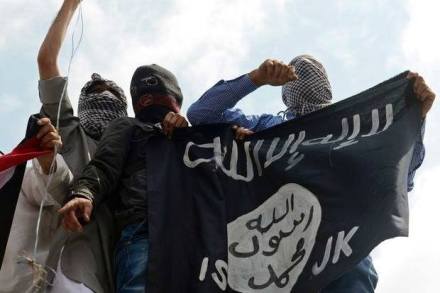
A new era of chemical warfare is upon us—an era of chemical warfare as psychological warfare. The poisoning of Russian double-agent Sergei Skripal and his daughter in Salisbury, England, has dominated the headlines. But another development, from around the same time as the Salisbury attack first became known, is revealing for the attention it hasn’t received. Have you heard about the chemical weapons in Syria that don’t belong to Bashar Assad? On March 22, the State Department officially declared one Joe Asperman a “Specially Designated Global Terrorist” and subject to sanctions. “French national Joe Asperman is a senior chemical weapons expert for Isis,” the State Department announced.

For conservative Catholics, Pope Francis’s hell remarks commit a double heresy

From our US edition

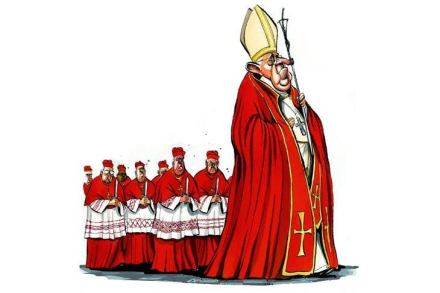
Hell is a hell of a problem. Eternal punishment of the damned is a basic dogma of the Catholic Church and most other forms of Christianity. But the Bible has surprisingly little to say about it, and philosophers have struggled for millennia to give a rigorous account of what hell would really mean. Without reason or revelation giving a clear picture, hell has been left to the popular imagination to fill in with scenes of devils either scary or absurd poking people with their pitchforks.

On guns and porn, morally elevated citizens should tell the busybodies to buzz off

From our US edition

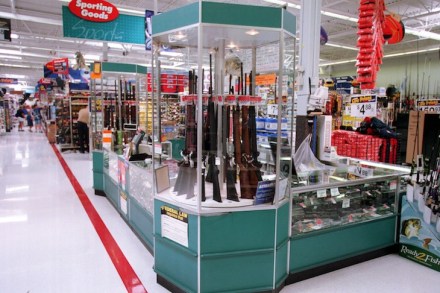
Will foreign pornographers be the last defenders of the Bill of Rights? America is going through one of its periodic seizures of moral grandstanding, with gun owners and supporters of the Second Amendment now deemed so unclean that one may not even have commerce with them. Under pressure from Twitter mobs and activist bullies, companies ranging from Delta Airlines to Google and Walmart have curtailed their firearms-related activities. Delta has scrapped a seldom-used discount for NRA members. Google has banned instructional firearms videos from YouTube.

15 years after Iraq, regime change has come to Washington

From our US edition

This week marks 15 years since the start of America’s war in Iraq. Regime change was George W. Bush’s objective, and Saddam Hussein was duly removed, tried, and executed. But Bush could not have counted on how much regime change would also come to Washington as a result of the war. It contributed to the Republicans’ loss of Congress in 2006 and to the failure of Bush’s party to keep control of the White House in 2008. Yet it did even more: it helped to give Barack Obama, an antiwar candidate—and premature winner of a Nobel Peace Prize as president—an edge against Hillary Clinton among the activist left in the 2008 Democratic primaries. As a senator, Mrs. Clinton had, after all, voted for the war. And then there is Donald Trump.

Is Donald Trump, like Bush, being taken over by neocons?

From our US edition

The Trump administration’s foreign-policy team is beginning to look a lot like a Marco Rubio foreign policy team. It’s not hard to imagine a generally hawkish Republican like Mike Pompeo serving as Secretary of State under Little Marco, and John Bolton - widely tipped to replace H.R. McMaster as national security adviser - would have turned up sooner or later in any GOP administration, except one led by Sen. Rand Paul. Nikki Haley at the United Nations, meanwhile, has been hailed by neoconservatives as heartily as Bolton was when he served as George W. Bush’s UN ambassador from 2005-6. The hawks don’t like to be called 'neoconservatives', but the neoconservative worldview is their worldview.

After Pennsylvania, can the GOP win again?

From our US edition

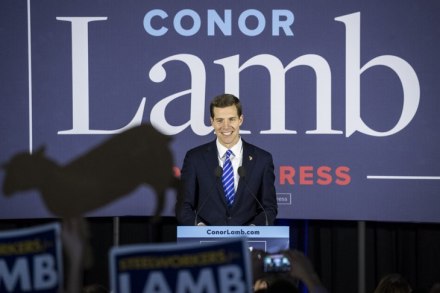
The special election for Pennsylvania’s 18th Congressional District has ended in a photo finish. There are absentee ballots still to be counted, perhaps a recount to be demanded. But it looks as if the Democrat, Conor Lamb, has won in this district that just two years ago voted for Donald Trump over Hillary Clinton by a 20-point margin. Even if the Republican, Rick Saccone, pulls ahead as the final count comes in, Tuesday’s result portends extinction for the GOP majority in Congress. But that was a safe bet even before this debacle. The better question is not whether Republicans have a prayer of hanging on to the House of Representatives, but what kind of Republican Party might eventually emerge from the wreckage to win again.

Is Donald Trump an ‘isolationist’? Or a ‘radical imperialist’? He can’t be both

From our US edition

For two years we’ve been hearing that Donald Trump is an 'isolationist', whatever that word is supposed to mean. Only now two op-ed writers in the New York Times have discovered that he isn’t — instead, Thomas Meaney and Stephen Wertheim write, 'Let’s call Mr. Trump’s vision what it is: radical American imperialism.' Let’s not, because it isn’t true. On the contrary, Donald Trump is the most anti-imperialist president in a generation, even if he is also far from being a mythical 'isolationist'. North Korea is isolationist, and perhaps Meiji Japan was, too. But Great Britain had a world empire when 'splendid isolation' was a maxim of Conservative leaders’ foreign policy in the 19th century.

Bureaucracy is more dangerous than the AR-15

From our US edition

Should taking rights away from innocent people be a first resort or a last resort—or no resort at all—in response to a spate of heinous crimes? If we were talking about the First Amendment rights of religious minorities or of free speech, most liberals would insist that people who had committed no crime shouldn’t forfeit any of their liberties. But where the Second Amendment is concerned, these same liberals are quick to call for law-abiding citizens to give up a measure of freedom simply because they are under 21 or want to buy something that progressives don’t like—such as an AR-15 rifle.

Why Trump’s ‘trade war’ makes strategic sense

Has Donald Trump sparked off a trade war? His plans for a 25 percent tariff on steel imports and 10 percent tariff on aluminum have shocked friend and foe alike. China is outraged; so are Canada, Japan, and South Korea—allies that in fact export more steel to the U.S. than China does. They stand to be hurt worst if they aren’t granted exemptions or cut special deals by the president. Trump accuses the Chinese of 'dumping' steel into the American market, while the legal grounds for his new tariffs rest in the idea that strategically critical manufacturing is endangered by a diminished U.S. metals industry.

The problem with America is not Donald Trump

Something has gone horribly wrong in America, but it isn’t Donald Trump. The 45th president’s first year has in fact been a very good year for the country. By the time those 12 months were up, the unemployment rate was the lowest the country had seen in 18 years, and the number of new filings for unemployment benefits was at a 45-year record low. Even black Americans were doing better under Trump than they did under the first black president: by the start of 2018 the black unemployment rate was the lowest it had been since the Bureau of Labor Statistics started keeping count. For all that his enemies insist that Trump’s electoral appeal was really about race, in 2016 Trump made jobs the centrepiece of campaign.

You’re fired!

 Washington D.C. Even a reality show needs good plot twists, and Donald Trump has delivered them like the master he is. First the misdirection: a week of publicly humiliating his attorney-general, Jeff Sessions, to the point where Sessions would surely quit or be fired. Then the sudden swerve — it was the press shop, not the justice department, that was decapitated. Sean Spicer was out as press secretary. Anthony Scaramucci, a mini Trump whose language was as blue as the lenses of his fancy sunglasses, was in as White House communications director. Reince Priebus, chief of staff, was next to go, sacked after clashing with ‘the Mooch’. And then the climactic twist: in virtually his first act in office, Priebus’s replacement, Marine Gen.

Obama fell for his own myth

Barack Obama’s farewell address was not one for the ages. Like his presidency, it was full of hope yet ultimately disappointing. When Obama rode into office eight years ago, he had two mandates from the public: to right the economy after the Great Recession and to end the wars that George W. Bush had started but couldn’t finish. Beyond that, yes, his voters hoped this first black president would usher America into a post-racial future. Even many Americans who had voted against him wished him well. He was enormously popular, and he had majorities in Congress to prove it. He was in a position to make good on his promises. https://www.youtube.com/watch?v=H1O4iOoZxjg But he didn’t, and he doesn’t seem to realise it.

The intelligent case for voting Trump

Last week more than 130 right-wing thinkers put their names to a defiant document — a list of ‘Scholars and Writers for America’ in support of Donald Trump. It includes the editors of five of the country’s leading conservative journals of ideas: R.R. Reno of the Christian conservative First Things; Roger Kimball of the New Criterion, the right’s leading journal of the arts; Charles Kesler of the Claremont Review of Books; the American Spectator’s R. Emmett Tyrrell; and me, the editor of the American Conservative. (Notably lacking are names from America’s oldest conservative magazine, National Review, which has been as hostile to Trump as the columnists of the New York Times and Washington Post.

Brains for Trump

Last week more than 130 right-wing thinkers put their names to a defiant document — a list of ‘Scholars and Writers for America’ in support of Donald Trump. It includes the editors of five of the country’s leading conservative journals of ideas: R.R. Reno of the Christian conservative First Things; Roger Kimball of the New Criterion, the right’s leading journal of the arts; Charles Kesler of the Claremont Review of Books; the American Spectator’s R. Emmett Tyrrell; and me, the editor of the American Conservative. (Notably lacking are names from America’s oldest conservative magazine, National Review, which has been as hostile to Trump as the columnists of the New York Times and Washington Post.

Obamacare? Not in the least

   Washington, DC On or around 17 October, the United States will stop paying its bills. The US Treasury will reach the limit of the debt it can legally issue — the ‘debt ceiling’ — and unless Barack Obama and Republicans in the House of Representatives come to an agreement, the US will stand on the brink of default. How did Obama get us into this mess? More importantly, can he get us out before the country (if not the world) plummets into crisis? The answer to the first question might surprise you: Obama is not an adroit politician. Good at winning votes, yes — not only better than the Republicans he faced in 2008 and last year, but better than Bill Clinton and either of the Bushes.