Daniel McCarthy

Daniel McCarthy

Daniel McCarthy is a US columnist for The Spectator and is the editor of Modern Age: A Conservative Review.

The return of Rand Paul

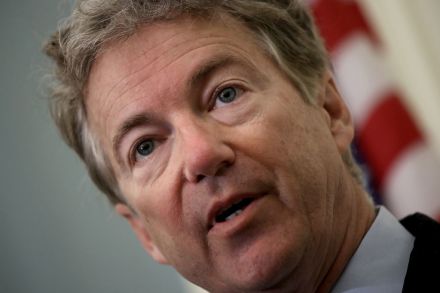
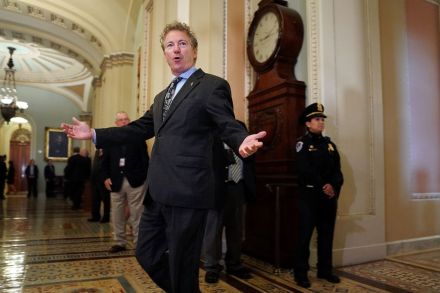
Against all odds, Rand Paul is once again the most interesting man in politics. When TIME first called him that in 2014, the Kentucky senator looked to be a serious presidential contender. Now he’s become President Trump’s unlikeliest alter ego — a Republican who can say and do many of the same things the president likes to say and do, but with greater ideological focus and discipline. Nowhere is this more apparent than in foreign policy, where the senator has both the institutional independence and the philosophical self-assurance to fight battles that the president’s advisers don’t want Trump himself to fight. Russia is a case in point.
No major upsets in Tuesday elections — but don’t expect a return to ‘normalcy’

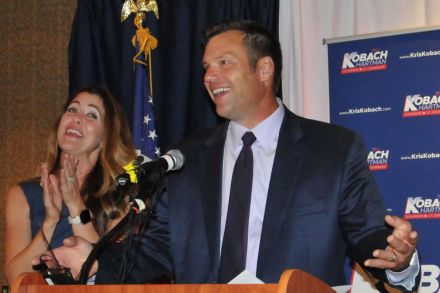
If Tuesday’s elections needed a slogan, it would be “make politics boring again.” In the hottest race of the night, the special election for Ohio’s 12th congressional district, Democrats failed to pull off an upset victory. Republican Troy Balderson, running to replace incumbent Republican Patrick Tiberi, squeaked out a one-point win over Democrat Danny O’Connor in a district that has reliably elected GOP congressmen since 1982. (It’s John Kasich’s old district.) Democrats take heart from the narrow margin—if Ohio 12 is this close, doesn’t that mean the Democrats will pick up less heavily Republican districts in November and cruise to control in the House of Representatives?Quite likely.

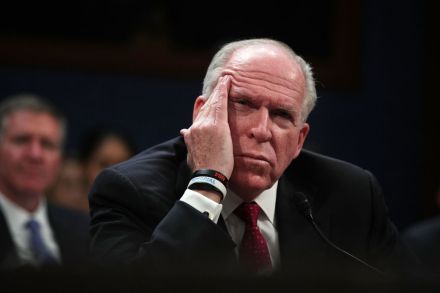
Who benefits from John Brennan’s security clearance?

John Brennan had a tough time when he took his first CIA lie-detector test in 1980. He was asked a standard question as to whether he had ever belonged to an organisation dedicated to the overthrow of the United States government. Not quite, but almost: just four years earlier Brennan, then a student at Fordham University, had cast his first vote for president for the candidate of the Communist Party USA. Brennan had never been a party member—just a Communist voter. The CIA let him in. A little more than thirty years later, he was appointed by Barack Obama to lead the agency. But now, ex-CIA director Brennan is questioning the patriotism of Obama’s successor, accusing the president of being an agent of Moscow.

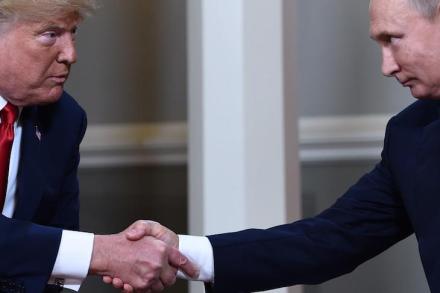
Donald Trump’s fight is against globalisation and the left – not Vladimir Putin

History somehow isn’t moving toward its predetermined end, and this has driven Western liberals completely mad. The theatrical overreaction to Donald Trump’s joint press conference with Vladimir Putin in Helsinki is just the latest proof. Before the Trump-Putin summit, pundits warned that Trump might recognise Crimea as Russian territory. He did nothing of the sort. But he did give Putin the benefit of the doubt when the Russian leader, in a carefully chosen phrase, said the ‘Russian state’ had not interfered in the 2016 election. Trump’s equivocation—‘My people came to me, Dan Coates came to me and some others, they said they think it's Russia. I have President Putin. He just said it's not Russia.

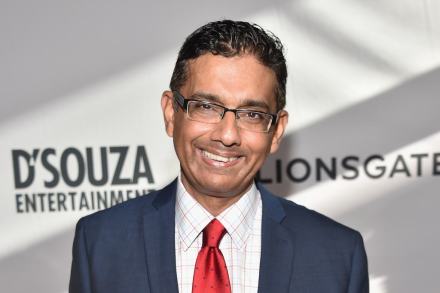
Dinesh D’Souza’s pardon may be political, but that isn’t Donald Trump’s fault

America is a free country in which the law criminalises almost everyone. The web of nanny-state regulations and bureaucratic technicalities is so dense that anyone can be snared. The law criminalises far more people and far more activities than prosecutors can possibly tackle. So they act on their discretion, and that discretion is often informed by political considerations. Prosecute a high-profile figure, and you can present yourself as David slaying Goliath.Donald Trump’s frankly political pardon of Dinesh D’Souza—admirably frank, even—should be less cause for outrage than the use of prosecutorial power to score partisan points. Not that D’Souza was a hapless innocent caught in the complexities of U.S. campaign law.

If this is a trade war, the United States will win

Donald Trump is following through on his threat—or promise, as his voters see it—to impose steep tariffs on foreign goods in the name of supporting American industry, starting with levies of 25 per cent on steel and 10 per cent on aluminium imports. Allies and neighbours that had been granted temporary exemptions are now set to feel the brunt of the tariffs: Canada is America’s leading source of foreign steel, and Mexico and the European Union will also feel the pain. They’re all threatening to retaliate, and the press is calling this a trade war. If this is a war, it’s one the United States will win.

Why America First beats the party of Bernie Sanders

The 2018 midterm elections, like the 2016 presidential contest, are proving to be far more interesting than conventional wisdom ever suspected. Two years ago, pundits were sure that Trump would lose, right up to the early evening of election day. This year, the conventional wisdom has it that Democrats will take back control of at least the House of Representatives, probably by a landslide, if not the Senate as well. But two critical polling indicators suggest the GOP’s hand is getting stronger. President Trump’s approval ratings are solidly into the 40s in recent polls, and even hit 50 percent in the most in the Rasmussen survey last week (which, to be sure, has consistently shown better numbers for Trump).

John McCain is right about Gina Haspel

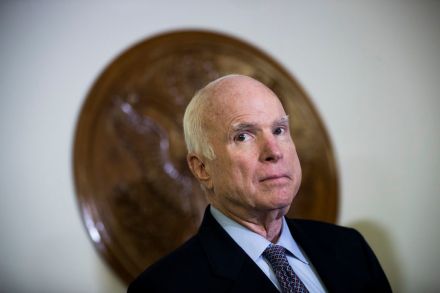
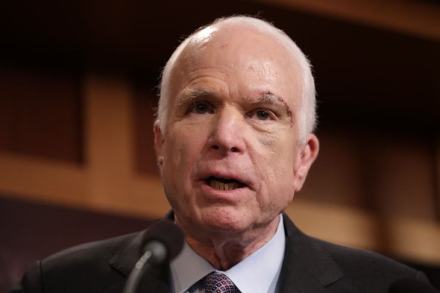
John McCain is a victim of hypocrisy. His allies in Washington and admirers in the national media praise him as the conscience of the nation, even as they betray him in his last desperate battle against the normalisation of torture. After a White House communications staffer, Kelly Sadler, joked that McCain’s views don’t matter because “he’s dying anyway,” the senator’s pretend friends called for her firing. Her tasteless joke, badly received even among colleagues, provoked a degree of outrage from wonks and commentators unmatched by any such umbrage at the nomination of a woman implicated in torture and the destruction of evidence to head the CIA. For elite Washington, disrespectful words are worse than waterboarding.

How John McCain lost the Republican Party

John McCain is dying, and with him is dying a Republican Party that was never born. The Arizona senator has to be understood in relation to the GOP because he has never really been the “maverick” that pundits made him out to be after his first White House bid eighteen years ago. Before then, he was seen as a reliably conservative Republican, albeit a more hawkishly internationalist one than was the norm for the GOP in the Bill Clinton era. Those were the days when Republicans like George W. Bush swore on an oilman’s bible that they were against “nation building.” McCain was more honest about his interventionism, which made him the neoconservatives’ first choice in 2000.

Anarchy in the White House — it’s a good thing

The John Kelly era in the Trump White House is drawing to a close. No one expects the chief of staff to hang on much longer, though if Rex Tillerson’s protracted exit from the State Department is any kind of precedent, Kelly may linger for weeks, even months. The end is in sight nonetheless: tales abound of the president circumventing his chief of staff to talk to people Kelly has banned from the Oval Office. The president evidently feels hemmed in by Kelly, who in turn, according to recent leaks, thinks the president is “an idiot” and “unhinged.” Kelly denies using those words. Even if Trump believes him, though, the fact that other people think the chief of staff described the president that way is damaging enough. Trump has little reason to keep Kelly on.

Why did Rand Paul endorse Mike Pompeo?

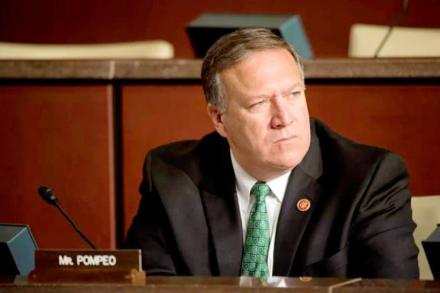
Rand Paul’s whole aim in foreign policy is to keep the U.S. out of unnecessary, unwinnable conflicts in which there is everything to lose and nothing gain. So why are some of his supporters angry at him for staying out of just such a conflict with President Trump over Mike Pompeo’s nomination for secretary of state?Pompeo is much more of an interventionist and national-security statist than Paul, who unsuccessfully opposed Pompeo’s earlier nomination to head the CIA. Paul had threatened to join Democrats to stop Pompeo’s State Department nomination from being reported out of committee. But at last he relented, and it’s not hard to see why.

The war party is ready for its next campaign: Haley 2020

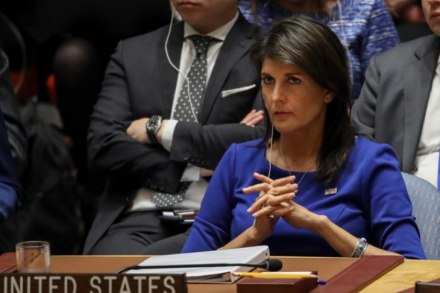
Nikki Haley is at war with Donald Trump. She may be his ambassador to the United Nations, but she wants to set a foreign policy all her own, closer to the global interventionism of George W. Bush or Hillary Clinton than to the muscular but restrained foreign policy that Trump campaigned on in 2016. Her differences with the president were on stark display this week, as she first announced sanctions against Russia that Trump had not approved, then shot back at the new director of the national economic council, Larry Kudlow, when he offered a diplomatic interpretation of her mistake. Kudlow ascribed her off-message remarks to “some momentary confusion,” to which Haley responded, “With all due respect, I don’t get confused.

Paul Ryan is out, and a new congressional Republican Party is waiting to be born

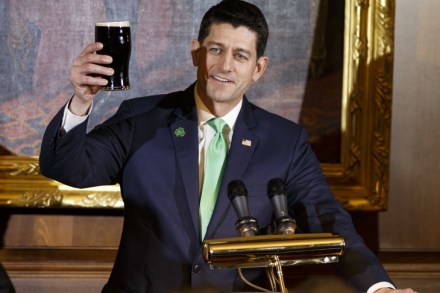
Paul Ryan is only the fourth Republican to serve as speaker of the House of Representatives since 1956. When Ryan took up the gavel, what precedent was there for a successful Republican speakership in modern times? Absolutely none. And at the end of Ryan’s brief tenure—barely beyond three years, Oct. 2015 to Jan. 2019, if he stays the course—there still won’t be one. The congressional GOP is somehow both wild and passive: ideologically rigid yet utterly incapable of achieving the results that conservatives want. Ryan’s predecessor, John Boehner, resigned once he realised this.

Why does nobody seem to care that Isis has used chemical weapons?

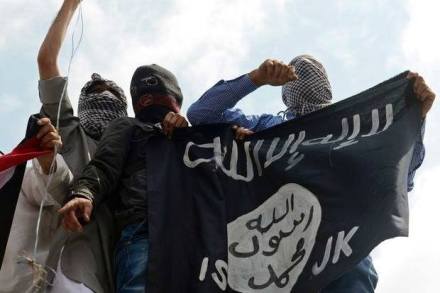
A new era of chemical warfare is upon us—an era of chemical warfare as psychological warfare. The poisoning of Russian double-agent Sergei Skripal and his daughter in Salisbury, England, has dominated the headlines. But another development, from around the same time as the Salisbury attack first became known, is revealing for the attention it hasn’t received. Have you heard about the chemical weapons in Syria that don’t belong to Bashar Assad? On March 22, the State Department officially declared one Joe Asperman a “Specially Designated Global Terrorist” and subject to sanctions. “French national Joe Asperman is a senior chemical weapons expert for Isis,” the State Department announced.

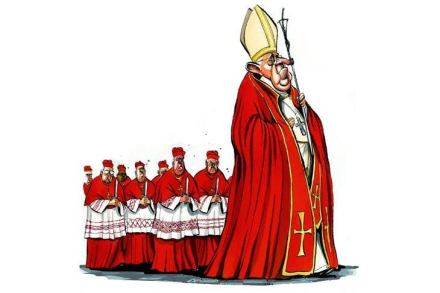
For conservative Catholics, Pope Francis’s hell remarks commit a double heresy

Hell is a hell of a problem. Eternal punishment of the damned is a basic dogma of the Catholic Church and most other forms of Christianity. But the Bible has surprisingly little to say about it, and philosophers have struggled for millennia to give a rigorous account of what hell would really mean. Without reason or revelation giving a clear picture, hell has been left to the popular imagination to fill in with scenes of devils either scary or absurd poking people with their pitchforks.

On guns and porn, morally elevated citizens should tell the busybodies to buzz off

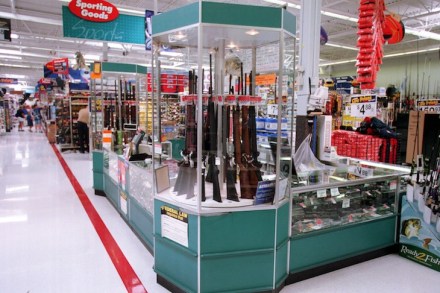
Will foreign pornographers be the last defenders of the Bill of Rights? America is going through one of its periodic seizures of moral grandstanding, with gun owners and supporters of the Second Amendment now deemed so unclean that one may not even have commerce with them. Under pressure from Twitter mobs and activist bullies, companies ranging from Delta Airlines to Google and Walmart have curtailed their firearms-related activities. Delta has scrapped a seldom-used discount for NRA members. Google has banned instructional firearms videos from YouTube.

15 years after Iraq, regime change has come to Washington

This week marks 15 years since the start of America’s war in Iraq. Regime change was George W. Bush’s objective, and Saddam Hussein was duly removed, tried, and executed. But Bush could not have counted on how much regime change would also come to Washington as a result of the war. It contributed to the Republicans’ loss of Congress in 2006 and to the failure of Bush’s party to keep control of the White House in 2008. Yet it did even more: it helped to give Barack Obama, an antiwar candidate—and premature winner of a Nobel Peace Prize as president—an edge against Hillary Clinton among the activist left in the 2008 Democratic primaries. As a senator, Mrs. Clinton had, after all, voted for the war. And then there is Donald Trump.

Is Donald Trump, like Bush, being taken over by neocons?

The Trump administration’s foreign-policy team is beginning to look a lot like a Marco Rubio foreign policy team. It’s not hard to imagine a generally hawkish Republican like Mike Pompeo serving as Secretary of State under Little Marco, and John Bolton - widely tipped to replace H.R. McMaster as national security adviser - would have turned up sooner or later in any GOP administration, except one led by Sen. Rand Paul. Nikki Haley at the United Nations, meanwhile, has been hailed by neoconservatives as heartily as Bolton was when he served as George W. Bush’s UN ambassador from 2005-6. The hawks don’t like to be called 'neoconservatives', but the neoconservative worldview is their worldview.

After Pennsylvania, can the GOP win again?

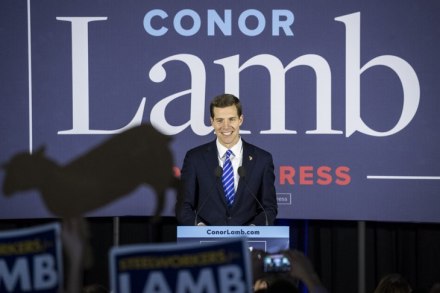
The special election for Pennsylvania’s 18th Congressional District has ended in a photo finish. There are absentee ballots still to be counted, perhaps a recount to be demanded. But it looks as if the Democrat, Conor Lamb, has won in this district that just two years ago voted for Donald Trump over Hillary Clinton by a 20-point margin. Even if the Republican, Rick Saccone, pulls ahead as the final count comes in, Tuesday’s result portends extinction for the GOP majority in Congress. But that was a safe bet even before this debacle. The better question is not whether Republicans have a prayer of hanging on to the House of Representatives, but what kind of Republican Party might eventually emerge from the wreckage to win again.

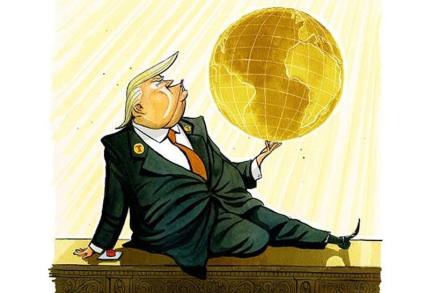
Is Donald Trump an ‘isolationist’? Or a ‘radical imperialist’? He can’t be both

For two years we’ve been hearing that Donald Trump is an 'isolationist', whatever that word is supposed to mean. Only now two op-ed writers in the New York Times have discovered that he isn’t — instead, Thomas Meaney and Stephen Wertheim write, 'Let’s call Mr. Trump’s vision what it is: radical American imperialism.' Let’s not, because it isn’t true. On the contrary, Donald Trump is the most anti-imperialist president in a generation, even if he is also far from being a mythical 'isolationist'. North Korea is isolationist, and perhaps Meiji Japan was, too. But Great Britain had a world empire when 'splendid isolation' was a maxim of Conservative leaders’ foreign policy in the 19th century.