Daniel McCarthy

Daniel McCarthy

Daniel McCarthy is a US columnist for The Spectator and is the editor of Modern Age: A Conservative Review.

Trump can forge a lasting peace

President Trump is giving peace a chance in the Persian Gulf, and for Iran’s leadership this is literally a matter of life or death. If Iran had continued to fight, one of two things would have happened. Either the war would have resumed its original tempo, leading to the extinction of another generation of Iranian leaders and the loss of yet more of the nation’s military capabilities, only for Tehran to strike a deal much like this one after realizing the futility of its efforts; or the war would have escalated, as the US employed greater force, potentially including ground troops, to force open the Strait of Hormuz. The latter scenario would have been costly to America, and the world, but it would have been fatal to Tehran.

Trump Iran

The ‘great man’ era is passing away

From our US edition

Not long ago, I participated in one of the many off-the-record discussions in Washington about ending the war in Ukraine. This conversation was quite detailed, with American academics and policy wonks asking a European who was especially well-informed on Russian matters just what a land-for-peace deal or security guarantees acceptable to all parties might look like. When my turn to speak came around, however, I had to wonder whether all this wasn’t moot. There just isn’t much time to reach an agreement – let alone implement one –before the end of Donald Trump’s second term. And when America elects its next president in November 2028, Vladimir Putin will be 75 years old.

Don’t bet on a blue wave

There are several reasons to think we won’t see a blue wave in this year’s midterm elections. A basic one is that the Democratic party simply isn’t very popular. In late May, Donald Trump’s approval ratings in the RealClear polling aggregate stood around 40 percent, which sounds bad. Yet Trump is more popular than his party – approval of the Republican brand was in the vicinity of 38 percent. And the Democrats’ ratings were even worse – standing, or one might say wilting, at about 36 percent. Those figures are not to be confused with “generic ballot” polling, which asks voters which party they would prefer in the forthcoming election. Democrats have lately enjoyed a lead of some seven points over the GOP in that category.

Where Thomas Massie went wrong

From our US edition

What happens when a Republican congressman turns his primary election into a referendum on Donald Trump? What happens when he turns it into a referendum on Israel? The answer to those questions should be stunningly obvious. There was never a reason to expect Kentucky to return a different verdict than anywhere else. Quite the contrary – it’s a staunchly red state. Asked to choose between Trump and a congressman who’d lately been garnering favorable coverage in the New Yorker, the Atlantic, the New York Times, Republican voters were not about to abandon the president. The very things Thomas Massie’s newfound friends liked about him made him unacceptable to the people who actually vote in Republican primaries.

Massie

Why the Republicans are still more focused than the Democrats

From our US edition

The pundits and political professionals of Washington, DC have never had a very good understanding of the Republican party. They hate its conservative and populist elements, and they only know how to evaluate the prospects of those elements using irrelevant criteria, like a chess club judging a basketball team – only it’s the political right that’s more cerebral than the dead center. It doesn’t matter how many times the conventional opinion is dead wrong. The Republican right was supposed to be humiliated, broken and vanquished for good after Barry Goldwater’s landslide loss to Lyndon Johnson in 1964. And then again after Richard Nixon resigned in disgrace a decade later. Donald Trump, of course, was totally unelected in 2016.

republicans

The Democrats’ race-based regime is collapsing

From our US edition

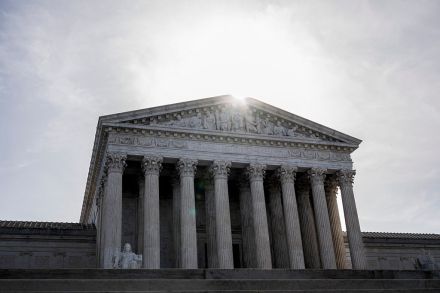
The Supreme Court’s decision yesterday in Louisiana v. Callais et al has inevitably drawn strong criticism. In ruling that electoral districts cannot be redefined along racial lines, the Court stands accused of "gutting" the Voting Rights Act, crippling civil-rights law and effectively disenfranchising minority voters.  What the Supreme Court has "gutted" is not the Voting Rights Act of 1965 – but a nakedly racial form of gerrymandering But the Court’s decision was correct on the merits. It also represents a great retrenchment that’s taking place in American politics.

Why America still longs for monarchy

Even when he’s not visiting the United States, King Charles III might occasionally daydream about what his reign would be like today if things had worked out differently 250 years ago. The King is not, of course, the head of government anywhere nowadays, and were Charles the king of America, he wouldn’t necessarily wield any more power here than he does in modern Britain. Yet there’s reason to think he possibly could – for the truth is, Americans love monarchy at least as much as they fear it, and they love the royal family, too.

What would Lincoln do?

From our US edition

If Americans are feeling gloomy as the nation’s 250th birthday approaches, they might look back to what Abraham Lincoln thought about the condition of the country in 1838 to get some perspective on present discontents. That was the year a young Lincoln, then just a state senator, delivered a speech at the Young Men’s Lyceum in Springfield, Illinois, on “the perpetuation of our institutions.” Lincoln perceived trouble ahead, but not exactly of the sort that would lead to the Civil War. He was already concerned about the lawlessness arising from racial strife, and there’s a hint of his future insistence upon the truth of the Declaration of Independence’s assertion that “all men are created equal.

lincoln

Should America be Venice or Sparta?

From our US edition

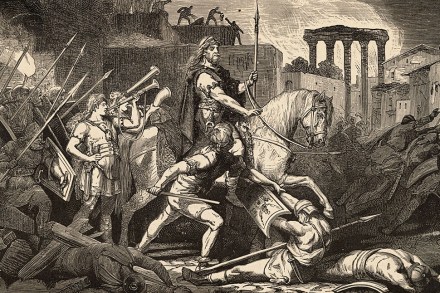
Americans never tire of asking themselves whether their country is turning into Rome. A Latin motto on the Great Seal of the United States proclaims a novus ordo seclorum – a “new order of ages.” But in the poem from which that phrase is adapted, Virgil’s fourth eclogue, the words mean a quite exact replay of past events: there will be, for example, another voyage of the Argo and another Trojan War. Our new order might likewise repeat the history of Rome. One philosopher who gave a great deal of thought to new orders and Roman history as a template was Niccolò Machiavelli, particularly in his Discourses on the First Ten Books of Titus Livy.

Are Republicans trying to lose the midterms?

From our US edition

Are congressional Republicans absolutely determined to forfeit this November’s midterm elections? It sure looks that way. The GOP would hardly be acting any differently if it were secretly run by its enemies. The election-security provisions of the SAVE Act enjoy overwhelming popular support. According to CBS/YouGov polling, requiring photo ID to vote is literally an 80-20 issue, commanding the support of four out of five voters. Yet the Republican Senate, with a 53-47 majority, is struggling to pass the law. Yes, the filibuster gives Chuck Schumer a powerful weapon to use against the GOP, but there are ways around that – ways the GOP chooses not to take. Democrats are killing the bill without even having to be held accountable for voting against it.

Why is America always at war?

From our US edition

Sizable minorities on both the left and the right want America to intervene in fewer foreign conflicts and to exercise more restraint in foreign policy. In the 2006 midterm elections, antiwar voters contributed to the Republicans’ loss of both houses of Congress. They also helped defeat Hillary Clinton in the 2008 Democratic presidential primary contest and the Republican nominee, John McCain, at that year’s general election. While McCain styled himself a “maverick,” the label could be more accurately bestowed upon the anti-interventionist Republican Ron Paul, who shocked the GOP establishment by showing that an unstinting critic of the Iraq War could mount an insurgency within the party of George W. Bush.

The problem with Thomas Massie

From our US edition

Thomas Massie’s predicament, as he fends off a Trump-backed challenger – and Trump himself – in the Republican primary for his seat in Congress, is symbolic of the vexed relationship libertarians have with the right these days. Massie was not only a Tea Party Republican when he was first elected in 2012, he was a Ron Paul Republican, inspired by the longtime, philosophically libertarian Texas congressman who made his second bid for the GOP presidential nomination that year. The Commonwealth of Kentucky had sent Paul’s son, Rand, to the US Senate two years before, and its 4th congressional district put Massie in the House. Libertarians are natural junior partners in someone else’s enterprise ​Now Trump is trying to take him out.

Thomas Massie

America’s last war in the Middle East

From our US edition

Win or lose, Donald Trump has begun the last war the United States is ever likely to fight in the Middle East. That might sound wildly optimistic, but what it really means is that war with Iran has been decades in the making. If the mission succeeds, it will mark the end of an era. And if it fails, this war will have exhausted what’s left of America’s willingness to remake the region by force. It’s not just that Iran puts the case for regime change to the ultimate test. America’s relationship with Israel is also on trial.

neoconservative

Why Iran marks the end of neoconservatism

45 min listen

Spectator World columnist – and Heritage Foundation fellow – Daniel McCarthy joins Freddy Gray to explain how Trump's war with Iran could mark the end of an era, that of neoconservatism. For Daniel, there is no contradiction between Trump's 'America First' policy and its overseas interventions: Trump is pursuing a version of hegemony that will reduce the need for future interventions. If all goes to plan, this could mark an ideological watershed that stretches back to the first Gulf War in the early 1990s – but it's a big 'if'. What if the conflict spirals out of control? To what extent was this driven by Trump, or by Netanyahu? And what are the dynamics at play between the leadership figures in Maga? Produced by Patrick Gibbons.

Why Iran marks the end of neoconservatism

The Bezos-Musk rivalry and the changing power of media

From our US edition

Elon Musk knows something Jeff Bezos doesn’t. Each has had turns as the world’s richest man, and both are media overlords. But whereas Musk’s purchase of Twitter arguably won a presidential election and briefly put the fate of the United States federal government in Musk’s hands, Bezos’s purchase of the Washington Post has bought him nothing but grief. No election victories, no sway in Washington, just the hatred of the journalists he subsidizes to the tune of hundreds of millions of dollars. Media power in the 21st century is about platforms, not publications. Bezos shouldn’t have needed Musk to teach him this: the whole strategy behind the business that made him rich, Amazon.

Bezos

The folly of Hamnet

From our US edition

Democracy has not been kind to William Shakespeare. His works may be read and performed more widely than ever, but readers and audiences understand less and less of what they see. Egalitarianism encourages narcissism, and narcissism interprets all art as autobiography. Shakespeare could only write about his own life, and if, in fact, he wrote about royal courts and noblemen, then Shakespeare must not have been Shakespeare, the actor from Stratford-upon-Avon. He must have been Edward de Vere, the earl of Oxford, or somebody like that. He could not have possessed the intelligence and imagination to transcend his personal identity, for none of us can do that. It would be superhuman. That’s one foolish contention arising from the idea that writing must always be memoir.

The unspoken logic of the anti-ICE mob

A basic question all Americans should ask themselves before they draw any other conclusions about events in Minneapolis is this: when is it right to interfere with law enforcement? The consequences of doing so are, obviously, potentially grave, even fatal. Obstructing or harassing officers of the law could put their lives in danger as well as yours, and bystanders’ as well. Law enforcement, of necessity, involves risks and the potential for violence, which officers are authorised to use and criminals – or third parties – are not. One side in the Minneapolis turmoil does not accept these premises, or at least doesn’t accept they apply when the laws to be upheld are laws that leftists don’t like.

The unspoken logic of the anti-ICE mob

From our US edition

A basic question all Americans should ask themselves before they draw any other conclusions about events in Minneapolis is this: when is it right to interfere with law enforcement? The consequences of doing so are, obviously, potentially grave, even fatal. Obstructing or harassing officers of the law could put their lives in danger as well as yours, and bystanders’ as well. Law enforcement, of necessity, involves risks and the potential for violence, which officers are authorized to use and criminals – or third parties – are not. One side in the Minneapolis turmoil does not accept these premises, or at least doesn’t accept they apply when the laws to be upheld are laws that leftists don’t like.

anti-ICE

Did the American Revolution ever really end?

From our US edition

We Americans celebrate July 4, 1776, as our national birthday, and this year, of course, marks our 250th. But the American Revolution began before that. And when did it end? Maybe it never did. In 1812, warhawks in Congress and president James Madison – the man known to posterity as the very father of the Constitution – launched an invasion of Canada in the hopes of completing the American Revolution. Canada was unfinished business. We had invaded Québec in 1775, but that was a disaster. And even though the 13 colonies that became the United States succeeded in winning their independence from Britain, the newborn US was not altogether free.

The plot against J.D. Vance

From our US edition

The Republican establishment is on the verge of extinction. Donald Trump’s first term wasn’t enough to kill it off: Trump came into office in 2017 with establishment figures such as Mitch McConnell and Paul Ryan leading the party in Congress, and Trump’s own vice president, Mike Pence, had been chosen for that role as a reassurance to the old guard. Trump made some efforts to staff his administration with outsiders, but the likes of Steve Bannon or the ill-fated Rex Tillerson were heavily outnumbered by Republicans who would have been just as happy – or a great deal happier – to serve in another Bush administration.  This time, though, things are very different.