Daniel Korski

Hail the moderate president

From our UK edition

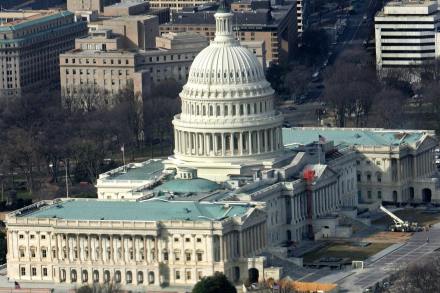
The news is in: the next U.S president will be a moderate. Why? Because whoever is elected in November, the Democrats look set to increase their share of congressional seats and may even win enough seats in the Senate to overcome Republican attempts to block legislation. Currently, Democrats have a 51-seat majority in the 100-member Senate. They would need 60 seats to end debate on legislation and send it to the Senate floor for an up-or-down vote. All 435 House seats and 35 of the 100 Senate seats will be up for election and Congress’ approval rating is currently quite low -- just 19 percent of those recently polled by Gallup/USA Today said they approve of Congress’ performance.
The Tories go nuclear

From our UK edition

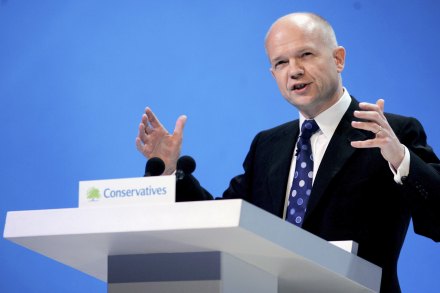
In a recent conversation with a Cameroon about the Tory Leader’s foreign policy overtures, I was alerted to William Hague’s July speech at the Institute for Strategic Studies during which the Shadow Foreign Secretary said the world faces a "new age of insecurity" unless the brakes are put on nuclear proliferation. In many ways, his concern sits a little uncomfortably with today’s dominant foreign policy narratives. We are meant mainly to talk about home-grown terrorists, climate change and – after Georgia’s buffoonery and Russia’s aggression – the resurgence of Cold War–style confrontation with Moscow as well as the rise of China.

The East London Carnival?

From our UK edition

The streets around my house have now been cleaned, shops have opened again and any trace of the colour-packed, music-filled event that is the Notting Hill Carnival has disappeared. The event was a success. Towards the end, police did fight a battle with about 40 youths and ended up arresting 330 people – up from 246 last year. But overall, the event went smoothly with about 850,000 people enjoying the music, floats and the alluring energy of African-Caribbean popular culture. So why, one week after the event, am I writing this blog? Because I think that the event needs to move on.

Conspirator-In-Chief

From our UK edition

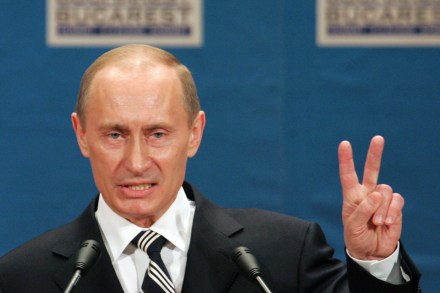
So it’s all America's fault, heh, Mr Putin? The Russian-Georgian War as a “wag-the-dog” kind of operation aimed at making John McCain the next US president. Sure. And what about that Third Tower, Mr. Prime Minister? Mr Putin's unhinged, Oliver Stone-like conspiracy reminds me of Nikita Khrushchev’s refusal to believe, when he visiting the U.S at the height of the Cold War, that the cars in a car park outside a Detroit factory belonged to the workers. Who owned them then, the Premier was asked? "The CIA have their ways", he retorted knowingly. Unlike his predecessor’s, Mr. Putin’s statement is not private. Given in an interview with CNN, it is intended for both foreign and domestic consumption. Blaming the U.

Stopping the Russian domino

From our UK edition

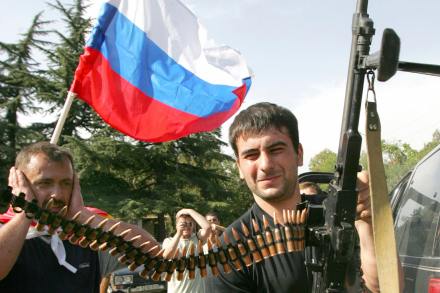
With French President Sarkozy having called an emergency EU summit to discuss Georgia, Europe’s finest diplomatic minds are now trying to decide what the leaders should actually talk about when they meet. In the run-up to Russia’s invasion of Georgia, the EU sought to avoid the issue altogether. Much has been made of the diplomatic offensive undertaken by President Sarkozy and Angela Merkel, which brought to the fighting to an end. But Russian troops remain ensconced inside Georgia, against the spirit if not the actual letter of the EU-brokered six-point plan. So what can EU leaders now do? Help is luckily at hand.

Britain’s missing Iraq debate

From our UK edition

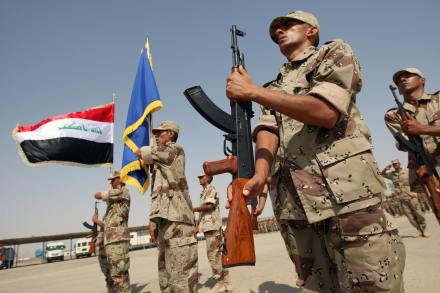
In the U.S, after a slow start by a media suffering from post-9/11 stress, a great debate about Iraq is going on. Every administration initiative is evaluated, wonks have made careers out of tracking Iraq policy and the press are full of analysis.  The future of Iraq's leader is a source of constant editorialising. Every month, politicians and analysts are flown to Baghdad by the U.S government for briefings. In fact, the surge was not even invented by the White House, but by the American Enterprise Institute, an independent, albeit government-affiliated think tank.   The contrast to Britain could not be starker. Here there is little debate and what exists is decidedly stale. On the left and parts of the isolationist right, there is a constant clamour to get out.

Brown’s crass Olympics comparison

From our UK edition

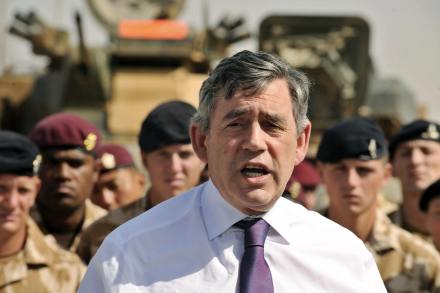
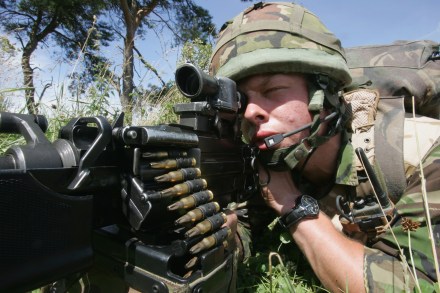
So Britain's soldiers, risking life and limb, fighting in the treacherous Hindu Kush, defending our freedoms and the safety of ordinary Afghans are like our Olympics athletes? Heh? That's what the Prime Minister seems to think. On his visit to Helmand, Gordon Brown said that British soldiers "have showed exactly the same courage, professionalism and dedication" as the British Olympians.  Sure, the achievements and medals of Britain's Olympians should be celebrated. But it is absurd, insulting and inappropriate to compare their courage, professionalism and dedication to that of our men and women fighting in Afghanistan. After all, 116 British troops have lost their lives in Helmand and our forces there are involved in the hardest fighting any person serving can remember.

And the award for worst foreign policy goes to…

From our UK edition

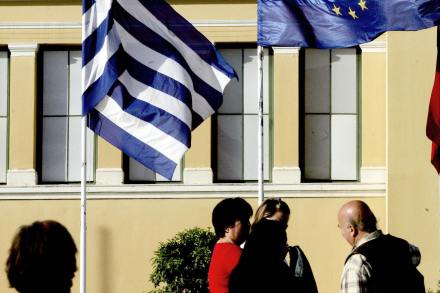
In Hollywood, there is an award called the Golden Raspberry or Razzies. The opposite of the much-desired Oscar, the Razzies go to those who have most dishonoured the acting, screenwriting or song-writing profession in the past year. If European foreign policy had a version of the Razzies, this year’s award would go to Greece for it attempts at destabilising neighbouring Macedonia and countering the EU’s Balkan policy. Since the break-up of Yugoslavia and the founding of Macedonia, Greece has had an uneasy relationship with its neighbour. At NATO’s Bucharest Summit, Greece vetoed Macedonia's bid to join the Alliance, because of an unresolved dispute over its name. The Greek government objects to its neighbour taking the same name as a northern Greek region.

Opposition foreign policy

From our UK edition

Normally foreign policy is the refuge of poll-losing leaders, who have tired of the slow pace of domestic reform and launch themselves unto the international stage in the hope of a restoration. Even if electoral rehabilitation is unlikely, the Club of Leaders is a more collegial place than the domestic political scene. Think Bill Clinton in 2000. Or the world-strutting Tony Blair. Even Gordon Brown, whose interest in foreign affairs is clearly limited, has sought to build an international profile, in part to help him at home. He hasn't done it like Tony Blair, who would be jetting round the world trying to solve the Russian-Georgian War. But the PM has taken a lead on issue he cares about like international development, and world finance.

Next stop, tax stop

From our UK edition

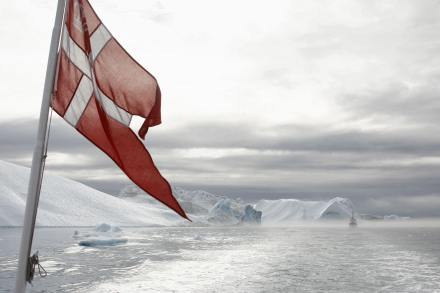
The Conservatives have been rightly looking to Sweden for ideas on education policy, now they should be looking a little further south, to Denmark, for inspiration on tax policy. In Denmark, a centre-right government has been in power for eight years and, despite technically being in a recession, the country’s thoroughly modern market economy and pro-active labor market policies – which combines easy hiring and firing with high benefits for the unemployed – is helping to weather the storm. But a key ingredient for Prime Minister Anders Fogh Rasmussen’s success in a country seen as more social democratic than centre-right has been the "tax stop" (or "skattestoppet" in Danish), which froze all taxes and duties at their January 2001 level.

General confusion

From our UK edition

Pakistan's government had vowed to start impeachment proceedings against President Pervez Musharraf. A session of the National Assembly, Pakistan's lower house of parliament, had been scheduled for today to initiate the proceedings. However, Musharraf pre-empted the move by announcing his resignation. Since the election, which saw the return to power of two Musharraf’s foes – former Prime Minister Nawaz Sharif and Asif Ali Zardari, widower of Benazir Bhutto –Musharraf’s main constituency has been in the White House. The State Department grasped a few months ago that the president’s career was unsalvageable. Musharraf chose to jump before he was pushed.

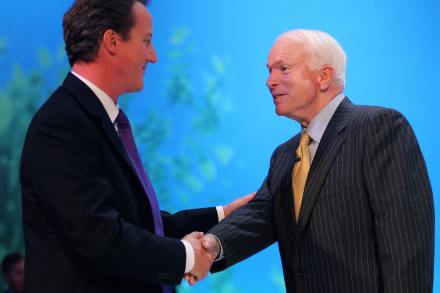
McCain and Cameron, close for now

From our UK edition

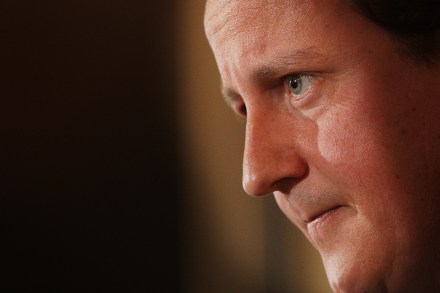
It is common knowledge that John McCain and David Cameron get on. By convention, politicians do not enter into electoral politics in other countries, but the Conservative leader has made clear how McCain impressed him when he spoke at the 2006 Conservative Party Conference while McCain has described Cameron as a Kennedyesque figure. Their staffs are said to be in regular touch and the two men talk on the phone.   At first blush, the Russo-Georgian War show how close they really are. Looking at their respective statements, it is hard to distinguish between the views of the two politicians.

Helping Europeans on defence is good policy

From our UK edition

European Union countries keep half a million more men and women under arms than the United States. But 70 percent of these troops cannot operate outside of their national borders and only 6,000 of them—0.3 percent of the total—are currently deployed on European Security and Defence Policy operations. The problem, as my colleague at the European Council on Foreign Relations Nick Whitney argues, is that European governments are squandering their already small defence budgets on outdated Cold War style-forces. Tony Blair hit upon European defence as an issue where the Labour government could lead, pursuing both prestige and power in the EU. He helped the EU ditch its fantasies about a 60,000 person rapid-reaction force and instead pushed the ingenious battle-group concept.

How Cameron should reshape the machinery of government

From our UK edition

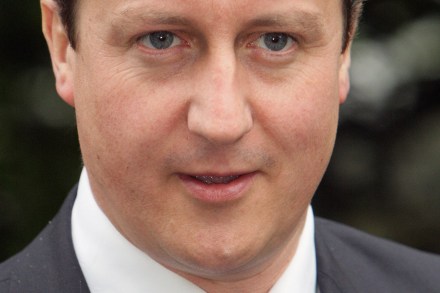
With the Conservatives ahead in the polls, David Cameron must be using the summer break thinking of whom to place around the Cabinet table. But he would do well to also think of what ministerial portfolios should exist at all. Prime Ministers have the greatest leeway to reshape the government's machinery upon taking office. Then it gets trickier as voters expect results, not tinkering with bureaucratic arrangements. A number of institutional changes are both needed and politically expedient. First, a Tory government should create a new Cabinet-level Secretary of State for Veteran Affairs – with a department underneath – appointing a senior politician, or perhaps a former 4* soldier like General Charles Guthrie to run all veteran-related affairs.