Daniel DePetris

Daniel DePetris is a fellow at Defense Priorities, a syndicated foreign affairs columnist at the Chicago Tribune and a foreign affairs writer for Newsweek.

Has Donald Trump finally met a European leader he can work with?

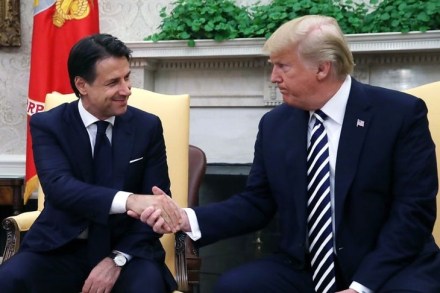
Donald Trump has finally met a European leader he can stand for more than a moment: Italy’s bookish new premier, Giuseppe Conte. The former law professor, who was plucked out of obscurity by 5Star’s Luigi Di Maio and the League's Matteo Salvini to be the nominal consensus pick of Rome’s anti-establishment government, is the kind of European Trump can do business with. Or at least that is Trump’s hope. For the brash billionaire, Europe has been nothing but a nuisance. Despite his proclamations of having a terrific relationship with Germany’s Angela Merkel and a kinship with France’s Emmanuel Macron, it is not difficult to see through the facade.

The EU’s migration solution? Throw cash at the problem

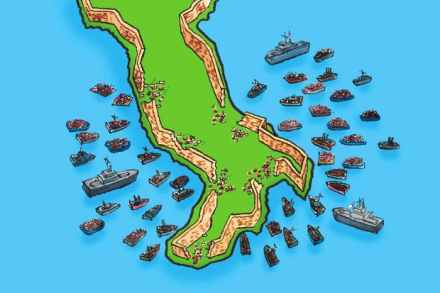
When European leaders met earlier this month to thrash out an agreement on  migration, they succeeded in rescuing German Chancellor Angela Merkel from the precipice. But it is already becoming clear that the deal they struck was more a temporary papering over of ideological differences on migration than a permanent solution. While the EU agreed on the possible establishment of migrant transit centres on European soil, disembarkation platforms in north Africa, and a general statement that illegal migration was a European problem, the detail of how all this would work in practice was ignored.

How May, Macron and Merkel failed to tame Trump

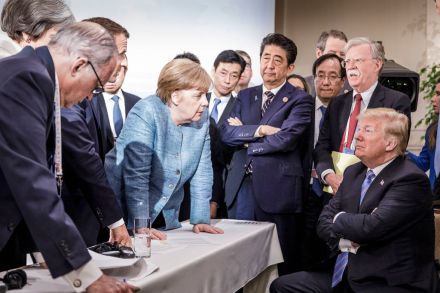
To conclude that relations between the United States and the Europeans are in quite a chaotic and unpredictable state is like saying German Chancellor Angela Merkel misses the good old days of Barack Obama and John Kerry. It’s so obvious that it doesn’t need repeating. There are a whole slew of foreign policy and economic issues that have shaken the U.S.-European relationship out of its traditional complacency. Steel and aluminum tariffs, Europe’s anaemic defense spending, the Iran nuclear deal, Brexit, trade imbalances, and Trump’s style of undiplomatic diplomacy have all thrown the continent for a loop.

Why Spain could be the populists’ next battleground

When Italy's interior minister, Matteo Salvini, refused to let the rescue ship Aquarius – which was carrying 629 men, women, and children – land, the European Union was presented with yet another migration emergency. The vessel was stranded for days in the Mediterranean looking for a place to dock, with an EU-wide solution nowhere to be found. Eventually, Spain's newly-installed socialist government stepped up and allowed the boat to dock. Madrid’s act of statesmanship was a win for everybody: it allowed Salvini to claim that his tough immigrant policy was working; Spain's prime minister, Pedro Sanchez, could burnish his credentials as a humanitarian; and it solved a problem for the EU, which has been pathetically ineffective on the migration question.

Jim Jordan’s sexual abuse scandal could threaten his conservative colleagues

From our US edition

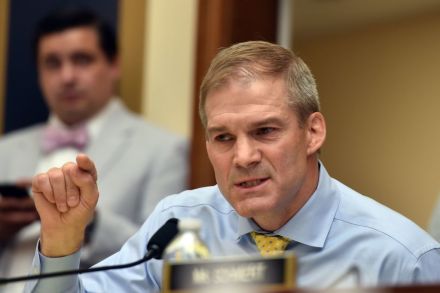
Jim Jordan of Ohio may not be a household name in the United States, but rest assured that he has turned himself into a disruptive force in Washington, D.C.  The seven-term congressman is a Donald Trump kind of guy: he hates the status-quo and wants to take down the political establishment of both parties. He relishes making mincemeat of any government official who has even the slimmest connection to former President Barack Obama. He is a sanctimonious loudmouth. Just as Donald Trump sees the value of unpredictability and unconventionality, Jim Jordan sees political value in using the allure of congressional oversight and transparency to mask what are undeniable political vendettas against anyone who happens to reek of the swamp. But it is now Jordan who is under the microscope.

Why we need a big Trump-Putin summit

From our US edition

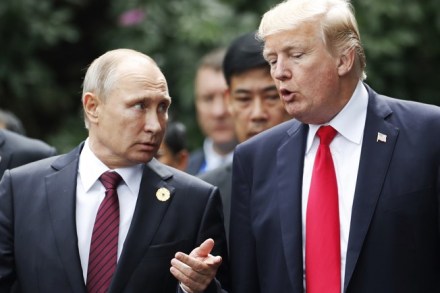
Writing in his space last week, Jacob Heilbrunn quipped that President Donald Trump’s summit in Singapore with North Korea’s Kim Jong-un went so well for the North Korean fat man that Vladimir Putin must now be itching to meet the Donald as soon as he can. Given how little Kim gave up in Singapore and how flimsy the page and a half communique he signed up to was, it’s hard to take issue with Jacob's point. But the more I think about a possible Trump-Putin blockbuster this year (perhaps in July), the more I’m inclined to support it. Relations between the United States and Russia have been awful for a long time, and it’s hard to see how the status-quo ante can be changed unless it is shattered into a million pieces.

Will Trump prove his critics wrong over North Korea?

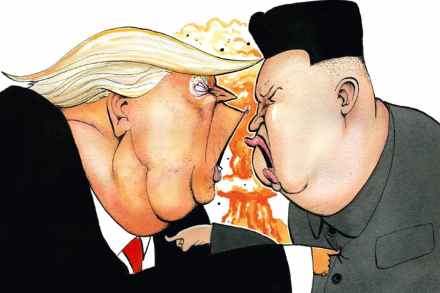
Donald Trump means different things to different people. To his core supporters, he’s the man who will make America great again.  To his diehard opponents, he is a dangerous juvenile with authoritarian tendencies. Ultimately, these descriptions are secondary to how Trump sees himself: a tough, dealmaking Svengali who has the experience and power of persuasion to get a deal that is advantageous to himself and to the people he represents. Democrats laugh and dismissively wave off that mindset as self-delusion. Even some Republicans would likely roll their eyes in private. Trump, of course, knows this too well - which is why his dalliance with North Korea’s Kim Jong-un this week is such a pivotal moment for his own sense of confidence as a leader.

Jeff Sessions is the loneliest man in Washington

From our US edition

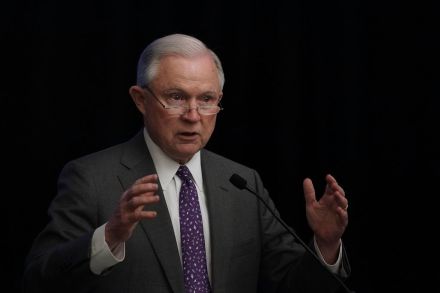
There was a time not long ago when Donald Trump and Jeff Sessions were best of buds. Well, not friends in the normal meaning of the word, but about as close as two such public figures can be. Trump and Sessions shared views on immigration, criminal justice, taxes, and military spending. Sessions even loaned one of his’ senior aides (a guy named Stephen Miller) to the Trump campaign at a time when his freewheeling operation was in desperate need of staffing. When the four-term U.S. Senator from Alabama announced to a crowd of Trump supporters on February 28, 2016 that he would be endorsing the uncensored billionaire for president, you got the sense that it wasn’t a hard decision for Sessions to make.

Will Trump end the Mueller inquiry or will the Mueller inquiry end Trump?

From our US edition

May 17, 2017 started out as any other day in Donald Trump’s Washington. Men and women in suits with briefcases walked into work, ready to meet clients or do business. The day, however, proved to be the very beginning of Trump’s troubles, with the appointment of a special counsel to look into allegations of collusion between the president’s campaign and Russian operatives in the Kremlin. The White House, like everybody else in the country, was caught off guard; Trump found out about the Justice Department’s decision when he was meeting with candidates for FBI Director (Trump threw James Comey out of the building a week earlier). As one administration official told CNN at the time: "It's still sinking in. We were told about it. Not asked about it.

Blankenship’s loss is an important victory for the Republican establishment

From our US edition

The midterm elections this November are bound to be a rough slog for a Republican Party desperately trying to keep its congressional majority. As former President Barack Obama would say, the Democratic base is “fired up, ready to go.” Democrats are giddy about their prospects; Republicans are for the most part gloomy.The GOP will need all the help from the heavens to pull this one off. A primary win by coal baron and provocateur Don Blankenship in West Virginia, however, wouldn’t be one of those gifts. There is a reason why Senate Majority Leader Mitch McConnell and the Republican political establishment threw $1.

Does President Trump have the authority to strike Assad without Congress?

From our US edition

When it comes to military action against the Assad regime, the United States again confronts one of the most fundamental questions of the American constitutional republic: does the president have the authority to order U.S. military force without the expressed authorisation of Congress? If you ask most executive branch officials, you would probably hear an affirmative “yes.” Generally, the case rests on a baseline argument: as Commander-in-Chief of the U.S. Armed Forces, the president has the inherent power under Article I of the Constitution to protect and defend the United States. While Congress has the authority to declare war, they claim, the president also has the authority to deploy the U.S. military when it is needed to promote the U.S. national interest.

Syrians are paying a heavy price for the UN’s incompetence

The United Nations Security Council has major responsibility in its job description: to maintain international peace and security. It is spelled out in Article 24 of the U.N. Charter, a tall task in normal circumstances but one that nonetheless underscores the core of the council’s very existence. Without it, the Security Council might as well be simply another distinguished debating society – a place where interesting, intellectually stimulating conversation occurs but where people leave without finding much consensus. On the subject of Syria, the top U.N. body has been anything but distinguished. Nor is there serious debate going on in the room.

Why Trump could regret targeting Mueller

From our US edition

Throughout the course of the inquiry on Russian interference in the 2016 U.S. presidential election, White House lawyers have attempted to drill a message into the president’s head. It is a simple one: whatever you do, don’t go after Robert Mueller personally or suggest in any way that you will shut down the investigation.  You can go after the probe’s integrity, attack the congressional Democrats making political hay over the probe, and push your own counter-narrative about the silliness of it all, but leave the special counsel alone. It is smart, conventional advice that most conventional politicians would take into serious consideration. But Donald Trump, to state the obvious, is not a conventional politician. He does not respond well to being told to be restrained.

Robert Mueller keeps everyone guessing

From our US edition

Robert Mueller, the former Director of the FBI and special counsel in the soap opera that is the Russia collusion investigation, has been on the case for ten months now. His team of attorneys and Washington prosecutors has interviewed dozens of witnesses, scanned hundreds of thousands of pages of documents, sent an unknown number of subpoenas to members of Donald Trump’s campaign for information or testimony, and is in the process of scheduling an interview with President Trump himself. Through it all, Mueller’s camp has shown impressive self-discipline; unlike Kenneth Starr’s inquest against President Bill Clinton two decades ago, the special counsel’s office is keeping its work in-house.

America’s involvement in the Yemen war is unconstitutional — and stupid

From our US edition

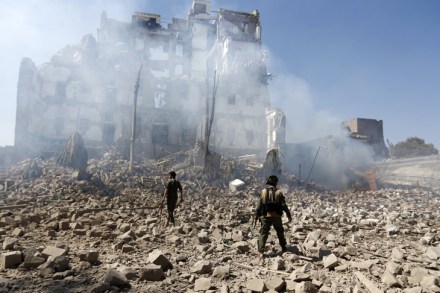
Only very rarely in today’s Washington, D.C. is a cause so strong that it brings together America’s most famous progressive with one of the country’s most ideological conservatives. But the nasty, bloody, and intractable proxy war in Yemen - and the U.S. military’s involvement in it - is one of those causes. Yesterday afternoon, Vermont Senator Bernie Sanders and Utah Senator Mike Lee held a press conference on Capitol Hill to unveil the introduction of a resolution that, if passed by both houses of Congress, would compel a withdrawal of all U.S. military assets from the Saudi-led campaign against the Houthi rebels.

Mitt Romney is back. Will he be a thorn in Trump’s side?

One of President Donald Trump’s chief political foils in the Republican Party — a party that increasingly resembles a Trump fan club more than a group of partisan but independent thinkers — is about to storm the national scene and send a jolt of energy to the dwindling and listless #NeverTrump movement. Mitt Romney, the former Governor of Massachusetts, 2012 Republican presidential nominee, and wealthy businessman, is reportedly preparing to announce his formal campaign to be the next US Senator from Utah.  And with no serious Republican in the heavily-Mormon state willing to throw a hat in the ring to challenge Romney, it is a virtual assurance that he will win the election.

Mike Pence missed a diplomatic opportunity at the Winter Olympics

The opening ceremony of the 2018 Winter Olympics in Pyeongchang, South Korea was a miraculous site.  The lights.  The fireworks.  The dancing.  The choreography.  It was everything we have come to expect from a world-class Olympic Games, a coordinated and ritzy show on behalf the entire planet. The Games in Pyeongchang, however, do stand out for one big reason: the massive sporting event is taking the form of a detente between North and South Korea, a minor easing of inter-Korean tensions that have plagued the bilateral relationship since the previous South Korean government shut down the joint industrial complex in Kaesong and Pyongyang stopped answering South Korea’s calls.

The GOP is now the Party of Trump

There was a time not so long ago when the political establishment of the Republican Party - the Mitt Romneys, Paul Ryans, and Lindsey Grahams of the world - were strong Donald Trump antagonists.  Trump would utter a racially charged remark about a Mexican-American district court judge being biased against him because he was Mexican, and Speaker Ryan would blast the comment as 'the definition of a racist comment'.  Lindsey Graham, an also-ran in the 2016 GOP presidential primary, acted like a South Carolina preacher with a southern drawl, warning Republican voters of how dangerous Trump would be as Commander-in-Chief.

Trump’s State of the Union address will change very little

Donald Trump had a lot to prove during his first ever State of the Union address this week. He had to demonstrate to the millions of Americans watching on television that he could deliver a semi-unifying and presidential speech and stay in one place for more than an hour without diverging into tangents. He had to show his Republican colleagues on Capitol Hill that he is a take-charge kind of guy — somebody who has bold, transformational plans for America’s infrastructure and for the country’s immigration system. To Democrats and independents, he wanted to exhibit a kind of conciliatory persona, not one of his favourite character traits.

US shutdown: how the ‘Common Sense Coalition’ saved the day

Compared to previous instances in US history when political paralysis and dysfunction shut down Washington for weeks at a time, the three-day government shutdown that ended on Monday was a rather mundane and unremarkable occurrence.  Indeed, unlike the 21-day saga in 1995-1996 between President Bill Clinton and House Republicans or the 16-day clash between House Republicans and President Barack Obama in 2013, this weekend’s fight had nothing to do with budget numbers, federal spending, tax rates, entitlements, or health care policy.  It was, instead, largely a crisis manufactured by Senate Democrats in an attempt to pressure their Republican colleagues on the immigration issue, one of the most controversial topics in American politics.