Damian Thompson

Damian Thompson

Damian Thompson is an associate editor of The Spectator and presenter of The Spectator’s Holy Smoke podcast

Why was C.S. Lewis such a killjoy at Christmas? A discussion with Alister McGrath

27 min listen

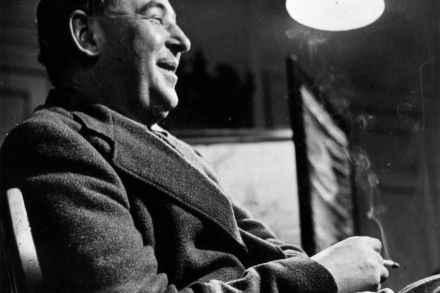
Which 20th-century Scrooge had the following to say about the celebration of Christmas?  ‘It gives on the whole much more pain than pleasure… Anyone can force you to give him a present by sending you a quite unprovoked present of his own. It's almost blackmail… Can it really be my duty to buy and receive masses of junk every winter just to help the shopkeepers?’ Step forward C.S. Lewis, beloved Christian apologist and children’s author, whose splenetic denunciation of ‘the whole dreary business’ of Christmas and mean-spirited comments about carol singers are hard to reconcile with his reputation for benevolence. To make sense of the author’s views, Damian Thompson is joined by the renowned theologian and C.S.

Is the end of Christendom nigh? with A.N. Wilson

25 min listen

Thousands of Brits will be attending Christmas and carol services throughout December. Yet festive attendance masks the reality that church congregations just aren’t holding up. The most optimistic of estimates suggest that regular church attendance has almost halved in the UK since 2009. This is just one of the factors that has led the historian and writer A.N. Wilson, in the Christmas edition of The Spectator this week, to declare that the end of Christendom is nigh. On this episode of Holy Smoke, A.N. Wilson joins Damian Thompson to discuss his thesis. Like Platonism, is Christianity doomed to become extinct in practice? When was the last time England was truly, and fervently, religious?

Defender of the Faith: how have the King’s religious beliefs changed?

31 min listen

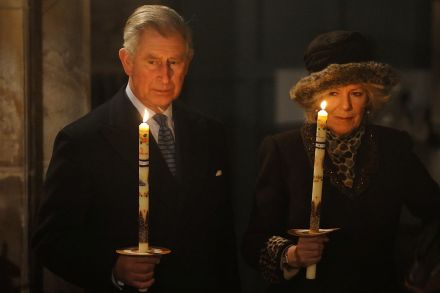
As we approach the end of a uniquely painful year for the Royal Family, the King's trusted biographer, Robert Hardman, joins Damian Thompson to discuss the Monarch’s faith. As Robert recently revealed in his updated biography of Charles III, the cancer-stricken King has been drawing solace from a Christian faith that has become increasingly explicit over the years. He still thinks of himself as the ‘defender of faith’, but now also unapologetically uses his ancient title of ‘Defender of the Faith’, meaning Christianity. Specifically, he is more attracted than ever to the traditions of the Orthodox Church into which his father was baptised.

Should assisted dying be legalised?

50 min listen

MPs are set to vote on the legalisation of assisted dying this week, the first such vote in almost a decade. The Terminally Ill Adults (End of Life) Bill was tabled by Labour MP Kim Leadbeater and follows a campaign by broadcaster Dame Esther Rantzen and others.  The biggest change since the last vote in 2015 is the make-up of parliament, with many more Labour MPs, as well as newer MPs whose stances are unknown. Consequently, it is far from certain that the bill – which would mark one of the biggest changes to social legislation for a generation – will pass. What are the arguments for and against? And how could the religious beliefs of MPs inform their votes?

Dazzling: Marc-André Hamelin’s Hammerklavier

Grade: A When Beethoven’s Hammerklavier Sonata was published in 1818, pianists were confronted with a mixture of ‘demonic energy and a torrent of dissonances’, as Charles Rosen put it. Only the most freakishly gifted virtuosos could tackle it. The first recording was by Artur Schnabel, whose heroic assault on the finale sent wrong notes scattering in all directions. Today, technique has improved so dramatically that most students can steer Beethoven’s juggernaut without obvious mishaps. Even so, some great masters wait decades before taking the plunge. In this sonata above all, getting the notes in the right order is no guarantee that you have anything to say. Marc-André Hamelin is now in his early 60s, which might seem to be pushing his luck. Not a bit of it.

Why is Fauré not more celebrated?

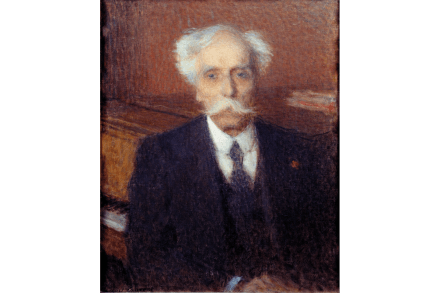
It is 100 years since the death of Gabriel Fauré, a composer whose spellbinding romantic tunes emerge from harmonies and rhythms that nudge us towards the future. No other composer deploys such subversive mastery of the conventions of French music: again and again, if we look underneath the arches of his melodies, we find ambiguous chromatic shifts or disorientating spiralling arpeggios. For some critics, the musical argument of Fauré’s late chamber work is so understated it evaporates And – see above – no other French composer is so hard to describe without falling into a purple puddle.

Welby resigns: crisis at the Church of England

18 min listen

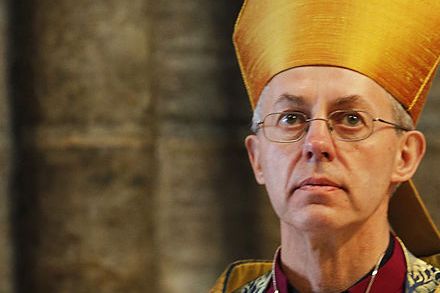
After mounting pressure, the Archbishop of Canterbury Justin Welby has resigned. His resignation comes days after a damning report into the child abuser John Smyth who was associated with the Church of England. Welby was apparently made aware of the allegations in 2013, yet Smyth died in 2018 before facing any justice. Since the report was published, Welby and the Church have faced questions about the failure to act and the lack of urgency. The Spectator’s editor Michael Gove joins Damian Thompson to discuss what Damian calls ‘not just a shocking moment in the history of the Church of England, but in the history of English Christianity’.   Produced by Patrick Gibbons and Natasha Feroze.

Did Christianity create secular humanism?

33 min listen

Since the election of an overwhelmingly secular Labour government, people who describe themselves as humanists have a spring in their step: for example, there's a prospect that humanist weddings will be legally recognised in England and Wales (they already are in Scotland). But what exactly is a humanist? Definitions vary and there's a heated debate about to what extent the ethical but firmly atheist beliefs of the rather loosely organised modern humanist movement are descended from Christianity. In this episode of Holy Smoke we'll hear from Andrew Copson, CEO of Humanists UK since 2010 & President of Humanists International, and the theologian and Spectator contributor Theo Hobson, author of God created Humanism: the Christian Basis of Secular Values.

Sale of the century: why is the Kirk selling off hundreds of churches so cheaply?

27 min listen

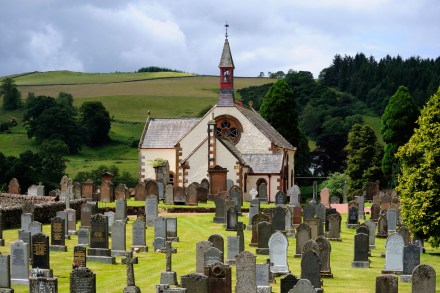
In this week’s Spectator, William Finlater reveals that some of the Church of Scotland’s most precious architectural heritage is being flogged off quickly, cheaply and discreetly. Most western denominations are being forced to close churches, but the fire sale of hundreds of Scottish churches is unprecedented in British history. In this episode of Holy Smoke, Damian talks to William about the Kirk’s apparently panicky reaction to losing half its members since 2000, and asks new Spectator editor Michael Gove – once a Church of Scotland Sunday School teacher – why his former denomination is staring into the abyss. Produced by Oscar Edmondson and Patrick Gibbons.

Schoenberg owes his survival to crime drama

George Gershwin once made a home movie of Arnold Schoenberg grinning in a suit on his tennis court in Beverly Hills but, sadly, never filmed one of their weekly matches. According to one observer, the composer of ‘I Got Rhythm’ played with languid strokes in a ‘nonchalant and chivalrous’ manner against the ‘choppy, over eager’ strokes of the creator of Erwartung. That figures. But how odd that the two men should be friends and passionate admirers of each other’s work. Gershwin paid for the first recording of Schoenberg’s gnarliest string quartet, the Fourth; when the younger man died, Schoenberg described him as ‘a great composer’ and expressed ‘the deepest grief for the deplorable loss to music’.

The Pope announces 21 new cardinals. Is he trying to pack the conclave?

26 min listen

This month Pope Francis announced that he’s creating 21 cardinals, and once again his list includes unexpected names that will baffle commentators who assume that he’s determined to stack the next conclave with liberals.  For example, Australia now finally has a cardinal – but he’s a 44-year-old bishop from the Ukrainian Greek Catholic diaspora rather than the actual head of the Ukrainian Church in Kiev. There’s also a new English cardinal who isn’t even a bishop, the Dominican theologian Timothy Radcliffe. He’s nearly 80, so will soon have to step down as an elector – but, believe it or not, one of the new cardinals is 99 and therefore old enough to be his father.

Could religious voters in the swing states decide the US election?

30 min listen

The US presidential election looks as if it’s coming down to the wire in a handful of battleground states. Neither Kamala Harris nor Donald Trump has established a clear lead, and that raises the question of whether, even in today’s increasingly secular America, evangelical Christians could give former president Trump a crucial advantage in the rust belt. On the other hand, could his role in the demise of Roe v Wade tilt the race towards Harris?  In this episode of Holy Smoke, Damian Thompson talks to Dr Melissa Deckman, CEO of the Public Religion Research Institute, a specialist in the influence of religion on US politics, and Justin Webb, presenter of BBC Radio 4’s Today programme, widely respected as an impartial commentator on presidential campaigns.

‘Some pianists make me shake with anger’: Vikingur Olafsson interviewed

At the BBC Proms this year, an Icelandic pianist dressed like a Wall Street broker played a slow movement from a Bach organ sonata that had the audience first gasping and then stamping their feet. This was an encore to a performance of the Schumann Piano Concerto that neither milked the poetry nor romped thrillingly through the finale – and that, too, nearly had the Prommers throwing their underwear at the shy soloist. How do you explain the phenomenon of Vikingur Olafsson? At first glance, he fits the mould of the bespectacled scholar-pianist who recoils from vulgarity – a young Alfred Brendel or Richard Goode, say, whose Beethoven or Schubert cycles have the cognoscenti underlining felicities in the score. ‘The Goldbergs are the hardest piece.

Man of mystery and friend of the Cambridge spies

In April 1967 Tony Scotland, a cub reporter for Australia’s ABC television news, drove with a cameraman from Hobart to a sheep station in Fingal to interview Lord Talbot de Malahide, an Anglo-Irish aristocrat who had edited a book about Tasmanian flora. This was a delicate assignment. Lord Talbot was a retired British ambassador to Laos who divided his time between his family’s Tasmanian property and one of Ireland’s grandest castles. He was fearsomely well-connected, peppery and ‘not good with people’. ABC had been trying for years to interview him, and he only grudgingly allowed in the cameras to publicise the book. Scotland, a 22-year-old English public schoolboy, wondered why he’d been given the job. His cameraman smiled knowingly.

A box set for those on the spectrum: Markus Poschner’s Bruckner Symphonies reviewed

Grade: B+ Anton Bruckner wrote 11 symphonies – Numbers One to Nine plus a student exercise and the formidable rejected symphony endearingly known as ‘Number 0’, actually finished between the First and Second. So why does this 200th anniversary cycle conducted by Markus Poschner, divided between the Bruckner Orchester Linz and the Vienna Radio Symphony Orchestra, run to 18 CDs? The answer is that it gives us two versions of Numbers One, Two and Eight, and three of Numbers Three and Four. The composer, generally agreed to have been ‘on the spectrum’, was hypersensitive to criticism and compulsively rewrote his symphonies in an attempt to tighten them up and silence his mean critics.

How pistols in St Paul’s Cathedral shaped the science of sound

18 min listen

In the winter of 1951 shots from a Colt revolver rang out in St Paul’s Cathedral in an experiment designed to solve the mystery of how architecture shapes sound. In this episode of Holy Smoke, Damian Thompson talks to Dr Fiona Smyth, author of a new book on the subject, and choral musician Philip Fryer, about the perfect acoustic – an increasingly important topic for churches, since many of them rely on the income from hiring themselves out as concert and recording venues. And it raises the question: should we think of a church as a musical instrument?

Manacorda’s thrills and spills at Prom 72

At a Hollywood party in the 1940s, the garrulous socialite Elsa Maxwell spotted Arnold Schoenberg, then teaching music at UCLA, looking miserable. So she pushed him towards the piano with the words: ‘Come on, Professor, give us a tune!’ I couldn’t help thinking of those words on Friday night, when we heard the first Proms performance of a symphony written in 1847 by a professor at the Paris Conservatoire. The Third Symphony of Louise Farrenc is full of well-crafted melodic lines, neatly configured to fit maddeningly predictable textbook chord progressions. It’s delicately orchestrated, but even the feathery flutes of the Orchestra of the Age of Enlightenment couldn’t disguise the professor’s failure to give us a single memorable tune. This is not a popular opinion.

Losing faith: will Labour’s VAT policy hit religious schools hardest?

25 min listen

In this week’s copy of The Spectator, Dan Hitchens argues that a lesser reported aspect of Labour’s decision to impose VAT on private schools is who it could hit hardest: faith schools. Hundreds of independent religious schools charge modest, means-tested fees. Could a hike in costs make these schools unviable? And, with uncertainty about how ideological a decision this is, does the government even care? Dan joins Damian on the podcast to discuss.  Raisel Freedman from the Partnerships for Jewish Schools also joins later, to discuss how the measure could threaten Jewish independent schools, when they provide a haven for students from a climate of rising antisemitism. Produced by Patrick Gibbons.
From the archives: An atheist goes on a Christian pilgrimage. Why?

23 min listen

Writer Guy Stagg threw in his job to undertake a pilgrimage to Jerusalem via Rome - choosing a hazardous medieval route across the Alps. It nearly killed him: at one stage, trying to cross a broken bridge in Switzerland, he ended up partially submerged in the water, held up only by his rucksack.  On this episode of Holy Smoke, from the archives, Guy explains why his journey was a pilgrimage, not just travels. And Damian Thompson talks to Harry Mount, editor of The Oldie, about why he’s irresistibly drawn to church buildings while remaining an unbeliever - albeit an agnostic rather than an atheist.

The Stockhausen work that is worth braving

Grade: A- One of the best one-liners attributed to Sir Thomas Beecham refers to the stridently avant-garde Karlheinz Stockhausen: ‘I’ve never conducted his music, but I once trod in some.’ It’s almost certainly apocryphal, but the implied verdict is widely shared. Stockhausen played up to the caricature of the self-obsessed ‘squeaky gate’ composer, though his capacity to create painful noises went way beyond squeaks: only he could have written a string quartet in which each player is recorded in a separate helicopter. So I’m sticking my neck out when I suggest that some of Stockhausen’s works are masterpieces that can be enjoyed even – or especially – if you steer clear of the thicket of mathematics, physics and astrology that surrounds them.