Damian Thompson

Damian Thompson

Damian Thompson is an associate editor of The Spectator

‘I’ve seen controllers come and go’: Radio 3’s Michael Berkeley interviewed

A few years ago I had a panic-stricken phone call from a female friend. ‘Help!’ she wailed. ‘Remind me what classical music I like. I think I’m going to be a guest on Private Passions.’ I could understand her anxiety. The programme, which celebrated its 30th birthday this month, is BBC Radio 3’s lofty version of  Desert Island Discs. Eminent writers, scientists, artists and businessmen, plus the occasional book-plugging celeb, explain how music – mostly but not exclusively classical – is, well, one of their private passions. Even if, as in the case of my friend, it isn’t. It’s an honour to be asked on the show, which is presented by Michael Berkeley – the first classical composer since Benjamin Britten to be elevated to the House of Lords.

The extraordinary scale of the crisis facing the next pope

At 9.47 a.m. on Easter Monday we heard the words ‘con profondo dolore’ from a cardinal standing in the chapel of the Casa Santa Marta. Two hours earlier, Pope Francis ‘è tornato alla casa del Padre’ – ‘had returned to the house of the Father’. Most people won’t have noticed a curious detail: the cardinal was speaking Italian with a pronounced Irish brogue. The incoming pope will face challenges that dwarf those that confronted any in living memory Cardinal Kevin Farrell, the papal ‘Camerlengo’, was born in a Dublin suburb. Or, as a tabloid put it: ‘Interim Pope is a bloke called Kevin from Dublin.’ That’s an exaggeration, but the Camerlengo does occupy centre stage when the See of Peter falls vacant. He confirms that the Pope is dead.

Pope Francis dies – what will his legacy be?

29 min listen

Pope Francis, the head of the Roman Catholic Church, has died. The Argentinian, the first Latin American – and the first Jesuit – to lead the Church, has been the head of the Holy See for 12 years, succeeding Pope Benedict XVI who resigned in 2013. Francis presided over the funeral of his predecessor, who died in 2022 – a first in modern history. But Francis’s leadership has been historic for many other reasons. In fact, says Damian Thompson, his reign has been ‘one of the most memorable, if controversial – not just in recent years but in recent centuries’. Liberals lauded his position on a number of social issues, while Conservatives saw the papacy as over-reaching and out of touch with every-day Catholics. But is it really that simple?

How should Christians embrace ‘faithful dissent’ today?

This is an excerpt from the latest episode of the Holy Smoke podcast with Damian Thompson, which you can find at the bottom of this page: The Easter issue of the Spectator includes two provocative articles exploring aspects of Christianity. Nigel Biggar, Regius professor emeritus of moral theology at Oxford University, now a Conservative peer, celebrates the heroic ‘faithful dissent’ of Christian heroes such as Thomas More and Helmuth von Moltke, who lost their lives rather than defend injustice.  Meanwhile Spectator columnist Mary Wakefield interviews Roman Williams, former Archbishop of Canterbury. She’s inspired by his holiness but depressed by his use of ‘C of E bureaucratese’ to uphold liberal orthodoxy on subjects such as gender ideology.

Easter special: in praise of faithful dissent, a conversation with Nigel Biggar and Mary Wakefield

24 min listen

The Easter issue of the Spectator includes two provocative articles exploring aspects of Christianity.  Nigel Biggar, Regius professor emeritus of moral theology at Oxford University, now a Conservative peer, celebrates the heroic ‘faithful dissent’ of Christian heroes such as Thomas More and Helmuth von Moltke, who lost their lives rather than defend injustice.  Meanwhile Spectator columnist Mary Wakefield interviews Roman Williams, former Archbishop of Canterbury. She’s inspired by his holiness but depressed by his use of ‘C of E bureaucratese’ to uphold liberal orthodoxy on subjects such as gender ideology. But, she says they can share an uncomfortable space together within faith.

Was Simeon of Jerusalem the first Christian in recorded history?

28 min listen

In Luke's Gospel, an ancient inhabitant of Jerusalem named Simeon meets Mary and Joseph when they bring Jesus to be presented at the Temple on the 40th day after his birth. He has been promised that he will not die until he has seen Christ, and as he takes the baby into his arms he utters the words, 'Lord, now let your servant depart in peace, according to your word; for my eyes have seen your salvation which you have prepared in the presence of all peoples, a light for revelation to the Gentiles, and for glory to your people Israel.'  This prayer, known down the centuries by its opening Latin words Nunc dimittis, explains the title of Quentin Letts's novel Nunc!, a delightfully quirky retelling of the story of Simeon and his friends.

Justin Welby has cemented his reputation – for having a tin ear

This is an excerpt from the latest episode of the Holy Smoke podcast with Damian Thompson, which you can find at the bottom of this page: The former Archbishop of Canterbury, Justin Welby, is back in the news following his interview this week with the BBC's Laura Kuenssberg. The interview – his first since he resigned last November – was clearly Welby's attempt to draw a line under the abuse scandal that cost him his job.  The 2024 Makin report concluded that the Church of England missed many opportunities to investigate the late John Smyth, one of the most prolific abusers associated with the Anglican Church. However, the biggest headline from the interview was that Welby would 'forgive' John Smyth were he alive today.

The tin ear of Justin Welby

29 min listen

The former Archbishop of Canterbury, Justin Welby, is back in the news following his interview this week with the BBC's Laura Kuenssberg. The interview – his first since he resigned last November – was clearly Welby's attempt to draw a line under the abuse scandal that cost him his job.  The 2024 Makin report concluded that the Church of England missed many opportunities to investigate the late John Smyth, one of the most prolific abusers associated with the Anglican Church. However, the biggest headline from the interview was that Welby would 'forgive' John Smyth were he alive today. Albeit unintentionally, the former Archbishop of Canterbury ended up cementing his reputation as an inflexible micro-manager with a tin ear for the views of abuse survivors and his own clergy.

Who is actually running the Catholic Church?

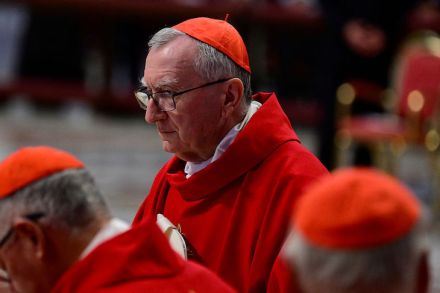
This is an excerpt from the latest episode of the Holy Smoke podcast with Damian Thompson, which you can find at the bottom of this page: It's emerged that [Pope Francis is] going to be kept in isolation on the second floor of Santa Marta for at least two months, in what is, in effect, a hospital suite. It seems that even his top officials, such as the Secretary of State Cardinal Pietro Parolin, currently fulfilling as many of Francis's duties as possible in order to look like the next pope, will have only limited access to him. Apparently, everything will be filtered through the Pope's Argentinian private secretary, Father Juan Cruz – now arguably the most powerful person in the Vatican next to the Pope.

A sick Pope and a paralysed Vatican: who is actually running the Catholic Church?

11 min listen

A greatly enfeebled Pope Francis is now living in enforced isolation in a suite at his Santa Marta residence that has been converted into hospital accommodation. He won't be resuming public duties for two months, we are told – and even his senior advisors have limited access to him. As a result, it's really not clear who is in charge of the Catholic Church. And, as Damian Thompson reports in this episode of Holy Smoke, it's by no means clear when this paralysis will end; it's significant that there has been so little talk of the Pope making a full recovery. Meanwhile, Cardinal Pietro Parolin, the Secretary of State who isn't bothering to hide his ambition to succeed Francis, is continuing to forge alliances... Produced by Patrick Gibbons.

Does China have Vatican City in its sights?

Last Sunday the Vatican released the first photograph of Pope Francis since his ordeal began. He was wearing a stole around his neck, indicating that he had concelebrated mass in the chapel of the Gemelli hospital. Admittedly, all he had to do was raise his hand and whisper a few words of consecration, but it would have been impossible to take such a photo a week earlier, when Vatican-watchers were checking their phones hourly to discover whether the See of Peter had become vacant. Francis is still very ill, of course, and everyone noticed that the picture was taken from behind, perhaps to hide his oxygen tube. The image was touching but unintentionally symbolic.

The filthy side of Dame Myra Hess

The photograph on the cover of Jessica Duchen’s magnificent new biography of Dame Myra Hess shows a statuesque lady sitting at the keyboard, hair swept back into the neatest of buns. Add a pair of half-moon spectacles and she could be Dr Evadne Hinge, accompanist to Dame Hilda Bracket. This isn’t to imply that Dame Myra looked like a man in drag, but then neither did the ‘Dear Ladies’ played by George Logan and Patrick Fyffe, some of whose fans thought the singing spinsters actually were women. In their 1980s heyday Hinge and Bracket were national treasures – and so, on a far grander scale, was Dame Myra, who lifted Londoners’ spirits with her National Gallery concerts during the second world war.

Christianity, culture wars and J.D. Vance: a conversation with James Orr

62 min listen

James Orr was living the life of a young, high-flying lawyer when, after a few drinks at a New Year's Eve party, he asked for signs that God existed. The signs came; among other things, he narrowly avoided a fatal skiing accident. Now he is a passionate Christian and a conservative culture warrior who helped defeat an attempt to impose the tyranny of critical race theory on Cambridge University, where he is an associate professor of the philosophy of religion. He's also an intellectual mentor to the vice president of the United States; Politico describes him as 'J.D. Vance's English philosopher king'. Dr Orr says Vance is 'extremely articulate, but he takes no prisoners'.

Jonathan Bowden: my eccentric school friend who became a far-right hero

When my old school, Presentation College, Reading, was demolished a decade ago, the Labour council desperately searched for famous old boys after whom they could name streets on the housing estate that replaced it. This was a challenge. According to the local newspaper, ‘names rejected include one in recognition of Mike Oldfield, the musician behind ground-breaking prog rock album Tubular Bells’ – rejected by Oldfield, I assume, since he hated the school. They settled on Bowden Row, ‘in honour of political philosopher and Presentation alumnus Jonathan Bowden’. I wonder if the residents of the handsome semi-detached houses know anything about Bowden. The council didn’t.

Conclave – what really happens when a pope dies?

54 min listen

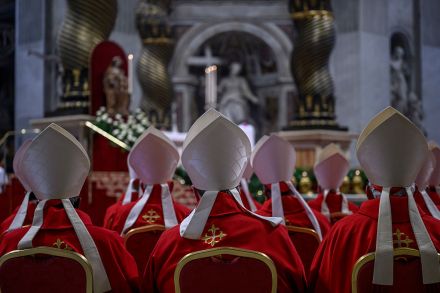
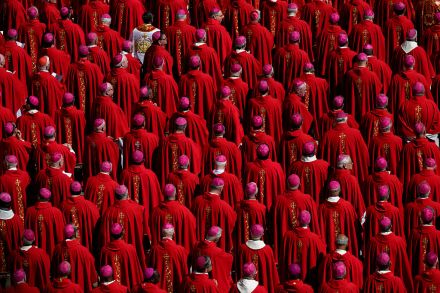
The film Conclave has picked up a host of awards across all the major ceremonies so far, including at the Screen Actors Guild, the Golden Globes, and winning Best Picture at the BAFTAs. Adapted from the novel by Robert Harris, it also has eight nominations at the upcoming 2025 Academy Awards. Full of intrigue, the film has viewers wondering how true to life the process depicted on the big screen is. And, with Pope Francis hospitalised, amidst the award season, this has only heightened interest in Papal conclaves and the election process.  Dr Kurt Martens, Professor of Canon Law at the Catholic University of America, joins Damian Thompson to unpack the process. What really happens when a pope dies? Produced by Patrick Gibbons.

Holy War and Antichrist: The rise of extremist rhetoric inside the Russian Orthodox Church

35 min listen

The subject of Ukraine shattered the unity of Eastern Orthodoxy long before Russia’s full-scale invasion began. In 2018 the Ukrainian Orthodox Church declared independence from Moscow with the approval of the Ecumenical Patriarch of Constantinople. In response, Patriarch Kirill of Moscow broke off all relations with Constantinople, creating arguably the greatest schism in Orthodoxy for 1,000 years. There are now two main Ukrainian Orthodox Churches: one that supports independence and one still loyal to Moscow. As The Spectator’s Ukraine correspondent Svitlana Morenets points out, Ukrainians who previously didn’t care which church they attended now have to decide which to attend.

Americans should feel uneasy about the new Archbishop of Washington

From our US edition

For an eighty-eight-year-old man who has spent only five days in the United States and doesn’t speak English, Pope Francis is a surprisingly partisan observer of American politics. For most of his life he was, like a typical Argentinean, viscerally but vaguely anti-American. By the time he became pope in 2013, he and the Democratic Party had embraced the ideology of the globalist left. And so they forged an alliance — one the Pope may soon regret, now that Republicans in the White House and on Capitol Hill are beginning to grasp the scale of the Vatican’s corruption. In 2016, Francis gave his blessing to the Hillary Clinton campaign’s Catholic front organizations, motivated not just by their shared obsession with anti-racism and climate change but contempt for Donald Trump.

Archbishop

Why militant atheists don’t understand religion: a conversation with Alister McGrath

36 min listen

In his new book Why We Believe: Finding Meaning in Uncertain Times, Prof Alister McGrath rejects the notion that belief is a relic of the past and takes aim at the ‘new atheists’ who attack religion without even knowing what it is. Prof McGrath, emeritus Andreas Idreos Professor of Science and Religion at Oxford University, has had a unique journey to religion. A former Marxist atheist with a doctorate in molecular biology, he’s now a world-renowned theologian and Anglican priest.  In this lively discussion with Damian Thompson he talks about the boundary between science and religion, something poorly understood by aggressive atheists such as Richard Dawkins and the late Christopher Hitchens.

Are these performances of the Bach cantatas the best on record?

Three projects shedding light on the sacred music of J.S. Bach are nearing completion. The first consists of an epic 25-year project to record all the composer’s vocal works – passions, masses, motets and more than 200-odd cantatas – in electrifying performances supplemented by lectures and workshops. At the helm is a Swiss choral conductor renowned for his improvisatory skills – and surely the only baroque specialist to have played Sidney Bechet on a chamber organ. The second project is a guide to Bach’s church cantatas tailored at ‘cultural Christians’; that is, music lovers intrigued but intimidated by their Lutheran theology, unsure how to approach this treasure trove of, at a conservative estimate, more than 100 masterpieces of western civilisation.

Katy Balls, Alexander Raubo, Damian Thompson, Daisy Dunn and Mark Mason

27 min listen

On this week’s Spectator Out Loud: Katy Balls analyses the threat Reform pose to the Conservatives (1:20); Alexander Raubo talks us through the MAGA social scene and the art collective Remilia (6:42); Damian Thompson reviews Vatican Spies: from the Second World War to Pope Francis, by Yvonnick Denoel (12:27); Daisy Dunns reviews the new podcast Intoxicating History from Henry Jeffreys and Tom Parker Bowles, as well as BBC Radio 4’s Moving Pictures (17:50); and, Mark Mason provides his notes on obituaries (22:46).  Produced and presented by Patrick Gibbons.