Damian Thompson

Damian Thompson

Damian Thompson is an associate editor of The Spectator and presenter of The Spectator’s Holy Smoke podcast

As we confront mortality, why do our bishops have so little to say?

29 min listen

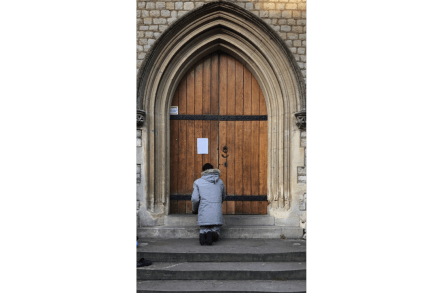
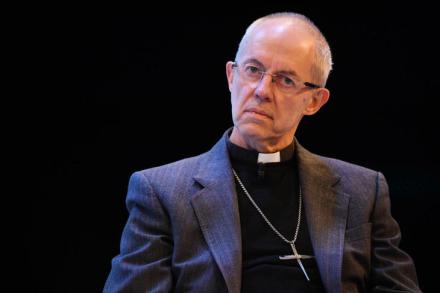
Do you sense that something is missing in the churches' response to the coronavirus? No one can fault them for ignoring the dangers of spreading the virus: bishop after bishop has taken the difficult decision to suspend public worship, and offered sensible advice about precautionary measures their flocks can take. And, in many cases, that's about it. Indeed, many church leaders, including the Archbishop of Canterbury, sound more like health and safety officers than the successors to the apostles.

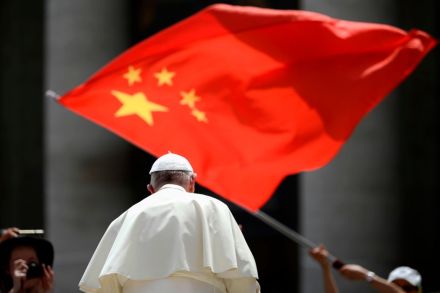
Has the Vatican become a mouthpiece for Beijing?

20 min listen

Last week, Pope Francis sent a message to Chinese Christians urging them to be 'true Christians and good citizens'. He didn't mention the growing persecution they face under President Xi's programme of sinicisation, despite the Vatican-China deal of 2018 under which Francis recognised China's puppet Catholic Church in return for state tolerance of 'underground' Catholics faithful to Rome. Conveniently for both sides, the text of the deal has never been made public. Essentially, the Pope kept his part of the deal while Xi has used it to try to force together the official and unofficial Chinese Catholic Churches under the umbrella of – it goes without saying – the Chinese Communist Party.

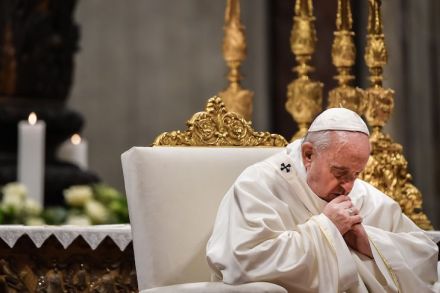
The Pope rebuffs his liberal supporters by rejecting married priests

Pope Francis today issued his official response to October’s ‘Amazon Synod’, which discussed a plan to ordain married men in the region. He was expected to endorse it and thus open the door for the ordination of married men throughout the whole Catholic Church. (It’s already permitted in Eastern-rite Churches.) Instead, his apostolic exhortation ignores the subject. The Pope has ‘rejected the proposal’, reports CNN disapprovingly. It adds: ‘The lack of an opening for married priests, or women deacons, is expected to disappoint the Pope’s liberal supporters, particularly in the Americas and Europe.

Westminster Cathedral’s musical heritage is under threat

The Catholic diocese of Westminster announced last week that it is holding 'a strategic review of the role of sacred music in the mission of Westminster Cathedral'. It didn't add: 'because our master of music has walked out in despair, after warning that recent changes to the choir will ruin its sound'. But that is the situation and I suspect the purpose of the review is to extract Cardinal Vincent Nichols, the Archbishop of Westminster, from the hole he has helped dig for himself. It's a nightmare for Nichols because Westminster owns what you might call the Berlin Philharmonic of Catholic choirs.

Holy Smoke podcast: has the Church of England surrendered to ‘soft socialism’?

Just before Christmas, Dr Gavin Ashenden, a former Chaplain to the Queen, converted to Catholicism. But that’s not the main subject of my interview with him in the first Holy Smoke episode of 2020. In it, he deplores the Church of England’s surrender to secularism under Archbishop Justin Welby, who won’t enjoy his former colleague’s assessment of his talents. Dr Ashenden may not be Anglican any more, but he does think that the Established Church has a historic mission – and that its 'middle managers' have betrayed it in favour of 'soft socialism'. To which I reply that Pope Francis is busy hoisting the white flag, or perhaps a red one, on the other side of the Tiber. At which point our conversation takes an unexpected turn. Don’t miss it!

Beethoven wasn’t just history’s greatest composer but also one of its greatest human beings

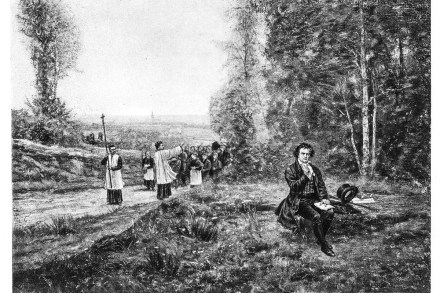
Ludwig van Beethoven isn’t just my favourite composer: he’s my household god. There’s a bust of him on my mantelpiece. It took ages to find something that did him justice. This one was made in Italy about 100 years ago; it’s painted to look like black marble, his features are modelled on his life mask and it gets his hair right. (This mattered to Beethoven: when August von Kloeber painted him in 1818, the composer ‘expressed delight at the treatment of his hair’.) Above my stereo system there’s a Victorian copy of another portrait of Beethoven; it’s striking but undistinguished.

Holy Smoke Podcast: Mental health, useless clergy – and a young professor’s nightmare

We're all sick of celebrities making a meal of their mental health problems – but that doesn't mean that we aren't facing a potential crisis. The unique strains of living in the technology-driven 21st century are taking their toll on people who, in an earlier era, would have been psychologically robust. Many of us are affected by anxiety, depression, addiction and eating disorders; all sorts of compulsive behaviour are flourishing as never before. And the mainstream churches have got nothing useful to say about it. Many bishops seem content to blame it on Brexit. My guest on Holy Smoke this week is Prof Stephen Bullivant, who is Britain's foremost expert on patterns of religious belief. He knows all about mental health, too.

The cult of Trifonov is doing the pianist no favours

Grade: B– Deutsche Grammophon have decided that Daniil Trifonov’s new Rachmaninov piano concertos with the Philadephia Orchestra and Yannick Nézet-Séguin are a railway journey. The video trailer offers no explanation — but, boy, they certainly threw some cash at their conceit. The pianist is dressed like a Russian anarchist, wandering wild-eyed through a railway carriage. Is he fleeing a ticket inspector? Apparently not, because later he’s playing on the train, presumably in the compartment reserved for grand pianos. Those were the days! Last year we had the second and fourth concertos, entitled Destination Rachmaninov: Departure. Now it’s Arrival — the first and third.

A hero bishop, a human disaster… and the Pachamama

What exactly is the role of a bishop – Catholic or Anglican – in the modern West? They spend a certain amount of time in church, of course, but what they love best is a committee meeting. And 'dialogue' with various groups. Sometimes they combine the two and have 'mutually enriching dialogue' at committee meetings. On today's Holy Smoke I meet a different sort of bishop: one whose most important dialogue is with armed warlords and their teenage mercenaries. He runs a hospital that is desperately short of doctors and medicine amid a humanitarian crisis in which over 200,000 people have died. And he has young men queuing up to become his priests.

In his new piano concerto Thomas Ades’s inspiration has completely dried up

There’s nothing like a good piano concerto and, sad to relate, Thomas Adès’s long-awaited first proper attempt at the genre is nothing like a good piano concerto. Not in the version we heard at its UK première in the Royal Festival Hall, anyway. What a disappointment! Perhaps Adès can rescue it, but he’d have to hack away at the score as ruthlessly as Bruckner dismantling his Third Symphony. That work wasn’t necessarily improved by its revisions but, honestly, almost anything would be an improvement on the first two movements of the 21-minute concerto performed by Kirill Gerstein and the LPO conducted by the composer. You knew there was something wrong after ten seconds.

Podcast: Why the Vatican is more corrupt than ever

As the world’s Catholic bishops meet in Rome to waffle about the problems of indigenous peoples in the Amazon basin, events in their own tribe have taken a dramatic turn. Last week, Vatican police raided the Church's own money-laundering watchdog. Meanwhile, in a simultaneous raid on the Vatican Secretariat of State, prosecutors seized documents, computers, telephones and passports. It seems to be a dirty business. According to the Italian press, police want to know more about a multi-million-pound real estate transaction in Mayfair. Significantly, all the seized documents reportedly relate to the years when Cardinal Angelo Becciu, a close papal ally, was running the Secretariat of State’s offices.

Holy Smoke podcast: the strange religion of cryptocurrency

What can a global cryptocurrency scam tells us about the future of religion? That's a strange question to ask, but the answer is: quite a lot. That's because beliefs of all kinds, including quasi-religious faith in get-rich-quick schemes, are increasingly being shaped online – a phenomenon ignored by the mainstream churches as they slide into irrelevance. In this week's episode of Holy Smoke I’m joined by Jamie Bartlett, one of the world’s leading experts on the dark web, radical politics and technology, whose gripping podcast series The Missing Cryptoqueen is currently being broadcast by the BBC.

If Richard Dawkins loves facts so much, why can’t he get them right?

Professor Richard Dawkins has written a book called Outgrowing God: A Beginner’s Guide. Its aim is to save children and young people from belief in the sky fairy. A couple of weeks ago he was plugging it on Channel 4 News. ‘Facts are so wonderful… and such a treat!’, he trilled, sounding not unlike the late Queen Mother. Indeed. Which is why a thread that appeared on Twitter on Saturday is so delicious. It was written by George Heath-Whyte, a researcher at Cambridge. It begins: ‘Reading @RichardDawkins new book “Outgrowing God”, and as an Assyriologist I've had a couple of major face-palms moments.

How a sadistic Kremlin tormented Jewish musicians

The new episode of the Holy Smoke podcast looks at the cruel cat-and-mouse game that the Soviet Union played with Jewish classical musicians at a time when it was sneakily trying to extinguish both their religion and their ethnic identity. It's prompted by the story of Maria Grinberg, the magnificent Russian Jewish pianist whose recorded legacy was mysteriously suppressed by the authorities, possibly because of her support for Israel; I recently wrote a column about her in the Spectator's arts pages. My guest is the brilliant young Israeli pianist Ariel Lanyi, who explains how Jewish composers had to find surreptitious ways of referring to their Jewishness – something they could do only fleetingly, often in the disguise of socialist realism.

Why did the Soviets not want us to know about the pianist Maria Grinberg?

Only four women pianists have recorded complete cycles of the Beethoven piano sonatas: Maria Grinberg, Annie Fischer, H. J. Lim and Mari Kodama. I’ve written before about the chain-smoking ‘Ashtray Annie’ Fischer: she was a true poet of the piano and her Beethoven sonatas are remarkably penetrating — as, alas, is the sound of her beaten-up Bösendorfer. Lim produced her cycle in a hurry when she was just 24; it’s engaging but breathless. Kodama’s set, just completed, is a bit polite. Which leaves Maria Grinberg (1908–78), whose recordings remain just where the Soviet authorities wanted them. In obscurity. That is shameful — and not because she was the first woman and the first Russian to record all the sonatas.

Why liberals turn a blind eye to the global persecution of Christians

The new episode of Holy Smoke is about the persecution of Christians. That's a familiar concept, even if we don't read much about it in the media. But here's what it means in 2019: The rape, murder and dismemberment of pregnant Christian women in Nigeria by Islamist thugs. The use of face-recognition technology by the Chinese government to monitor, control and, where it deems necessary, eradicate Christian worship by demolishing thousands of churches The evisceration of ancient Christian communities in the lands of the Bible. The relentless torture of Christians in North Korea. The burning of Christian villages by Hindu nationalists in India, and vicious attacks on Christians in Sri Lanka and Burma by Buddhists, egged on by bloodthirsty monks.