Daisy Dunn

The author who made a living measuring the legs of lice

Wilhelm Nero Pilate Barbellion, real name Bruce Frederick Cummings, earned his living measuring the legs of lice in the Natural History Museum. ‘To the lay mind how fantastic this must seem!’ he exclaimed in his journal, before enumerating his enthusiasms for Burton’s Anatomy of Melancholy, names like ‘Mr. Hogsflesh’ and ‘Pickle Herring Street’, and Petticoat Lane on Sunday mornings. The young naturalist had a habit of landing himself in embarrassing situations. He once spotted a pretty woman at the theatre and composed a notice for the classifieds in a bid to find her. The editor sent his missive back supposing he was a white-slave trafficker.

I’ve lost patience with podcasts and their presenters

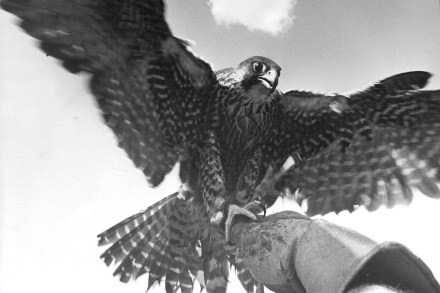
‘To be recognised and accepted by a peregrine,’ wrote J.A. Baker in 1967, ‘you must wear the same clothes, travel by the same way, perform actions in the same order. Like all birds, it fears the unpredictable.’ Sitting around in the same old clothes, performing chores in the same order, travelling by no way at all, I’ve found comfort in Baker’s assurance that I may at least prove attractive to birds in my slovenly purdah. Sir David Attenborough read The Peregrine beautifully on Radio 4 just before Christmas, but if you were too busy steaming puddings to listen, you may find this a good time for enjoying the series online.

Every bit as well observed as Rembrandt – and often funnier: Nicolaes Maes reviewed

Nicolaes Maes (1634–93) relished the simple moments of daily life during the Dutch Golden Age. A woman peeling parsnips over a bowl; a young girl threading a needle; a peasant lugging pails of milk to sell on the doorstep. His paintings are sensitive, not showy, and, as you would expect from a pupil of Rembrandt, rendered with the most exquisite use of light. Maes was apprenticed to the Dutch master for about five years in his teens. He returned to Amsterdam later in life, but worked for two decades in his hometown of Dordrecht, 11 miles southeast of Rotterdam. Several of his paintings, including ‘The Apostle Thomas’ and ‘Christ Blessing the Children’, have wrongly been attributed to Rembrandt over the years.

Why do writers enjoy walking so much?

Writers like walking. When people ask us why, we say it’s what writers do. ‘Just popping out to buy a pencil,’ we cry, before tootling along the tarmac à la Virginia Woolf, Walter Benjamin or George Sand. BBC Radio likes walking, too, to judge by the number of programmes dedicated to the pursuit this fortnight. Some revolve around mental health and the environment; Clare Balding saunters over Berkshire’s Winter Hill in Ramblings with Steve Backshall and Helen Glover discussing wellbeing, parenthood and sewage. More involve the walking writer, with five authors retracing memorable ambulations on Radio 3, and Professor Jonathan Bate taking us on an altogether more dreamlike journey for In Wordsworth’s Footsteps on Radio 4.

Sea fever

Looking at the sketchbook of William Whitelock Lloyd, a soldier-artist who joined a P&O liner after surviving the Anglo-Zulu War, I’m reminded why I avoid cruises. On board this India-bound ship were: a ‘man who talks a great deal of yachting shop and collapses at the first breeze of wind’, ‘a successful Colonist’, and ‘the victim of mal de mer who lives on smelling salts’. It would be just my luck to be stuck in the cabin between ‘One of our Flirts’, the busty lady with pretty eyes, and what Lloyd affectionately called ‘Our Foghorns (automatic)’ — two bawling babies. By the late 19th century, ocean liners attracted all sorts, from emigrants seeking a new life in the US to curious poseurs.

In the shadow of Vesuvius

From our US edition

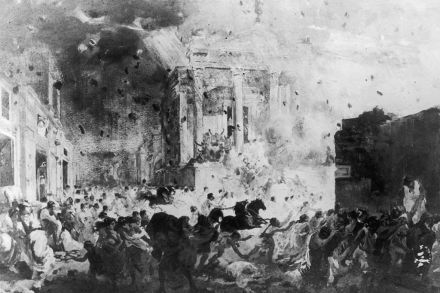
AD 79: Pliny the Elder, admiral of the Roman fleet and author of an encyclopedia of Natural History, sails towards Mount Vesuvius as it erupts.For several hours, the fleet held course across the Bay of Naples. Despite heading in the very direction whence others were now fleeing, Pliny the Elder was said to have been so fearless that ‘he described and noted down every movement, every shape of that evil thing, as it appeared before his eyes’. To any sailors who survived to tell the tale of their admiral’s fortitude, the chance of reaching land in safety must have seemed increasingly remote as they proceeded across the water. First ash rained down on them, then pumice, then ‘even black stones, burned and broken by fire’. This was no hail storm.

vesuvius

What really happened at Troy?

Heinrich Schliemann had always hoped he’d find Homer’s Troy. Although he had no archaeological background to speak of, he did have money, and spades, and in the 1870s this would do. Tipped off as to the probable location of the ancient citadel — beneath Hisarlik on the west coast of modern Turkey — the Prussian businessman got zealously to work, pushing through the soil until he struck what he assumed to be the treasure of King Priam himself. In the Iliad the Trojan king lived lavishly. His palace was ‘surpassingly beautiful’. Its 50 rooms were built of ‘polished stone’. The terracotta wares Schliemann lifted from the ground did not quite evoke such splendour. There were fat-bellied pots with nipples and navels and rustic two-handled cups.

Did Radio 2 really need to give us four days of the Beatles to celebrate Abbey Road?

This Changeling Self, Radio 4’s lead drama this week, clearly ought to have gone out in August. It’s set — and was recorded — at the Edinburgh Festival and would have been a gift to marketing. ‘I love the festival!’ coos She. ‘All these millions of conversations, listen, listen, oh and stories, lots of stories, the different ways of telling…!’ No one in the real world speaks like this. But it’s just about OK, because she isn’t quite real either. She is a Fairy Queen, come to Edinburgh to spirit away a young pianist named Tam, as in Tamlin, who is a bit wet but really rather nice. The story is a modern retelling by Linda Marshall Griffiths of an old Scottish ballad that couldn’t be better suited to radio.

Up Pompeii!

One afternoon in AD 79 an unusual cloud appeared above Vesuvius in the Bay of Naples. ‘It was raised high on a kind of very tall trunk,’ recalled Pliny the Younger, likening it to an umbrella pine tree, ‘and spread out into branches.’ When, finally, the cloud collapsed and the sky grew dark, some people raised their hands to the gods. Others reasoned that ‘there were now no gods anywhere and that the night would last for ever and ever across the universe’. There are corners of the ancient cities that have not seen daylight since they were buried in volcanic debris. While excavations officially began in Pompeii and Herculaneum in the mid 18th century, there remains much to uncover, and still more to restore.

The write stuff | 9 May 2019

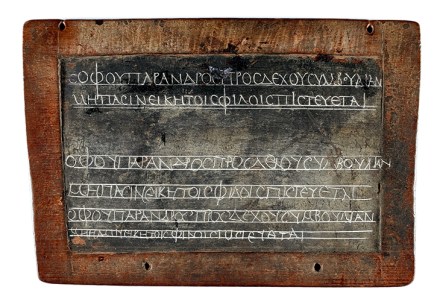
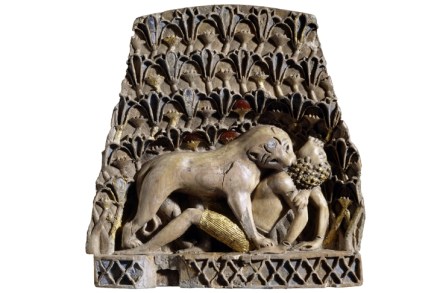
The Mesopotamians wrote on clay and the ancient Chinese on ox bones and turtle shells. In Egypt, in about 1,800 BC, someone even found the space to scrawl on a portable sandstone sphinx. Look closely towards the base of the sculpture and you will find a delicate line drawing of an ox head. Remarkably, this picture reveals the origins of the letter ‘A’. At the first stage in its development, the ox was simplified, so that an engraver could express it with just a couple of lines. An Egyptian seal stone shows the animal’s head in abstract form. Next, the shape was flipped 90º, so that by the time the Greeks had adopted the Phoenician system of writing, in the 8th century BC, it was recognisably an ‘A’.

Outsider art | 21 February 2019

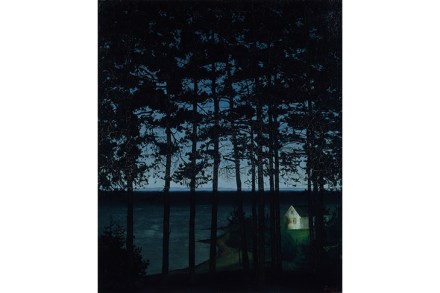
If you’re tired of hygge then you’ll like Harald Sohlberg. The Norwegian painter  eschewed the cosy fireside for the great outdoors, eager to see what view might greet him as he wandered the woods and country roads of Norway in the failing light. While his contemporary Nikolai Astrup filled his landscapes with people, Sohlberg preferred to bring nature to the fore, at once unnerved and mesmerised by its power. He excelled at depicting the scene just stumbled upon or left behind. In ‘Summer Night’ (1899), a table is set for two on a veranda overlooking the Kristiania Fjord off what is now Oslo. The glasses are half full, the fruit sliced but abandoned, the door of the house ajar. Have the diners slipped inside? Then look at the sunset they are missing.

Brightness falls

The little-known painter Cyril Mann (1911-80) saw a lot from his council-flat window. Beyond the parks and trees and red-brick houses was St Paul’s, rising triumphantly through the haze. Mann, who grew up in Nottingham and trained at the Royal Academy in the 1930s, had painted the bombsites around Spitalfields and the streets of postwar London when he finally turned his hand in 1961 to the view from his Finsbury tenement block. The resulting painting was exceptional. He captured the cathedral in the distance with such a swift brush that it seems almost to dance on the horizon. The optimism Mann clearly found in the city skyline reflected his own change in circumstances as much as those of Britain.

Classics takes the Red Pill

From our US edition

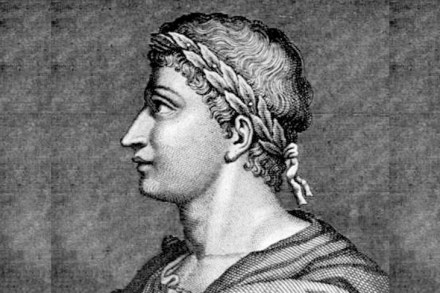
There was a time Classicists feared their subject was endangered because not enough people were taking it up. That fear has now been supplanted by anxieties over its manipulation by far-right groups and individuals with insalubrious intentions, like the white supremacist organization that employs images of the Roman gods and heroes to encourage its followers to ‘protect your heritage’. And this is just the tip of the Zuckerberg. In Not All Dead White Men, Donna Zuckerberg examines the abuse of Classics by by those who, in the political equivalent of the perceptual choice in The Matrix, have taken the ‘Red Pill’. Zuckerberg defines Red Pillers as ‘a group of men connected by common resentments against women, immigrants, people of color, and the liberal elite’.

ovid classics

Hunter, scholar, boaster, dreamer

The Assyrians placed sculptures of winged human-headed bulls (lamassus) at the entrances to their capital at Nineveh, in modern Mosul, to ward off evil. The mighty lamassu to the right of the Nergal Gate had been on guard for some 2,700 years when Isis vandals took a drill to it in 2015 and blew away its face. Today a copy, crafted out of date syrup cans, stands on the Fourth Plinth in Trafalgar Square. It wears the oblong beard and proud look of the Assyrian kings. The original sculpture dated to the time of Sennacherib, who ruled Assyria from 705 to 681 BC, and transformed Nineveh into a magnificent metropolis. No stranger himself to violent desecration, he made his eldest son king of Babylon, but went on the rampage when the Babylonians rebelled and had the ruler dispatched.

The little cloth dyer who made it big

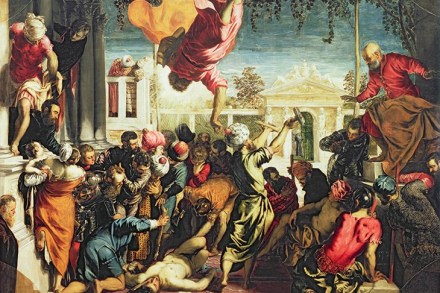
Tintoretto was il Furioso. He was a lightning flash or a thunderbolt, a storm in La Serenissima of Renaissance Italy, a maverick and a cheat. One of his friends, a fellow Venetian, likened him to a peppercorn overwhelming ten bunches of poppies. More often than not, those poppies were rival artists. He trampled them like an overgrown child. Henry James said that ‘if Shakespeare is the greatest of poets, Tintoretto is assuredly the greatest of painters’. He was at least the most aggressive. A series of exhibitions opens in Venice this autumn to mark the 500th anniversary of Tintoretto’s birth. If they show him to be half as devious as his first biographers described him, then it will be all anyone can do to salvage his good name.

The play’s the thing | 9 August 2018

Nothing was so interesting to Yves Klein as the void. In 1960 he leapt into it for a photograph — back arched, chin raised, spread-eagled. The same year, he took out a patent for International Klein Blue (IKB), a colour inspired by the limitlessness of the sky itself. He even went so far as to stage an exhibition of white walls and an empty cabinet. If there is a less appropriate place to exhibit his work than the lavishly adorned Blenheim Palace, I can’t think of it. Klein was born in Nice in 1928 and learned judo as well as art. In his late teens he visited the Scrovegni Chapel in Padua and marvelled at Giotto’s 14th-century frescoes, particularly the ceiling, which was bluer than the deepest seas.

Alpacas

Of all the window displays in Amsterdam this spring there was just one that stopped me in my tracks. I had come for tulips, canals, the tremendous Van Gogh and Japan exhibition, but the unexpected highlight of my trip was the sight of a dozen alpacas beaming through the glass of a shop front off the Herengracht. Nothing could have made me forget the rain like this jubilant herd. I have long had a passion for alpacas but had never seen faux ones quite so lifelike. These were made from real alpaca fur — brown, white, chocolatey caramel — and were proportionally perfect, as though a craftsman had scaled a real one down in size and taken into consideration just how absurdly high its coat to body ratio is. Needless to say I bought one at once.

A vanished world

When the German novelist Sophie von La Roche visited Oxford Street in the 1780s she saw watchmakers and fan shops, silversmiths and spirit booths, and a Pantheon that rivalled the one in Rome. Edward Gibbon called the domed ballroom, which hosted glitzy concerts, ‘the wonder of the eighteenth century and of the British empire’, but Von La Roche could not agree. The Pantheon’s architect, she concluded, ‘only half knew what he was about’. The young James Wyatt, who went on to design some of the loveliest college buildings at Oxford University, had apparently given little consideration to the acoustics of his Pantheon, ‘as the sound becomes diffused’.

The icemen cometh

You wouldn’t want to stumble upon the Scythians. Armed with battle-axes, bows and daggers, and covered in fearsome tattoos, the horse-mad nomads ranged the Russian steppe from around 900 to 200 BC, turning squirrels into fur coats and human teeth into earrings. At their mightiest, they controlled territory from the Black Sea to the north border of China. They left behind no written record, only enormous burial mounds, chiefly in the Altai mountains and plains of southern Siberia. Chambers that weren’t looted in antiquity were preserved in the permafrost only to be discovered millennia later. It is thanks to Peter the Great and the expeditions he launched that so many objects have now been retrieved from the ice.

Match made in heaven | 6 July 2017

Tennis is best played with a wooden racket on a shady lawn somewhere close to Dorking. There is no need for trainers, an umpire, or a scoreboard. No need for rules at all. After Wimbledon, the tea-and-jam, grass-stained, Sunday-afternoon scenario from A Room with a View is the only one to emulate. In 1908, when E.M. Forster published his novel, lawn tennis was not yet 50 years old. Although the origins of the game reach back to the 12th century, the version played by Miss Honeychurch and Reverend Beebe and most of us today was said to have been pioneered on a croquet lawn in Edgbaston in 1859.