D.J. Taylor

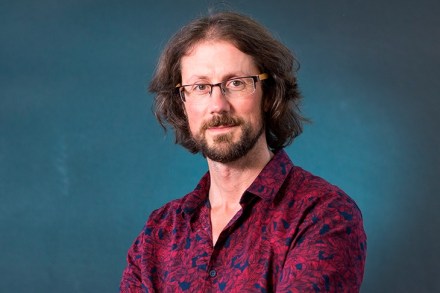
D.J. Taylor is a critic, novelist and biographer of William Thackeray and George Orwell.

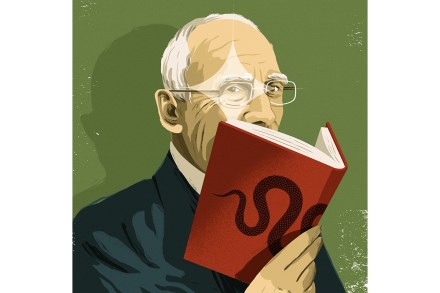
From teenage delinquent to man of letters: James Campbell’s remarkable career

The great age of the Scottish autodidact must have ended a century ago, but it had a prodigious impact while it lasted. To read John Gross’s The Rise and Fall of the Man of Letters (1969) is to be plunged headfirst into a world of kenspeckle lads studying Nietzsche behind the crankshaft and miners quoting Burns to each other as they were winched up from the Lanarkshire coal face. If James Campbell (born 1951) isn’t quite a figure to rank with James Thompson the Younger (1834-82) or the Rev.

A book trade romp: Sour Grapes, by Dan Rhodes, reviewed

Dan Rhodes’s career might be regarded as an object lesson in How Not to Get Ahead in Publishing. Our man was chosen as one of the Best of Young British Novelists in 2003, but his recent exploits include a spectacular falling out with his one-time sponsors, Messrs Canongate, and the writing of a lampoon about Richard Dawkins which so alarmed the lawyers that it had to be issued privately. Significantly, Sour Grapes — his first novel for seven years — comes courtesy of a small, independent press of which I confess that I had not previously heard. In most hands, these serial misfortunes could be guaranteed to produce a full-frontal assault on the people and institutions thought to have let the proud author down. Oddly enough, though billed as ‘a hilarious satire...

Hawkwind: a very British tale

18 min listen

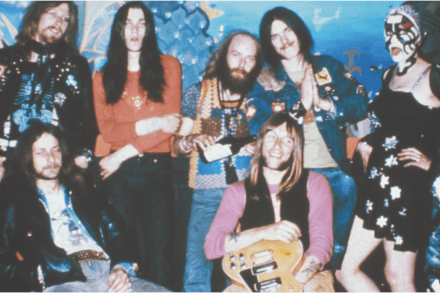
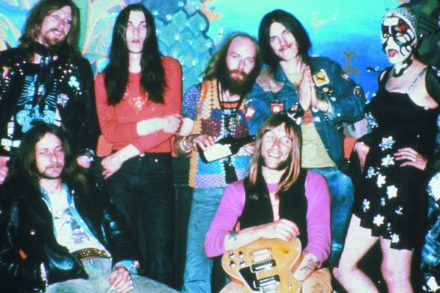
In this week’s edition of The Green Room, Deputy Editor of The Spectator's world edition Dominic Green meets DJ Taylor, who writes in the June edition of Spectator World, about Hawkwind, unlikely champions of the British rock underground. Less a band, more a way of life, the fascinating story of Hawkwind veers from the radicalism of the late 1960s, through the rise and fall of countercultural forces in decades to follow, to the present day. It’s a soap opera of Spinal Tap proportions, a very British tale of inspiration, madness, dreaminess and otherworldliness. Dominic and DJ Taylor have collaborated on a special Hawkwind playlist over here at Spotify, so don’t forget to check it out and let us know what you think!

Take a trip with Hawkwind

From our US edition

Fifty years ago this midsummer, a ramshackle convoy of vehicles — cars, minibuses, motorcycles and the odd hippie caravan — could be seen wending its way through the western counties of England in search of a patch of agricultural land near Shepton Mallet called Worthy Farm. There had already been several Sixties-era tribal gatherings in the fields beyond Michael Eavis’s now legendary homestead, but this iteration, widely advertised in the countercultural press, came billed as the very first Glastonbury Festival.

Hawkwind

My father, the tyrant: Robert Edric describes a brutal upbringing

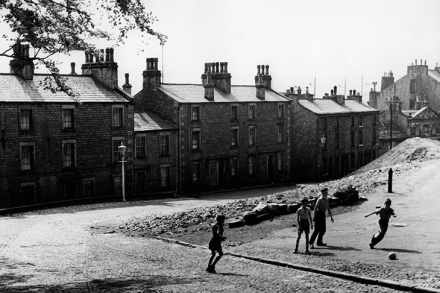
In a career stretching back to the mid-1980s, Robert Edric has so far managed a grand total of 28 novels, plus a couple of early efforts under his birth name, G.E. Armitage. I must have read two thirds of this shelf-distending oeuvre, but in none of them have I ever detected the faintest whiff of disguised autobiography. Whether writing about early-Victorian Lakeland, in the 2006 Booker-longlisted Casting the Waters, or reanimating the career of P.T. Barnum (In the Days of the American Museum, 1990), Edric has always worn his detachment, his absolute reluctance to say anything about the person he is, or was, like a rosette. All this makes My Own Worst Enemy, an account of his immensely tough upbringing in the shadow of the Sheffield steel factories, rather a departure.

A complex creation myth: Alexandria, by Paul Kingsnorth, reviewed

‘Challenging stuff,’ my wife remarked, having alighted on the page of Paul Kingsnorth’s new novel in which a character named el supplies several stream-of-consciousness paragraphs about a ritual dance featuring ‘big Birds runnin round Pole and fyr and mam and mother and all womyn and these big things all hummin’. Dystopian, or by the time you reach the final paragraph, maybe only utopian, Alexandria turns out to be set in the East Anglian fens a millennium or so in the future. Here lurk the last tattered remnants of a self-sequestered religious cult, their numbers steadily depleted by marauding ‘stalkers’, their destiny ever more uncertain.

What would Orwell be without Nineteen Eighty-Four?

43 min listen

In the first Book Club podcast of the year, we’re marking the moment that George Orwell comes out of copyright. I’m joined by two distinguished Orwellians — D. J. Taylor and Dorian Lynskey — to talk about how the left’s favourite Old Etonian speaks to us now, and how his reputation has weathered. Was he secretly a conservative? Was he a McCarthyite snitch? How would he be remembered had he died before writing Nineteen Eighty-Four? And does 'Orwellian' mean anything much at all?

Mart and marketing

From our US edition

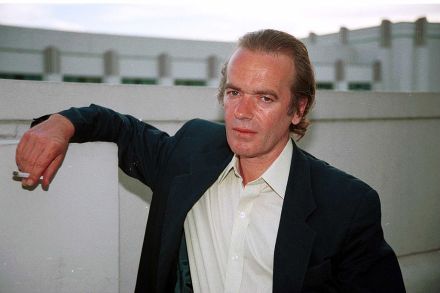
George Orwell once proposed that the specimen literary career takes the form of a parabola in which the downward curve is implied in the upward. You can see immediately how this theory might work with a major-league titan such as Thackeray (promising early sketches leading to Vanity Fair, then downhill to the trackless waste of The Virginians) or James Joyce (peaks in the early stretches of Ulysses before descending to the dream language of Finnegans Wake). But how does it apply to the 71-year-old former enfant terrible and, to borrow another useful French phrase, one-time jeune premier of English fiction, Martin Amis?

martin amis

Finding the Lost Girls

From our US edition

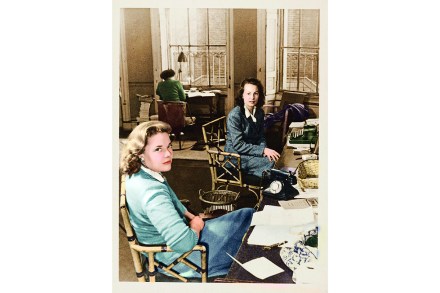
This article is in The Spectator’s February 2020 US edition. Subscribe here. Encapsulations of a particular art-world demographic nearly always fall wide of the mark. Just as there were plenty of people on hand in the 1950s to protest that the Angry Young Men were neither especially angry nor exclusively male, so countless chroniclers of interwar social life complained that the Bright Young People were neither bright nor young. But the critic Peter Quennell’s phrase ‘Lost Girls’ to describe the gang of female twenty-somethings who worked on the magazines and populated the parties of Blitz-era literary London carries an unmistakable tang of conviction.

lost girls

Is Lou Reed a rock ’n’ roll Dostoevsky?

From our US edition

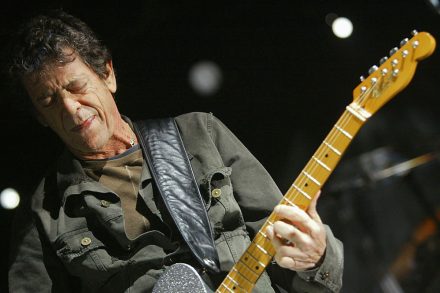
This article is in The Spectator’s November 2019 US edition. Subscribe here. A journalist friend was once ordered to interview Lou Reed in his hotel room. The meeting was not a success. Reed retreated to the closet bearing a copy of the poems of Delmore Schwartz and refused to come out until his guest had paid cash for it, saying, ‘Delmore needs the money.’ Reminded that the author of In Dreams Begin Responsibilities had died some years before, Reed observed, ‘Well, his family needs the money.’ $5.99 changed hands and the conversation continued.

lou reed

The House of Eliot

Like many a 20th-century publishing house, the fine old firm of Faber & Faber came about almost by accident. The inaugurating Faber — Geoffrey — was an All Souls don in search of a livelihood, who began his career in the post-Great War book trade by investing in the Scientific Press, publishers of the Nursing Mirror. There was trouble with the Gwyer family, owners of the original concern, who resisted the move into general books and disliked the poems of Faber’s brisk young protégé Mr Eliot, but by 1929 the sale of the Mirror for an eye-watering £190,000 (about £5 million at current values), allowed Geoffrey to buy them out and set up on his own.

His own worst enemy | 27 July 2017

One fail-safe test of a writer’s reputation is to see how many times his or her books get taken out of the London Library. Here, alas, John Lodwick (1916–1959) scores particularly badly. If The Butterfly Net (‘filled with a lot of booksy talk and worldly philosophising,’ Angus Wilson pronounced in 1954) has run to all of five borrowers in the last five years, then The Starless Night (1955) seems not to have left the shelves since 1991. All this suggests that the title of Geoffrey Elliott’s valiant attempt to reconstruct Lodwick’s lost, vagrant and sometimes violent life is painfully accurate.

Boats, goats and landslides

J.L. Carr’s classic novel How Steeple Sinderby Wanderers Won the FA Cup (1975) contains a character named Arthur Fangfoss. Mr Fangfoss is a rural tyrant who, when standing for the local council, limits his election address to a pithy eight words: ‘If elected, I will keep down the rates.’ No such brevity, alas, attends the 2017 manifestos of the UK’s three main political parties. The shortest of them — the Lib Dems’ Your Chance to Change Britain’s Future — weighs in at over 80 pages, while Labour’s For the Many, Not the Few extends to a well-nigh novella-length 23,000 words.

Father, son and holy ghost

No disrespect to any of the present incumbents, but Karl Miller (1931–2014) was a literary editor in an age when such jobs mattered. Between the late 1950s and the early 1970s he not only ran the books pages of two weekly magazines — The Spectator, and the Paul Johnson-era New Statesman — before moving on to edit the Listener, but did so with a conviction that their cultural stance was quite as important as the political material that crowded out the front end. The virus that had propelled him into literary journalism burned away for nearly 60 years, and his last book review appeared in these pages four days before his death.

A woman of some importance | 22 September 2016

Searching for a 12-month stretch in the life of Elizabeth Jane Howard (1923–2013) that might illuminate the kind of person she was and the circumstances of her fraught and chaotic career, I settled on the year of 1955. Our heroine, then living in a maisonette flat in Little Venice and reading manuscripts for the publishing firm of Chatto & Windus, was hard at work on her well-received second novel, The Long View (1956). She was also having an affair with Arthur Koestler, who, when they entertained, her biographer tells us, expected her to ‘produce a three-course meal, look demurely beautiful and say as little as possible’. And so the year winds on. Koestler dazzles her with his volcanic temperament, gets her pregnant and then fixes an abortion.

Goodbye to all that | 12 May 2016

Glimpsing the title of Lynsey Hanley’s absorbing new book as it fell out of the jiffy bag, I found myself thinking of my grandmother, Mrs Lilian Taylor. This lady, who died in 1957, spent the first part of her married life inhabiting a couple of furnished rooms on the western side of Norwich and the second part of it living in a white stucco council house on the newly built Earlham estate. She was an intensely respectable woman, implacably opposed to strong drink and strong language, but of what, materially, did her respectability consist? On the one hand it meant goading my father through the scholarship exam to a place at the local minor public school.

Cold comfort for Gibbons fans

One of the great fascinations of a ‘lost’ work by a famous name dredged up out of the vault after a lapse of several decades lies in establishing precisely when it was written. The jacket of Pure Juliet offers no clue, but parenthetic mention of Star Wars being on at the Odeon and an old lady who fears the depredations of the IRA suggests a composition mark sometime in the late 1970s — at any rate somewhere near the point when Stella Gibbons (1902–1989) was approaching her 80th year. Take away these half-dozen references to such sure-fire signifiers of the Callaghan era as comprehensive schools and this awful ‘punk’ music and what remains could very easily have been filed in the 1930s.

Spirits of the Blitz

If the early Martin Amis is instantly recognisable by way of its idiosyncratic slang (‘rug-rethink’, ‘going tonto’ etc) then the later Pat Barker can be similarly identified by its finely wrought accounts of physical trauma. ‘Afterwards, it was the horses she remembered,’ runs a specimen sentence from the new novel, ‘galloping towards them out of the orange-streaked darkness, their manes and tails on fire.’ Noonday’s Blitz-era setting — the horses are in flight from a bombed-out brewery — gives Barker ample opportunity to do what she does best: intent descriptions of splayed limbs that are sometimes engaged in the act of love, occasionally the subjects of paintings or, more often, casualties of war.

Cats, curates and cardigans

Anyone who has ever listened to the thump of a rejected manuscript descending cheerlessly on to the mat can take comfort from the roller-coaster career of Barbara Pym. Between 1950 and 1961 Miss Pym (1913–1980) had published six modestly successful novels with the firm of Jonathan Cape. Then, on 24 March 1963 — ‘a sobering fourth Sunday in Lent’, as Ann Allestree is careful to remind us — came a bolt from the skies, in the shape of a letter from Cape’s editorial director, Wren Howard, turning down the seventh with the age-old publisher’s bromide that ‘in present conditions we could not sell a sufficient number of copies to cover costs’.

George Gissing: the last great Victorian novelist?

George Gissing’s The Whirlpool was originally published in 1897. In this shortened version of the foreword to the new Penguin Classics edition, D.J. Taylor argues that its author is ‘the last great Victorian novelist.’ In the early summer of 1896, hard at work on the manuscript of what was to become The Whirlpool, George Gissing struck up a connection with the Jewish novelist Israel Zangwill. A natural solitary, wary of unburdening himself even to the friendliest male associate, Gissing seems to have decided that Zangwill, author of the best-selling Children of the Ghetto, was a suitable repository for his confidence.