Constantin Eckner

Constantin Eckner is a Berlin-based journalist and historian. He works for numerous German newspapers and broadcasters

The race to replace Merkel is turning nasty

It's hard to imagine German politics without Angela Merkel, but next year the country's long-term chancellor will leave office. While some of her advisors have attempted to change her mind, Merkel – who became Germany's leader when Tony Blair was still Britain's PM – is determined to say goodbye after the end of her fourth term. But there's a problem: less than a year before the next election in Germany, Merkel’s Christian Democrats still haven’t found a successor. Merkel herself initially chose Annegret Kramp-Karrenbauer, the former state premier of Saarland and current minister for defence.

Angela Merkel’s executive power-grab

Germany’s Social Democrats have remained quiet for months as their coalition partner, Angela Merkel’s Christian Democrats, have tackled this pandemic. But it seems as if some have had enough. Social Democrats are fed up with how the federal government has relied on decrees and executive orders during the epidemic, rather than using the proper legislative procedures. Critics believe Merkel and her cabinet have effectively neutralised Germany’s national parliament and now govern in whatever way they want. A law proposed by Merkel’s health minister Jens Spahn could be the straw that breaks the camel’s back.

Germany’s growing Covid revolt

Germany is edging towards revolt. Twelve of the country's 16 federal states have brought in 'accommodation bans', forbidding travellers in high-risk areas from visiting other regions without proof of a recent negative test.  These risk areas include four out of five of Germany's largest cities as well as any Landkreis (or administrative districts) that have recorded more than 50 new cases per 100,000 residents within the last seven days. According to this metric, both Berlin and Frankfurt are now high risk areas. Berlin has recorded 61.3 infections per 100,000 residents over the past week, leading the city government to introduce its first ban on all-night drinking since 1949.

Germany’s second wave puts an end to the party

Berlin's partygoers are being told to stay at home by health experts and politicians amid rising new coronavirus cases. Researchers say that clubs and restaurants have become super spreading hubs as Germany’s looser Covid-19 restrictions have allowed events to take place again.  Germany's infection control agency warned on Tuesday that the country could see up to 10,000 new coronavirus cases a day after it recorded the highest daily infection rate since April. There were more than 4,000 new cases confirmed on Thursday and then another 4,000 confirmed today. The announcement has raised fears that the pandemic is picking up pace in a country that so far has coped better than many of its European neighbours.

Germany’s ‘reckless’ coronavirus era is over

As Angela Merkel enters her final year in office, the German chancellor faces one of her most difficult challenges amid the rise of coronavirus infections. Germany was rightfully praised for how it managed the pandemic early on, recording a steep drop in infections after the initial outbreak in March. However, for the past two months, infections have been increasing again – much to the concern of Merkel and political leaders across the country who were keen to ease restrictions on businesses and citizens.

Merkel ally claims ‘Britain is joining the ranks of despots’

German politicians have been understandably fired up about Boris Johnson’s plan to breach the Brexit treaty. While the relationship between the two countries already suffered during the Brexit negotiations, allies of chancellor Angela Merkel are astonished by Johnson’s recent actions. They believe that the UK will become an unreliable partner if the treaty will be broken. However, one lawmaker from Merkel’s Christian Democrats went a step too far in condemning Britain.  Backbencher Detlef Seif has made some waves in recent times with his statements on Brexit and EU politics. But nothing is likely to surpass his comment this week as to what is unfolding across the North Sea.

Germany is terrified of upsetting China

As Europe weighs what course to take in the face of Beijing’s growing belligerence, it has become increasingly clear that the decision depends on Berlin. Germany is China’s most important counterpart on the continent. Unfortunately for Europe, it is equally clear that Germany’s economic entanglement with China has become so extensive that reversing it is no longer a realistic option. Germany’s big industrial powerhouses, including Volkswagen and the engineering conglomerate Siemens, were among the first European companies that made the jump to China in the 1980s and have benefited from the unparalleled economic growth in the East. However, over the years the likes of Volkswagen and Siemens developed an unhealthy economic dependency on the Chinese market.

Navalny’s poisoning has shown the emptiness of German diplomacy

German Chancellor Angela Merkel has confirmed that tests showed ‘unequivocally’ that Russian dissident Alexei Navalny was poisoned by a military-grade novichok nerve agent. Germany became involved in the affair when Navalny was transported to the Charité hospital in Berlin two weeks ago. But, while Berlin decided to reveal the test result and called on the Russian government to provide answers about what happened to Navalny, this could easily become a typical case of German diplomacy. Critics of the government in Germany like to call its actions on the international level ‘zahnlos’, which can be translated as ‘toothless’ – its actions lack teeth to hurt another power, or at least leave a bite mark.

Germany’s far-right and the rise of the anti-corona protests

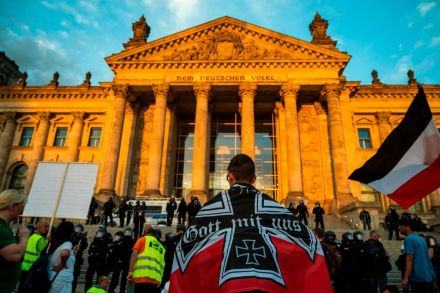
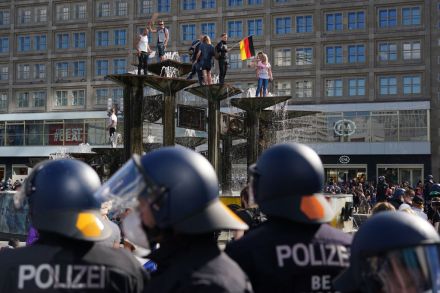
Germany has been in uproar over the events that unfolded this Saturday, when 38,000 protesters gathered in Berlin and clashed with the police. The organisers of the gathering, entitled Umdenken (Rethinking), claimed they wanted to show their frustration at government measures to contain the spread of the coronavirus. Among the 38,000 were at least 3,000 far-right sympathisers and extremists, according to Berlin’s interior minister. The run-up to Saturday’s protests was already marked by controversy, as Berlin’s local government had initially banned the gathering due to concerns that the event could contribute to the spread of the coronavirus.

Merkel may come to regret her furlough generosity

As Britain’s furlough scheme winds down, Germany’s is set to continue: Merkel’s government has announced that its enormously-expensive policy will stay in place until the end of next year. Hubertus Heil, the country’s finance minister, says furloughing offers ‘the stablest bridge over a deep economic valley’. Many in Britain are clamouring for Rishi Sunak to adopt the same approach. But with a price tag of 30 billion euros (£26 billion) and no guarantee it will prevent a surge in unemployment, is Germany’s strategy really a sensible one? This isn’t the first time Germany is hoping furloughing workers can get it out of a crisis.

How Germany avoided an exams crisis

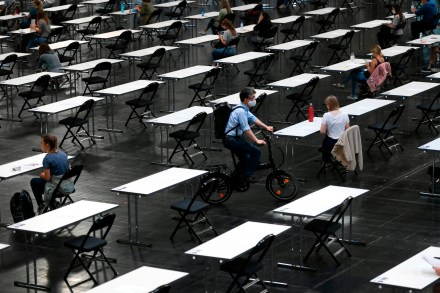
The timing for Germany’s school-leaving exams couldn’t have been worse this year. Typically, the exams including the Abitur – equivalent of A-levels – take place between March and June to give school leavers enough time to apply for apprenticeships or a place at university as the winter term starts in October. This year, however, the outbreak of the corona pandemic caused schools across Germany to close, casting doubt on whether final exams could take place. In Germany, the 16 federal states are in charge of education policy which usually creates a mosaic of regulations, exceptions and exam schedules.

Trump’s error in withdrawing troops from Germany

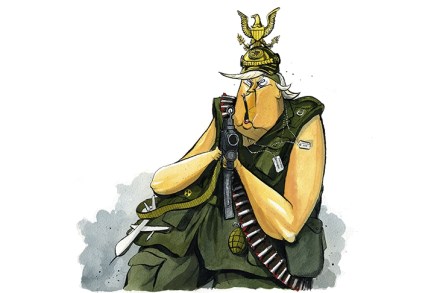
The Pentagon will fulfil President Trump’s demand to move almost 12,000 US troops out of Germany. About 6,400 forces will be brought home and 5,400 shifted to other countries in Europe. While Pentagon officials claim the action is part of a plan to strategically 'reposition' forces in Europe, the move is widely seen as an attempt by Donald Trump to punish Germany for its supposed failure to spend more on defence. Trump announced last month that he wanted to cut the number of active duty US troops in Germany from roughly 36,000 to slightly more than 24,000. His comments indicated that the move was tied more directly to his anger over Germany’s failure to meet Nato defence spending goals.

Germany’s EU presidency could make or break the union

Germany's government had been busy making big plans about all that it wanted to achieve during its EU council presidency which started this week. But then Covid-19 hit, and all these ideas went out the window. Now the talk in Brussels is that Germany’s council presidency has turned into a ‘corona presidency’. But what will this mean for the future of the EU? Angela Merkel admitted recently that coronavirus has exposed 'how fragile the European project is’. After the mortal shock of Brexit, the EU tried to show confidence about the future. Brussels tried to punch above its weight, taking on tech giants like Google and Apple. But now the pandemic has transformed the EU from policymaker into big money spender.

Is reopening possible without a tracing app?

40 min listen

Germany has launched its contact tracing app, but is it the only way to get out of lockdown? Kate Andrews talks to a panel of international guests and hears about the situation from Italy, where concerns over tourism and getting their cities back are conflicting the residents of Venice and Rome; from Germany, where uptake on the new app has been good; and from America, on how even 'science' is becoming partisan.With Silvia Sciorilli Borrelli from Rome, Nick Gillespie from New York, and Constantin Eckner from Berlin.Presented by Kate Andrews.

Does Germany’s track and trace app actually work?

Brits are still waiting for their coronavirus track and trace app. Meanwhile, Germany’s version is up and running. But although Germany appears to have beaten Britain again when it comes to tackling the threat of coronavirus, not all Germans are happy with the new app. The app’s launch coincides with the further easing of lockdown restrictions in Germany, so its success is critical to Merkel’s hopes of keeping her country's coronavirus death toll relatively low in comparison with elsewhere. It operates by issuing a warning to those who have come into contact with someone who subsequently tests positive for the virus.

Trump’s German troop withdrawal will hurt America

Tensions between Germany and the United States have increased considerably since Donald Trump became president. Trump has repeatedly criticised Berlin for a variety of things, most vocally accusing the German government of failing to pay its way on defence. Trump has said that Europe’s Nato members, including Germany, should no longer rely so heavily on the US to shoulder the costs of maintaining the alliance. The debate has focused on the target agreed by all alliance members that defence spending should reach 2 per cent of each country’s GDP by 2024. Germany’s military expenditure equalled 1.4 per cent of its GDP in 2019.

Can Germany spend its way out of the corona crisis?

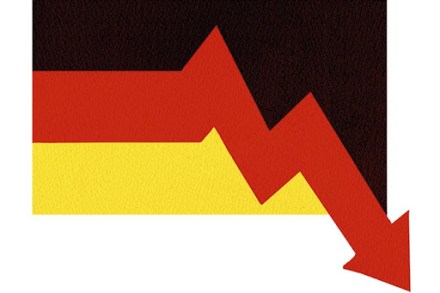
Coronavirus is grim news for all major economies and Germany is no exception. The country’s economic output decreased by 2.2 per cent during the first quarter of the year, the sharpest fall since the 2008 crash and the second biggest since German reunification in 1990. A double-digit dip in the second quarter, when the full impact of the lockdown restrictions introduced in March become more visible, seems likely. But while Germany is not alone in facing up to grim economic statistics, it is using its economic clout – unavailable to poorer countries in Europe – to try and spend its way out of the crisis. Many German employers have been able to switch staff to shorter working hours during the outbreak, avoiding mass layoffs, under the terms of a government rescue package.

Germany’s flag burning ban is a threat to freedom of expression

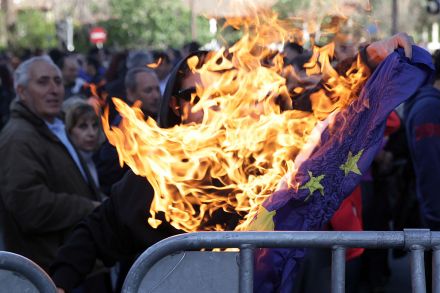
Germany’s national parliament has made the public burning of the European Union flag and flags of foreign countries punishable by up to three years in jail, classing it as a hate crime. In a vote last Thursday, the German parliament made the act of defiling foreign flags equal to the crime of defiling the German flag. The new law also applies to acts of defilement other than burning, such as publicly ripping a flag up. The initiative for this legislative change dates back to 2017 when protesters in Berlin burned the Israeli flag to emphasise their outrage about the United States’ support of Israel, causing indignation in parts of German federal politics.

Germany’s coronavirus protests are a big headache for Merkel

Where Brits have voiced their opposition to the coronavirus lockdown, they've mostly done so from their own homes over the internet. But some Germans who are unhappy at the restrictions imposed to thwart the spread of the virus are adopting a more radical approach. Demonstrators gathered in Munich, Stuttgart and other German cities last Saturday to protest coronavirus-related measures. Now these rallies look set to become just the beginning of a wave of protests demanding the lifting of coronavirus restrictions.  It's true that other countries around the world look to Germany, which has done well in managing the current crisis, as a model of best practice. Yet plenty of people here are unhappy with the continuation of lockdown measures.

Merkel has lost control of Germany’s coronavirus response

Angela Merkel unveiled a new phase of Germany's strategy for dealing with coronavirus last night. Much of what she said was already widely known, but the nuances of what she announced were still revealing. Two households will now be able to meet up with each other. Football – albeit behind closed doors – is back on. Restaurants and hotels will reopen within the next few weeks. And people in care homes will be allowed one visitor. ‘All in all, it is a balanced decision’, Merkel said in typical Merkel fashion after the meeting between the government and Germany's 16 federal states where the next phase was thrashed out. In reality, however, Germany is witnessing a major shift in its approach to the crisis, as Berlin is no longer in charge.