Claudia Massie

Touchy-feely – not

From our UK edition

‘The eye is fatigued, perverted, shallow, its culture is degenerate, degraded and obsolete.’ Welcome to the Palpable Art Manifesto of Romanian sculptor Paul Neagu. Art must be accessible to all the senses, he argued, for ten fingers will explain more than two eyes and the tongue might tell yet more again. His Palpable Sculpture is the focus of an exhibition at the Henry Moore Institute that itself ‘ascends to the condition of a work of art’, according to the Scottish artist and gallerist Richard Demarco. His opinion carries weight, for it was he who brought Neagu out of Romania in 1969 to exhibit and teach in Edinburgh. A succession of little galleries lead the viewer through Neagu’s playful mind.

Life after death

From our UK edition

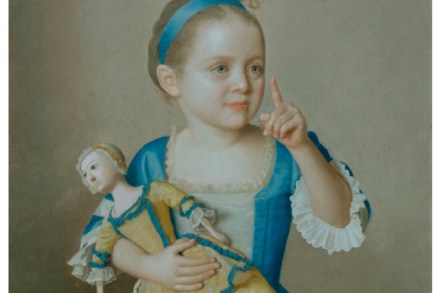
This is not the biggest exhibition at Edinburgh and it will not be the best attended but it may be the most daring. While the main gallery at the Royal Scottish Academy, commandeered as usual for Festival season by the National Galleries of Scotland, hosts a glittering exhibition of David Bailey photographs, the lower galleries offer three small rooms of Jean-Etienne Liotard. Who? You may well ask, because for anyone not schooled at the Courtauld, Liotard is likely to be as obscure as Bailey is recognisable. Drawing the two together in the same building is less of a leap than it might appear, however, for Liotard was also an eminent portraitist of his time, and, like Bailey, was himself a celebrity figure.

Glasgow

From our UK edition

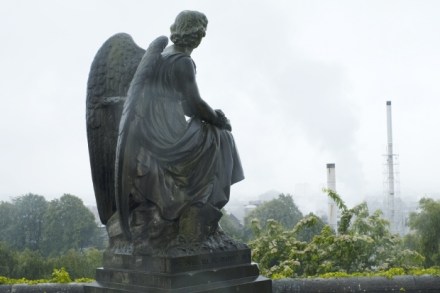
A wet walk in a Glaswegian graveyard might not be your idea of fun, but then you might not have spent the past two hours in the Glasgow Science Centre. Endure that, and see the sodden Necropolis stroll swell in allure. The Science Centre is one of the emblems of the new Glasgow. Rising from the old docklands on the south side of the Clyde, beside the BBC at Pacific Quay, it is one of the shouty new buildings leading the regeneration of the old shipbuilding areas. These buildings and their outlying friends still look like awkward blow-ins here, isolated blobs of glitter studding the wasteland. There’s not yet much sense of any connection with Govan Road, 200 yards to the west, but people are certainly coming here from somewhere for something, and in their multitudes.

Normandy

From our UK edition

I am compiling a list of the best black puddings. It began in Spain when I encountered my first morcilla de Burgos, a rich, spiced black sausage bulked up with rice. I was smitten. No black pudding could compete with this, I thought. But then I moved to Cumbria and in the flat hinterland of the Solway plain I found a butcher who made trays of the black stuff, studded with nuggets of fat the size of a child’s thumb. A portion of this was a veritable slice of heaven. I’ve sampled Stornoway’s, of course, and a black-pudding Scotch egg, but nothing ranked alongside the twin fruits of Burgos and Great Orton.

Møn

From our UK edition

The sky over the island of Møn, which is at the bottom right of Denmark, was cobalt and the whitewashed walls of the Elmelunde church dazzled in the bright sunshine and hurt our eyes. Our arrival had been preceded by an argument about visiting the church at all, some of the party being of the opinion that they had seen enough medieval churches already during the four-week trek across northern Europe. Nevertheless, culture won the day and in we filed to glory in the frescoes of the Elmelunde Master, who some time during the 15th century devoted himself to the decoration of this church. The frescoes are spare and sinuous, bleached in hue and basic in execution.

A celebration of Scottish artistic success over the past 25 years

From our UK edition

Since spring this year, art venues across Scotland have been dedicating themselves to a gigantic project called Generation. Involving more than 100 artists and 60 venues, the programme is a celebration of Scottish artistic success over the past 25 years, a multifaceted retrospective that recreates lauded exhibitions of yore and puts together new ones by old faces. The scale and ambition are impressive. There are fine artists involved and a clutch of Turner champions, too. But this is an event that demonstrates there’s more to Scottish art than the ‘Glasgow Miracle’ and lays out its case all across the country.

The immigration museum that travelled 4,000 miles

From our UK edition

The Immigrant Church at Sletta emigrated from North Dakota 18 years ago. Built on the prairie by Norwegian settlers in the 1900s, but latterly abandoned, it was deconstructed, transported and rebuilt on the island of Radøy, off Norway’s west coast. Now it presides over the West Norway Emigration Centre, a monument to the Norwegian diaspora, where it has since been joined by a jailhouse and four other buildings also salvaged from the American Midwest. This jumbled prairie scene surprises the unwitting visitor, accustomed to the red-or-white uniformity of the wooden houses of Radøy, each one equipped with a magnificent woodpile and a flagpole bearing a tricolor pennant.

We’re very lucky Philip II was so indulgent with Titian

From our UK edition

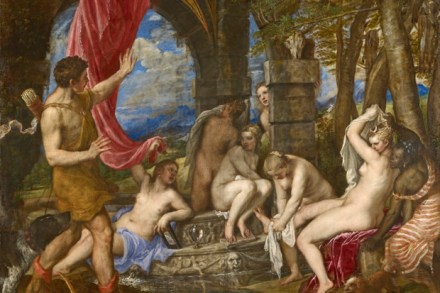
In Venice, around 1552, Titian began work on a series of six paintings for King Philip II of Spain, each of which reinterpreted a scene from Ovid’s Metamorphoses. The resulting work proved to be the apogee of his career and became what may be the most influential group of paintings in post-Renaissance European art. Studied, absorbed and channelled by successive generations of artists, from Velázquez and Rubens through to Gainsborough and latterly Freud, the impact of these works and their stylistic legacy was profound.

Weaving the colours of music 

From our UK edition

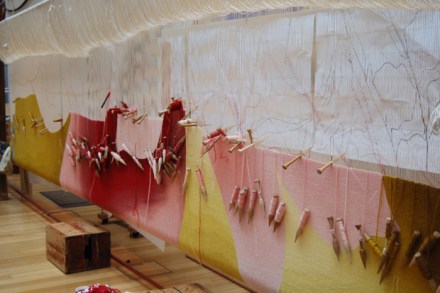
One loom, six metres in length, currently dominates the great, light-filled weaving hall of Edinburgh’s renowned tapestry workshop, Dovecot Studios. At its side sits Master Weaver Naomi Robertson, threading yarn from countless dangling bobbins between and around taut vertical strings, each dabbed with tiny, code-like markings. The tapestry, which is growing slowly upwards from the base of the loom, forms a spread of pinks, reds and golds, shifting horizontally through rich tonal ranges. The subject is as yet unclear. Given the intensity of the colour in this tapestry, it may seem surprising that its architect should be the painter Alison Watt, known for her bleached-out portraiture and paintings of white cloth.

Highlights of the Edinburgh Art Festival

From our UK edition

Few come to Edinburgh in August for the art but this year they should. The line-up for the official Art Festival is impressive and, happily, rich in painters. Foremost among them is Peter Doig, whose semi-retrospective No Foreign Lands is the main event at the Scottish National Gallery (until 3 November). Doig was born in Edinburgh in 1959 and is being claimed as ‘one of us’. That he left the country as a baby should not stand in the way here; we need painters like this. For too long now, perceptions of art in Scotland have been skewed by the consistent success of Glasgow artists in the Turner Prize. As Doig himself has said, the influential art prize should not be the Turner but the John Moores, the annual award for painting that Doig won in 1993.

Champion of the people

From our UK edition

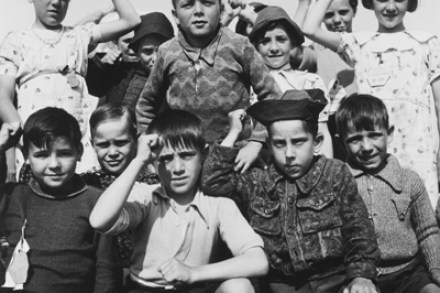
Welsh miners, Basque child refugees (above), Tyneside shipbuilders, Paul Robeson: In the Shadow of Tyranny at the Scottish National Portrait Gallery (until 16 May) offers a compelling portrait of Britain in the mid-20th century, as seen by an émigrée communist Austrian Jew, who also happened to be a Soviet espionage operative. Edith Tudor-Hart, who had fled her homeland in 1933 after marrying an English doctor, worked with spymaster Arnold Deutsch from 1926 onwards. As a photographer, her political sympathies were evident throughout her career, from early work documenting protest marches of ‘Red Vienna’ and its subsequent Nazification to representations of British inequality and deprivation.

Spirit of the Fringe

From our UK edition

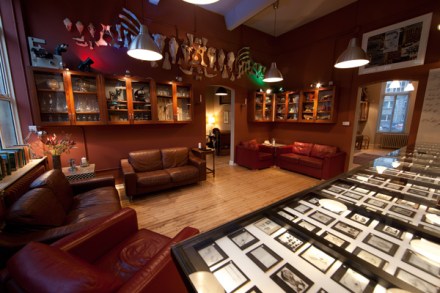
In the beginning was the Edinburgh International Festival, a carefully curated exhibition of high culture. Then came the Fringe, in which every pub and church hall in the city became a venue for everything from student theatre to experimental dance. Now, it is mutating again — and for the better. The real arts story of Edinburgh this year is emerging from what used to be the Royal Veterinary School. It has been renamed Summerhall, transformed inside into a world of fresh wood and glass doors and offered as a strikingly ambitious, multifaceted arts venue. Bankrolled by the financial consultant and sometime Downing Street adviser Robert McDowell, the 2.5-acre site incorporates theatre and exhibition spaces, studios, workshops, libraries and little museums.

Paper sculptures

From our UK edition

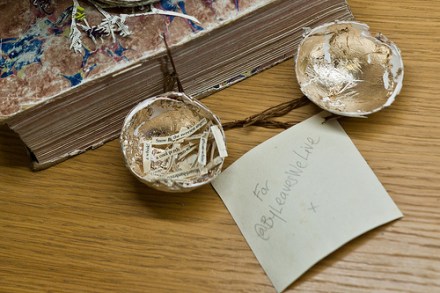
When Georges Simenon visited Edinburgh and saw the great gothic monument to Sir Walter Scott that rises from Princes Street Gardens, he is reputed to have said in astonishment, ‘They built that to a writer — to one of us!’ But Edinburgh, which has a fair claim to being the cradle of literature, has always been a city that both promotes and succours its writers. What other city would name its main railway station after a novel, as Edinburgh did in honour of Scott’s Waverley? And what football team other than Heart of Midlothian is named after a novel?

ART: Dutch landscapes

From our UK edition

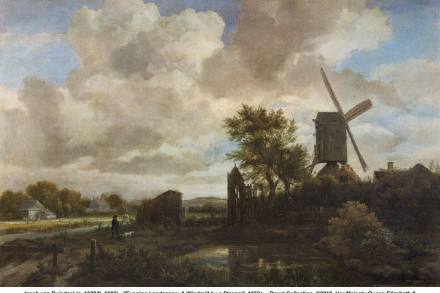
The big event this year at the Queen's Gallery in Edinburgh is an exhibition of Dutch Landscapes. Van Gogh fans will be disappointed, as these paintings are exclusively 17th Century – and rightly so, as it is in the work of this period that the art of landscape painting actually originated. Formerly a peripheral element to the action in what were usually either religious or mythical narratives, the landscape would step forward to take centre stage in Dutch art in the immediate aftermath of the Netherlands’ liberation from Spanish rule in 1648. The new Dutch republic became a fertile land for a generation of aspiring artists, the most illustrious of whom are of course Vermeer, Rembrant and Franz Hals.