Claudia Massie

A blunt instrument of war

From our UK edition

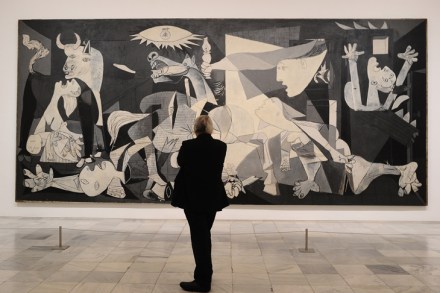
It takes a bold author to open his book about ‘Guernica’ with a quotation from the Spanish artist Antonio Saura lamenting ‘the number of bad books that have been written and will be written’ about it. Fortunately, James Attlee’s study of Picasso’s superstar work of art is not a bad book and he builds on a solid cultural and historic understanding of the painting to collate 80 years of evolving reaction to it. Attlee begins in May 1937, when, at the height of the Spanish Civil War, the Spanish Republic commissioned Picasso to create a painting for its pavilion at the World’s Fair in Paris. They hoped the famous artist would help secure sympathy, funds and, significantly, political intervention in the Republican cause.
Nothing is quite what it seems

From our UK edition

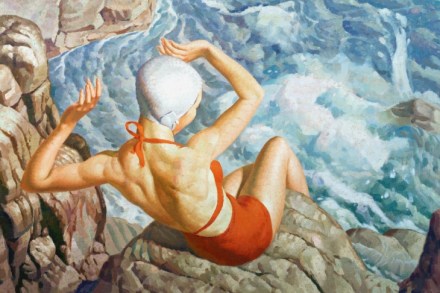
One day, somebody will stage an exhibition of artists taught at the Slade by the formidable Henry Tonks, who considered Cézanne a ‘curiously incapable’ menace, and a cracking show it will be. Until then, we must take what we can from exhibitions like True to Life: British Realist Painting in the 1920s & 1930s. Here, many of Tonks’s pupils, and others schooled with similar exactitude, can at last reclaim their rightful positions in British art after decades in the wilderness, pushed into the shadows by the alpha art of abstraction and the ironies of pop. True to Life is a marvellous show. The portraiture is the stand-out stuff, dominated by the limpid virtuosity of Meredith Frampton and Gerald Leslie Brockhurst.

Watercolour

From our UK edition

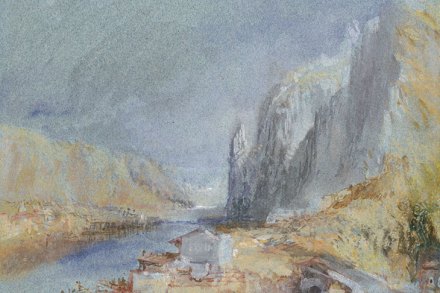
Like many artistically inclined children, I was given a set of Daler Rowney watercolours for my birthday one year. My first paints! What delights would I unleash with these cubes of colour? Well, practically none, as it turned out. Unschooled in the art of watercolour and evidently lacking any instinct for the medium, I used them, as undiluted as possible, to colour in my drawings of horses and Dogtanian characters. It was a bit fiddly with the blunt brush provided and, frankly, felt tip worked better. I went on to art school where, in the late 1990s, everyone would rather have dropped dead than be seen prodding around a tin of watercolours. The closest we got was watching the hapless amateurs in the surprisingly addictive Watercolour Challenge.

Dogs for children

From our UK edition

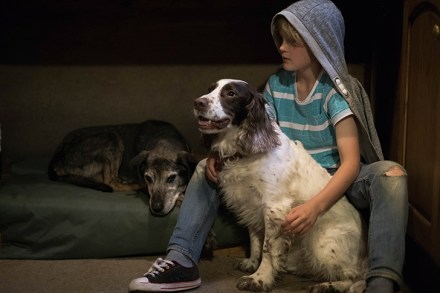
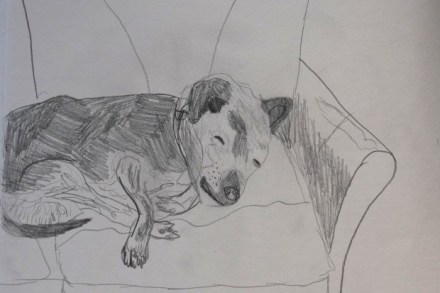
Henry, our springer spaniel, has died, suddenly and prematurely. With the passing weeks, we are becoming accustomed to the strange stillness his absence has left behind, and I no longer expect to meet him hurtling around the house in motiveless delight or to find him sidling against my leg as I sit in the kitchen. We do adapt quite quickly to life post-dog, though the sadness lingers. Sir Walter Scott knew this. ‘I have sometimes thought of the final cause of dogs having such short lives,’ he wrote, ‘and I am quite satisfied it is in compassion to the human race; for if we suffer so much in losing a dog after an acquaintance of ten or 12 years, what would it be if they were to live double that time?

Skye

From our UK edition

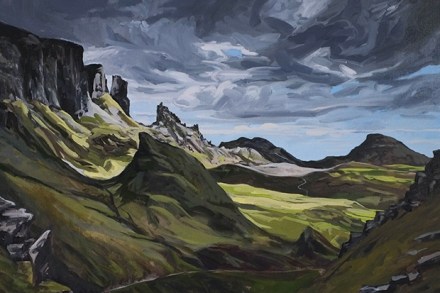
Glamour. It’s Marcello Mastroianni drinking negronis on the Via Veneto; it’s Audrey Hepburn, George Clooney, Sinatra on the Vegas Strip in ’59… and a composting toilet on the west coast of Scotland. The latter was the only one available when I went glamping in Skye. Glamping is a neologism, an awkward portmanteau word that seeks to persuade us there really can be a satisfactory crossover between glamour and camping, even though most reasonable people have these two concepts pegged in different stratospheres. You can ‘glamp’ all over the place these days, in everything from yurts to airstream caravans, but to do it in Skye you must head to Skye Eco Bells near Dunvegan.

First impressions | 21 July 2016

From our UK edition

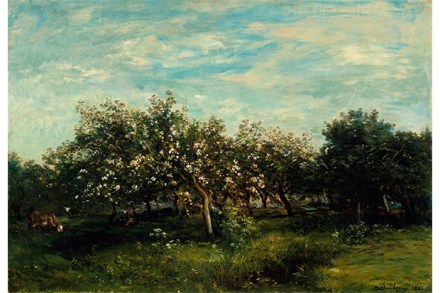
The last boat I saw in the galleries on the Mound was a canoe that the Scottish painter Jock McFadyen had been using to explore viewpoints around the waterways of London. Now another vessel has sailed in, a full-scale recreation of the studio boat built in 1857 by the French painter Charles-François Daubigny, from the bow of which he ushered in the movement that would come to be known as impressionism. Daubigny, a now sorely neglected artist, established an entirely novel approach to landscape painting that was to influence Monet, Pissarro and Cézanne and also, quite explicitly, Van Gogh. Inspiring Impressionism has an admirably clear narrative and it places Daubigny back where he belongs, at the fulcrum of modern painting.

First Lady of Pop Art

From our UK edition

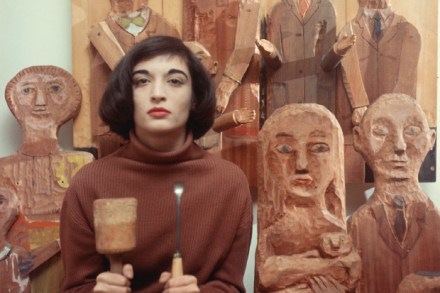
In 1961 the Venezuelan-American sculptor Marisol Escobar made a startling appearance at the New York artists’ group known as the Club that would set the tone for her unconventional career. The Club was where the alphas of contemporary American art met. Franz Kline, Robert Motherwell, Willem de Kooning and their ilk gathered there to take part in discussions, listen to talks, and escape their families. Abstract Expressionism was the house style and in its early days women, homosexuals and communists were all barred from membership. The Club was male, cliquey, exclusive and drenched in its own importance so when Marisol, as she was always known, arrived to participate in a discussion wearing a white mask over her face she caused consternation and even anger.

The delights of Hieronymus Bosch

From our UK edition

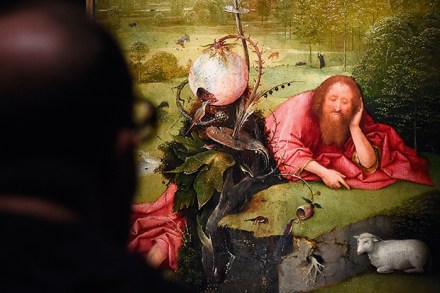
If you hope to inspire an appreciation of Renaissance art in your children, look to Hieronymus Bosch. Ideally, your children will not be sensitive types, nor prone to nightmares, but if they can handle a little, or indeed quite a lot, of fantasy, Bosch will blow their tiny minds. My four-year-old lad, Luca, definitely not a delicate chap, was deeply impressed by ‘The Garden of Earthly Delights’ when I showed him reproductions. He remains unmoved by Leonardo and bored rigid by Giotto, but Bosch snared him. I should hunt down a full-size poster and hang it in his room. I read somewhere that Leonardo DiCaprio snoozed beneath one as a boy, and look where it got him. Bosch fascinates everyone though, not just impressionable infants.

Painters triumph at Glasgow International – even though installations dominate

From our UK edition

Glasgow International Glasgow, until 25 April 2016 Kelvin Hall is a semi-derelict monument to the fag-end of Glasgow’s great art deco adventure. Built during the city’s industrial prime as an exhibition hall, it is now a building site, undergoing refurbishment. This has not stopped the Glasgow International art festival, the loose theme of which is the legacy of industry, from using it as a venue for two of the 78 exhibitions currently running across the city. Visitors must therefore navigate dilapidated stairwells and boarded up doorways to find the two rooms of art huddled in the front of the building. In the foyer is a show by Australian painter Helen Johnson.

Waspish traditionalist

From our UK edition

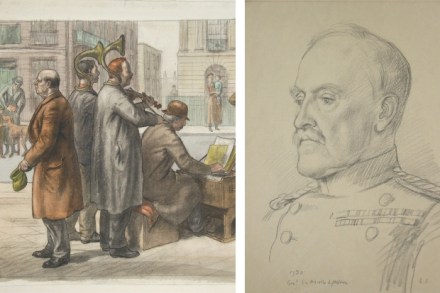
Randolph Schwabe (b. 1885) was a measured man in art and in life. His drawings are meticulous, closely observed models of draughtsmanship and represent a school of art that has now largely been lost or dismissed as irrelevant. To some, though, Schwabe seemed old-fashioned even in 1930 when he ascended to the position of Principal of the Slade school of art, taking over from the formidable Henry Tonks. The publication of his diaries from 1930 until his death in 1948 offers a welcome insight into the divergence in British art between the traditionalists and the new breed of modernists. Schwabe was emphatically of the former camp, and never lost his scepticism about the merits of the latter.

Dying of the light | 25 February 2016

From our UK edition

Finding St Peter’s is not straightforward. I approach the wrong way, driving up a pot-holed farm track between a golf club and a wood until a fly-tipped sofa blocks my way. Beyond the sofa, behind padlocked security fencing, stands an old stone bridge. Someone has sprayed ‘Go Home’ on the pillar. I prowl through the wood, hoping to find a way in, and scramble across a gorge to the rear edge of the building. More security fencing, through which I see tantalising glimpses of brutal, and brutalised, architecture. Two workmen appear, dressed like crime-scene investigators in blue hooded overalls, and I lean nonchalantly against the fence and talk about the site. I propose a quick tour of the interior but receive an emphatic response, ‘Not a chance, hen.

Internal affairs

From our UK edition

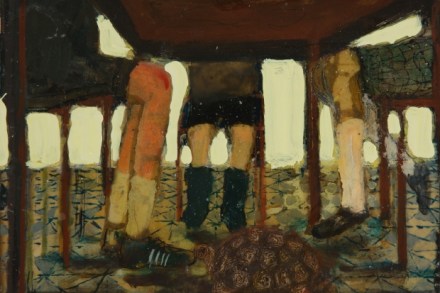
The ten vignettes that punctuate the white walls of the Ingleby Gallery invite us to step into the many-chambered mind of Andrew Cranston. These densely textured and patterned figurative scenes of obscure meaning enthrall, drawing the viewer into a peculiar realm of fantasy where tortoises crawl for ever and infants abandon their toys to stare out of viewless windows. Cranston’s painting is the kind that provokes extravagant responses from observers uncomfortable with art that refuses clearly to state its purpose. Read profiles of the artist and you will find much pontificating about ‘the despondent poetry of the creative process’, and so on. To my eyes, Cranston’s painting is about surface, colour and imagination.

Magnetic north

From our UK edition

‘Edvard Munch, I cannot abide,’ wrote Nikolai Astrup in a letter to his friend Arne Giverholt. ‘Everything that he does is supposed to be so brilliant that it doesn’t have to be more than merely sketched.’ Near contemporaries, Munch and Astrup were both innovative and admired painters but while Munch is today one of the few household-name artists, thanks to one misunderstood and overrated painting, Astrup has been neglected by everyone outside Norway. Happily, this is a travesty soon to be rectified by Dulwich Picture Gallery, which next month stages the first major exhibition of Astrup’s work to be held in Britain. Unlike many other Norwegian painters, Munch included, Astrup did not abandon his native land to make a career further south.

Artist gets £15,000 of public funds to live in Glasgow and eat chips

From our UK edition

The Glasgow Effect is a term given by epidemiologists and sociologists to describe the disproportionate levels of ill health and early death in Scotland’s second city. Disproportionate, because even when the usual factors of poverty are accounted for, Glasgow exceeds expectation. People in Glasgow have the lowest life expectancy in Scotland but even the wretched figures given for the city as a whole mask appalling local discrepancies. In 2008, a study for the Centre for Social Justice found that a white male in the Calton area of the city could expect to live until the age of 54, some twenty seven years less than his Bearsden counterpart.

Approachable abstraction

From our UK edition

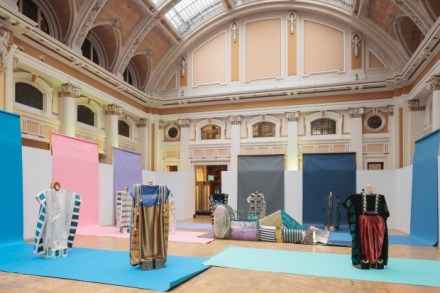
Fifteen million pounds and a hefty slice of architectural vision have transformed the Whitworth from a fusty Victorian art temple into a sumptuous and thoroughly modern gallery. The space inside now channels the visitor from one gallery to another through split levels and along wide, glass-walled extensions. The great barrel-vaulted spaces at the gallery’s core are now flooded with light from the opening up of the building into the park around it. The redevelopment has embraced the landscape surrounding the gallery and thinned the barrier between inside and out. The transformation is impressive; the sense of space remarkable.

Hanging offence

From our UK edition

Modern Scottish Men, a new exhibition celebrating the achievements of male artists in the 20th century, opens next month in Edinburgh. Men only; no women. Bold! Only joking. That show would never happen today. How could it? Where would an exclusive, specifically male-only exhibition be tolerated these days? A women-only show, on the other hand, would be fair enough; we need to point out that the wee dears can paint too. And so we have Modern Scottish Women: Painters and Sculptors 1885–1965. Should we perhaps be feeling patronised, ladies? The recent death of Brian Sewell has again thrown up his old allegations regarding the inferiority of women artists.

The Lake District

From our UK edition

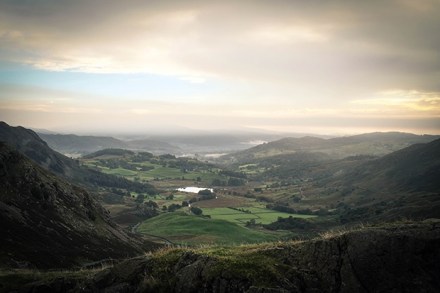
Cumberland and Westmorland Wrestling is the best thing in the Lake District. I lived near Wigton, just north of the fells, for two years and escaping the shadow of the clingfilm factory to witness generations of champions, all called Brocklebank, do writhy battle on the Cumbrian turf was a delight. Fools might think that the embroidered pants worn by competitors over their white suits indicate a camp, silly sport, but they are wrong. It is a noble art and its practitioners are heroes; legends of the Lakes. The terminology is as thrilling as the bouts: swinging hype, hank, cross buttock, inside click. (The latter is a particularly devilish move.

The importance of drawing

From our UK edition

Watch a child draw. See how she scrawls with abandon, jabs the felt tip at the paper, colours an eye so deeply the pen drives a hole through the paper. Look as she concentrates on the action of the subject, strips out unnecessary detail, toys with scale. This is pure drawing, instinctive, expressive and truthful. Children’s drawings are interesting, especially to artists, because of their honesty and their energy. Unfortunately, these qualities are frequently abandoned as they grow up and, for most teenagers, a good drawing is one that resembles a photograph, with the emphasis on precision and neatness. The result is usually a tidy drawing stripped of life; neat, dull and dead. The great challenge is to revitalize drawing. Throughout October, The Big Draw seeks to do just that.

Assemble’s Turner Prize entry is positive, genuine and ego-free. They’ll never win

From our UK edition

Here are some fur coats reclaiming the design canon for the sisterhood. They are draped over the back of tubular steel chairs. In this daring arrangement, they subvert the established patriarchy by partially obscuring the ‘autograph design object’ of the chair, something that represents the historic subsuming of all female creativity under male dominance. While this will be obvious enough, it must be appreciated in the greater context of the work which 'extrudes novelty from recognisability via subtle acts of transformation' and in doing so 'displaces the certainty with which we appoint function and value to objects'. I read this in the catalogue, an essential companion to Nicole Wermers’ ‘Untitled Chairs’.

Two country-house treasures in the Borders

From our UK edition

Picture Gallery Paxton House, Berwick-upon-Tweed Curved Stream Traquair House, Innerleithen, until 31 October In the Regency picture gallery at Paxton House hangs a full-length portrait of a young man in striking yellow breeches. The horse at his side is rubbing its bridle on its knee, the way horses do, while the man looks out at the viewer with the composed confidence of a fellow who would go on to be professor of moral philosophy at the University of Edinburgh. This is John Wilson, or ‘Christopher North’, writer, critic, advocate and, according to one contemporary, nothing less than ‘a true upright, knocking-down, poetical, prosaic, moral, professional, hard-drinking, fierce eating, good-looking, honorable and straightforward Tory.