Cindy Yu

Cindy Yu

Cindy Yu is a Times columnist, and formerly both an assistant editor of The Spectator and presenter of our Chinese Whispers podcast.

Has inflation stuck?

12 min listen

September's inflation data was released today, and showed that it was at the same level as August. Is inflation getting stuck a problem? Cindy Yu talks to Kate Andrews and Katy Balls. Also on the podcast: Labour's Israel headaches and a look ahead to tomorrow's by-elections. Produced by Cindy Yu.

‘The mask has slipped’ – Tuvia Gering on China, Israel and Hamas

43 min listen

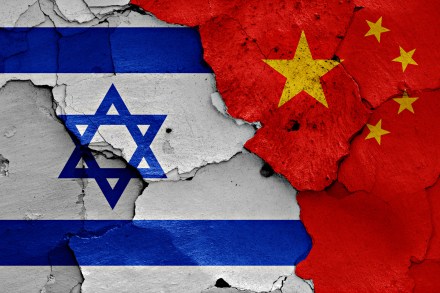
When China brokered a historic detente between Saudi Arabia and Iran earlier this year, it seemed that a new phase in world history – and certainly in Chinese foreign policy – had opened up. Instead of the US being a policeman of the world, it was the rising power, China, that was stepping into that role. Whereas Chinese foreign policy had previously only really cared about promoting trade and silencing dissidents, it seemed that perhaps, now, Beijing was taking a more leadership role in global diplomacy and security issues. And yet the events of the last week and China’s response to them have shown that perhaps the country isn’t ready for that responsibility just yet.

Does China care what Britain thinks?

62 min listen

In 2010, David Cameron and George Osborne ushered in what they called ‘a golden era’ with China, the world’s rising superpower. They argued that Britain could be China’s best friend in the West. Thirteen years later, after a global pandemic, up to a million interned in Xinjiang, and a Communist Party General Secretary seemingly keen to roll back democratic progress in the mainland and in Hong Kong, that policy looks ill-thought-out, at best. But are we at risk of swinging the other direction now, going from ignorance to hysteria within a handful of years? Did we get China wrong, and do we keep getting China wrong? Is Britain now losing influence in China?

Is Suella after the Tory leadership?

11 min listen

Suella Braverman is in Washington today, giving a speech to a think tank on illegal migration in which she will argue that seeking asylum and seeking better economic prospects are two different things. It's a punchy line she's taking, should Rishi be taking note? Or is this a thinly veiled bid for the Conservative leadership?  Also on the podcast, as Ed Davey wraps up this year's Liberal Democrat conference in Bournemouth, is there optimism in Lib Dem HQ as we look towards the next election?  Cindy Yu speaks to Patrick O'Flynn and James Heale.  Produced by Cindy Yu and Oscar Edmondson.

125,000 Hong Kongers have come to the UK. Where are they?

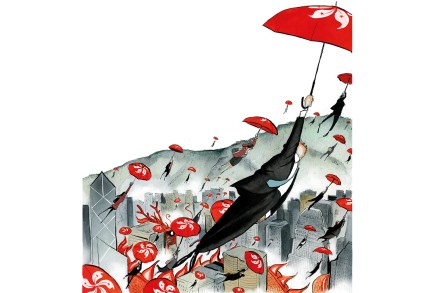
The Revd Dave Ho Young wasn’t interested in being Chinese when he was growing up. After his parents’ divorce, he was brought up by his British mother in Shropshire, while his Cantonese father moved back to Hong Kong. These days, the Revd’s Chinese heritage plays a bigger part in his life: his evangelical C of E church, St Barnabas in Leeds, has become a gathering place for the city’s newly arrived Hong Kong émigrés. Two years ago, Britain opened the route to residency for Hong Kong Chinese who hold British National (Overseas) passports, after the National Security Law imposed by the Chinese Communist party ended the city’s ‘one country, two systems’ arrangement with the mainland.

What we know about Beijing’s spies

32 min listen

Two years ago, Richard Moore, head of MI6, said that China was now the organisation’s ‘single greatest priority’. Parliamentarians and the British public have been starkly reminded of this by last week’s news that a parliamentary researcher had been arrested on suspicion of spying for China. On this episode, we won’t be commenting on the ins and outs of that case, but talking more generally about Chinese espionage. What forms does it take, what are its goals and how successful are the Chinese secret services at achieving those? I’m joined by a brilliant and knowledgeable guest. Nigel Inkster is the former director of operations and intelligence for MI6.

Cindy Yu, Charlie Taylor and Petroc Trelawney

17 min listen

Cindy Yu tells the story of how she got to know Westminster’s alleged Chinese agent and the astonishment of seeing herself pictured alongside him when the story broke (01.12), Charlie Taylor, His Majesty’s Chief Inspector of Prisons, talks breakouts, bureaucracy and stabbings, and wonders – where have all the inspirational leaders gone (06.45), and Petroc Trelawney shares his classical notebook and describes a feeling of sadness as the BBC Proms wraps up for another year (11.54). Produced and presented by Linden Kemkaran.

How I got to know Westminster’s ‘Chinese agent’

On Monday, I was surprised to discover a photo of myself in the papers next to a parliamentary researcher who had been arrested on suspicion of being a ‘Chinese agent’. The photo was taken in February at a panel in parliament entitled ‘Defeating the dictators’. The man and I are both twentysomething China watchers who work in Westminster. I’d got to know him in a professional capacity, but every so often, we had a drink together or hung out at a friend’s flat. It was only when I saw reports of his arrest that I realised I hadn’t heard from him since an evening six months ago when we teamed up to play Codenames, the board game in which rival spymasters race to rendezvous with their agents. We smashed the other team.

Is China still a Confucian country?

29 min listen

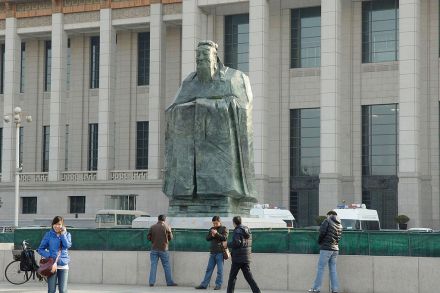
For thousands of years, Confucianism has run through the fabric of Chinese society, politics and culture. Decades of Communism has taken its toll on China, so can it still be considered a Confucian country? Joining the episode is one of the world’s leading experts on the philosophy, Professor Daniel Bell. In 2017, he was appointed the dean of Shandong University, an unusual appointment for a foreigner in China but one based on his expertise in Confucianism, in the province of Confucius’s birth. His new book, The Dean of Shandong: Confessions of a Minor Bureaucrat at a Chinese university, details some of the ups and downs of his time in that position.

Can Cleverly handle China?

10 min listen

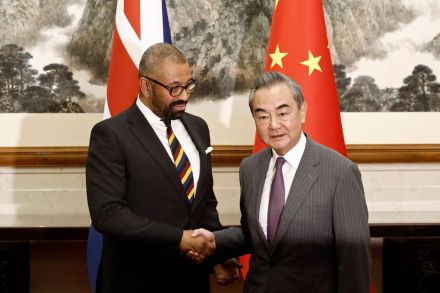
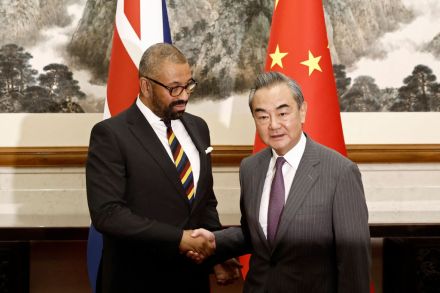
James Cleverly is in Beijing, a decision which he has been pushed to defend in a clip given to the BBC. Much has changed in the five years since a British foreign secretary last visited China. What's the purpose of the trip? How has it been received in Westminster?  Katy Balls speaks to Cindy Yu.  Listen to Cindy's fortnightly podcast on Chinese politics, society and culture here: https://spectator.

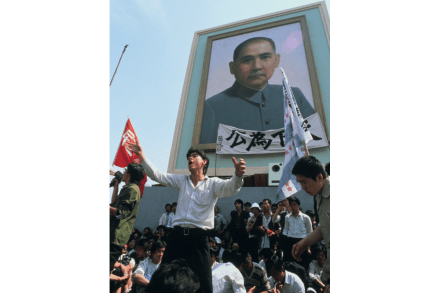
‘I want to see my parents. I’ll take any deal’: the Tiananmen Square leader desperate to return to China

Taipei Anyone in China who remembers the Tiananmen Square protests will remember Wu’er Kaixi. As thousands of students began a hunger strike in May 1989, premier Li Peng held live, televised talks with the protest leaders. Wu’er Kaixi, then 21, turned up to the talks in hospital pyjamas, oxygen bag in tow, and berated the elderly communist leaders. It was an electrifying moment. After the CCP’s bloody crackdown, he found himself second on the party’s most-wanted list. He fled China and eventually ended up in Taiwan. We meet in a Taipei jazz bar, which he tells me is his ex-girlfriend’s favourite spot.  Kaixi, as he asks me to call him, talks about his survivor’s guilt. ‘I was a leader of a movement where many of the students were killed,’ he says.

James Cleverly faces his biggest challenge yet on his trip to China

Much has changed since the last time a British Foreign Secretary visited China. Back in 2018, when Jeremy Hunt met his Chinese counterpart, foreign minister Wang Yi, the world had never heard of Covid-19, Hong Kong remained mostly immune from interference from Beijing, and the truth about the mass internment camps in Xinjiang had only started emerging. Hunt and Wang agreed to keep ‘building the 'Golden Era' of China-UK relations’. How different the world looks, just five years later, as another British Foreign Secretary prepares to visit Beijing.

What Beidaihe reveals about the changing nature of Communist leadership

26 min listen

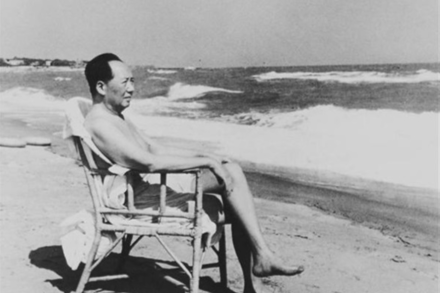
178 miles to the east of Beijing, there’s a beach resort called Beidaihe. The water is shallow and the sand is yellow and fine. Luxurious holiday villas dot the coastline. Starting from the 1950s, leaders of the Chinese Communist Party have moved their families and work to Beidaihe in the summer, making the beach resort something of a summer capital. Secrecy clouds the gatherings, and though this tradition continues, today the resort seems to serve a much more leisurely purpose when the CCP visits. On this episode, I’m joined by the historian James Carter and Bill Bishop, editor of the very popular Sinocism newsletter, to discuss where Communist leaders go, when they go on summer holiday.

Results day: is the worst of the pandemic over for students?

12 min listen

As A-level students receive their exam results, Cindy Yu speaks to Isabel Hardman and Mary Curnock Cook who is the former chief executive of UCAS. In a bid to curb recent grade inflation, fewer of the top results have been handed out to students who were the first year group to sit through pandemic style national examinations. Can the government return to 2019 levels this summer? Produced by Cindy Yu and Natasha Feroze.

Will Rishi hit his inflation target?

5 min listen

Today we had the – seemingly – good news that the headline rate of inflation for July has come down to 6.8%. This is in line with Bank of England targets which suggest that Rishi could be set to meet his pledge to halve inflation. Is this cause for celebration in Number 10? Or should we be wary? Cindy Yu speaks to Michael Simmons, The Spectator's data editor. Produced by Cindy Yu and Oscar Edmondson. Check out The Spectator's data hub: https://data.spectator.co.

Chinese cities are being sacrificed to save Beijing

Bazhou and Zhuozhou, two small cities to the south of Beijing, have been submerged in record floods since late July, when Typhoon Doksuri swept through China’s northeast. Nearly one million people have been displaced. But this is not just a natural disaster. The region has taken more than its fair share of floodwaters. All of this is a deliberate strategy to protect Beijing, the capital, and Xiong’an New Area, a project dear to Xi Jinping’s heart.  Residents are understandably furious. Yesterday, a group of Bazhou residents took to the local government building to demand compensation, for the second time in three days. The protestors were met with pepper spray and batons.

Does China need a new economic playbook?

41 min listen

At the end of last year, some thought that the Chinese economic recovery after three years of zero Covid could happen just as fast as zero Covid itself ended being government policy. I admit, that included me. And yet, more than halfway into 2023, that recovery looks increasingly elusive. The Chinese economy has failed to shake off its own long Covid while other structural problems have reared their heads. What does the future hold for the Chinese economy? Is this the new normal? And if so, is that really a problem? I’m joined on this episode by the economist Keyu Jin, author of The New China Playbook: Beyond Socialism and Capitalism. Keyu is an associate professor at the London School of Economics and advised and consulted for the World Bank and the IMF.