Cindy Yu

Cindy Yu

Cindy Yu is a Times columnist, and formerly both an assistant editor of The Spectator and presenter of our Chinese Whispers podcast.

An insider’s account of the CCP’s stranglehold on China

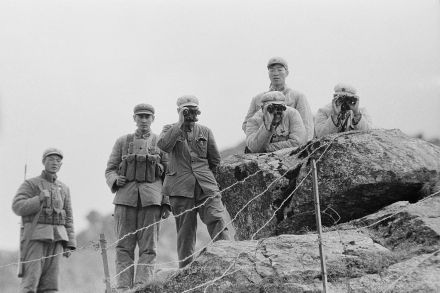
All families have secrets, but few family histories are classified by the state. After the death of Snow’s father, his study is cleared out by officials from the Chinese Communist party; but Snow discovers letters and unmarked hard drives hidden in hollowed-out dictionaries that they’d missed. The material reveals that her father was a high-ranking intelligence officer in the party, handpicked to build China’s intelligence service after the founding of the new People’s Republic. He’d hidden them for his family to find. Jie provides a rare insider account showing just how much the CCP knew and how much it covered up This isn’t the set-up for a new spy novel, but a true story.
Was China’s economic boom ‘made in America’?

53 min listen

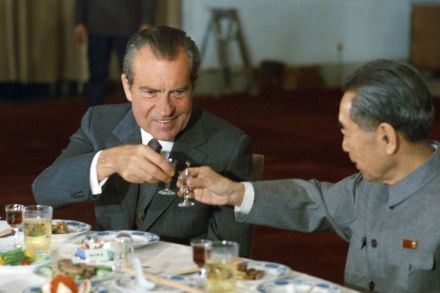
Today, the US and China are at loggerheads. There’s renewed talk of a Cold War as Washington finds various ways to cut China out of key supply chains and to block China’s economic development in areas like semiconductors and renewables. There’s trade, of course, but the imbalance in that (some $370 billion in 2022) tilts in China’s favour and only serves as another source of ammunition for America’s Sinosceptics. China, on the other hand, is also decoupling in its own way, moving fast to cut its reliance on imported technology and energy. At this moment, it seems like US-China tensions are inevitable – but look into the not so ancient history, and you’ll find a totally different picture.

Is the ERG a spent force?

12 min listen

After much back and forth, the Rwanda Bill passed last night with only 11 votes against while other critics, such as Lee Anderson who resigned his party role, abstained. Rishi Sunak can celebrate a small victory as it appears that the Brexit 'Spartans' of yesteryear are something of a spent force today. Cindy Yu talks to Katy Balls and Fraser Nelson. Produced by Cindy Yu.

Cindy Yu, Mary Wakefield and Natasha Feroze

18 min listen

This week: Cindy Yu reads her piece ahead of the Taiwanese elections (00:54), Mary Wakefield discusses the US opioid crisis which she fears has come to the UK (07:13), and Natasha Feroze tells us about the rise of relationship contracts (13:26).  Produced and presented by Oscar Edmondson.

Taiwan can’t escape China’s shadow

The Taiwanese rock band Mayday – ‘the Beatles of the Chinese-speaking world’ – are being investigated by the Chinese Communist party for the crime of lip syncing. Local authorities are combing through recordings of Mayday’s Shanghai concerts from November looking for evidence of ‘deceptive fake-singing’, as the CCP calls it, which has been illegal in China since 2009 (although the law is rarely enforced). Last month, an anonymous Taiwan-ese government source told Reuters that the investigation had been cooked up because the pop stars refused a request from Beijing to say something nice about China in the run-up to Taiwan’s election this Saturday. The band found itself at the centre of a row between the presidential hopefuls about Chinese interference.

What lies at the root of the India-China rivalry?

45 min listen

India is the fifth largest economy in the world, and now has a population larger than China’s. It’s no surprise, then, that officials in Washington often see India as a powerful non-western bulwark to growing Chinese power. On this podcast, I look at where China and India’s rivalry comes from. How much have long-lasting skirmishes on the China-Indian border damaged relations? How have demographics, economic competition and recent international conflicts affected the relationship between the two countries? And are the domestic politics of China and India in fact more similar than most westerners like to admit? I speak to Avinash Paliwal, an international relations expert at the School of Oriental and African Studies, and the author of India’s Near East: A New History.

2023: The year in review

27 min listen

How well did Rishi Sunak do on his five pledges? Are we any clearer on what Keir Starmer stands for? Is the SNP done for in Scotland? On this episode, Cindy Yu, Katy Balls, James Heale and Coffee House Shots regular Stephen Bush look back on the past year in British politics. Produced by Cindy Yu and Joe Bedell-Brill.

Who will be Taiwan’s next President?

43 min listen

Taiwan goes to the polls in just over a month. This is an election that could have wide repercussions, given the island’s status as a potential flashpoint in the coming years. The incumbent President, Tsai Ing-wen, is coming to the end of two elected terms, meaning that she cannot run again. Her party’s chosen successor is William Lai – Lai Ching-te – who is the current vice president. For most of this year, he has been facing off opposition from the Kuomintang, the biggest opposition party in Taiwan, and the Taiwan People’s Party, a third party led by the charismatic Ko Wen-je. Lai remains in the lead with a month to go, but polls show that the KMT is only a few points behind, meaning that an upset is still possible.

Is Rishi’s Rwanda Bill doomed?

10 min listen

Rishi Sunak is stuck in a migration quagmire and will be spending the weekend drumming up support from MPs ahead of the vote on his amended Rwanda bill on Tuesday. He will be hoping for a Christmas miracle in the form of support from both One Nation MPs and those on the right of the party. Will Tuesday's vote be a de facto confidence vote in the prime minister?  Cindy Yu speaks to Katy Balls and James Heale.

Will Boris surprise at the Covid inquiry?

13 min listen

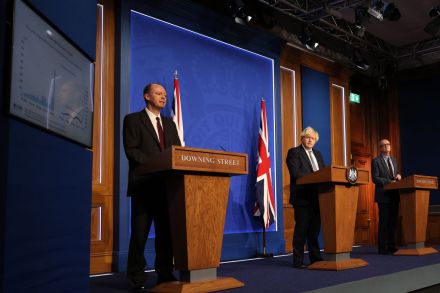
As Matt Hancock appears before the Covid inquiry for a second day, we take a look at the revelations from the former health secretary, including the allegation that involving the Prime Minister and former prime minister, Boris Johnson. Both are due to be up at the Covid inquiry in the coming weeks. Cindy Yu talks to Katy Balls and James Heale. Produced by Cindy Yu.

Carbon capture: how China cornered the green market

30 min listen

On the podcast: In her cover piece for the magazine, The Spectator's assistant editor Cindy Yu – writing ahead of the COP28 summit this weekend – describes how China has cornered the renewables market. She joins the podcast alongside Akshat Rathi, senior climate reporter for Bloomberg and author of Climate Capitalism: Winning the Global Race to Zero Emissions, to investigate China's green agenda. (01:22) Also this week: Margaret Mitchell writes in The Spectator about the uncertainty she is facing around her graduate visa. This is after last week's statistics from the ONS showed that net migration remains unsustainably high, leaving the government under pressure to curb legal migration.

How China cornered the green market

When Rishi Sunak announced that the 2030 ban on new petrol and diesel cars would be delayed by five years, he framed it as a common-sense move. What he didn’t say is that he had been advised that, had the original deadline stuck, Britain’s electric vehicle (EV) market would have been handed over to China. Going green, Sunak was told, would mean going Chinese. At the COP climate summit in Dubai starting this weekend, other leaders will have reached the same conclusion. They’re all a bit late. With little fanfare and a lot of state help, Chinese companies are now world leaders in wind, solar, hydro, lithium batteries and electric cars – dominating either the sectors or the supply chains that support them.

Dialect and identity: is Mandarin bad for China?

44 min listen

Across the span of China, a country as big as Europe, there are countless regional dialects and accents – perhaps even languages. Often, they're mutually unintelligible. The Chinese call these ‘fangyan’, and each Chinese person will likely be able to speak at least one fangyan, while also understanding Standard Mandarin, the official language of the People's Republic. It means that the Chinese are more multilingual than you might think. But it also means that the question of language is inherently a political one. Standard Mandarin has a relatively short history, created by the country’s founding fathers to unify the spoken word in a huge country. But with the ubiquity of Standard Mandarin now, is fangyan at risk of dying out?

Suella tells Rishi: ‘You have repeatedly failed to deliver’

15 min listen

When Suella Braverman was sacked on Monday she warned that she would have more to say in due course, and she has just released her resignation letter. It is predictably punchy, accusing the prime minister of backtracking on policy promises he made to her and especially on his commitment to stop the boats. Will Sunak come to regret casting Suella Braverman aside? Is this the start of a leadership bid? Cindy You speaks to Katy Balls and Paul Goodman.  Produced by Cindy Yu and Oscar Edmondson.

Battling the official narrative — China’s ‘underground historians’

35 min listen

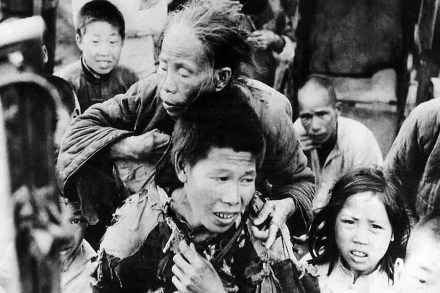
Controlling history is key to the Chinese Communist Party’s control of the country. Whether it’s playing up the ‘century of humiliation’, or whitewashing past mistakes like the Great Leap Forward or the Tiananmen Protests, the Party expends huge effort and resources on controlling the narrative. That’s why it’s so important and interesting to look at those Chinese people who are documenting the bits of history that the Party doesn’t want you to know about. They interview survivors from Communist labour camps, or keep their own memoirs of the Cultural Revolution, and try to keep the memory of past horrors alive through film, magazines and paintings. A new book called Sparks documents their work.

Why the Tories need the new Hong Kong voter base

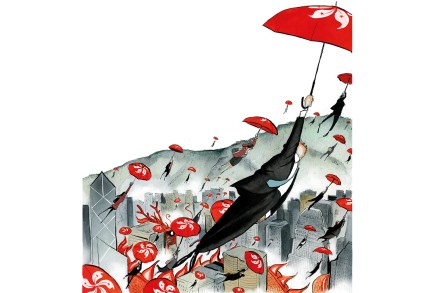
With the Conservatives trailing around twenty points in most polls, the outcome of the next election seems all but set. However, even if Rishi Sunak will struggle to lead his party to a fifth term, the scale of a likely Labour victory remains unclear. Whether it’s a backlash from the Muslim community over Starmer’s position on Gaza or Scottish independence, there are plenty of factors that could dampen a Starmer victory parade. One of these unknowns that could swing the balance for some crucial seats in the next election are that of the new voters from Hong Kong, 125,000 of whom have come to the UK on British Nationals (Overseas) status since China imposed a National Security Law on the city in 2020.

Did Boris’s No. 10 have a women problem?

11 min listen

Today the Covid inquiry heard from Helen McNamara, former deputy cabinet secretary (who infamously supplied a karaoke machine for one of the government's lockdown parties). Her evidence suggested that the government's pandemic response had a women problem – from not properly understanding lockdown's impact on domestic abuse to not considering that PPE is designed for male bodies, not female. Is that fair? Cindy Yu talks to Katy Balls and Isabel Hardman. Produced by Cindy Yu.

Rethinking Chinese food with Fuchsia Dunlop

50 min listen

All cultures care about their cuisine, but the Chinese must have one of the most food-obsessed cultures in the world. It may be because we have the best food... Those listeners of Chinese Whispers who’ve been to China will know exactly what I’m talking about. For those of you who haven’t, you may have come across the classic Chinese takeaway with dishes like sweet and sour pork, or you may like Cantonese dim sum, and some of you may be big fans of Sichuanese cooking. But China has so much more to offer than what has made across into the West’s Chinese restaurants. Thankfully, that’s changing and quite fast. Part of the education campaign to bring more of the diversity and richness of Chinese cuisine to the West is the work of people like Fuchsia Dunlop.

Can Xi successfully stage manage Li Keqiang’s legacy?

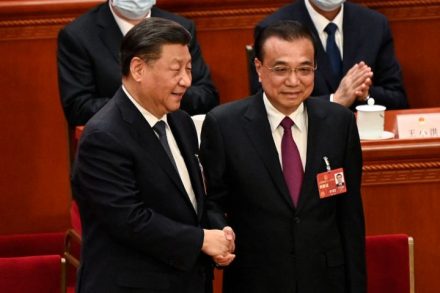
Political deaths in China always carry the risk of social unrest. It was premier Zhou Enlai’s death that triggered the ‘democracy wall’ movement of the late 1970s, a student protest that was the precursor for the Tiananmen Square protest ten years later. In turn, the latter protest was triggered by former Chinese Communist party (CCP) leader Hu Yaobang’s death. Last night, the former premier Li Keqiang passed away of a sudden heart attack at the age of 68, so reports Chinese state media Xinhua. A few things will happen now. It’s true that Li was not as well loved by the Chinese people as Zhou, nor was he explicitly associated with a liberalising reform agenda in the way that Hu was.

Keir Starmer’s Israel problem is growing

13 min listen

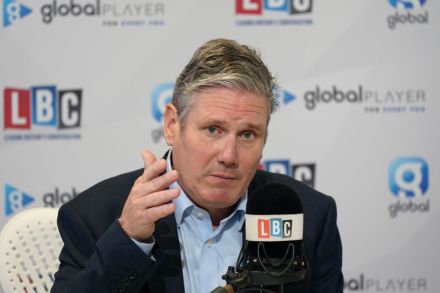
Today, Keir Starmer held a long meeting with some Muslim Labour MPs over their concern on his stance on the Israel-Hamas conflict, first ignited by comments he made on LBC which seemed to justify Israel's electricity and water blockade of Gaza. The Labour leader has made huge progress to move his party on from the reputation of anti-Semitism forged during the Corbyn era – but can he find a middle way to please all wings of his party on this deeply emotive issue? Cindy Yu talks to Katy Balls and Isabel Hardman. Produced by Cindy Yu.