Christopher Sandford

Christopher Sandford is the author of The Rolling Stones: Sixty Years (Simon & Schuster).

Nick Kristof and a tale of two Oregons

From our US edition

The long-serving New York Times opinion writer Nick Kristof apparently now wants to be governor of Oregon. The 62-year-old media superstar seems to be a rather changeable sort of chap. It might almost seem he’s one of the many New York-area residents to have had their identities stolen. Perhaps it was an old platinum credit card, carelessly tossed in a Midtown trash can, which allowed the criminals to strike, or perhaps the purchase over the phone of a first-class air ticket to one of the exotic locales his business frequently takes him. Whatever it was, it’s difficult to reconcile the superbly cerebral, crusading double Pulitzer Prize-winner and regular CNN contributor with the self-styled ‘Oregon farmboy’ with his finger firmly on the Beaver State’s troubled pulse.

nick kristof

The Rolling Stones cancel themselves

From our US edition

First, the good news. Despite the recent death of drummer Charlie Watts, the Rolling Stones are back among us, playing a series of sold-out US stadium shows between now and Thanksgiving. It’s not just that the three surviving band members, now all in their seventies, refuse to grow up. They seem actually to live in a time warp: in an era when most rock stars dress like they work at UPS and offer a relentless diet of screwed-up nihilism and phony salves, the Stones are still out there in their skimpy, Day-Glo T-shirts and leather pants, serving up great meat-and-potato rock songs garnished with lyrics about sex and drugs, and generally carrying on like it’s 1967 all over again. Now the bad news.

rolling stones
kshama sawant

Bad Kshama: meet Seattle’s worst socialist

From our US edition

Seattle In Max Frisch’s 1953 absurdist play The Fire Raisers, a well-off family in an unnamed town invites a man they suspect of being an arsonist to sleep in their home. A second such guest then appears, and before long the family’s attic is piled high with drums of gasoline. The man of the house gradually realizes that he has two active pyromaniacs under his roof, but believes that by displaying kindness, he will make his house immune to them. In the last scene of the play, the original arsonist asks for a box of matches and, again wishing to appear generous, his host gives him one. You can guess the rest. Somehow I’m put in mind of Frisch’s morality tale when examining the unresisted rise of the 46-year-old Seattle socialist politician Kshama Sawant.

The Sting paradox

From our US edition

As a fitfully employed, freelance hack, there are few jobs I consider beneath me. I’ve peered anxiously over the boundary wall of Eric Clapton’s English estate to the approaching noise of guard dogs to see if Clapton might care to supply an impromptu quote or two in lieu of the formal interview his management had aggressively denied me. I’ve been informed by a source close to Roman Polanski that he considered me a ‘nosy fellow’ — enough, perhaps, to give pause to anyone who happens to recall the director using that same phrase to Jack Nicholson immediately prior to inserting his flick-knife in Nicholson’s left nostril in a scene from Chinatown.

sting

An ode to Charlie Watts, the politest man in rock music

From our US edition

There can be few terms in the English language more debased than ‘rock star’. Nowadays, it seems, the press makes a fetish of every halfway plausible such chancer to appear over the horizon, regardless of whether their art will endure, or their generally slim recorded oeuvre instead be among the detritus one eventually takes to the nearest Goodwill store. But the Rolling Stones drummer Charlie Watts, who died today aged 80, truly merits a place in the pop pantheon. He wasn’t just an original among the standard tub-thumpers of his profession. He was unique. Back in 1963 the Stones’s first manager, Eric Easton, fastened on the essential thing about Watts, which was that he was ‘totally unpretentious’ and ‘perfect at his job.

Charlie Watts of The Rolling Stones performs live at Adelaide Oval on October 25, 2014 (Getty Images)

Fatty Arbuckle’s fall

From our US edition

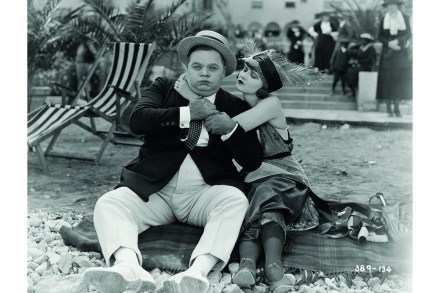
Roscoe ‘Fatty’ Arbuckle (1887-1933) never won an Oscar or saw his name emblazoned on the Hollywood Walk of Fame, but he should be remembered as a movie pioneer. Despite his considerable physical size, he was a remarkably versatile and agile actor, and his best films are weirdly droll as much as slapstick funny. He predated both Charlie Chaplin and Buster Keaton as a master of physical comedy played with a straight face. Arbuckle was also an accidental pioneer of cancel culture. Exactly a hundred years ago, he found himself sitting in a cell on ‘felony row’ at the downtown San Francisco jail, held without bail for the alleged rape and subsequent death of a 26-year-old actress named Virginia Rappe.

fatty arbuckle

The man in the White Castle

From our US edition

The world’s first fast-food restaurant chain. The first to sell over a billion hamburgers, to invent the carry-out and to offer discount coupons in the newspapers. Jewel of the American Midwest. Celebrating its centenary. Better burgers than McDonald’s, according to Consumer Reports. Still run as a family business. Some 377 US locations, and growing. Obsessively loved by some, faintly ludicrous to others with its trademark enamel-glazed, faux-brick architecture and miniature square patties, White Castle is the Rodney Dangerfield of greasy spoons. It gets no respect.

white castle
portland

Hell in Portland

From our US edition

Portland has had one of the most turbulent histories of any town in America. At the time of the Great Depression it was as rowdy a riverfront port as Shanghai or Marseille, where some shopkeepers still took their payment in gold, women in tight skirts loitered in doorways on Salmon Street, and loggers drank and gambled away the afternoon.Then Portland enjoyed an economic boom, largely thanks to government shipbuilding contracts, and quickly cleaned up its act. If you happened to have visited from around 1945-65, you would have been struck by the long rows of neat clapboard houses, most with a US flag fluttering out front, and a waterfront area conspicuously free of girly bars and vomit.

The fight for Greater Idaho

From our US edition

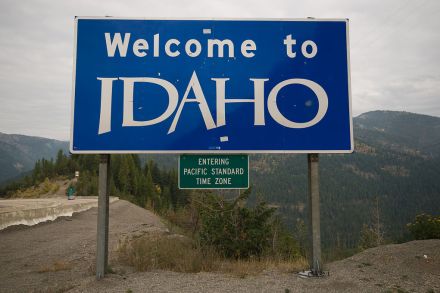
A nonbinding, off-season ballot initiative in rural Oregon isn’t normally the most viscerally exciting of events, couched as they generally are in terms agonizing over whether to ‘note’ or ‘reaffirm’ a past proposal, or to ‘endorse’ or ‘refer’ a more recent one for further consideration. But just the other day, out of the tepid depths of yet more interminable debate on local timber-harvest regulations, or supplemental sport-fishing laws, something of genuine significance happened. The voters of five Oregon counties let it be known that they would like to secede from their state and join Idaho instead. ‘This election proves that rural Oregon wants out of Oregon,’ Mike McCarter, spokesman for the Greater Idaho movement, said in a statement.

greater idaho

Fifty years of ‘Imagine’

From our US edition

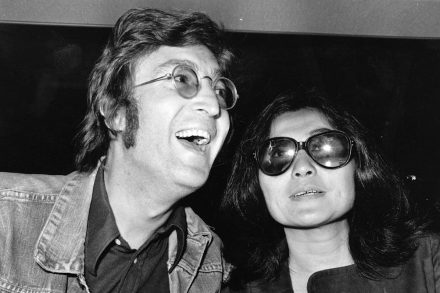
How should we measure the value of a work of art or, failing that, a pop song? Take for example John Lennon’s ‘Imagine’, which was recorded exactly 50 years ago. It certainly scores on the sales front, having shifted about 21 million copies worldwide according to the Chartmasters service. That’s a healthy revenue stream in anyone’s book, particularly for a tune whose lyric urges us to envision a world without possessions. The ‘ubiquitous’ box gets ticked, too, because ‘Imagine’ has been covered by more than 200 other artists. It’s the unifying song we all seem to turn to at moments of crisis, as when the pianist David Martello performed it in front of the Paris Bataclan the morning after the November 2015 terrorist attacks there.

imagine

The narcissism of Pramila Jayapal

From our US edition

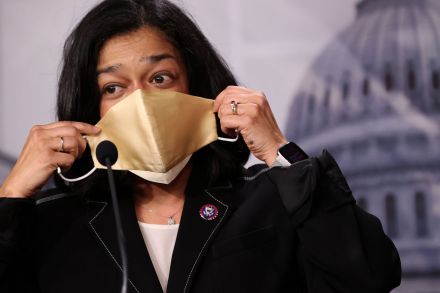
When you’re averse to the administration’s ‘zero-tolerance’ policy on illegal immigration and are invited to occupy the Senate Office Building to signify your displeasure, do you, as an elected US representative, agree to do so? When asked to join 398 of your House colleagues in passing a motion decrying any prejudicial treatment of Israel, specifically affirming the right of all US citizens to free speech, do you boldly side with the 16 dissidents who oppose this ideal?

pramila jayapal

Here’s looking at you, Kid

From our US edition

‘I learnt there was Charlie and there was Chaplin,’ Jackie Coogan, the actor’s young foil in 1921’s groundbreaking The Kid once remarked. ‘The first was the biggest movie star on the planet, the second an insecure boy from the slums of London.’ Luckily for us, both sides of the Chaplin persona meshed perfectly in The Kid, with its generous helpings of the comic and the sentimental. It may be the Little Tramp’s most perfect and most personal film. Like almost everything that’s any good in art, The Kid emerged out of turmoil. In October 1918, the 29-year-old Chaplin had married the first of his child brides, 16-year-old Mildred Harris, after she told him she was pregnant.

kid

Elvis and Nixon, the odd couple

From our US edition

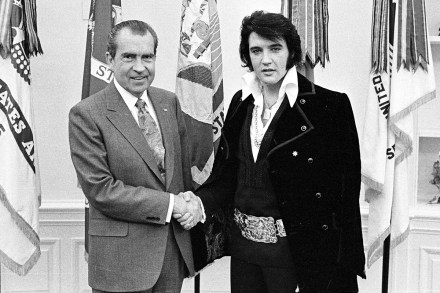
If you were called upon to invent the human antithesis of rock and roll, you couldn’t do better than our nation’s 37th president, Richard Nixon. Habitually clad in a funereally dark suit and dress shoes, even when strolling on the beach, Nixon’s tastes in music ran to the semi-classical strains of Mantovani and the Boston Pops, and a penchant for sitting alone at night brooding to Wagner. I once asked the legendary White House fixer Gordon Liddy what his chief thought, if anything, about pop music. ‘Crap,’ Liddy replied succinctly. In late 1970, the 57-year-old Nixon was at something of a low point. A combination of the continuing war in Vietnam and domestic economic woes proved disastrous for the GOP in that November’s midterm elections.

nixon

Gone to pot: drugs in the Pacific Northwest

From our US edition

It is two o’clock on an unusually mild December afternoon here in suburban Seattle, and I’m sitting on my back porch smoking marijuana.Passively smoking, I should add, lest I shock any reader by this lapse, but smoking nonetheless. Since 2012, when the voters of Washington State chose to decriminalize it, my part of town has been especially fragrant with the acrid smell of pot. A thick haze of the stuff lingers long in the air these quiet lockdown days.

drugs

Washington State is a worrisome window into the future

From our US edition

SeattleI have seen the future, and it looks much like Washington State.But let’s get there by steps. The Pacific Northwest, for much of its history dominated by the logging and fishing industries, has an aggressive blue-collar tradition. Radical groups like the Industrial Workers of the World — or so-called Wobblies — used to congregate there. Sometimes on a Saturday night in downtown Seattle old anarchists can still be found singing their ballads of longshoremen’s revolts. The place has been called 'the hideout capital of the USA’, a far-flung outpost where generations of the nation’s failed, fed-up, and felonious have gone to disappear.

seattle washington state

Richard Nixon took the high road in 1960. Donald Trump should now

From our US edition

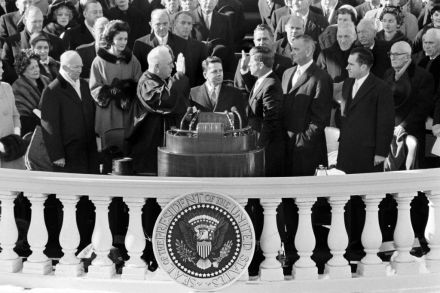
‘You gotta swallow this one, they stole it fair and square.’ That’s a Republican hack speaking to Richard Nixon, as fabricated in Oliver Stone’s 1995 biopic about our nation’s 37th president. The reference is to the 1960 election, in which Nixon’s opponent John F. Kennedy prevailed by 303 electoral votes to his opponent’s 219, although the popular margin was a scant 113,000, or about 0.16 percent, out of 68,837,000 ballots cast.

nixon

The talentless Mr Inslee

From our US edition

SeattleWhen the time comes to consider the question of America’s worst governors, it seems we’re somewhat spoilt for choice. From the swivel-eyed Gretchen Whitmer of Michigan to New York’s ubiquitous Andrew Cuomo and his never-ending victory lap for having overseen just 33,000 deaths — a reported 6,692 of them in his state’s nursing homes — media posturing would seem to be the rule, and sustained periods of selfless public duty the exception. But for sheer myopic self-regard, it would be hard to top 69-year-old Jay Inslee, the Democratic governor of Washington since 2013, who barring a political earthquake is almost certain to be reelected in next month’s election.

inslee

Delivering the goods?

From our US edition

Seattle My local post office in suburban Seattle seems to be rigged to obstruct customers these days. After standing motionless for half an hour awaiting my turn, I find that I've lost the will to live even before the inevitable altercation with the masked clerk squinting back at me through a sheet of plastic. When you ask for the slightest bit of 'consumer assistance' — as their cheerful mission statement on the wall promises they’re only too happy to provide — they seem to get ferociously cross. Not long ago I was read the Riot Act by a young USPS employee because I politely asked if I might be allowed an inch or two of Scotch tape from one of the dozen or so open rolls of it I could see on the shelf behind her.

usps

Does Seattle deserve better than Carmen Best?

From our US edition

SeattleSo the revolution devours its children. On Tuesday, Seattle’s police chief Carmen Best announced her retirement just hours after the city council had voted to strip her department of roughly 130 of its 1,400 officers, with more such cuts promised in the future. Best, 54, was Seattle’s first black police chief. She had served in the department for 28 years. Announcing her departure, Best remarked: ‘It’s not about the money. And it’s not about the demonstrations in our city. Be real. I have a lot thicker skin than that.’‘It’s really about the overreaching lack of respect for the men and women who work so hard, day in and day out,’ Best added.

carmen best

Tear gas Ted: the mayor manning Portland’s barricades

Portland, Oregon The federal courthouse in downtown Portland, Oregon, has become ground-zero for the nightly orgy of assaults, looting, arson, and public nudity — and, most recently, a surrealistic duel between protestors and federal agents using leaf-blowers to drive back each other’s tear gas — that continues to enliven America’s so-called Rose City in the wake of the death of George Floyd. It’s a curious thing, this new alignment of some of America’s most high-profile mayors with the very people burning down their towns. In Portland the competent authority figure is 57-year-old Ted Wheeler, who took office three and a half years ago.