Christopher Sandford

Christopher Sandford is the author of The Rolling Stones: Sixty Years (Simon & Schuster).

Pat Nixon, ambassador of goodwill

From our US edition

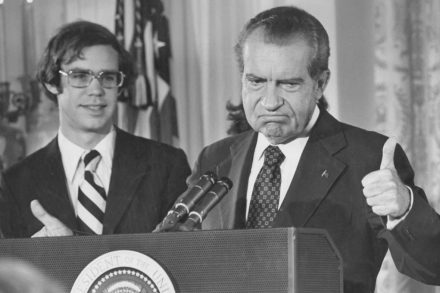
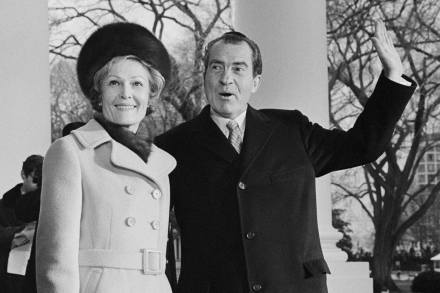
The Watergate scandal already commands a wide bookshelf. In the fifty years since Richard Nixon fell on his sword, we’ve had the big-ticket books by the tag-team of Woodward and Bernstein, and others, by contrast, seeking to exonerate Nixon and pin the whole thing on his adversaries; tales about secret sources and White House interns and plucky whistleblowers like the oleaginous John Dean and that human hand grenade Martha Mitchell; not to mention self-serving memoirs from all the principals, some now on their second or third helping at the table; or the ones saying it was all a conspiracy involving an unholy alliance of the FBI, MI6 and KGB, with the little green men from Mars thrown in.

Pat

The evergreen, ageless Rolling Stones

From our US edition

Are the Rolling Stones the new Rat Pack? Or put it another way: how did the Stones achieve this curious headlock on our affections? If anything, it seems to get stronger over time. In the band’s current US stadium tour, aptly sponsored by the old-age interest group AARP, a million customers are each paying $100 for a seat that allows you to aim a pair of binoculars at a distant video screen. Want an actual view of the stage? It’ll cost you up to ten times as much. Still, it’s all gravy. The last major Stones tour grossed $550 million at the box office.

Stones

A revelatory account of the post-war exploits of the House of Windsor

From our US edition

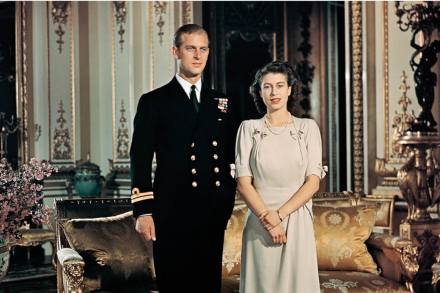
Power and Glory is, as its subtitle implies, a tale of survival. In a fast-paced history of the British throne from the years 1945-53, Alexander Larman, a seasoned chronicler of the House of Windsor, depicts a dynasty reeling from the 1936 abdication of Edward VIII — “David” to intimates — and the storm of war that broke over Europe three years later.

Windsor

Khrushchev and me

From our US edition

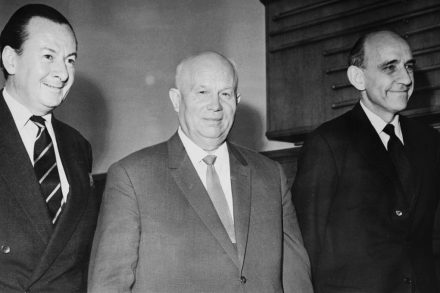
It was December 1968, and I was a twelve-year-old English schoolboy seriously obsessed with cricket. The sport’s headline news at the time concerned a thirty-seven-year-old South African-born, dark-skinned player named Basil D’Oliveira. The previous August, D’Oliveira had scored a magnificent century (baseball fans need only think of Reggie Jackson hitting three consecutive homers in the clinching game of the 1977 World Series to get the flavor) while representing his adopted home team of England in a match against Australia. Despite this achievement, just days later the English team’s selectors omitted D’Oliveira from a tour of South Africa that was due to follow in the winter. Was the decision taken on purely technical cricketing grounds?

nikita khrushchev

Kurt Cobain’s life was an American morality tale

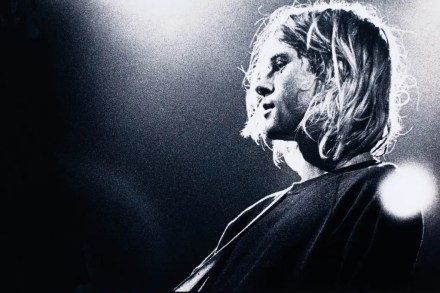
The Peaceable Kingdom probably isn’t the first place you would have looked for Kurt Cobain. Of all the ironies and confusions of his brief life, perhaps none was as pointed as his choosing to kill himself in a room overlooking that sign, announcing Seattle’s upscale Leschi neighbourhood, with its views of Lake Washington and the snow-capped mountains beyond. It was here that, one morning in April 1994, Cobain – then in the third year of his marriage to his fellow musician Courtney Love – first injected himself with heroin and then took a shotgun and blew his brains out.

A ride-along with the King County Sheriff’s Office

From our US edition

There are probably better ways to start your fifteen-hour work shift than to hear the words: “Fire at the Renton Avenue gas station. Pump still leaking fuel. Possible injuries. Attend scene immediately.”  That was the stark dispatch that came over the radio of the King County Sheriff’s car driven by thirty-two-year-old Deputy Cy Brame, one of 720 law enforcement officers who serve the needs of half a million people living in the sprawling unincorporated areas around Seattle. I recently joined him on a characteristically drizzly early March afternoon on his beat behind the wheel of a black Ford Interceptor SUV. “You’re lucky,” said Deputy Brame, with a thin smile. “The last ride-along I had was here all day without an emergency.

seattle

John Densmore on protecting the Doors’ legacy

From our US edition

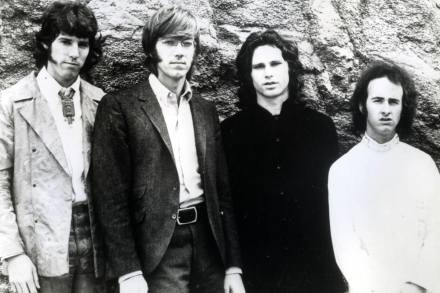
The once-explosive accusation that a rock ’n’ roll band is a sell-out, aimed at artists who make an accommodation with industry, has come to seem a little naive since it was first bandied about in the 1960s. Whether it’s that well-known monument to prudence Iggy Pop extolling the virtues of car insurance, the Zombies promoting Tampax or Bob Dylan shilling for Victoria’s Secret, they’re all at it these days. Elton John wants you to dial UberEats, the Stones will start you up with a $139.99 Keurig coffee machine, and by now it might be easier to list the names of rock stars who haven’t chugged Pepsi on TV than those who have.

densmore

Jerry Miller’s tale

From our US edition

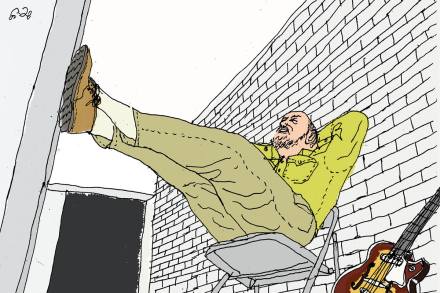
One of the saddest things about popular music is the talents it can’t accommodate. Robbie Robertson, of the Band and much else besides, died in August at the age of eighty, and never found a proper home for his gifts after that great initial burst of late-1960s creativity. But at least Robertson was widely recognized by his peers as one of the outstanding electric guitar players of his time, although the contemporary guitarist he most admired himself was Jerry Miller, of the group Moby Grape. Unlike Robertson, Miller, who’s happily still with us today, hasn’t as yet won a Grammy, or been inducted into the Rock & Roll Hall of Fame. But he did play a starring part in what’s surely one of the great show business morality tales of its time.

miller

Keef at eighty (Yes, really)

From our US edition

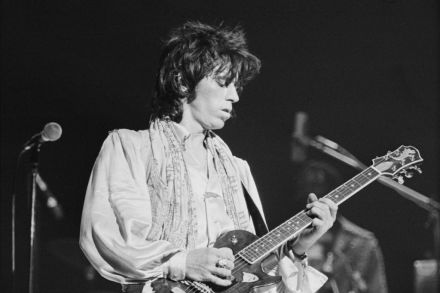
Most of us have at one time played the you-couldn’t-make-it-up game. What were the odds back in, say, 1973, that millions of us would casually engage in Jetsons-style video chats, conduct business at the swipe of a thumb, or consider the prospect of a space-tourism flight courtesy of Virgin Galactic? Or for that matter, rue the fact that the all-conquering Oakland Athletics might fall so low as to become the worst team in baseball last season, with a dismal 50-112 record? Perhaps the biggest shock to someone contemplating the future in 1973 might have been the knowledge that Keith Richards, the guitarist and primary creative force of the Rolling Stones, would still be alive and well at the time of his eightieth birthday on December 18, 2023. Wrecked. Sick. Zombielike. Undead.

keith richards

Was JFK any ‘good’ as a president?

From our US edition

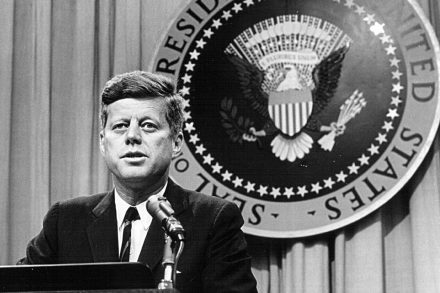
How should we assess the value of a US president? In the case of John F. Kennedy, who died sixty years ago, the box denoting youthful vigor clearly gets a checkmark. Kennedy was just forty-six at the time of his assassination, which makes him younger than Hunter Biden is now. The box denoting the “vision thing” gets checked as well, if only because Kennedy saw the potential for beating the Soviets in the race to put a man on the moon, famously declaring, “We choose to do this, not because [it is] easy, but because it is hard; because that goal will serve to organize and measure the best of our energies and skills.” Also to be considered is the collective trauma of the events of November 22, 1963.

jfk

A hundred years on from the Munich Putsch

From our US edition

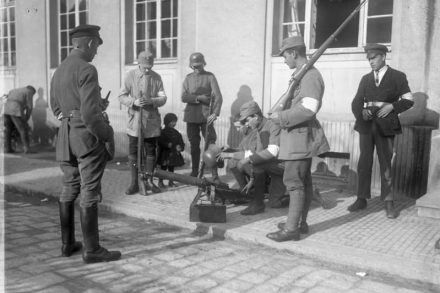
There’s a school of thought that says the events in Washington, DC on January 6, 2021 were the great communal wound of Western democracy, an outrage seen around the world when a retired cowboy dared put his boots up on an aide to the speaker of the House’s desk (he later got four-and-a-half years for his trouble), and the commander-in-chief tried to grab the steering wheel from a Secret Service agent to turn his SUV around in the direction of the mob so he could join them. “I did not seek the fight brought to this Capitol, but I will not shrink from it either,” President Biden announced through clenched teeth in a speech delivered just outside the House chamber a year later. “I will stand in this breach. I will defend this nation.

munich putsch

How the CIA interfered in the Congo

From our US edition

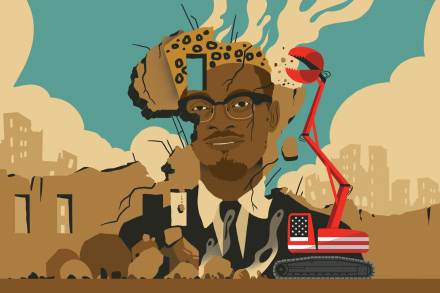
As everybody knows, as soon as you start to talk to any historian of postwar life in any Latin American or African or Southeast Asian country, the discussion quickly turns to the role of the CIA in subverting democracy. From the Truman-era coups in Syria and Egypt, through regime change in Guatemala, assassination in the Dominican Republic, the fomenting of industrial unrest in Guyana, and both the military and covert US involvement in Vietnam, it seems overseas intrigue was the rule and long periods of benign neglect the exception.

congo

The Queen’s sole mistake

It’s often been said that the late Queen Elizabeth II rarely if ever put a foot wrong during her 70-year reign. Trained from a young age to betray no sign of partiality, or even of individuality, she lived long enough to become the matriarchal figure at the centre of everyone’s favorite soap opera. In a world of change, she never wavered. Her death last year may have drawn a final line under the era we knew as ‘postwar’, where qualities like stoicism and self-effacement still just about prevailed in British life, and where nobody blamed, whined or emoted. But as the curious events of exactly 60 years ago prove, the Queen, like most of us, was also capable of the occasional faux pas.

Remembering Charlton Heston on his 100th birthday

From our US edition

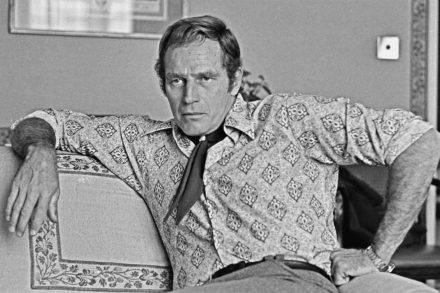
“The grand picture of life lies in the little moments,” the Indian author Abhijit Naskar reminds us in his incongruously long poem “Visvavictor.” In that same spirit, I always like to remember Charlton Heston, who would have turned 100 on October 4, not for his larger-than-life Oscar-winning roles, but the fleeting cameo he played in that underrated social satire of American suburbia in the 1990s, Wayne’s World 2. Heston is on screen for all of thirty seconds, and dare I say it he steals the show.

charlton heston

Bernie Taupin is more than just ‘Elton John’s lyricist’

From our US edition

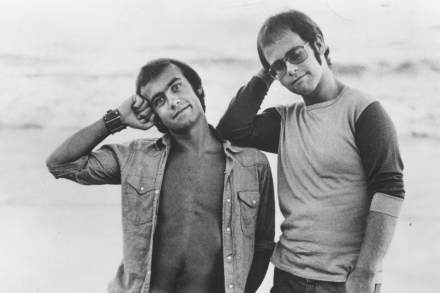
It takes only a couple of hours by train from the southern reaches of rural Lincolnshire to central London. But for seventeen-year-old Bernie Taupin, leaving home in June 1967 to try his luck in the big city, the journey might as well have been to a distant planet, such was the gulf between his life as a casual farm-laborer and his ambitions to become an internationally acclaimed songwriter like his heroes Hank Snow or Merle Haggard.

taupin

Danny Bonaduce’s guide to survival

From our US edition

It’s just after nine on a gray Pacific Northwest morning, and Danny Bonaduce, the once winsome redheaded child star of TV’s The Partridge Family, is dispensing life advice on Seattle’s 102.5 KZOK classic-rock radio station. “My ex-husband has a gambling problem and won’t ever show up for our two kids,” one distressed young woman announces. “Keep a journal. Write down what he does wrong, it’ll be useful one day in court,” says Danny, speaking in his familiar rapid-fire, gravelly voice. “He has to perform if he’s ever going to see the kids. You’re not a bad person, he is. The kids know that. Be strong. Hang tough.” “My twelve-year-old son is cool,” the next caller says, “but he’s rude to his mom. Should I intervene?” “Intervene?

bonaduce

Roman Polanski at ninety: what will be his legacy?

From our US edition

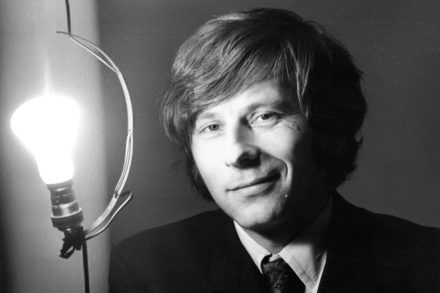
How should we assess the reputation of a late-career movie director? In the case of Roman Polanski, who turns ninety on August 18, we can clearly tick the box denoting a solid body of work. He’s responsible for half a dozen enduring films, and one — 2002’s The Pianist — that rightly won him an Academy Award. Readers may have their own candidate, but for me Polanski’s first full-length feature, 1962’s Knife in the Water, remains at the top of the list. It’s a beautifully crafted, if at times noticeably low-budget, thriller that offers the classic Polanskian brew of claustrophobia, latent menace, voyeurism, class antagonisms and sexual tension, in this case set aboard a small yacht.

roman polanski

Mick Jagger at eighty: the beginnings of a Rolling Stone

From our US edition

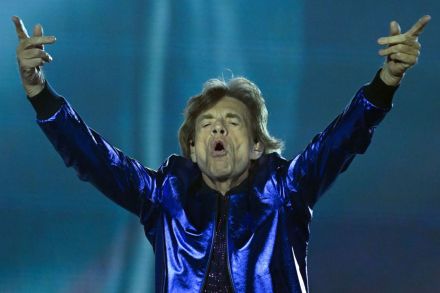
Among the other jewels in the crown of Sir Mick Jagger’s songwriting career is a number he and his longtime creative partner Keith Richards knocked off in December 1963 to promote the Kellogg’s company products. Don’t laugh — it’s an infectious little tune in its way, even if the key lyrical message — “Wake up in the morning/ There’s a pop that really says/ Rice Krispies for you and you and you!”) falls some way short of the same duo’s “(I Can’t Get No) Satisfaction,” which followed barely twelve months later. But then Jagger, who turns eighty on July 26, was always a quick study. Last year’s four-part EPIX documentary series My Life as a Rolling Stone may be numbingly banal (“They set the bar for what a rock ’n’ roll band should sound like, look like..

mick jagger

John F. Kennedy’s trip worth remembering

From our US edition

Sloppy Joe Biden may face strong political headwinds with just seven months to go before the first presidential primary, but at least he’s in good company. Assessing the Washington landscape in mid-June 1963, when John F. Kennedy set off on a European tour designed to bolster not only the NATO alliance but his own poll numbers, the British ambassador David Ormsby-Gore cabled back to London: He will be leaving behind a disquieting domestic situation, [with] economic troubles to the fore... The Negro leaders are beginning to talk about large scale civil disobedience on a nation-wide basis... Moreover, the racial crisis is causing new difficulties for [Kennedy’s] legislative program...

Kennedy in Berlin
ciano

The troubled relationship between Mussolini and his son-in-law

From our US edition

Like those of his wartime ally Joseph Goebbels, the diaries of the Italian fascist foreign minister Count Galeazzo Ciano (1903-44) have proved a mainstay of academic research into the frequently banal inner workings of the Axis dictatorships. Both men were entirely aware of their journals’ historical and commercial value. In 1937, Goebbels struck a lucrative deal with Max Amman, the Nazi Party publisher, for the release of his warped musings on race and politics twenty years after his death, which in the event came sooner than he might have imagined. Ciano in turn used his diaries to barter unsuccessfully for his life when arrested on charges of treason.