Christopher Caldwell

Christopher Caldwell

Christopher Caldwell is a contributing editor of the Claremont Review of Books and the author of The Age of Entitlement: America Since the Sixties.

Trump Notebook

The first election day since Donald Trump was elected president a year ago brought a funereal mood to Washington that you could feel on the streets. The swamp, apparently, remains undrained. Elections for governor in Virginia and New Jersey and for mayor in New York City cheered the locals a bit, producing the expected victories for Democrats. Virginia was the most consequential of these. It seemed a harbinger of the next presidential race. The moderate, decidedly un-Trumpian Republican Ed Gillespie was accused of making ‘ugly racial appeals’ — this for expressing the opinion that the statues of Virginia’s Civil War heroes should not be razed in a frenzy of revisionism.

Diary – 24 November 2016

From our UK edition

 Washington DC Washington has been, for the past two weeks, indescribably depressed. When I walked into the deli down the street to buy a bag of cookies, a neighbour who was having coffee with her girlfriends hailed me. ‘Are you as despondent as the rest of us?’ she asked. I told her: ‘No, I’m not.’ But that has been true since we moved into the neighbourhood 20 years ago. The students at the nearby Wilson High School ‘Human Rights Club’ staged a walkout a week ago. ‘We will march down Pennsylvania Avenue to the Trump Hotel,’ they announced. ‘We will then stand before the building and hold hands.’ You would need a heart of stone, as Oscar Wilde would have said, not to titter a bit.

What’s wrong with early voting

From our UK edition

 Washington The outcome of America’s elections might become clear in the first minutes of vote-counting next Tuesday night. That is because Americans are as moody and fussy about voting as they are about everything else. Their elections depend on who is excited enough to show up at the polls and who is too depressed. Black voters, historically loyal to the Democrats but hard to bring to polling stations, went into paroxysms of enthusiasm over Barack Obama and in the last election voted at higher rates than white voters. Born-again Christians used to bring the Republican party victory after victory, but more recently they have decided the party doesn’t mean what it says about Jesus, and have spent their election days at home.

Trump’s big mistake? Turning the election into a personality contest

From our UK edition

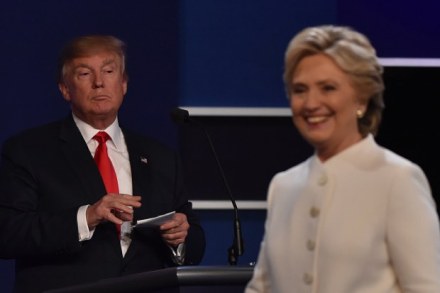
If, on the night of Monday September 26, a US presidential election had been held instead of a televised debate, Donald Trump would likely now be America’s president-elect. That morning the reliable on-line poll analyst Nate Silver, sympathetic to Clinton, had tweeted, 'It’s a dead heat,' and then, a few minutes later, 'State firewall breaking up. Trend lines awful.' In retrospect, one simple task stood between Trump and the presidency: he had to look like some version of a rational human being. He failed. As Conrad Black has put it, the office of the presidency has been seeking Donald Trump. That night, Trump essentially picked up the phone and told the presidency it must have the wrong number. A classicist would call it a peripeteia. A sports fan would call it a choke.

Trump’s people: The Donald and white nationalism

From our UK edition

The fit, or fugue, that Hillary Clinton suffered during a 9/11 memorial service in Manhattan on Sunday left mysteries in its wake. One concerns Mrs Clinton’s apparently serious medical problem. Another concerns her opponent Donald Trump, who appears eager to run her campaign for her while she convalesces. When felled, Mrs Clinton was two weeks into a public-relations blitz designed to tar Trump as a bigot. In August, she accused him of making the Republican party a vehicle for racism and the ‘hardline right-wing nationalism’ of Vladimir Putin and Nigel Farage. At an open-to-the-press dinner for gay donors two days before her incident, she used vivid and memorable language.

Trump’s forgotten people

From our UK edition

The fit, or fugue, that Hillary Clinton suffered during a 9/11 memorial service in Manhattan on Sunday left mysteries in its wake. One concerns Mrs Clinton’s apparently serious medical problem. Another concerns her opponent Donald Trump, who appears eager to run her campaign for her while she convalesces. When felled, Mrs Clinton was two weeks into a public-relations blitz designed to tar Trump as a bigot. In August, she accused him of making the Republican party a vehicle for racism and the ‘hardline right-wing nationalism’ of Vladimir Putin and Nigel Farage. At an open-to-the-press dinner for gay donors two days before her incident, she used vivid and memorable language.

Trump holds the aces

From our UK edition

Last week, the New York Times ran the page one headline ‘Pence Supports Ryan, Showing GOP Turmoil.’ There was turmoil in the Republican party because Mike Pence, its vice-presidential nominee, had endorsed the candidacy of Paul Ryan, its most powerful congressman. One wonders what the Times would have called it had the two men actually disagreed about something. The Republican presidential nominee Donald Trump had waited days before endorsing Ryan, a signal that he had not forgotten Ryan’s slowness to back him in the spring. And the whole press is now in a frenzy of negative reporting about the Trump campaign. These have been ‘weeks of self-inflicted controversies and plummeting poll numbers’ among Trump’s Republicans.

Cops and killers

From our UK edition

 Washington, DC Considering how heavily its citizens are armed with pistols, hunting rifles, shotguns, military semi-automatics, crossbows and nunchucks, considering how ethnically diverse and historically divided the place is, and considering that it is home to a third of a billion more or less rootless people, it is surprising Americans don’t kill each other more. The United States is well policed, even if it has been hard to say so lately. In the space of a couple of days in July, black men were shot dead by policemen in two separate incidents in Louisiana and Minnesota. Video flew round the internet.

Trump’s women trouble

From our UK edition

Washington DC In La Crosse, Wisconsin, on Monday night, Donald Trump said, ‘If we do well here, folks, it’s over.’ He was right in theory. There were signs that the billionaire’s crusade against the Republican party establishment and the plutocrats who run it might find an ear in Wisconsin. The state has an industrial working class. It has lately seen plants close and good jobs flee. On the other hand, there were signs that Trump might go up in flames. Wisconsin is well-educated. It is one of the last places in the country where the party system resembles the sociological cliché of the 1950s: rich Republicans in the suburbs, working-class Democrats in the cities and the boondocks.

Republicans have started using feminism to fight Donald Trump

From our UK edition

Washington DC In La Crosse, Wisconsin, on Monday night, Donald Trump said, ‘If we do well here, folks, it’s over.’ He was right in theory. There were signs that the billionaire’s crusade against the Republican party establishment and the plutocrats who run it might find an ear in Wisconsin. The state has an industrial working class. It has lately seen plants close and good jobs flee. On the other hand, there were signs that Trump might go up in flames. Wisconsin is well-educated. It is one of the last places in the country where the party system resembles the sociological cliché of the 1950s: rich Republicans in the suburbs, working-class Democrats in the cities and the boondocks.

If Merkel shrugs…

From our UK edition

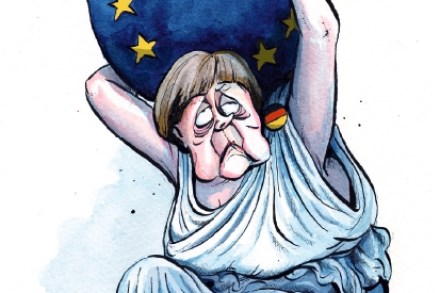
[audioplayer src="http://rss.acast.com/viewfrom22/angelamerkel-sburden/media.mp3" title="Fredrik Erixon and James Forsyth discuss the challenges facing Angela Merkel" startat=36] Listen [/audioplayer]German chancellor Angela Merkel may still be the most formidable politician in Europe, but this week she lost a bit of her reputation as the scourge of Mediterranean debtor nations. Greece’s firebrand leftist premier, Alexis Tsipras, actually gets on well with Merkel, however much his countrymen enjoy burning her in effigy and adorning her portraits with Hitler moustaches. In a recent profile of their relationship in Der Spiegel, Tsipras gushed, ‘She has this East German way of telling you honestly and straightforwardly what she thinks.

Bob Dylan and the illusion of modern times

From our UK edition

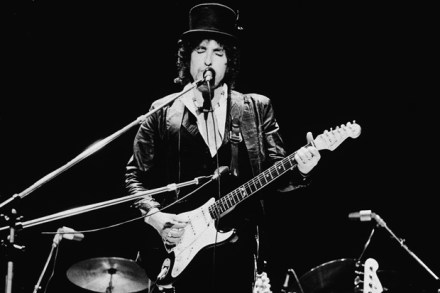
I was talking the other day to a young woman who knows a lot about the history of rock. We shared an enthusiasm for Bob Dylan’s later work — especially Blood on the Tracks (1975). As we talked, it occurred to me that Dylan recorded this ‘late’ effort 40 years ago, only 13 years into his career. So why do we treat it as belonging more to our time than, say, his folk ballads from the early 1960s? Some baby-boomer journalist must have decided around 1970 that something Dylan did in 1965 or 1966 — maybe his switch to electric instruments or his motorcycle accident — marked a critical break in history. We stupidly accept this view of things: Dylan is now in his sixth decade as a symbol of American youth. But time does keep moving on.

What Angela Merkel really wants (it’s not good news for Dave)

From our UK edition

Angela Merkel is misunderstood. Last winter, when Russia moved to annex Crimea after the overthrow of Ukraine’s government, American officials put it about that the German Chancellor had described Russia’s leader Vladimir Putin as ‘living in another world’ and ‘out of touch with reality’. No evidence has emerged that she ever said any such thing. Europhiles in the press and in Westminster have now pulled the same trick on David Cameron. The Prime Minister has lately been ruminating about quotas for migrants from certain European Union countries. He complained last month when an unannounced £1.7 billion upward adjustment in Britain’s EU payment turned out to be triple the levy on anyone else.

Obama knows that America has lost its appetite for war

From our UK edition

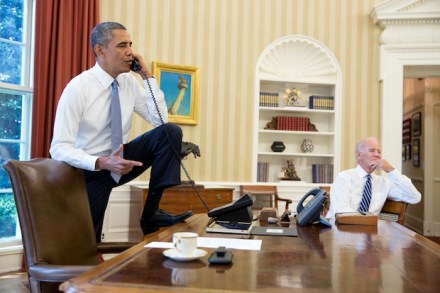
It was to Fort Belvoir that President Barack Obama repaired on Saturday, minutes after he announced that attacks by the Syrian government on a rebel stronghold in Damascus constituted ‘an assault on human dignity’ and a ‘serious threat to our national security.’ By using what the US government says was sarin gas, Syria’s dictator Bashar al-Assad crossed a ‘red line’ that Mr Obama had laid down a year before. The President has asked Congress to authorise an attack on Syria as soon as legislators return on 9 September. Fort Belvoir is home to the US army’s 29th Light Infantry Division. More to the point, it is the site of a terrific 18-hole golf course, and the President had a mid-afternoon tee-time with the Vice President.

Diary – 17 January 2013

From our UK edition

Washington DC: My elegant and sociable mother-in-law received an email this week warning that, should she wander on to her balcony to smoke on Monday, somebody might shoot her. The Secret Service is eager that nothing should go awry when our president is inaugurated for his second term. The inaugural parade route stretches a dozen city blocks along Pennsylvania Avenue from the Capitol, where the president gets sworn in, to the White House. The route is lined with office buildings and museums. There are few apartments with a view of the street, and my mother-in-law lives in one of them. When my father-in-law was alive, they’d throw a big party on inauguration day for friends, journalistic colleagues and a few politicians.

Merkel’s sovereign remedy

From our UK edition

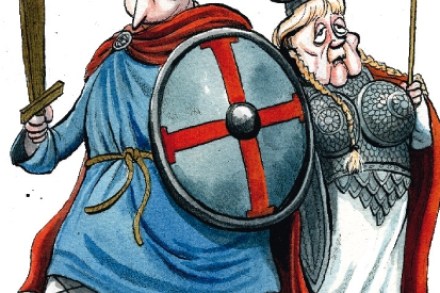
‘Europe is speaking German now,’ said Volker Kauder, parliamentary chairman of German Chancellor Angela Merkel’s Christian Democrat party, about a year ago. He was urging Britain to back Merkel’s plans for saving Europe’s rickety banks and state budgets. Last week, the Chancellor herself arrived in London to dine with David Cameron and deliver the message in person. Cameron is in a tricky spot. The summit to determine the EU budget for the next seven years will be held on 22 November. A coalition of opportunistic Labour MPs and dug-in Tory rebels has just passed a non-binding amendment in parliament urging that the government accept nothing less than a cut in real EU spending. Cameron has tried to win himself a bit of wiggle room.

Sarkozy’s last stand

From our UK edition

The man who promised to reform France looks set to become a martyr to the euro – and his own abrasive personality Paris Nicolas Sarkozy chose an unpropitious week to tell the French public he wanted to be their president for another five years. As Sarko was granting a semi-official interview to Le Figaro, addressing the nation on television and planning his campaign’s first rally for the weekend in Marseille, the bad news kept rolling in. Qantas found cracks in the wings of an Airbus 380 superjumbo jet, and European aviation officials ordered them to be recalled for tests, dampening the spirits of French jet engineers. Corbusier’s Cité Radieuse, a landmark of French modern architecture (albeit one that no one would wish to live in), caught fire in Marseilles.

America’s overdue financial crisis

From our UK edition

When Congress went into deadlock on the debt ceiling, it was the culmination of years of bitterness and complacency – and there is worse to come Washington DC It’s obvious to me why the United States found itself so deep in debt that only an ugly compromise — rushed through Congress on Tuesday and Wednesday — could save it from failing to pay its bills for the first time in its history. The country is in the middle of a moral crisis. So often have Americans heard the tale of their forebears’ self-reliance and genius for political accommodation that they have grown complacent. If the crisis is new, the danger is of long standing.

You can’t say that here!

From our UK edition

Thilo Sarrazin is breaking Germany’s taboos on welfare and immigration – and selling over a million books in the process In Berlin in September, I noticed that Deutschland schafft sich ab (‘The Abolition of Germany’), a taboo-breaking blockbuster by Bundesbank governor Thilo Sarrazin, had just come through a new printing after having been sold out for a week. In the morning, as I walked off to work, there would always be a large table near the front of the Hugendubel bookstore on Tauntzienstrasse stacked two feet high with bright red copies. In the evening, as I returned to my hotel, the table would be denuded, or have just a few scattered copies, like the bar after an undergraduate drinks party.

Obama is on course for victory. But he isn’t ready for the White House

From our UK edition

Two Sundays ago, I was sitting in the café in the Borders on L Street in Washington, a table away from a couple of middle-aged black men who were discussing politics over cups of coffee and great piles of books. One of them, wearing a black T-shirt with a Union logo on it and the kind of motley pillbox hat that was popular during the Afrocentric clothing fad of the early 1990s, raised his voice. ‘If they steal it,’ he said, ‘brothers is gonna riot.’ The ‘they’ were Republicans. It was the presidential election and the diagnosis was unsurprising. The belief is widespread among Democrats of all hues, views and regions that Republicans never win elections legitimately. They must either lie to the public or manipulate the vote.