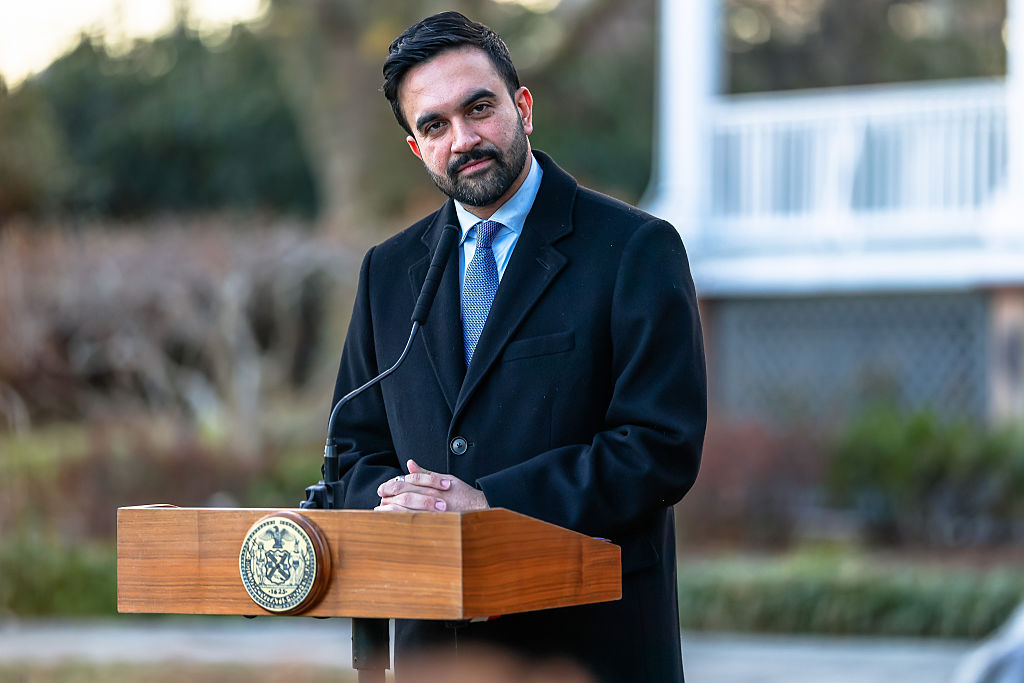


New York’s new mayor is woke. The Ugandan-born Muslim leftist Zohran Mamdani imperils the city as we know it, some people grumble. In a recent letter to supporters, Republican Representative Nancy Mace warned that Mamdani was “a man who’s bringing SHARIA LAW to America.”
Of course, Sharia and woke are not the same thing. Mamdani’s program, brimming with paeans to trans and gay rights, might not thrill a Wahhabi cleric. Still, he has brought a Middle Eastern flavor, and not in the good sense. During the campaign Mamdani promised to arrest Israeli leader Benjamin Netanyahu should he decide to visit the United Nations. That hair-raising prospect would expose Mamdani to federal kidnapping charges. He has already done his share of scolding about the Middle East. But whether by statesmanship, self-interest or accident, Mamdani has now struck a powerful blow against political correctness.
After rallying half the public behind a crusade against woke, the President decided to keep parts of it
On Mamdani’s first day in office he revoked the International Holocaust Remembrance Alliance’s definition of anti-Semitism, which his predecessor, Eric Adams, had adopted by executive order. The IHRA definition, despite its invocation of the Holocaust, is a product of the European Union’s contemporary anti-racism culture. It was drafted by the European Monitoring Centre for Racism and Xenophobia starting in 2005. The IHRA, an intergovernmental group rallied by the Swedish Social Democrat Göran Persson a few years earlier, made the definition its own in 2016. Other cities – including London, Paris and Washington, DC – have adopted it. So has the Trump administration’s State Department. Too bad. It is a catastrophe for freedom of speech.
A definition that actually defined anti-Semitism, the better to fight it, would be welcome. This one is just verbiage. Here it is in full: “Anti-Semitism is a certain perception of Jews, which may be expressed as hatred toward Jews. Rhetorical and physical manifestations of anti-Semitism are directed toward Jewish or non-Jewish individuals and/or their property, toward Jewish community institutions and religious facilities.”
An obvious problem is that, since everyone has “a certain perception of Jews,” and since hatred is not a prerequisite, anyone can be accused of anti-Semitism. A bit of clarity is offered in 11 “examples” that are appended to the definition. Some are sensible: “Calling for, aiding, or justifying the killing or harming of Jews in the name of a radical ideology or an extremist view of religion.” OK – that’s definitely anti-Semitism. But seven of the examples involve political opinions about the state of Israel.
Most are dubious. Is it anti-Semitic to “accus[e] Jewish citizens of being more loyal to Israel, or to the alleged priorities of Jews worldwide, than to the interests of their own nations?” It might well be anti-Semitic to generalize about Jews in that way. But it’s not unheard of for Christians or Muslims to care more about their co-religionists than their compatriots, and there would be nothing anti-Semitic about acknowledging cases where the same is true of Jews. Other examples sound as if they were written simply to stifle discussion: is it anti-Semitic to claim “that the existence of a State of Israel is a racist endeavor”? Such accusations of racism are indeed tedious – but we have just been through an entire generation in which everyone has been stigmatized as a racist for everything. Israel is hardly being singled out. And if it’s anti-Semitic, as the definition claims, to practice “double standards” – to care about Gaza more than Xinjiang – then politics becomes impossible, because such value judgments are what politics is about.
You can see why Mamdani might be uncomfortable with the IHRA definition: he is a longtime supporter of the Palestinian cause. Under such a definition, he and his friends can be dismissed as anti-Semites, whether or not their attitude toward Middle Eastern politics has anything to do with their attitudes toward Jews.
In response to Mamdani’s decision to scratch the IHRA definition, Israel’s minister of diaspora affairs described him as “an overt anti-Semite” (wrongly) and as “a supporter of terrorism” (probably rightly, if you look at some of the things his Democratic Socialists of America chapter tweeted on the evening of October 7, 2023).
The IHRA describes its work as a “non-legally binding working definition” – it’s not the law. But that is not exactly true. In the era of civil rights, law can effectively be smuggled into society piece by piece, without ever being written into legislation. Foundations put forward guidelines about fighting prejudice. If they are widely adopted, regulators and judges use them as benchmarks for determining whether a company or university is “racist,” say, or “homophobic” – and thus never to be frequented, accredited or hired. Fights over definitions are high-stakes. Britain’s ruling Labour party is debating how tough to make its new IHRA-like definition of “Islamophobia.”
Mamdani’s conversion to free speech is a backhanded compliment to Donald Trump. A surprise of the past year is that, after rallying half the electorate behind a crusade against woke, the President decided to keep parts of it. Indeed, he used allegations of anti-Semitism as a bludgeon against the radical professors and students whom he held responsible for campus unrest after October 7. At one university after another – Columbia, Brown, Yale – he made acceptance of the IHRA definition a condition for the release of federal funds. Columbia historian of Palestine Rashid Khalidi resigned rather than teach under such conditions. He was right to. It is an archetypal Trumpian gambit. It triumphs in practice, clearing out a space for dissenters of the last generation. But it loses in principle, surrendering the moral high ground to dissenters of the next. Mamdani will not be the last to reap the benefits.
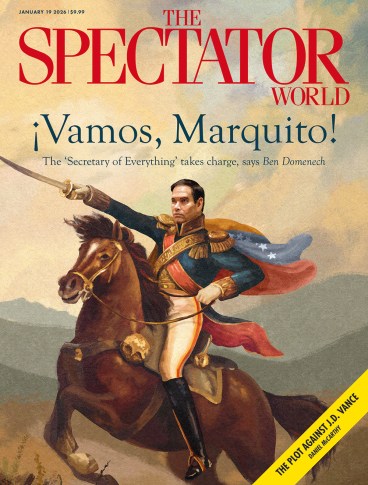
This article was originally published in The Spectator’s January 19, 2026 World edition.




Comments