Charlotte Hobson

Micro-managing the terror

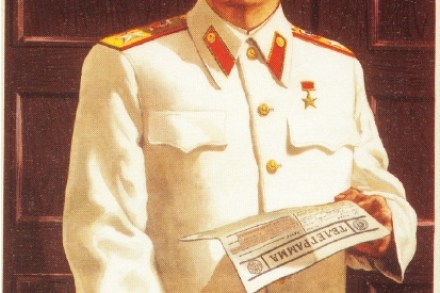
‘Lately, the paradoxical turns of recent Russian history… have given my research more than scholarly relevance,’ remarks Oleg Khlevniuk in his introduction. Indeed, in Putin’s Russia Stalin’s apologists and admirers seem daily to become more vocal. The language of the 1930s is used in televised tirades against ‘internal enemies’ and ‘foreign agents’. Stalin himself is upheld not only as a strong leader, but also as an ‘effective manager’ who, despite his mistakes, did what was necessary to modernise the Soviet Union; or, contrarily, as a benevolent dictator who was unaware of the corrupt actions of his officials.

Attack of the night witches

The name Lyuba Vinogradova may not ring any bells, but her ferrety eye for spotting a telling detail may already have impressed you. As Antony Beevor generously acknowledges in his introduction to this book, her work as his researcher in various archives played an important role in the creation of his triumphant Russian histories; she has also assisted Simon Sebag Montefiore and Max Hastings, among others. Here she brings to light the fascinating story of the world’s first and only all-female aviation regiments. As German troops advanced towards Moscow in 1941, the celebrated aviatrix Marina Raskova determined to form three ‘women’s regiments’: fighters, night bombers and long-distance bombers.

Life after Vera: Patrick Gale’s hero finds happiness towards the end of the Saskatchewan line

Patrick Gale’s first historical novel is inspired by a non-story, a gap in his own family record. His great-grandfather Harry Cane spent the first part of his life as a gentleman of leisure among the Edwardian comforts of Twickenham. What then suddenly prompted him to abandon his wife and small daughter and emigrate to the Canadian wilderness? The official line was that he had money troubles, yet he doesn’t seem to have been short of cash in Canada. As far as we know, Harry Cane’s motives went with him to the grave. In this re- imagining of his life, however — partly because homosexual love is a theme throughout Patrick Gale’s work — it feels entirely convincing that his secret should be ‘the love that dare not speak its name’.

How Putin turned Russian politics into reality TV

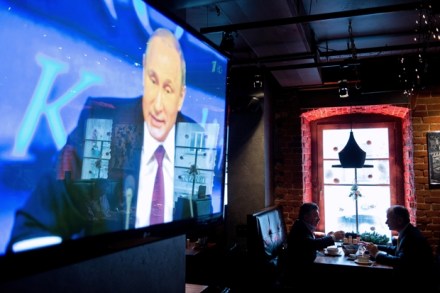
‘We all know there will be no real politics.’ A prominent Russian TV presenter is speaking off the record at a production meeting in 2001. ‘But we still have to give our viewers the sense that something is happening. They need to be kept entertained. Politics has got to feel … like a movie!’ When Peter Pomerantsev, a Brit of Russian descent, sat in on this meeting he had recently graduated and moved to Moscow to work as a TV producer. A decade in Russian television has now provided him with the material for his chilling first book. Nothing is True… is more than an evocative travelogue or an insight into a new system of authoritarian control, although it is both of these.

Mastering the Art of Soviet Cooking, by Anya von Bremzen – review

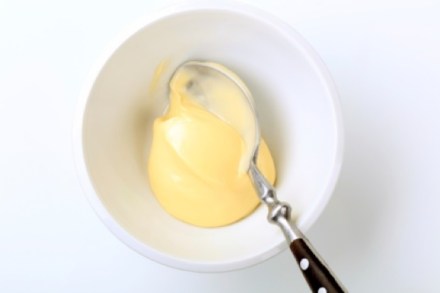
The early 1990s in Russia were hungry years. At the time, I was a student, too idle to barter and hustle for food, and the collapse of the planned economy had left the shops empty. Instead, we staved off hunger- pangs with cigarettes, and if edible matter came our way, we fell upon it like locusts. More often than not, it took the form of the Soviet staple, Salat Olivier — Russian salad, plastered so thickly with mayonnaise that the ingredients were unidentifiable. (I notice that even the act of typing these words makes my mouth water; a complicated rush of nostalgia, anxiety and greed.) Like most aspects of late Soviet Russia, the Salat Olivier had a dual identity.

Joy to the world

Patrick Gale’s new novel could be read as a companion work to his hugely successful Notes from an Exhibition, and in fact, in a satisfying twist, some characters and even objects slip from the latter into this novel. Notes from an Exhibition centred around the character of Rachel Kelly, whose mental instability and solipsistic devotion to her art left a painful mark on her family. The ‘perfectly good man’ of this title is a vicar, Barnaby Johnson, as kind, gentle and balanced as Rachel Kelly was not, yet with the same sense of vocation — in this case, selfless service to the church — that moulds and in its own way scars his family. ‘Ah,’ says his daughter Carrie to another child of a ‘very good man’, ‘you have my deepest sympathy.

The Russian connection

It’s impossible not to warm to the author of this book, a perky Turkish-American woman with a fascination with Russian literature and an irresistible comic touch. It’s impossible not to warm to the author of this book, a perky Turkish-American woman with a fascination with Russian literature and an irresistible comic touch. I began it on the train; barely had I started before my involuntary yelps of hilarity were causing alarm amongst my fellow passengers. An elderly man moved to another seat after I came upon Batuman’s description of the time she found herself judging an adolescent boys’ leg contest in Hungary. Fortunately, perhaps, I arrived at my station before Batuman embarked on an account of an excruciatingly funny literary seminar to rival Lucky Jim.

The sweet smell of danger

If this novel is ever published with a scratch-and-sniff cover — which incidentally, I think it might be successful enough to warrant — this is what it would smell of: cheap petrol, lust, the ripe, acidic scent of decaying corpse, cat litter, $2,000 suits, Cristal champagne, decaying encyclopaedia, corruption, fumes from the power plant, betrayal, sausage. If this novel is ever published with a scratch-and-sniff cover — which incidentally, I think it might be successful enough to warrant — this is what it would smell of: cheap petrol, lust, the ripe, acidic scent of decaying corpse, cat litter, $2,000 suits, Cristal champagne, decaying encyclopaedia, corruption, fumes from the power plant, betrayal, sausage.

Out of time and place

The misleadingly titled Life of an Unknown Man is in fact the story of two men, and the dualities that their characters embody — fame and anonymity, unhappiness and happiness, West and East. The misleadingly titled Life of an Unknown Man is in fact the story of two men, and the dualities that their characters embody — fame and anonymity, unhappiness and happiness, West and East. Like Andrei Makine himself, the protagonist, Shutov, is a middle-aged Russian emigré author living in Paris. His powers, both sexual and literary, are slipping away from him, and his sense of failure is minutely and rather brilliantly dissected in a parade of petty humiliations, ridiculous outbursts and painful internal dialogue.

The motherland’s tight embrace

At nursery school, along with her warm milk, little Lena Gorokhova imbibed the essence of survival in the post-war Soviet Union. It consisted of a game called vranyo — pretence: My parents play it at work, and my older sister Marina plays it at school. We all pretend to do something, and those that watch us pretend they are seriously watching us and don’t know that we are only pretending. The school teachers pretended that their pupils’ 100 per cent attendance at Young Pioneer meetings was unconnected with the padlocked door of the meeting hall. The women standing in line pretended they saw no contradiction between reports of record harvests and empty shops, or glittering construction projects and shoddy, just-built university dorms.

Variations on an enigma

You may have caught Jonathan Dimbleby on television recently travelling across Russia, picking potatoes with doughty Russian women, baring all for a steam bath in Moscow, looking alarmed as a white witch from Karelia promised to heal his bad back with a breadknife, etc. Here is the book of the series, in which Dimbleby, drawing on Churchill, plans to ‘reveal the enigma, unwrap the mystery and solve the riddle’ that is Russia. What is it about Russia that inspires this desire, again and again, in Western Europeans? Why does it matter to us?

A genius for living

Perhaps the only drawback to this highly enjoyable biography is the shadow of utter banality that it throws over one’s own life by comparison. Princess Sofka Dolgorouky, the author’s grandmother and namesake, began life as scion of one of the great ruling families of Russia and a playmate of the Tsarevich. She was brought up by her grandmother, a figure reminiscent of the Countess in Pushkin’s The Queen of Spades who did not know how to dress herself. Her mother, meanwhile, astonished Petersburg society by becoming a surgeon, flying her own plane, and receiving not one but two Crosses of St George for her bravery as a doctor during the first world war; her father occasioned less surprise but no less scandal by marrying his gypsy mistress.

The heart and stomach of a king

When Princess Sophie of Anhalt-Zerbst arrived at the Russian court in 1744, one of the many daughters of minor German royal houses who came to St Petersburg in the hope of an advantageous marriage, she was just 15 and ‘as ugly as a scarecrow’ after a severe illness. Her future husband, the heir to the throne, Grand Duke Peter, was a bizarre character whose main interests were his toy soldiers and ‘romping’ with his valets.

A cross-cultural crisis

If you were a Martian, whiling away the time on an intergalactic beach holiday by reading an account of the Cuban missile crisis, you could be forgiven for dismissing it as wildly implausible fiction. All the blockbuster ingredients are there: the clash of superpowers, one led by the clean-cut American hero, the other by the fat Ukrainian with bad teeth, the military hardware amassing in the Caribbean (nice location), the split-second timing, not to mention the prospect of the end of the world. As a setting for a novel it’s worthy of a Robert Harris-style humdinger, called, no doubt, Cuba, or Missile, or even just Crisis. Instead, rather surprisingly, here we find Katherine Bucknell taking up the challenge in this novel set in Moscow, October 1962.

A tale of January and May

So you’d like your child to be a successful writer (as the classified ads might say)? Well, the least you can do, in that case, is to ensure that he or she grows up as a first- or second-generation immigrant. That way, you will provide them with an incomparably rich (literarily speaking) background straddled between two cultures, with all the sense of irony, alienation and identity crisis this entails. They will absorb two different languages and, even better, the mish-mash of both which inevitably ends up being spoken at home and which has enlivened Anglophone literature in a hundred different ways over the past half century.