Charles Moore

Charles Moore

Charles Moore is The Spectator’s chairman.

He is a former editor of the magazine, as well as the Sunday Telegraph and the Daily Telegraph. He became a non-affiliated peer in July 2020.

Cyclists are the Jeremy Corbyns of the road

Three years ago next month, the journalist Andy Webb put in a Freedom of Information request to the BBC. He asked for material which he believes would expose a new cover-up of the BBC’s behaviour over Martin Bashir’s notorious 1995 Panorama interview with Diana, Princess of Wales. The cover-up in question (there was a much earlier one shortly after the interview first aired) took place, he believes, between September and November 2020, and involved the BBC’s decision to release certain documents, while concealing others. Lord Dyson’s investigation of the saga began shortly afterwards.

What makes MPs special

On Monday, the House of Commons passed, by one vote, a motion to allow MPs to be suspended from parliament (a ‘risk-based exclusion’) if arrested for sexual or violent crime. The government had preferred that the trigger should be charge, not arrest, but there were enough Tory rebels, including Theresa May, for the lower threshold to be chosen. Jess Phillips, supporting the change, asked rhetorically, and contemptuously: ‘Why do we think we’re so special in here?’ There is, in fact, an answer to her question, and it has nothing to do with any unmerited self-esteem which MPs may feel. King Charles I entered the Commons in person on 4 January 1642. His purpose was to arrest five MPs.

The science behind Olivia Colman’s left-wing face

The new hunting year formally began last week. Should I resubscribe? Politically, the outlook is bleak. In February, Steve Reed, the shadow environment secretary, announced that Labour would implement a ‘full ban on trail and drag hunting’, on the grounds that there were ‘loopholes’ in Labour’s hunting ban. This even though, when advocating the original ban, Labour said it favoured drag hunting (trail hunting had not then been invented) and was worried only about live quarry. Mr Reed included his ban promise in a speech in which he announced that his party would treat rural voters with ‘greater respect’. His two aims conflict.

Europe has no answer to its immigration problem

Pulling off the rhetorical trick that Brexit would undermine the Northern Ireland Good Friday Agreement, Michel Barnier, the EU negotiator, said in 2018 that the agreement meant removing borders not only from maps, ‘but also in minds’. Even a single CCTV camera on the North-South roads was considered a threat to the peace process. Now it turns out, which is grimly amusing, that the Irish government has not banished the border from its mind. The Republic is upset that asylum seekers are crossing the border that it does not believe in, fleeing the threat of deportation to Rwanda from the United Kingdom. It talks of sending them back, ignoring a recent decision of its own courts that Britain is not a safe country.

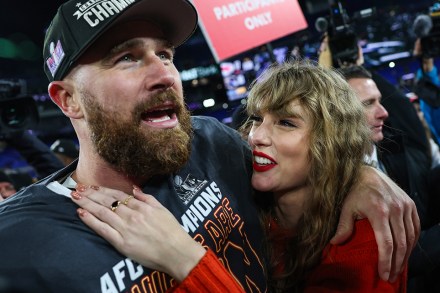
A helpful suggestion for Taylor Swift’s boyfriends

Sir Mark Rowley should not resign. We must try to break our habit of getting rid of each Metropolitan Police Commissioner before his/her term is complete. He has done nothing iniquitous or seriously incompetent. He is, however, systematically wrong about the right to protest, elevating it over the much more important right of the general public to own the streets. His parlaying with self-appointed Muslim community leaders privileges them. The weekly Gaza marches in London are effectively mobile no-go areas. This was confirmed by the altercation between Gideon Falter and the police sergeant who told him he was ‘openly Jewish’.

My letter from Chris Packham

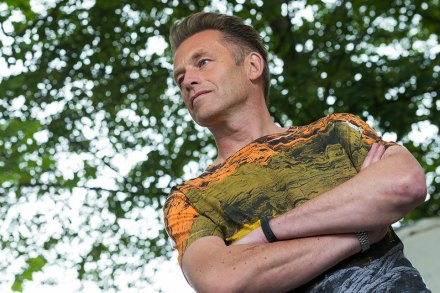
I do not know Chris Packham, the BBC nature broadcaster, personally, but he wrote me a letter last month, enclosing a book called Manifesto, The Battle for Green Britain by Dale Vince which, he tells me, ‘has something very important to say at this most important time’. In his letter, Chris says that ‘irrespective of any party politics’, ‘The coming election will be the most important of our lifetimes’ because we are ‘halfway through the last decade’ left to avoid ‘the worst of climate breakdown’. So ‘we must help young voters navigate the new voting rules’. Politics has ‘become the final frontier for a real greener Britain’. What Chris does not mention is that party politics is very important in this most important book.

Why do MPs send nude pictures of themselves?

Adam Dyster has gone to work for the shadow Defra secretary Steve Reed. I admit this is not an appointment which would normally trouble the political scorers, but it is a straw in the wind. Mr Dyster was, until recently, the adviser to both the chairman and the director-general of the National Trust. As Zewditu Gebreyohanes points out in her new pamphlet, ‘National Distrust: the end of democracy in the National Trust’, it was against the interest of the Trust that Mr Dyster advised both, since it blurred the necessary governance difference between the trustees and the management. Mr Dyster was previously, in the Jeremy Corbyn era, the national organiser of Labour’s environment campaign, influencing, he says, the party’s general 2017 election manifesto.

The London Library should leave us in peace

Reading only slightly between the lines of US foreign policy on Israel/Gaza, I detect that its most urgent aim is to get rid of Benjamin Netanyahu. The same goes for the Foreign Office and Lord Cameron. The shocking killing of the World Central Kitchen workers is being pressed into the service of this cause by London and Washington. Obviously there are lots of reasons – corruption accusations, alleged divisiveness, Anno Domini – why it might soon be time for the Israeli Prime Minister to depart, but why is that a decision for Israel’s western allies? Don’t we normally allow fellow democracies to make up their own minds who leads them, especially in a war? Undermining Netanyahu is a displacement activity, damaging our aim of upholding Israel’s right to defend itself.

The three most radical words Jesus said

Some Jewish friends recently asked me: ‘What is Good Friday?’ At first, they said, they had thought it was so called because of the peace agreement signed in Northern Ireland in 1998. Then they had learnt that it was a Christian thing, but they weren’t sure what. They wanted to know why it was ‘Good’. This put me to the test. You cannot explain anything about Christianity without paradox. It was Good, I hazarded, because it was bad: Jesus had to die to rise. My friends were scrupulously polite, but I thought I detected increasing perplexity. Many films of Christ’s Passion have been made, but all from a more or less Christian point of view. The film I should love to see would be one made through the eyes of a practising Jew.

We have less freedom now than we did 40 years ago

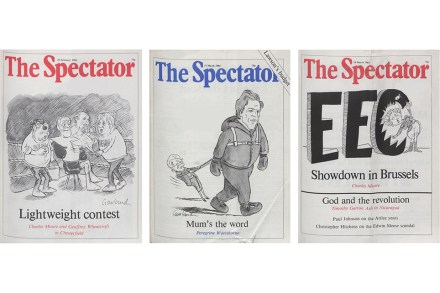
Forty years ago this week, I became the editor of this paper. That is as long ago from now as was D-Day from then. It must seem as distant to today’s young as did the men on the Normandy beaches to my 27-year-old self. I can now see more clearly how much my generation enjoyed the freedom for which those men had fought. That freedom is trickling away. Re-reading The Spectator’s Portrait of the Week (which I restored to the front of the paper as soon as I became editor), I find many aspects of the world in March 1984 echoing today. There was near-anarchy in Lebanon; American marines withdrew. Israel/Palestine peace plans were unsuccessfully touted. Sunnis and Shi’ites were killing one another in the Persian Gulf. An Assad ruled Syria. A Trudeau was prime minister of Canada.

Why are the photo agencies punishing Kate?

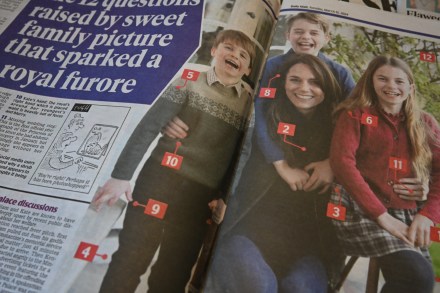
Media scrutiny of the Princess of Wales and her personal photoshopping of her Mothering Sunday photograph has been intense. One important set of players has escaped attention, however: the picture agencies. It was they – AP, Getty Images, AFP, Reuters, Shutterstock and PA – who issued a ‘mandatory photo kill’ of the image. They doubted what PA called its ‘veracity’. I hope it is not unduly cynical to point out that these agencies hate the fact that HRH distributes her own pictures (without charge). Her homemade pics take the bread out of the agencies’ mouths. Suppose other world figures get the DIY habit: what will become of the professionals then? Are the agencies trying to teach the Princess a lesson? Trinity College, Cambridge, houses de Laszlo’s portrait of A.J.

Could I be on the National Trust Council?

The end of the Cold War offered the former communist countries the chance to live a western way of life. But it also brought back what was known as the ‘nationalities question’, so long suppressed by Soviet power. We in Britain think little about this. We can easily see why the slowdown in western arms supplies threatens Ukraine, but not why it spreads such confusion among Nato allies. It is because any retreat by the United States forces Europeans to make frightening choices. The 20th century showed that European powers were unable to resolve their own conflicts without American help. Post-war, the European Community did its bit, but the real protector was America, via Nato. Now it might not be.

My trip to Kyiv with Boris Johnson

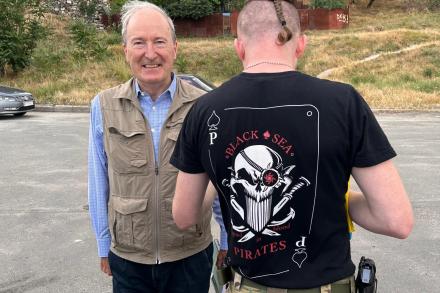
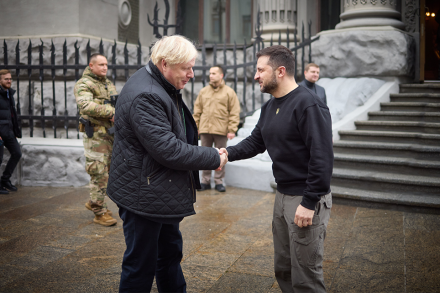
Last week, en route to Oxford, I dropped in on Boris Johnson at his rural retreat, where he is writing his ‘not exactly memoirs’. Unlike Cincinnatus, he has no plough, but he does possess one of those squat, computer-driven lawnmowers which move silently about the lawn, grazing. Boris is impulsive. At lunch, he suddenly said: ‘Let’s play tennis.’ So we did. At another point, he said: ‘Why don’t you come to Ukraine on Friday?’ So I thought I would. The journey involved 24 hours of train against 19 hours in Kyiv, but there is something romantic about reaching a foreign country by train. Besides, Ukrainian trains are more efficient than British ones even though (or because?) there’s a war on.

What is Prince William thinking?

In a statement, the Prince of Wales says he ‘refuses to give up’ on ‘a brighter future for the Middle East’. Nobody thought he had given up, so why did he feel the need to say it? His Churchillian reference to ‘the darkest hour’ does not work. In 1940 the darkest hour was for Britain against Nazi Germany. Now it is for Israel, attacked by fanatical anti-Semites. Churchill did not call for ‘permanent peace’ but to fight back. Although Prince William mentions the plight of the hostages as well as Gazans’ need for aid, the objective effect of his intervention (if any) is to make life harder for Israel. Israel, not Hamas will attract more pursed lips of western disapproval.

British cheese… or gay dating website?

If you can vote in Rochdale, you have a choice of three candidates with Labour backgrounds in the coming by-election. There is George Galloway, the man who famously saluted Saddam Hussein’s ‘courage and indefatigability’. George used to be a Labour MP but is now the candidate of the Workers Party of Britain. Then there is Simon Danczuk. He too was a Labour MP, for Rochdale indeed. He was a scourge of paedophiles, peddling conspiracy theories about Dolphin Square, the innocent Leon Brittan etc, but – as so often with those who love hurling sexual allegations – he got tangled up himself, sending ‘inappropriate’ texts to a 17-year-old girl, and subsequently resigned. Simon says he is a reformed character, so he is standing for Reform. And there is Azhar Ali.

Should King Charles have announced the news of his cancer?

Everyone seems to agree that it is better for royal personages to be open if they have cancer. It helps thousands of other sufferers and their families. But nowadays sheer necessity is part of it: the omnipresent video evidence of the monarch’s daily life makes it unavoidable that people will notice physical changes. This applies to our present King. In her recent biography, George VI and Elizabeth, Sally Bedell Smith gives an excellent account of the illness of George VI, which probably began in 1949 and killed him in February 1952. Even in those days, people did begin to notice. She quotes Harold Nicolson, as early as March 1950, hearing from Paddy Leigh Fermor that the King, at an investiture, had to be ‘heavily made up with sun tan and rouge’ to conceal the pallor of the invalid.

Why should graduates give back to universities that seem to hate them?

It is now a given of Northern Ireland issues that mainlanders cannot be expected to understand them. (Arguably, it was ever thus.) So we know that late on Monday night the DUP was finally persuaded to take part in governing Northern Ireland after a two-year gap, but we still do not really know what it will involve. The agreement is treated by most London-based media as good news, because that is always how any concession by Unionists is treated. Boredom and obscurity allow the case of Northern Ireland to be used by our main political parties, officialdom, the Republic, the EU and the US administration as the exemplar of virtue.

Would Jesus really be against the Rwanda Bill?

Sitting in the Chamber late on Monday afternoon for the Lords debate on the UK-Rwanda treaty, I was impressed by the standard of oratory. Most of the best speeches came from those – Lords Goldsmith (the Labour one), Kerr of Kinlochard, Anderson of Ipswich – who argued that the treaty was not, in itself, proof of the government’s contention, which the Safety of Rwanda (Asylum and Immigration) Bill seeks to turn into law, that Rwanda is now a safe country. Not for the first time, I felt an unease about how the government has got itself into this tight corner. But then up popped the Bishop of Gloucester: ‘I will just say,’ she just said, ‘that as Lord Bishops we take no party position… based on tribal loyalty and we are not whipped.

Nikki Haley is respectable. Will she find that inhibiting?

From our US edition

In June 2022, I interviewed Nikki Haley on stage for JW3, a Jewish organization in north London. She was personable, clear, well-briefed and pleasingly normal, with the interesting exception of her Sikh background growing up in small-town South Carolina (she later became a Christian by conversion). Her conservatism seemed strongly felt, coherent and not extreme. I also liked her way — now highly unusual in US politics — of addressing foreign policy and setting it in the context of her general political beliefs. At that time, she was mulling the presidential bid she launched the following year. After Iowa, she remains in the race, but only just. Why would such a presentable and decent person not be preferred to Donald Trump?

Haley

What Nikki Haley has over Trump

In June 2022, I interviewed Nikki Haley on stage for JW3, a Jewish organisation in north London. She was personable, clear, well-briefed and pleasingly normal, with the interesting exception of her Sikh background growing up in small-town South Carolina (she later became a Christian by conversion). Her conservatism seemed strongly felt, coherent and not extreme. I also liked her way – now highly unusual in US politics – of addressing foreign policy and setting it in the context of her general political beliefs. At that time, she was mulling the presidential bid she launched the following year. Today, after Iowa, she remains in the race, but only just. Why would such a presentable and decent person not be preferred to Donald Trump?