Charles Moore

Charles Moore

Charles Moore is The Spectator’s chairman.

He is a former editor of the magazine, as well as the Sunday Telegraph and the Daily Telegraph. He became a non-affiliated peer in July 2020.

The London Library should leave us in peace

From our UK edition

Reading only slightly between the lines of US foreign policy on Israel/Gaza, I detect that its most urgent aim is to get rid of Benjamin Netanyahu. The same goes for the Foreign Office and Lord Cameron. The shocking killing of the World Central Kitchen workers is being pressed into the service of this cause by London and Washington. Obviously there are lots of reasons – corruption accusations, alleged divisiveness, Anno Domini – why it might soon be time for the Israeli Prime Minister to depart, but why is that a decision for Israel’s western allies? Don’t we normally allow fellow democracies to make up their own minds who leads them, especially in a war? Undermining Netanyahu is a displacement activity, damaging our aim of upholding Israel’s right to defend itself.

The three most radical words Jesus said

From our UK edition

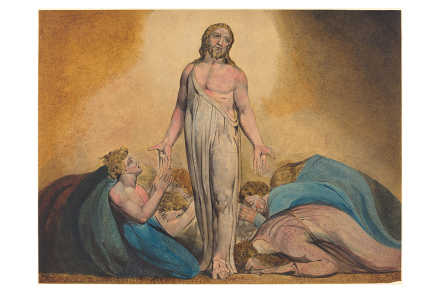
Some Jewish friends recently asked me: ‘What is Good Friday?’ At first, they said, they had thought it was so called because of the peace agreement signed in Northern Ireland in 1998. Then they had learnt that it was a Christian thing, but they weren’t sure what. They wanted to know why it was ‘Good’. This put me to the test. You cannot explain anything about Christianity without paradox. It was Good, I hazarded, because it was bad: Jesus had to die to rise. My friends were scrupulously polite, but I thought I detected increasing perplexity. Many films of Christ’s Passion have been made, but all from a more or less Christian point of view. The film I should love to see would be one made through the eyes of a practising Jew.

We have less freedom now than we did 40 years ago

From our UK edition

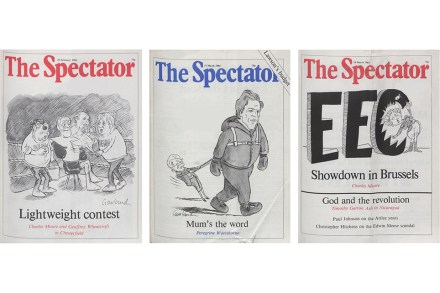
Forty years ago this week, I became the editor of this paper. That is as long ago from now as was D-Day from then. It must seem as distant to today’s young as did the men on the Normandy beaches to my 27-year-old self. I can now see more clearly how much my generation enjoyed the freedom for which those men had fought. That freedom is trickling away. Re-reading The Spectator’s Portrait of the Week (which I restored to the front of the paper as soon as I became editor), I find many aspects of the world in March 1984 echoing today. There was near-anarchy in Lebanon; American marines withdrew. Israel/Palestine peace plans were unsuccessfully touted. Sunnis and Shi’ites were killing one another in the Persian Gulf. An Assad ruled Syria. A Trudeau was prime minister of Canada.

Why are the photo agencies punishing Kate?

From our UK edition

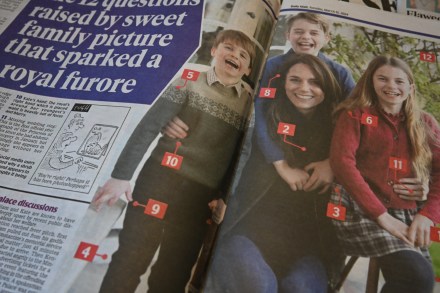
Media scrutiny of the Princess of Wales and her personal photoshopping of her Mothering Sunday photograph has been intense. One important set of players has escaped attention, however: the picture agencies. It was they – AP, Getty Images, AFP, Reuters, Shutterstock and PA – who issued a ‘mandatory photo kill’ of the image. They doubted what PA called its ‘veracity’. I hope it is not unduly cynical to point out that these agencies hate the fact that HRH distributes her own pictures (without charge). Her homemade pics take the bread out of the agencies’ mouths. Suppose other world figures get the DIY habit: what will become of the professionals then? Are the agencies trying to teach the Princess a lesson? Trinity College, Cambridge, houses de Laszlo’s portrait of A.J.

Could I be on the National Trust Council?

From our UK edition

The end of the Cold War offered the former communist countries the chance to live a western way of life. But it also brought back what was known as the ‘nationalities question’, so long suppressed by Soviet power. We in Britain think little about this. We can easily see why the slowdown in western arms supplies threatens Ukraine, but not why it spreads such confusion among Nato allies. It is because any retreat by the United States forces Europeans to make frightening choices. The 20th century showed that European powers were unable to resolve their own conflicts without American help. Post-war, the European Community did its bit, but the real protector was America, via Nato. Now it might not be.

My trip to Kyiv with Boris Johnson

From our UK edition

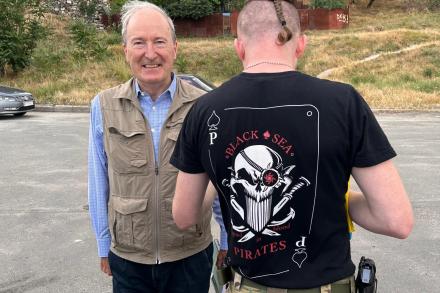
Last week, en route to Oxford, I dropped in on Boris Johnson at his rural retreat, where he is writing his ‘not exactly memoirs’. Unlike Cincinnatus, he has no plough, but he does possess one of those squat, computer-driven lawnmowers which move silently about the lawn, grazing. Boris is impulsive. At lunch, he suddenly said: ‘Let’s play tennis.’ So we did. At another point, he said: ‘Why don’t you come to Ukraine on Friday?’ So I thought I would. The journey involved 24 hours of train against 19 hours in Kyiv, but there is something romantic about reaching a foreign country by train. Besides, Ukrainian trains are more efficient than British ones even though (or because?) there’s a war on.

What is Prince William thinking?

From our UK edition

In a statement, the Prince of Wales says he ‘refuses to give up’ on ‘a brighter future for the Middle East’. Nobody thought he had given up, so why did he feel the need to say it? His Churchillian reference to ‘the darkest hour’ does not work. In 1940 the darkest hour was for Britain against Nazi Germany. Now it is for Israel, attacked by fanatical anti-Semites. Churchill did not call for ‘permanent peace’ but to fight back. Although Prince William mentions the plight of the hostages as well as Gazans’ need for aid, the objective effect of his intervention (if any) is to make life harder for Israel. Israel, not Hamas will attract more pursed lips of western disapproval.

British cheese… or gay dating website?

From our UK edition

If you can vote in Rochdale, you have a choice of three candidates with Labour backgrounds in the coming by-election. There is George Galloway, the man who famously saluted Saddam Hussein’s ‘courage and indefatigability’. George used to be a Labour MP but is now the candidate of the Workers Party of Britain. Then there is Simon Danczuk. He too was a Labour MP, for Rochdale indeed. He was a scourge of paedophiles, peddling conspiracy theories about Dolphin Square, the innocent Leon Brittan etc, but – as so often with those who love hurling sexual allegations – he got tangled up himself, sending ‘inappropriate’ texts to a 17-year-old girl, and subsequently resigned. Simon says he is a reformed character, so he is standing for Reform. And there is Azhar Ali.

Should King Charles have announced the news of his cancer?

From our UK edition

Everyone seems to agree that it is better for royal personages to be open if they have cancer. It helps thousands of other sufferers and their families. But nowadays sheer necessity is part of it: the omnipresent video evidence of the monarch’s daily life makes it unavoidable that people will notice physical changes. This applies to our present King. In her recent biography, George VI and Elizabeth, Sally Bedell Smith gives an excellent account of the illness of George VI, which probably began in 1949 and killed him in February 1952. Even in those days, people did begin to notice. She quotes Harold Nicolson, as early as March 1950, hearing from Paddy Leigh Fermor that the King, at an investiture, had to be ‘heavily made up with sun tan and rouge’ to conceal the pallor of the invalid.

Why should graduates give back to universities that seem to hate them?

From our UK edition

It is now a given of Northern Ireland issues that mainlanders cannot be expected to understand them. (Arguably, it was ever thus.) So we know that late on Monday night the DUP was finally persuaded to take part in governing Northern Ireland after a two-year gap, but we still do not really know what it will involve. The agreement is treated by most London-based media as good news, because that is always how any concession by Unionists is treated. Boredom and obscurity allow the case of Northern Ireland to be used by our main political parties, officialdom, the Republic, the EU and the US administration as the exemplar of virtue.

Would Jesus really be against the Rwanda Bill?

From our UK edition

Sitting in the Chamber late on Monday afternoon for the Lords debate on the UK-Rwanda treaty, I was impressed by the standard of oratory. Most of the best speeches came from those – Lords Goldsmith (the Labour one), Kerr of Kinlochard, Anderson of Ipswich – who argued that the treaty was not, in itself, proof of the government’s contention, which the Safety of Rwanda (Asylum and Immigration) Bill seeks to turn into law, that Rwanda is now a safe country. Not for the first time, I felt an unease about how the government has got itself into this tight corner. But then up popped the Bishop of Gloucester: ‘I will just say,’ she just said, ‘that as Lord Bishops we take no party position… based on tribal loyalty and we are not whipped.

Nikki Haley is respectable. Will she find that inhibiting?

In June 2022, I interviewed Nikki Haley on stage for JW3, a Jewish organization in north London. She was personable, clear, well-briefed and pleasingly normal, with the interesting exception of her Sikh background growing up in small-town South Carolina (she later became a Christian by conversion). Her conservatism seemed strongly felt, coherent and not extreme. I also liked her way — now highly unusual in US politics — of addressing foreign policy and setting it in the context of her general political beliefs. At that time, she was mulling the presidential bid she launched the following year. After Iowa, she remains in the race, but only just. Why would such a presentable and decent person not be preferred to Donald Trump?

Haley

What Nikki Haley has over Trump

From our UK edition

In June 2022, I interviewed Nikki Haley on stage for JW3, a Jewish organisation in north London. She was personable, clear, well-briefed and pleasingly normal, with the interesting exception of her Sikh background growing up in small-town South Carolina (she later became a Christian by conversion). Her conservatism seemed strongly felt, coherent and not extreme. I also liked her way – now highly unusual in US politics – of addressing foreign policy and setting it in the context of her general political beliefs. At that time, she was mulling the presidential bid she launched the following year. Today, after Iowa, she remains in the race, but only just. Why would such a presentable and decent person not be preferred to Donald Trump?

The joys of the wireless

From our UK edition

Obviously, one’s first instinct is to agree that parliament should step in and decree that all the hundreds of sub-postmasters convicted in the Post Office scandal should be exonerated without their appeals needing to be heard. But I suspect that instinct is wrong, for at least two reasons. The first is the precedent. These are individual criminal cases (though with strong common characteristics). If parliament feels it can interfere with such cases, it is usurping the process of law. Once MPs feel they can decide questions of individual guilt, where’s the end to it? Politicians cannot judge evidence to a legal standard. Justice will become politicised. The political proclamation of unproved innocence could be almost as noxious as that of unproved guilt.

Christmas Special 2023

From our UK edition

70 min listen

Welcome to this festive episode of the Edition podcast, where we will be taking you through the pages of The Spectator’s special Christmas triple issue.  Up first: What a year in politics it has been. 2023 has seen scandals, sackings, arrests and the return of some familiar faces. It’s easy to forget that at the start of the year Nicola Sturgeon was still leader of the SNP! To make sense of it all is editor of The Spectator, Fraser Nelson, The Spectator’s political editor Katy Balls, and Quentin Letts, sketch writer for the Daily Mail. (01:06) Next: The story that has dominated the pages of The Spectator in the latter half of this year is of course the conflict in Gaza.

The literary canon of P.G. Wodehouse

From our UK edition

When T.S. Eliot published ‘The Waste Land’ in 1922, it was seen as a masterpiece of modernism. It was, but it was also a work steeped in cultural tradition. This was made apparent in the ‘Notes on The Waste Land’ with which Eliot supplemented his poem. In them, he glossed its literary echoes – the Upanishads, Dante, Chaucer, Mallory, Shakespeare, etc. Another master of the modern who came to his greatest flourishing between the world wars was P.G. Wodehouse. Though seven years older than Eliot, Wodehouse first achieved real fame at much the same time, after the publication of The Inimitable Jeeves in 1923. Like Eliot’s, his work’s modernity, making such innovative use of the main literary traditions of the West, would have been unimaginable in the 19th century.

Ivy League universities must be depoliticised

From our UK edition

In writing about the RedBird IMI bid for the Telegraph Group and The Spectator, its opponents – your columnist very much included – emphasise the danger that the real buyers, the ruling family of Abu Dhabi, could use their purchase to put political or commercial pressure on the British government. But there is also a danger the other way round. If Abu Dhabi owned the titles, I would not put it past any British government (of any party) to put pressure on the Arabs. ‘Look here,’ I can imagine some prime minister saying: ‘Of course, we’d like to sell you a stake in our power stations/electric vehicles/5G networks [or whatever], but it’s very difficult for us to help while you let your titles criticise us so unfairly.

Who really controls The Spectator?

From our UK edition

Now that the government has triggered a public-interest intervention (PIIN), who will end up owning the Telegraph group, and this paper, after deliberations finish in late January? If it dismisses objections to the sale to the ruling family of Abu Dhabi, that family’s vehicle, RedBird IMI, takes control. A leading national newspaper and our most venerable British magazine are thus nationalised by an authoritarian Arab state. If the government rejects the Redbird IMI bid, in law the titles stay with the Barclay family (as they do right now, since the Barclays’ debt to Lloyds bank has been discharged, though under a ‘hold separate’ order which deprives the Barclays of executive power for the course of the investigation) with the consequent right to sell them.

The importance of remembering the Holodomor

From our UK edition

At the end of last week, the Holodomor was commemorated in Britain. There was a service at Westminster Abbey. But the chief point to notice is that no important British government or opposition representatives appeared. Nor, with the honourable exception of Stephen Fry, did any of the celebrities who infest causes such as ‘Free Palestine’. Almost everyone knows, thank goodness, what the Holocaust was. But even now, although Vladimir Putin is trying a small-scale repeat, have most people heard of the Holodomor? (If you haven’t, read Anne Applebaum’s astonishing Red Famine.) It was the largely deliberate starvation of about four million Ukrainians by Stalin in 1932-33, bringing death at a rate rivalling even that of the Final Solution.

Rishi Sunak’s reshuffle weakens his government

From our UK edition

Rishi Sunak thinks David Cameron will be a round peg in a round hole in the Foreign Office. I think (as I have written elsewhere) that he is right. If foreign secretaries could be bought at Harrods, Mr Cameron is the model discerning customers would prefer. But the underlying problem, which provoked this reshuffle, is at the Home Office. This was a personal one, because Suella Braverman, though she did not breach government policy, had defied the wishes of the Prime Minister about what her article in the Times should say. It is also, which matters much more, a national and political problem, because anti-Semitism, Islamism, immigration policy and confidence in the police are all in contention.