Charles Moore

Charles Moore

Charles Moore is The Spectator’s chairman.

He is a former editor of the magazine, as well as the Sunday Telegraph and the Daily Telegraph. He became a non-affiliated peer in July 2020.

Has the assisted dying lobby considered the guillotine?

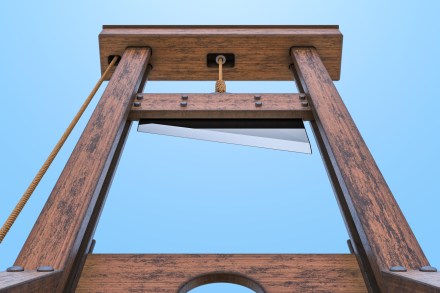
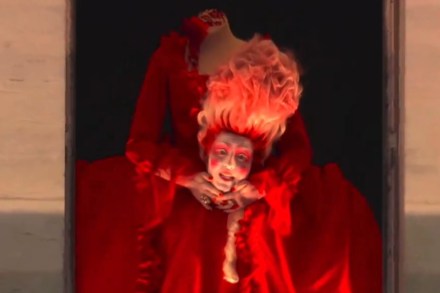
My young friend Dr Cajetan Skowkronski has helped me resolve a question that has been worrying me. Why do supporters of ‘assisted dying’ insist that the best method is a cocktail of pills (or intravenous injection)? Their prescription has an air of medical respectability, but this is not a medical process. The sole aim in assisting suicide is to achieve the quickest, least painful death. In a Twitter thread of Swiftian brilliance, Dr Skowkronski has the answer: ‘At the height of the French Revolution,’ he writes, ‘when large volumes of Assisted Deaths were taking place for the sake of noble aims, a compassionate physician, Dr Guillotin, felt that many of the prevailing methods were cruel.

The 38 candidates to be Oxford’s chancellor

Being Cambridge, I thank God that we have no nonsense about electing our chancellor. We have had a blameless, unchallenged succession of eminent persons. Since 1900, three prime ministers (Balfour, Baldwin and Smuts), two military commanders, one royal Duke (Prince Philip), two great scientists (Lords Rayleigh and Adrian) and now that prince of commerce and philanthropy, Lord Sainsbury of Turville. Their presence has passed almost unnoticed, rightly so: a chancellor’s role is to be, not to do. Poor Oxford, however, has a form of democracy to choose its chancellor, and now has insanely extended its effective franchise by online voting. So there are 38 candidates, and pressure that they should stand for something or other, know how the university works and play a part in academic politics.

Why won’t David Lammy help Jimmy Lai?

As I write, the Foreign Secretary, David Lammy, is flying to China. So I am only guessing when I say that I expect he will ‘raise’ the case of Jimmy Lai, the newspaper publisher, businessman and Democratic party supporter, a British citizen. Mr Lai has now been imprisoned in Hong Kong for four years with his numerous trials not yet completed. ‘Raise’, yes, but not as in ‘do anything about’ the situation. So far, the best the Foreign Office has done is to ‘request consular access’ to Mr Lai.

Who will dress Keir Starmer now?

It is worth upholding the stuffy point which should have prevailed at the start. It was always improper and unethical for Sue Gray (formerly in charge of Propriety and Ethics in government) to leave the civil service to become Sir Keir Starmer’s chief of staff. In her beginning was her end. Carrying with her all her inside knowledge, she was almost a gamekeeper turned poacher, inspiring mistrust among career officials without winning the respect of the much rougher political crowd. To understand why she was unsuited to her job, one has only to imagine how the thing would look the other way round, with Morgan McSweeney being suddenly announced as, say, cabinet secretary.

The Tories’ Greek tragedy has reached its catharsis

I write this as I leave the Tory conference in Birmingham. I have covered most of these events (and many Labour ones too) since the beginning of the 1980s. They do not lift the heart, but it is always interesting to watch the activity of the tribe. I attended the 1997 conference at Blackpool after the Tories had been broken by Tony Blair. William Hague had just become leader. The tribe was in a state of tongue-tied mourning. The party faithful were perplexed that the Conservatives had bequeathed extremely favourable economic conditions and public finances and yet had been utterly rejected. The trappings of power still hung about the agenda and the rituals, but Blair had ‘stolen hence the life of the building’. This time, though the defeat is even worse, the mood is far better.

Who’d be an MP now?

Sir Keir Starmer offered a sausage to fortune when he let Lord Alli bankroll half the cabinet. One’s heart does not bleed for those ministers assailed for taking his gifts in cash and kind. They have spent the last few years being mercilessly sanctimonious. But their plight does confirm that being a Member of Parliament has become an ever more disagreeable life and is therefore pursued by people ever less representative of the population. The traditional compensation for MPs’ relatively low salaries was a) some freedom to earn money elsewhere and b) respect. Both have dramatically diminished. Deference meant, for example, that few dared disturb their MP at home at a weekend. Now constituents literally ring them up and demand they unblock their drains (I have been witness to this).

Do you have a ‘story’?

As someone who worked full time in the office for 24 years and has now worked full time from home for nearly 21 – always, in both periods, on the staff – I can see both sides of the argument. But I do think the sequence matters. I would have had no idea how to work for my employers if I had begun at home. Indeed, the entire concept of a newspaper then – and even, to a large extent, now – depends on its collective capacity to find, write and edit news fast. Much of that stimulus comes from being in the same building. On Monday, Andy Jassy, the CEO of Amazon, wrote a longish letter to all employees about work methods. He praised his company’s ‘culture’, but asked whether it is best set up to ‘invent, collaborate, and be connected enough to each other’.

Rachel Reeves is right to cut the winter fuel payment

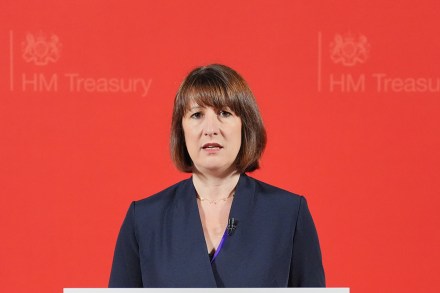
Gordon Brown introduced the winter fuel payment shortly after becoming Chancellor of the Exchequer in 1997, following his party’s landslide victory. Rachel Reeves abolished the winter fuel payment shortly after becoming Chancellor in 2024, following her party’s landslide victory. Since others are shy of saying so, I want to point out that Mr Brown was wrong and Ms Reeves is right. The payment was a wasteful gimmick, addressing a problem better handled by the benefit system. If at least 80 per cent of the beneficiaries of something intended for the poor are not poor, the winter payment is ridiculous. Mr Brown loved such special devices because he instinctively liked to complicate welfare to create more dependency.

Starmer’s double standards

Sir Keir Starmer’s readiness to do ‘whatever it takes’ to support Ukraine seems to be qualified by his fear of offending the Biden administration. He wants to let Ukraine use British Storm Shadow missiles inside Russia but dares not, for fear of the White House. Surely if the special relationship were really strong, its junior partner would be confident enough to diverge occasionally. Think of Mrs Thatcher saying to George Bush senior, at the time of the first Gulf war, ‘This is no time to go wobbly’. In fact, however, Sir Keir is not even consistent: he is prepared to annoy the United States by making the worthless gesture of an embargo on tiny, selective arms-related sales to Israel, but not on missiles which could work decisively against Vladimir Putin.

Starmer’s specs appeal

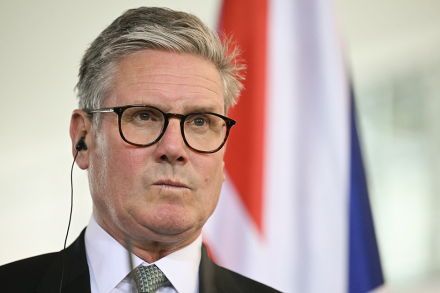
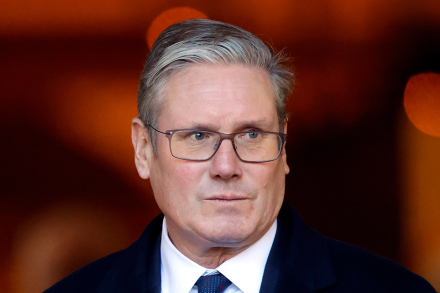
No doubt Lord Alli should not have been given a 10 Downing Street pass, but that is true of most who work there. BB (Before Blair), roughly 100 people were in the building. Today, it is 300. The quality of government has deteriorated as the numbers have swelled. At least Lord Alli has been genuinely useful. It is officially declared that he gave Sir Keir Starmer ‘multiple pairs of glasses’ worth £2,485. It was an inspired move. Until about April this year, Sir Keir did not wear spectacles on public occasions. Observers concentrated on his startled and unhappy-looking eyes because they were the only striking thing in his oddly inexpressive face.

Who will stand up for France’s aristocrats?

When it was recently announced that 40,000 people, the great majority civilians, have been killed in the Gaza conflict, I checked the media coverage. Almost all – Sky, CNN, the Guardian etc – correctly reported that the figure came from the Hamas health ministry. All, however, implied acceptance of the figure’s accuracy by the prominence they gave it (except for the Guardian, preposterously plus royaliste que le roi, which said the Hamas figure ‘does not tell the full story of Palestinian losses’). The classic example was the BBC. The story led the six o’clock news on Radio 4, the serious programme with the bongs of Big Ben, always considered the gold standard.

Joe Biden was never quite all there

As President Biden sank more deeply into the mire this month, kind friends kept urging me to write in his defence, because respect for the old must be maintained in our discourteous society. ‘And why does it matter,’ they added, ‘if he muddles up everyone’s name? We know who he means.’ ‘It’s like sacking the warden of New College for Spoonerisms,’ said one. I nearly succumbed; but since I had observed as early as the mid-1980s that Biden was not quite all there, I did not feel I could stick up for his underlying cognitive coherence nearly 40 years later. Besides, if Donald Trump wins, America will still have an old President, possibly a raging King Lear, with the major difference that he will not have handed on his kingdom to his children in his lifetime.

In praise of Pat McFadden

There is a small section of the Labour party which I greatly admire – those on the party’s right, often from working-class backgrounds, who unrelentingly fight the party’s left without being crypto-Tories. They are more effective than the Conservative right, being more disciplined and less voluble. For decades, they have taken on the Bennite/Corbynite/Islamist/woke tendency and its paler offshoots, such as Ed Miliband. They want genuine economic and social gains for working people rather than ‘saving the planet’ or ‘decolonising’. One such is Pat McFadden, now billed as the third most powerful person in the new government.

What the Tories got wrong on housing

Sir Keir Starmer may be our first atheist prime minister, but his manner in parliament resembles that of what, in House of Lords terminology, is called a ‘Most Reverend prelate’. There is a lot of sonority about serving others, disagreeing well etc. These are good sentiments but, when trying to be good, ‘show, not tell’ is better. Adopting an archiepiscopal tone, a political leader is quickly tripped up. For example, Sir Keir wants to drive peers aged over 80 out of the Lords, thinking this conducive to the public good; and yet, as I write, he is having his first much-prized bilateral with Joe Biden, who is six years older than the Nato alliance whose 75th anniversary western leaders have gathered to celebrate.

I will miss my vote

I feel as if I first took part in a general election even before I was born. My father was the Liberal candidate in Tavistock in 1955 and 1959, and although I was alive only for the latter, featured reading Peter Rabbit in his election address, the two weaved into my infant consciousness. At that time, modernity had not reached rural Devon. Noticing that two neighbouring villages had extremely small Liberal clubs, my father proposed they join forces. ‘Oh no,’ he was told, ‘We were on different sides in the war.’ ‘The war?’ he replied. ‘Surely we were all against the Germans?’ ‘No, the Civil War.

The problem with flexible working

Lots and lots and lots of fuss about betting on the general election. Less attention is paid to the biggest bet of all – Rishi Sunak’s frightening flutter in opting for 4 July. At Tuesday lunchtime, I was held up crossing the Mall by the procession for the state visit of the Emperor of Japan. I fumed a bit, but the modest crowd’s modest interest was soothing. How success is taken for granted. The recovery of Japan from disgrace, hunger and ruin was a miracle, the triumph of western, especially American, nation-building – such a miracle that everyone has forgotten it. When I was a boy, Hirohito, the wartime emperor, came on a controversial state visit. Private Eye ran the headline ‘There’s a nasty Nip in the air’. Now his blameless grandson passes unnoticed.

Ukraine’s greatest, yet least publicised success

Odessa Our conference here is about Black Sea security, where I am the guest of UK Friends of Ukraine. Its subject reflects one of Ukraine’s greatest, yet least publicised successes. Almost a third of the Russian fleet has been destroyed, mostly by sea drones. The rest is trapped in ports much further east. As a result, almost normal amounts of grain and other goods flow to the wider world. It says something not good about third-world politics that all 11 recipients of WFP relief in the form of Ukrainian grain, including Nigeria, Yemen, the Democratic Republic of Congo and Gaza, support Russia in international forums. Tony Abbott, the former prime minister of Australia, gives us a rousing keynote speech, praising Ukraine for ‘defeating the Russian fleet without a navy’.

What tax rises are Labour planning?

The Tory manifesto is ‘a clear plan’ promising ‘bold action’. Rishi Sunak uses the word ‘bold’ three times in two paragraphs. If it were bold, it would not need its 80 pages. Its detail is best seen as a resource for candidates trying to deploy specific promises with specific interest groups. This is a way of shoring up the Tory vote, not of winning the election – a tacit admission of defeat. It may have an eye, too, to what happens afterwards. Labour wants to be able to say that the Conservatives crashed out on the most extreme manifesto ever. Indeed, Sir Keir Starmer is already calling it a Jeremy Corbyn-style document, but from the right. This is untrue. The manifesto is essentially technocratic, as is the party’s leader.

Sunak seemed the challenger; Starmer the establishment figure

I watched Tuesday night’s leaders’ election debate with fellow guests at a party to launch Conservative Revolution, a book to mark the 50th anniversary of the Centre for Policy Studies, the thinktank founded by Keith Joseph and Margaret Thatcher to ‘think the unthinkable’ after Tory defeat. Rishi Sunak’s performance certainly achieved one of its intended effects, which was to summon up the blood of supporters. Oddly, given his amiability, he is impressive in attack. Both leaders conveyed their main true points well: Sir Keir that Mr Sunak dare not talk about his party’s record of 14 years in government, Mr Sunak that Sir Keir dare not talk about what he would do in office. Of the two, Mr Sunak’s is the more powerful, because it is about what happens next.

Could Michael Gove support Labour?

Now that Sir Keir Starmer has reaffirmed he is a socialist, interviewers are asking other leading Labour figures if they are too. The shadow business secretary, Jonathan Reynolds, explains he is a Christian socialist, which makes me want to go back to Sir Keir, an unbeliever, and ask him how he thinks his atheist socialism differs from Marxism. Socialism is in essence an economic doctrine about the common ownership of (to use the famous Clause 4 wording) ‘the means of production, distribution and exchange’. How does Sir Keir believe that common ownership should be achieved? He may not want to say. It would be equally reasonable – and equally awkward politically – to ask Rishi Sunak whether he is a capitalist.