Charles Moore

Charles Moore

Charles Moore is The Spectator’s chairman.

He is a former editor of the magazine, as well as the Sunday Telegraph and the Daily Telegraph. He became a non-affiliated peer in July 2020.

Rachel Reeves is right to cut the winter fuel payment

From our UK edition

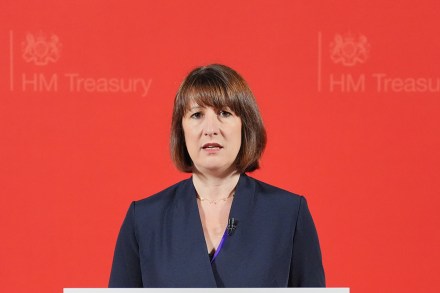
Gordon Brown introduced the winter fuel payment shortly after becoming Chancellor of the Exchequer in 1997, following his party’s landslide victory. Rachel Reeves abolished the winter fuel payment shortly after becoming Chancellor in 2024, following her party’s landslide victory. Since others are shy of saying so, I want to point out that Mr Brown was wrong and Ms Reeves is right. The payment was a wasteful gimmick, addressing a problem better handled by the benefit system. If at least 80 per cent of the beneficiaries of something intended for the poor are not poor, the winter payment is ridiculous. Mr Brown loved such special devices because he instinctively liked to complicate welfare to create more dependency.

Starmer’s double standards

From our UK edition

Sir Keir Starmer’s readiness to do ‘whatever it takes’ to support Ukraine seems to be qualified by his fear of offending the Biden administration. He wants to let Ukraine use British Storm Shadow missiles inside Russia but dares not, for fear of the White House. Surely if the special relationship were really strong, its junior partner would be confident enough to diverge occasionally. Think of Mrs Thatcher saying to George Bush senior, at the time of the first Gulf war, ‘This is no time to go wobbly’. In fact, however, Sir Keir is not even consistent: he is prepared to annoy the United States by making the worthless gesture of an embargo on tiny, selective arms-related sales to Israel, but not on missiles which could work decisively against Vladimir Putin.

Starmer’s specs appeal

From our UK edition

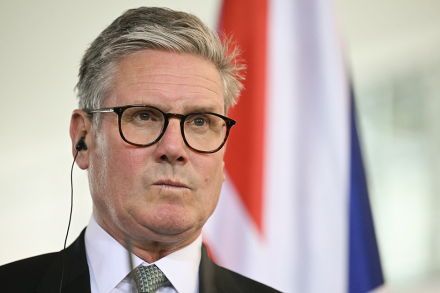
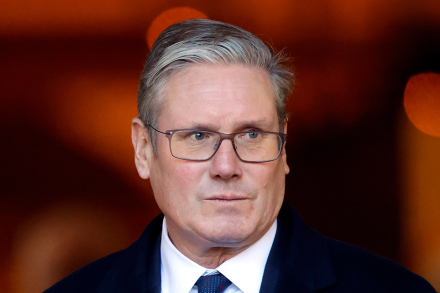
No doubt Lord Alli should not have been given a 10 Downing Street pass, but that is true of most who work there. BB (Before Blair), roughly 100 people were in the building. Today, it is 300. The quality of government has deteriorated as the numbers have swelled. At least Lord Alli has been genuinely useful. It is officially declared that he gave Sir Keir Starmer ‘multiple pairs of glasses’ worth £2,485. It was an inspired move. Until about April this year, Sir Keir did not wear spectacles on public occasions. Observers concentrated on his startled and unhappy-looking eyes because they were the only striking thing in his oddly inexpressive face.

Who will stand up for France’s aristocrats?

From our UK edition

When it was recently announced that 40,000 people, the great majority civilians, have been killed in the Gaza conflict, I checked the media coverage. Almost all – Sky, CNN, the Guardian etc – correctly reported that the figure came from the Hamas health ministry. All, however, implied acceptance of the figure’s accuracy by the prominence they gave it (except for the Guardian, preposterously plus royaliste que le roi, which said the Hamas figure ‘does not tell the full story of Palestinian losses’). The classic example was the BBC. The story led the six o’clock news on Radio 4, the serious programme with the bongs of Big Ben, always considered the gold standard.

Joe Biden was never quite all there

From our UK edition

As President Biden sank more deeply into the mire this month, kind friends kept urging me to write in his defence, because respect for the old must be maintained in our discourteous society. ‘And why does it matter,’ they added, ‘if he muddles up everyone’s name? We know who he means.’ ‘It’s like sacking the warden of New College for Spoonerisms,’ said one. I nearly succumbed; but since I had observed as early as the mid-1980s that Biden was not quite all there, I did not feel I could stick up for his underlying cognitive coherence nearly 40 years later. Besides, if Donald Trump wins, America will still have an old President, possibly a raging King Lear, with the major difference that he will not have handed on his kingdom to his children in his lifetime.

In praise of Pat McFadden

From our UK edition

There is a small section of the Labour party which I greatly admire – those on the party’s right, often from working-class backgrounds, who unrelentingly fight the party’s left without being crypto-Tories. They are more effective than the Conservative right, being more disciplined and less voluble. For decades, they have taken on the Bennite/Corbynite/Islamist/woke tendency and its paler offshoots, such as Ed Miliband. They want genuine economic and social gains for working people rather than ‘saving the planet’ or ‘decolonising’. One such is Pat McFadden, now billed as the third most powerful person in the new government.

What the Tories got wrong on housing

From our UK edition

Sir Keir Starmer may be our first atheist prime minister, but his manner in parliament resembles that of what, in House of Lords terminology, is called a ‘Most Reverend prelate’. There is a lot of sonority about serving others, disagreeing well etc. These are good sentiments but, when trying to be good, ‘show, not tell’ is better. Adopting an archiepiscopal tone, a political leader is quickly tripped up. For example, Sir Keir wants to drive peers aged over 80 out of the Lords, thinking this conducive to the public good; and yet, as I write, he is having his first much-prized bilateral with Joe Biden, who is six years older than the Nato alliance whose 75th anniversary western leaders have gathered to celebrate.

I will miss my vote

From our UK edition

I feel as if I first took part in a general election even before I was born. My father was the Liberal candidate in Tavistock in 1955 and 1959, and although I was alive only for the latter, featured reading Peter Rabbit in his election address, the two weaved into my infant consciousness. At that time, modernity had not reached rural Devon. Noticing that two neighbouring villages had extremely small Liberal clubs, my father proposed they join forces. ‘Oh no,’ he was told, ‘We were on different sides in the war.’ ‘The war?’ he replied. ‘Surely we were all against the Germans?’ ‘No, the Civil War.

The problem with flexible working

From our UK edition

Lots and lots and lots of fuss about betting on the general election. Less attention is paid to the biggest bet of all – Rishi Sunak’s frightening flutter in opting for 4 July. At Tuesday lunchtime, I was held up crossing the Mall by the procession for the state visit of the Emperor of Japan. I fumed a bit, but the modest crowd’s modest interest was soothing. How success is taken for granted. The recovery of Japan from disgrace, hunger and ruin was a miracle, the triumph of western, especially American, nation-building – such a miracle that everyone has forgotten it. When I was a boy, Hirohito, the wartime emperor, came on a controversial state visit. Private Eye ran the headline ‘There’s a nasty Nip in the air’. Now his blameless grandson passes unnoticed.

Ukraine’s greatest, yet least publicised success

From our UK edition

Odessa Our conference here is about Black Sea security, where I am the guest of UK Friends of Ukraine. Its subject reflects one of Ukraine’s greatest, yet least publicised successes. Almost a third of the Russian fleet has been destroyed, mostly by sea drones. The rest is trapped in ports much further east. As a result, almost normal amounts of grain and other goods flow to the wider world. It says something not good about third-world politics that all 11 recipients of WFP relief in the form of Ukrainian grain, including Nigeria, Yemen, the Democratic Republic of Congo and Gaza, support Russia in international forums. Tony Abbott, the former prime minister of Australia, gives us a rousing keynote speech, praising Ukraine for ‘defeating the Russian fleet without a navy’.

What tax rises are Labour planning?

From our UK edition

The Tory manifesto is ‘a clear plan’ promising ‘bold action’. Rishi Sunak uses the word ‘bold’ three times in two paragraphs. If it were bold, it would not need its 80 pages. Its detail is best seen as a resource for candidates trying to deploy specific promises with specific interest groups. This is a way of shoring up the Tory vote, not of winning the election – a tacit admission of defeat. It may have an eye, too, to what happens afterwards. Labour wants to be able to say that the Conservatives crashed out on the most extreme manifesto ever. Indeed, Sir Keir Starmer is already calling it a Jeremy Corbyn-style document, but from the right. This is untrue. The manifesto is essentially technocratic, as is the party’s leader.

Sunak seemed the challenger; Starmer the establishment figure

From our UK edition

I watched Tuesday night’s leaders’ election debate with fellow guests at a party to launch Conservative Revolution, a book to mark the 50th anniversary of the Centre for Policy Studies, the thinktank founded by Keith Joseph and Margaret Thatcher to ‘think the unthinkable’ after Tory defeat. Rishi Sunak’s performance certainly achieved one of its intended effects, which was to summon up the blood of supporters. Oddly, given his amiability, he is impressive in attack. Both leaders conveyed their main true points well: Sir Keir that Mr Sunak dare not talk about his party’s record of 14 years in government, Mr Sunak that Sir Keir dare not talk about what he would do in office. Of the two, Mr Sunak’s is the more powerful, because it is about what happens next.

Could Michael Gove support Labour?

From our UK edition

Now that Sir Keir Starmer has reaffirmed he is a socialist, interviewers are asking other leading Labour figures if they are too. The shadow business secretary, Jonathan Reynolds, explains he is a Christian socialist, which makes me want to go back to Sir Keir, an unbeliever, and ask him how he thinks his atheist socialism differs from Marxism. Socialism is in essence an economic doctrine about the common ownership of (to use the famous Clause 4 wording) ‘the means of production, distribution and exchange’. How does Sir Keir believe that common ownership should be achieved? He may not want to say. It would be equally reasonable – and equally awkward politically – to ask Rishi Sunak whether he is a capitalist.

Cyclists are the Jeremy Corbyns of the road

From our UK edition

Three years ago next month, the journalist Andy Webb put in a Freedom of Information request to the BBC. He asked for material which he believes would expose a new cover-up of the BBC’s behaviour over Martin Bashir’s notorious 1995 Panorama interview with Diana, Princess of Wales. The cover-up in question (there was a much earlier one shortly after the interview first aired) took place, he believes, between September and November 2020, and involved the BBC’s decision to release certain documents, while concealing others. Lord Dyson’s investigation of the saga began shortly afterwards.

What makes MPs special

From our UK edition

On Monday, the House of Commons passed, by one vote, a motion to allow MPs to be suspended from parliament (a ‘risk-based exclusion’) if arrested for sexual or violent crime. The government had preferred that the trigger should be charge, not arrest, but there were enough Tory rebels, including Theresa May, for the lower threshold to be chosen. Jess Phillips, supporting the change, asked rhetorically, and contemptuously: ‘Why do we think we’re so special in here?’ There is, in fact, an answer to her question, and it has nothing to do with any unmerited self-esteem which MPs may feel. King Charles I entered the Commons in person on 4 January 1642. His purpose was to arrest five MPs.

The science behind Olivia Colman’s left-wing face

From our UK edition

The new hunting year formally began last week. Should I resubscribe? Politically, the outlook is bleak. In February, Steve Reed, the shadow environment secretary, announced that Labour would implement a ‘full ban on trail and drag hunting’, on the grounds that there were ‘loopholes’ in Labour’s hunting ban. This even though, when advocating the original ban, Labour said it favoured drag hunting (trail hunting had not then been invented) and was worried only about live quarry. Mr Reed included his ban promise in a speech in which he announced that his party would treat rural voters with ‘greater respect’. His two aims conflict.

Europe has no answer to its immigration problem

From our UK edition

Pulling off the rhetorical trick that Brexit would undermine the Northern Ireland Good Friday Agreement, Michel Barnier, the EU negotiator, said in 2018 that the agreement meant removing borders not only from maps, ‘but also in minds’. Even a single CCTV camera on the North-South roads was considered a threat to the peace process. Now it turns out, which is grimly amusing, that the Irish government has not banished the border from its mind. The Republic is upset that asylum seekers are crossing the border that it does not believe in, fleeing the threat of deportation to Rwanda from the United Kingdom. It talks of sending them back, ignoring a recent decision of its own courts that Britain is not a safe country.

A helpful suggestion for Taylor Swift’s boyfriends

From our UK edition

Sir Mark Rowley should not resign. We must try to break our habit of getting rid of each Metropolitan Police Commissioner before his/her term is complete. He has done nothing iniquitous or seriously incompetent. He is, however, systematically wrong about the right to protest, elevating it over the much more important right of the general public to own the streets. His parlaying with self-appointed Muslim community leaders privileges them. The weekly Gaza marches in London are effectively mobile no-go areas. This was confirmed by the altercation between Gideon Falter and the police sergeant who told him he was ‘openly Jewish’.

My letter from Chris Packham

From our UK edition

I do not know Chris Packham, the BBC nature broadcaster, personally, but he wrote me a letter last month, enclosing a book called Manifesto, The Battle for Green Britain by Dale Vince which, he tells me, ‘has something very important to say at this most important time’. In his letter, Chris says that ‘irrespective of any party politics’, ‘The coming election will be the most important of our lifetimes’ because we are ‘halfway through the last decade’ left to avoid ‘the worst of climate breakdown’. So ‘we must help young voters navigate the new voting rules’. Politics has ‘become the final frontier for a real greener Britain’. What Chris does not mention is that party politics is very important in this most important book.

Why do MPs send nude pictures of themselves?

From our UK edition

Adam Dyster has gone to work for the shadow Defra secretary Steve Reed. I admit this is not an appointment which would normally trouble the political scorers, but it is a straw in the wind. Mr Dyster was, until recently, the adviser to both the chairman and the director-general of the National Trust. As Zewditu Gebreyohanes points out in her new pamphlet, ‘National Distrust: the end of democracy in the National Trust’, it was against the interest of the Trust that Mr Dyster advised both, since it blurred the necessary governance difference between the trustees and the management. Mr Dyster was previously, in the Jeremy Corbyn era, the national organiser of Labour’s environment campaign, influencing, he says, the party’s general 2017 election manifesto.