Charles Moore

Charles Moore

Charles Moore is The Spectator’s chairman.

He is a former editor of the magazine, as well as the Sunday Telegraph and the Daily Telegraph. He became a non-affiliated peer in July 2020.

Why it was a mistake for the head of MI6 to not wear a tie

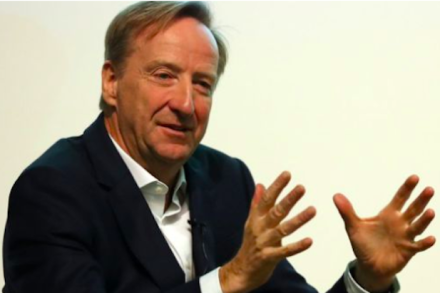
Alex Younger, the head of MI6, made his second public appearance after four years in the job, on Monday. He spoke to students at St Andrews. Presumably because of his young audience, and because he was promoting officialdom’s orthodoxy that ‘diversity’ in recruitment trumps everything else, Mr Younger did not wear a tie. This was a mistake for two reasons. The first is that able young people will wish to join MI6 not because it offers a comfy, reassuring version of their existing easy-going lives, but because it doesn’t. The idea of challenge is what attracts, and of exclusivity not inclusivity. It is, after all, called the Secret Intelligence Service. It ought to be tight-lipped, formal and (for men) tie-wearing.

Could Dominic Grieve’s Brexit amendment launch a new party?

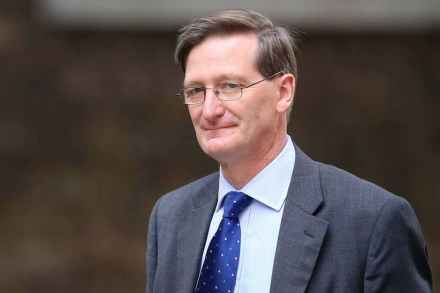
Inside the Dominic Grieve amendment carried on Tuesday is the embryo of a new political party. Any parliamentary majority for what Sir Oliver Letwin, who voted for the amendment, calls ‘something real’ (‘Norway plus’) if Mrs May’s deal falls would depend on the support of a good many Labour MPs. After three months’ work, the organisers believe they have got 75 such on board, led by Chuka Umunna. These are anti-Brexit, chiefly Blairite Labour MPs who cannot bear Jeremy Corbyn. If their number held up (a big ‘if’), the organisers calculate, the House could carry ‘Norway plus’, with the government and most Conservative backbenchers supporting, even if the ‘hard’ Brexiteers opposed. Labour would be split.

The Spectator’s notes | 6 December 2018

Inside the Dominic Grieve amendment carried on Tuesday is the embryo of a new political party. Any parliamentary majority for what Sir Oliver Letwin, who voted for the amendment, calls ‘something real’ (‘Norway plus’) if Mrs May’s deal falls would depend on the support of a good many Labour MPs. After three months’ work, the organisers believe they have got 75 such on board, led by Chuka Umunna. These are anti-Brexit, chiefly Blairite Labour MPs who cannot bear Jeremy Corbyn. If their number held up (a big ‘if’), the organisers calculate, the House could carry ‘Norway plus’, with the government and most Conservative backbenchers supporting, even if the ‘hard’ Brexiteers opposed. Labour would be split.

Should we listen to David Attenborough’s climate change warning?

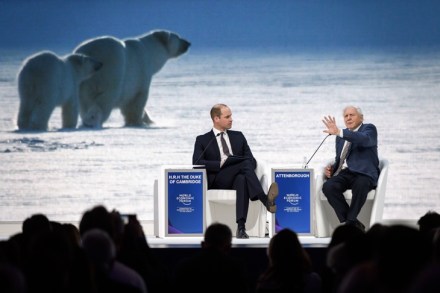
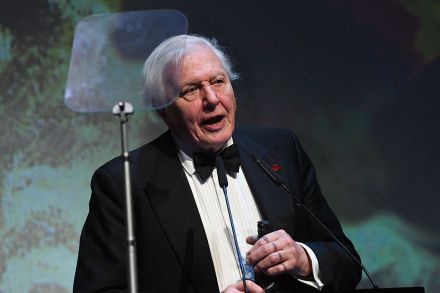
‘Civilisation faces collapse, Attenborough warns UN.’ That was the Times headline on Tuesday about the great broadcaster’s speech at the latest climate change conference in Poland. In theory, Sir David is always worth hearing. Nevertheless, his solemn warning was made less effective by the decision to print it at the bottom of page 17. I cannot help feeling that this adverse news judgment was entirely correct.

Emmanuel Macron is Donald Trump in reverse

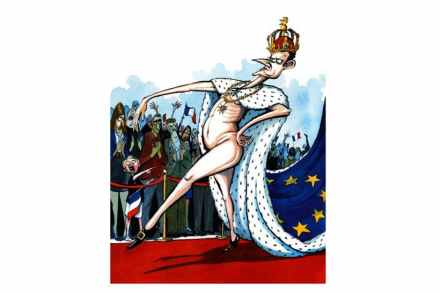
Is Emmanuel Macron the oddest leader in the EU? When he became President of France last year, he made a speech at Versailles to both houses of parliament calling for a renewal of ‘the spirit of conquest’. This year, commemorating the centenary of the Armistice, he seemed more inclined to invent a project for perpetual peace, like some 18th-century rationalist. In recent days, he has demanded our fish, decided that the gilets jaunes, who are rioting about his astonishing diesel price rises to save the planet, are really a ‘brown plague’, and welcomed a report which wishes to empty France’s museums of any treasures which originated in Africa, Oceania and anywhere else that can claim victim status, and return them thither. M.

The Spectator’s Notes | 29 November 2018

Theresa May, William Hague and others say that the EU will not want to trap Britain in the backstop because it is not in its interest. It will want to move to a free-trade agreement for its own benefit. If that is so, why is the backstop the thing above all others upon which the EU insists? Brexiteers must absolutely oppose the backstop because agreeing it would repeat Britain’s delusion in every European negotiation over nearly 50 years, which is that we should grab ‘practical’ advantages and concede ‘windy’ principles. This sounds good, but it invariably means that we are trapped later. The principles acquire legal force.

The UK must avoid the backstop trap

Theresa May, William Hague and others say that the EU will not want to trap Britain in the backstop because it is not in its interest. It will want to move to a free-trade agreement for its own benefit. If that is so, why is the backstop the thing above all others upon which the EU insists? One reason why Brexiteers have to oppose the backstop absolutely is that it is yet another manifestation of Britain’s delusion in every European negotiation over nearly 50 years, which is that we should grab ‘practical’ advantages and concede ‘windy’ principles. This sounds good, but it invariably means that we are trapped later. The principles acquire legal force.

Will May’s Brexit deal stop us making jokes about Juncker?

Article 129 (3) of the withdrawal agreement provides that ‘the United Kingdom shall refrain, during the transition period, from any action or initiative which is likely to be prejudicial to the Union’s interests, in particular in the framework of any international organisation, agency, conference or forum of which the United Kingdom is a party in its own right.’ What does that mean? That we are not free at the UN Security Council to oppose any item of EU foreign policy? That we cannot cut our rate of VAT? That we must not make jokes about Jean-Claude Juncker? Needless to say, there is no reciprocal obligation on the EU to do nothing prejudicial to the interests of the United Kingdom.

The Spectator’s Notes | 22 November 2018

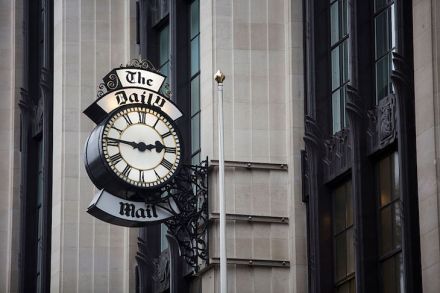
It will be interesting to see whether the about-face of the Daily Mail on Brexit makes the slightest difference to anything. Paul Dacre was admirably consistent when he was editor and the paper did well. But on the whole, the history of the Mail is that it is happy dramatically changing sides on major issues. Under David English, for instance, it suddenly switched to Europe and Heseltine away from his earlier Thatcher-worship, and few seemed to notice. Thus, after attacking the High Court judges as enemies of the people in 2016, under Dacre, it can move effortlessly to attacking the Brexiteers as ‘preening peacocks’ etc, under Geordie Greig.

When the BBC’s ‘Reality Check’ reporter met his match

The BBC’s ‘Reality Check’ device is a piece of hubris, which this week met its nemesis. It effectively says: ‘We report untrustworthy politicians who disagree with one another. You, the stupid viewer/listener, obviously cannot be expected to work out where the truth lies. Our expert correspondents will tell you.’ The main man who does this on Brexit is called Chris Morris. His version of ‘reality’ is strongly pro-Remain. If you read his online summary of the withdrawal agreement, for example, he says that ‘the Brexit process has caused an enormous amount of anxiety and uncertainty’ in relation to immigration. That is a defensible proposition, but one depending on a point of view.

The Spectator’s Notes | 15 November 2018

‘It’s time for Bond — Basildon Bond,’ is the joke among pro-Leave MPs as Theresa May serves up her mess of pottage as Brexit. Market research, however, shows the joke does not work on MPs under 40 because they do not know what Basildon Bond is. So perhaps I should explain to the hip Spectator crowd that Basildon Bond remains the commonest brand of quality paper on which to write letters. There need to be 48 such letters sent to Graham Brady, the chairman of the 1922 Committee, to provoke a vote of confidence in Mrs May among Conservative MPs. There are certainly far more than 48 who do not, in fact, have confidence in her. It does not automatically follow, needless to say, that they will say so when asked.

Theresa May’s Brexit is a mess. But will Tory MPs dare move against her?

It’s time for Bond — Basildon Bond,’ is the joke among pro-Leave MPs as Theresa May serves up her mess of pottage as Brexit. Market research, however, shows the joke does not work on MPs under 40 because they do not know what Basildon Bond is. So perhaps I should explain to the hip Spectator crowd that Basildon Bond remains the commonest brand of quality paper on which to write letters. There need to be 48 such letters sent to Graham Brady, the chairman of the 1922 Committee, to provoke a vote of confidence in Mrs May among Conservative MPs. There are certainly far more than 48 who do not, in fact, have confidence in her. It does not automatically follow, needless to say, that they will say so when asked.

The Spectator’s Notes | 8 November 2018

The sixth of November 1918 was remembrance day for my great-grandfather, Norman Moore. It was the fourth anniversary of the death of his younger son, Gillachrist (known as Gilla), a second lieutenant in the Royal Sussex Regiment, who had been killed at the first battle of Ypres. Sitting quietly in his London house in Gloucester Place, Moore heard shouting in the street: rumours of peace were spreading. ‘If it be so,’ he wrote in his diary, ‘how appropriate on Gillachrist’s day for he gave his life to resist German power.’ It became so five days later. On 9 November, NM (as he was always called) attended the Lord Mayor’s Banquet in Guildhall: ‘A fanfare of trumpets announced Mr Lloyd George.

The faulty logic of a ‘Norway for Now’ Brexit

The campaign ‘Norway for Now’, an idea promoted by Nick Boles, is that Britain should join the European Economic Area and EFTA, until such time as we can move further out of the EU, for example with a Canada-style free-trade deal. This is what Norway and Iceland and Liechtenstein do. The idea sounds nice as a friendly and temporary compromise. But in fact the psychology is wrong. Such arrangements were devised more as an entry chamber to full membership (which is what Norwegian elites still want) than as part of an exit strategy. The Norwegian Prime Minister is now making this point. The point of Leave is to escape the gravitational pull of Brussels. Why make self-contradictory efforts to stay in the orbit and leave it at the same time?

Will a ‘zero tolerance’ approach stop attacks on NHS staff?

Obviously it is wrong to attack NHS staff. But does the government’s new ‘zero tolerance’ policy consider why such attacks take place? There are eternal reasons, such as the inherent nastiness of some people, and wider social ones, such as drug abuse. Are there also specific NHS-related ones too, though? The worst aspects of the NHS are not usually medical: they are to do with a bureaucracy which puts patients last. It is utterly extraordinary, for example, that a waiting time of four hours in A&E is now the norm or even, it would seem, the (often missed) target. Often have I sat there wondering not at the aggression of patients, but at their quiet acceptance of such ill treatment. It is wrong when patients attack, but not surprising.

The Spectator’s Notes | 1 November 2018

At the Brexit-related cabinet last week — as revealed by James Forsyth in these pages — David Lidington made an intervention in support of the Prime Minister’s approach to the negotiations. He was, he said, the only person present who had been an MP at the time of ‘Black Wednesday’, when the pound fell out of the ERM on 16 September 1992. It had been so disastrous and divisive, he went on, that the government must at all costs avoid a repeat over Brexit. Many heads nodded sagely. Mr Lidington, a moderate and public-spirited man, was quite right about the pain caused to his party 26 years ago; but the interests of the Tories and of the nation are not necessarily the same thing.

Violent metaphors in politics are nothing new

There is much shock professed about the metaphors used to describe Mrs May’s political plight — talk of the ‘killing zone’, or her being stabbed, and worse. I feel this shock myself, but in fact such metaphors are routine in politics and almost always have been. Think, for example, of Harold Macmillan’s ‘Night of the Long Knives’ — arguably more tasteless, since it compared a cabinet reshuffle with a Nazi murder spree. The real reason it seems shocking in this case surely, as it did when John McDonnell favourably invoked people who wanted to lynch Esther McVey, is that it is men speaking about a woman. On this, old-fashioned chivalry and modern feminism agree.

Making the right-wing case for George Orwell

This year’s Orwell Lecture will be delivered by the novelist Kamila Shamsie. She will be complaining, it is announced, about this government’s talk of citizenship being ‘a privilege and not a right’. (Actually, it is both.) No doubt she will have interesting points to make, but it is a pity that Orwell’s flame is always tended by the left. There is a right-wing case for Orwell, or, to be more precise, an anti-left-wing case. Plenty of Orwell’s writing about England could make him a proto-Brexiteer, and it would be interesting to air this just now. His greatest satires were directed chiefly at communists, and he had a hearty dislike of the New Statesman.

Nick Clegg’s move to Facebook makes perfect sense

Do you remember that brief couple of weeks in British history when we all had to say ‘I agree with Nick’? It seems a long time ago, and now Sir Nick Clegg is off to Silicon Valley to be the head of Facebook’s global affairs and communications team. Some sneer, but the move makes perfect sense. Correctly clocking that he has no future in British politics, and that the European Union is not an area of growth and opportunity, he thinks that the United States has a brighter future than our common European home. I agree with Nick. This article is an extract from Charles Moore's Spectator notes, available in this week's magazine.

The Spectator’s Notes | 25 October 2018

Mrs May says she is taking her stand on the issue of Northern Ireland and the integrity of the United Kingdom. If so, good; but it cannot be the whole truth. After all, she surrendered on the Irish border issue in negotiations last December until, at the very last minute, the DUP forced her to row back. I think the irreducible core of her position is something which she does not fully disclose: that she is determined to keep Britain in the customs union, though perhaps only approximately and certainly by another name. This cannot work, surely, because to the EU it is ‘cherry-picking’ and to the Brexiteers it is BRINO, but there must be a reason why she revives it each time it is stamped on.