Charles Moore

Charles Moore

Charles Moore is The Spectator’s chairman.

He is a former editor of the magazine, as well as the Sunday Telegraph and the Daily Telegraph. He became a non-affiliated peer in July 2020.

The problem with Westminster is that politicians don’t do their jobs

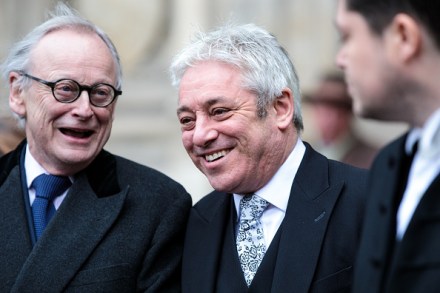
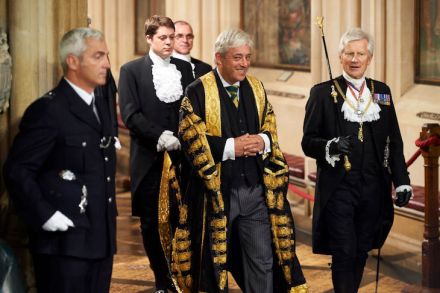
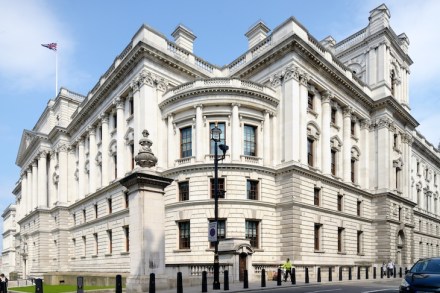
The trouble with Mr Speaker, even when he makes the right decision, is his motives. Fame is the spur and so is his love of hurting the Conservative party which nurtured him. However natural these feelings, they are completely wrong for the Speakership. The occupant of the chair is supposed to be a pillar of the constitution, not its talking gargoyle. A sad feature of the Brexit story has been how so many people with important official roles have not seemed to understand or, in some cases, even to care, what those roles entail. The Chancellor of the Exchequer and the Governor of the Bank of England are supposed to assist the British economy, not invest in its collapse.

The Spectator’s Notes | 21 March 2019

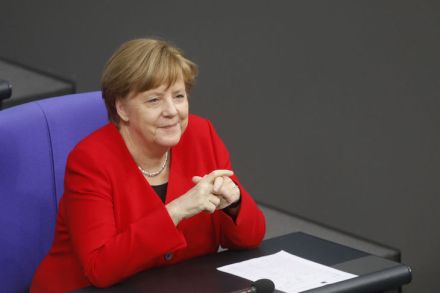
Angela Merkel says disdainfully, ‘I admit I was not on top of the British parliament’s 17th-century procedural rules.’ Her implication is that they are absurdly out of date. Yet the old rule invoked by Mr Speaker Bercow is surely one that can hold up its head in the 21st century. It is that the executive should not keep putting the same question to parliament until it gets its way. Therefore Mrs May cannot just keep reheating her terrible withdrawal deal. If there were no such rule, there would be no end to the bullying. Isn’t there something quite impressive about the fact that we have an elected assembly which had already thought of this more than 400 years ago? Habeas corpus is a pretty old idea too, and jury trial is even older. Does Mrs Merkel mock them?

The problem with Speaker John Bercow

The trouble with Mr Speaker, even when he makes the right decision, is his motives. Fame is the spur and so is his love of hurting the Conservative party which nurtured him. However natural these feelings, they are completely wrong for the Speakership. The occupant of the chair is supposed to be a pillar of the constitution, not its talking gargoyle. A sad feature of the Brexit story has been how so many people with important official roles have not seemed to understand or, in some cases, even to care, what those roles entail. The Chancellor of the Exchequer and the Governor of the Bank of England are supposed to assist the British economy, not invest in its collapse.

Why great minds get Brexit wrong

A besetting sin in this process has been over-cleverness. As so often in our history, the ‘stupid’ people are right. The Brexit question is a classic example of something which is simple but not easy. It is ‘Do you want to be ruled by those you can choose, or by those you can’t choose?’ Voters understood this, and gave a clear answer. Clever people keep complicating it. Three leading examples of this, I am afraid — Oliver Letwin, Nicholas Boles and Michael Gove — are good friends of mine. Precisely the qualities which endear them to me in private conversation are proving a menace to the public weal.

I’ve been surprised how useless the civil service have been during the negotiations

Obviously the Prime Minister herself bears chief responsibility for Brexit mistakes, but she must have been terribly badly advised throughout, not only by political staff — who always get it in the neck when things go wrong — but by the professional civil service, which tends to escape censure. I have been genuinely surprised by the bureaucrats’ uselessness in the negotiations. In my Thatcher studies, now drawing peacefully to their close, I find that the mandarinate, though out of sympathy with Mrs Thatcher, did, on the whole, do its best for her. It was excited by the possibilities she opened up, and enjoyed surmounting the various crises.

The Spectator’s Notes | 14 March 2019

I had forgotten, until I checked this week, that Mrs May timed the general election of June 2017 in order to have a mandate for the Brexit negotiations. They began ten days after the nation voted. She conveyed no sense, at the time, of how the election result had changed her situation. In her beginning is her end. Political leadership requires imagination. She has never displayed any. Why, for example, did she fly to Strasbourg on Monday night? She made the same mistake in December 2017 when she took a dawn flight to Brussels after making a hash of the Irish problem. The point of dramatically winging your way out of the country is to be seen to win something. Instead, Mrs May is the spurned suppliant.

Michael Gove’s Brexit agony

I feel particularly sorry for Michael Gove, because there is psychological torment here. His understandable reasoning for not resigning over Theresa May’s Chequers proposal was that he had been accused first of betraying David Cameron, then of betraying Boris Johnson. He could not face being accused of a third betrayal by walking out on Mrs May. This meant that he unintentionally betrayed the cause of Brexit. He is now the government’s media apologist for whatever piece of contortion comes out of Downing Street, and is humiliated when the line he has just peddled collapses a few hours later.

The problem with Theresa May

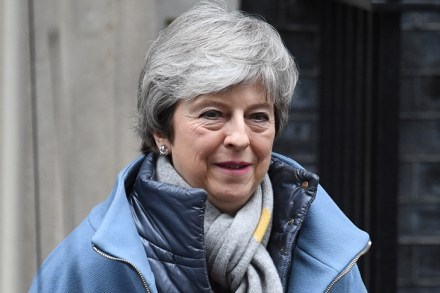
I had forgotten, until I checked this week, that Theresa May timed the general election of June 2017 in order to have a mandate for the Brexit negotiations. They began ten days after the nation voted. She conveyed no sense, at the time, of how the election result had changed her situation. In her beginning is her end. Political leadership requires imagination. She has never displayed any. Why, for example, did she fly to Strasbourg on Monday night? She made the same mistake in December 2017 when she took a dawn flight to Brussels after making a hash of the Irish problem. The point of dramatically winging your way out of the country is to be seen to win something. Instead, Mrs May is the spurned suppliant.

The imperialism of intervening in tax havens’ affairs

I am never sure what I think about tax havens. On the one hand, there is something terribly depressing about places whose raison d’être is tax avoidance. On the other, what the EU calls ‘unfair tax competition’ is better described simply as ‘tax competition’. It would be a very bad thing if powerful nations could abolish competitive pressure to keep taxes down. Whatever one thinks of them, tax havens themselves have laws. In the case of the Crown dependencies, the Isle of Man, Guernsey and Jersey, they are ancient entities, governed by the laws passed by their own parliaments, not by the House of Commons.

The secret way to unnerve Jonathan Dimbleby on Any Questions?

The departure of Jonathan Dimbleby from Any Questions? is sad for me. I first listened to the programme when the chairman was Freddie Grisewood, and first appeared on it under the over-emollient David Jacobs. Then I served under the likeable but somehow underpowered John Timpson. Since 1987, I have appeared under Jonathan. He is the master of all subjects, and much more genial than his interrogative manner suggests. I have never known him seem bored on air, although, over more than 30 years, he must often have been. Jonathan’s Achilles heel, I discovered quite early on, is the BBC. If you criticise it on air, he gets slightly trembly, casts aside his otherwise impeccable impartiality and tries to put you down.

Why I’ll be avoiding London on the day after Brexit

A kind billionaire called Jeremy Hosking, whom I do not know personally, has invited us to join the Britannia Express, a steam train, on 30 March, the day after Brexit. The train will traverse Wales and England, starting at Swansea and ending in Sunderland. In an unspoken rebuke to the metropolis, it will not travel via London. The train will, says the invitation, commemorate ‘the UK’s exit (or non-exit) from the European Union’. This is the opposite, I suppose, of the European train which people like the late Sir Geoffrey Howe constantly exhorted us to climb aboard. What to do? The most likely situation on the day is that we still will not know our country’s fate.

The Spectator’s Notes | 7 March 2019

A kind billionaire called Jeremy Hosking, whom I do not know personally, has invited us to join the Britannia Express, a steam train, on 30 March, the day after Brexit. The train will traverse Wales and England, starting at Swansea and ending in Sunderland. In an unspoken rebuke to the metropolis, it will not travel via London. The train will, says the invitation, commemorate ‘the UK’s exit (or non-exit) from the European Union’. This is the opposite, I suppose, of the European train which people like the late Sir Geoffrey Howe constantly exhorted us to climb aboard. What to do? The most likely situation on the day is that we still will not know our country’s fate.

Should Michael Jackson’s music be banned?

Why does it follow that, because an artist or performer is an appalling human being, his work should be banned? Speaking at Oxford in the late 19th century, Paul Verlaine introduced himself thus: ‘Je suis Paul Verlaine — poète, ivrogne, pédéraste.’ His work survived. Yet nearly a century and a half later, Michael Jackson has his music banned by the BBC.

Is it good news that there are fewer UK-born students at Oxbridge?

How to classify the story that there are a thousand fewer UK-born undergraduates at Oxford and Cambridge than there were ten years ago? For those (seemingly all three main political parties) who love subjecting education to social control, is this good news? Is it a roaring success for ‘diversity’ (in the same period, Oxford numbers of overseas undergraduates rose by 51 per cent and Cambridge numbers by 65 per cent)? Or is it an example of social regression, since the main feature of most overseas undergraduates is that they pay much higher fees, and therefore are of much greater interest to the university authorities than our own fee-capped students? The whole tale is full of ironies.

Corbyn wants Brexit to happen, but be badly done

I have praised in print before Mr Corbyn’s magnificently opportunistic handling of the Brexit issue. His aim is to ensure that Brexit happens, but that it is very badly done, and can therefore be attacked as a ‘Tory Brexit’. Who can say he’s failing? His apparent conversion to a second referendum looks to me like a variation on the old theme. Highly qualified support for a ‘People’s Vote’ calms down some possible defectors to the Independent Group without changing the reality much. The unreality of the thing is reflected in Emily Thornberry’s idea that ‘Remain’ could be on the ballot paper. It implies, obviously, that we shall not have left the EU when Mr Corbyn calls the referendum.

Ministers have been allowed to condemn no deal

One could smell a rat in the fact that so many ministers have recently been allowed publicly to break with government policy and condemn ‘no deal’ flat-out, and even threaten resignation. Three ministers co-wrote an article in Tuesday’s Daily Mail (over the undead body of Paul Dacre) in this sense. They would never have dared to do so unless they had been sure that they would go unpunished by the government. If you follow the sequence of how a variety of ministers emerged on this subject, you will see orchestration. Mrs May’s spin doctor, Robbie Gibb, ex-BBC, briefs programmes like Newsnight all the time: the official line was to say how ‘troubling’ the behaviour of the ministers was.

The Spectator’s Notes | 28 February 2019

Jeremy Corbyn never ceases to attack Mrs May for trying to run down the clock. She has certainly done that, but she is also quite capable of running up the clock. This she is now doing with her threat of an extension of Article 50. She is like the mouse in the nursery rhyme, with its order reversed. As has been true at least since her disastrous general election of 2017, she will do absolutely anything to avoid a clean break with the EU and keep us in some approximation to the Customs Union. Hickory, dickory, dock: that’s the policy. One could smell a rat — or rather, that mouse — in the fact that so many ministers have recently been allowed publicly to break with government policy and condemn ‘no deal’ flat-out, and even threaten resignation.

Where will the Independent Groupies end up?

Where will these nice Independent Groupies end up? If the SDP example applies, they will wander through the political wilderness, some of them coming to rest in existing parties. All the following were in the SDP. Greg Clark is a Tory cabinet minister. Danny Finkelstein is a Tory peer, excellent journalist and wordsmith to David Cameron. Andrew Cooper, the political strategist, is the Conservative Baron Cooper of Windrush. Adair Turner is a crossbencher peer with a quiverful of business and pro-bono positions. Sir Vince Cable is the leader of the Liberal Democrats. They are all likeable, friendly, able and successful men. Yet all of them have a ‘non-tribal’, EU-centred approach which ultimately makes them honourably ineligible for the struggle of British politics.

The Spectator’s Notes | 21 February 2019

The BBC reported on Tuesday that the proposed closure of Honda’s plant at Swindon was largely caused by the prospect of a no-deal Brexit. The collapse of ‘just-in-time’ procedures would do for the factory, it said. That’s odd, I thought as I listened: why would you close a whole factory because of something that might very well not happen? Why not wait five more weeks and find out whether or not it will? Sure enough, a few hours later, Honda’s vice-president for Europe said that ‘It’s not a Brexit-related issue for us, it [the decision to close] is being made on … global-related changes.

Why the crackdown on cash makes me uneasy

Banks are trying to change our ways. Our own recently wrote to tell us that it will no longer send us cheque books unless we positively demand them. And now a battle is beginning to close down cash machines. It is reported that there are none at all in Stoke; and when I accosted an ATM in St James’s this week, it flashed up a message saying it would close in three days’ time. I suppose this is because having cash is becoming like smoking — a slightly furtive and discreditable minority occupation. We tap, so far fewer machines are needed. It makes me uneasy.