Charles Moore

Charles Moore

Charles Moore is The Spectator’s chairman.

He is a former editor of the magazine, as well as the Sunday Telegraph and the Daily Telegraph. He became a non-affiliated peer in July 2020.

The Spectator’s Notes | 23 May 2019

Almost everyone agrees it is a pity that so few pupils from ‘disadvantaged socioeconomic backgrounds’ get into Oxford. But no one has successfully proved that it is Oxford’s fault that they do not. (I went to Cambridge, by the way, so I do not have a dog in this fight, except that I imagine the same arguments apply.) One reason that some universities, including Oxford, are classified as ‘world-class’ is that they admit the best. The definition of ‘best’ cannot refer only to native ability, but must also take some account of how well prepared a pupil is.

Why I’m voting for the Conservatives today

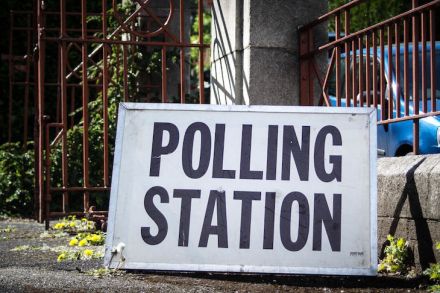
It would not normally be an act of great courage to vote Conservative in true-blue Sussex, but I feel I have to screw myself up to do so in the European elections this week, so great is the ill feeling here against the Tories for not achieving Brexit. Yet do it I will. In extenuation, I would plead that I do sincerely wish the Tories ill in these unusual elections. My vote is not intended to help them in any way. It is just that Daniel Hannan is first on the Conservative candidates’ list, and so there is a chance, if opinion polls are right, that he will be the only one of his party elected. It would be most unjust if he were kicked out. I want him to be the righteous remnant.

Why I sympathise with David Lammy

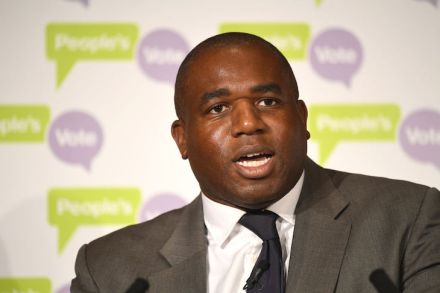
Having been at Cambridge with the then-delightful Diane Abbott about 40 years ago, I know how hard it is for charming, intelligent black people with middle-class aspirations to make it in the Labour party without great sacrifice. They have to pull grumpy faces, pretend to be angry and claim membership — despite overwhelming evidence to the contrary — of what Frantz Fanon called ‘the wretched of the earth’. So one must sympathise with David Lammy — choral scholar of The King’s School, Peterborough, graduate of SOAS and Harvard Law School, member of Lincoln’s Inn, former government minister — as he feels the need to wave his arms about on television and denounce Boris Johnson and Jacob Rees-Mogg at the top of his voice.

The Spectator’s Notes | 17 April 2019

This week, the Wolfson History Prize announced its shortlist. It is always worth drawing attention to, precisely because it is not attention-seeking. Neither ‘woke’ nor stuffy, the prize is simply interested in serious history. This year’s list of six ranges in terms of subject from birds in the ancient world and building Anglo-Saxon England, through maritime London in the age of Cook and Nelson, to Queen Victoria and India (a love affair in which the two never met), Oscar Wilde, and the quest for justice after Nazi persecutions. It being Holy Week, I am wondering what would happen if all the four Gospels were on the Wolfson shortlist.

General de Gaulle was wrong about Britain joining the EEC

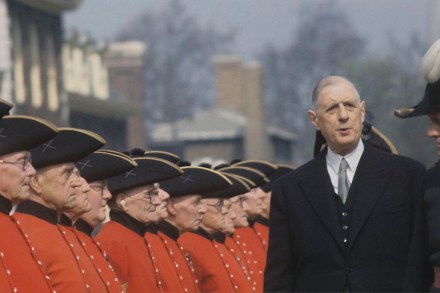
In his famous speech to both Houses of Parliament in March 1960, General de Gaulle praised Britain: ‘Although, since 1940, you have gone through the hardest vicissitudes in your history, only four statesmen [Churchill, Attlee, Eden and Macmillan] have guided your affairs in these extraordinary years. Thus, lacking meticulously worked-out constitutional texts, but by virtue of an unchallengeable general consent, you find the means on each occasion to ensure the efficient functioning of democracy.’ De Gaulle admired us and disliked us, and concluded that we threatened France if we joined the EEC. So he blocked our entry. He was right about us, wrong about the effect of our joining.

The Tories shouldn’t worry about losing the youth vote

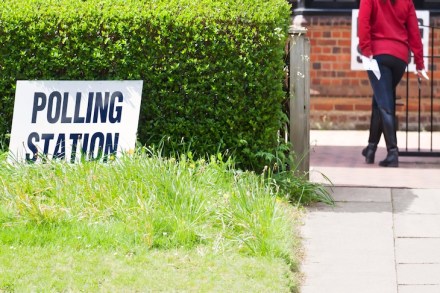
There was publicity last weekend for a report (Generation Why?) by Onward, the think tank of semi-young ‘mainstream’ Tories. Its survey seemed to confirm the widespread belief that hardly anyone young supports the Tories, which may not matter quite as much as Onward thinks, since it also showed that the young have astonishing difficulty in working out how to get to a polling station and write a cross on a ballot paper. Although the results collected by Hanbury Strategy were obtained via ‘an online smartphone poll’ of 10,031 voters, I found myself losing confidence on page 46.

The Spectator’s Notes | 11 April 2019

In his famous speech to both Houses of Parliament in March 1960, General De Gaulle praised Britain: ‘Although, since 1940, you have gone through the hardest vicissitudes in your history, only four statesmen [Churchill, Attlee, Eden and Macmillan] have guided your affairs in these extraordinary years. Thus, lacking meticulously worked-out constitutional texts, but by virtue of an unchallengeable general consent, you find the means on each occasion to ensure the efficient functioning of democracy.’ De Gaulle admired us and disliked us, and concluded that we threatened France if we joined the EEC. So he blocked our entry. He was right about us, wrong about the effect of our joining.

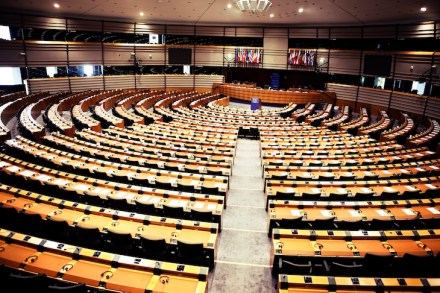
The reason Remainers are worried about European elections

If the EU grants us a long extension (and let us pray that M. Macron’s malice towards Britain leads him to prevent this), Remainers are worried. They want the extension, but not the European elections, since there is a real chance that ‘the wrong people’ might win. Ken Clarke, I gather, is working out a plan to head off this unpleasant potential outbreak of democracy. He seeks to persuade the EU high-ups to concoct a new rule by which countries which have already triggered Article 50 but have not yet left would not be allowed to take part. They will surely oblige. This article is an extract from Charles Moore's Spectator Notes, available in this week's magazine.

The Spectator’s Notes | 4 April 2019

There is a logic in Mrs May’s late move to Labour. It is the same logic by which both parties, at the last general election, put forward very similar policies about Brexit. They need to stay together (while feigning disagreement for party reasons) to frustrate what people voted for. Just as they both said in 2017 that they wanted to leave the customs union, now both are working to stay in it. It is the same logic by which Mr Speaker Bercow has arranged for Sir Oliver Letwin to become prime minister on roughly alternate days. None of the main players really wants Brexit, but none can really say so.

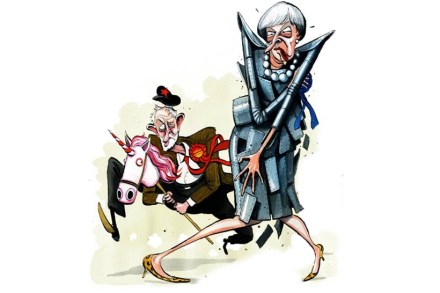
Theresa May and Jeremy Corbyn both want to frustrate Brexit

There is a logic in Theresa May’s late move to Labour. It is the same logic by which both parties, at the last general election, put forward very similar policies about Brexit. They need to stay together (while feigning disagreement for party reasons) to frustrate what people voted for. Just as they both said in 2017 that they wanted to leave the customs union, now both are working to stay in it. It is the same logic by which Mr Speaker Bercow has arranged for Sir Oliver Letwin to become prime minister on roughly alternate days. None of the main players really wants Brexit, but none can really say so.

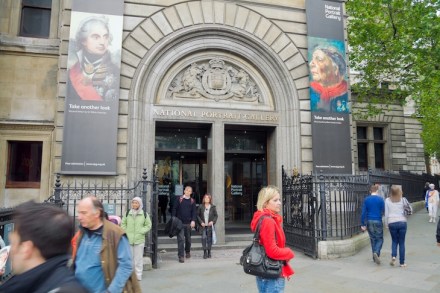
The unpopular populism of the National Portrait Gallery

Nicholas Cullinan, the director of the National Portrait Gallery, says that the success of a gallery should not be judged by its number of visitors. He is defensive because the visitor figures at the NPG have fallen (by nearly 120,000 from 2016-17). Dr Cullinan is right. Anyone who likes going to galleries would always say, ‘The smaller the visitor numbers, the merrier for those who want to see the pictures.’ But what he says now would seem to go against his vision for the gallery’s future. It is currently trying to raise £35.5 million for its new ‘Inspiring People’ project. Launching the appeal in January, Dr Cullinan enthused about how the NPG wants to be ‘the nation’s family album’.

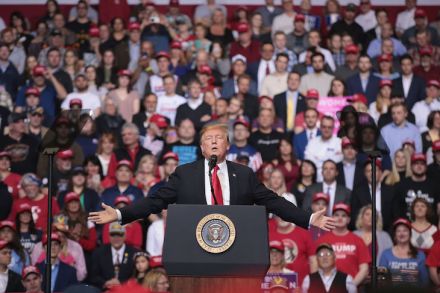
Why Mueller’s exoneration of Trump should be rejoiced

It is worth rejoicing at Robert Mueller’s exoneration of the President, even if you do not like Donald Trump. Wherever possible, politics should not be pursued via legal processes and investigations. This sounds an odd thing to say, since democracies depend upon the rule of law. The trouble is that the rule of law quickly gets hijacked when one political grouping tries to arraign another. Motives become suspect. I learnt this myself at the time of the attempted impeachment of Bill Clinton. I was editing the Telegraph, and, thanks to the great Ambrose Evans-Pritchard, we had actually been ahead of the US media in revealing the murky stories of Clinton which had originated in the great state of Arkansas.

The Spectator’s Notes | 28 March 2019

There is an obvious solution to the Brexit problem. It is based on a recognition that we want out and that the EU leaders want the moral high ground. Give it to them. Get them to expel us from the European Union. It cannot be too hard for them to persuade the ECJ, or some new body invented for the purpose, to declare the United Kingdom in breach of ‘European values’, and kick us out. Then we would leave with nothing at all, except our liberty. We might even bribe them for the privilege. As it is, we are committed by Mrs May to paying £39 billion, but that is over several years, and involves much ‘doubt, hesitation and pain’. Why not offer them, say, £10 billion on the nail, in return for them punishing us?

The problem with Westminster is that politicians don’t do their jobs

The trouble with Mr Speaker, even when he makes the right decision, is his motives. Fame is the spur and so is his love of hurting the Conservative party which nurtured him. However natural these feelings, they are completely wrong for the Speakership. The occupant of the chair is supposed to be a pillar of the constitution, not its talking gargoyle. A sad feature of the Brexit story has been how so many people with important official roles have not seemed to understand or, in some cases, even to care, what those roles entail. The Chancellor of the Exchequer and the Governor of the Bank of England are supposed to assist the British economy, not invest in its collapse.

The Spectator’s Notes | 21 March 2019

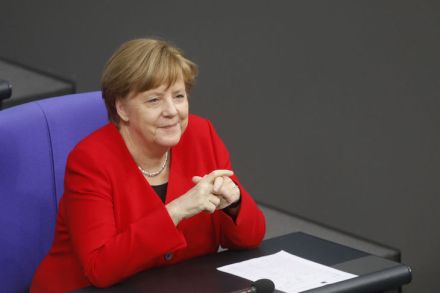
Angela Merkel says disdainfully, ‘I admit I was not on top of the British parliament’s 17th-century procedural rules.’ Her implication is that they are absurdly out of date. Yet the old rule invoked by Mr Speaker Bercow is surely one that can hold up its head in the 21st century. It is that the executive should not keep putting the same question to parliament until it gets its way. Therefore Mrs May cannot just keep reheating her terrible withdrawal deal. If there were no such rule, there would be no end to the bullying. Isn’t there something quite impressive about the fact that we have an elected assembly which had already thought of this more than 400 years ago? Habeas corpus is a pretty old idea too, and jury trial is even older. Does Mrs Merkel mock them?

The problem with Speaker John Bercow

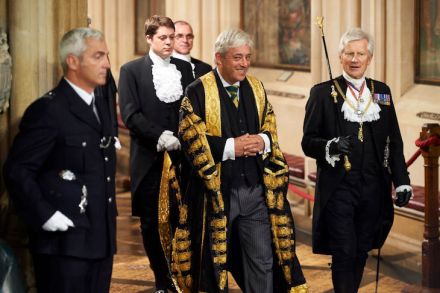
The trouble with Mr Speaker, even when he makes the right decision, is his motives. Fame is the spur and so is his love of hurting the Conservative party which nurtured him. However natural these feelings, they are completely wrong for the Speakership. The occupant of the chair is supposed to be a pillar of the constitution, not its talking gargoyle. A sad feature of the Brexit story has been how so many people with important official roles have not seemed to understand or, in some cases, even to care, what those roles entail. The Chancellor of the Exchequer and the Governor of the Bank of England are supposed to assist the British economy, not invest in its collapse.

Why great minds get Brexit wrong

A besetting sin in this process has been over-cleverness. As so often in our history, the ‘stupid’ people are right. The Brexit question is a classic example of something which is simple but not easy. It is ‘Do you want to be ruled by those you can choose, or by those you can’t choose?’ Voters understood this, and gave a clear answer. Clever people keep complicating it. Three leading examples of this, I am afraid — Oliver Letwin, Nicholas Boles and Michael Gove — are good friends of mine. Precisely the qualities which endear them to me in private conversation are proving a menace to the public weal.

I’ve been surprised how useless the civil service have been during the negotiations

Obviously the Prime Minister herself bears chief responsibility for Brexit mistakes, but she must have been terribly badly advised throughout, not only by political staff — who always get it in the neck when things go wrong — but by the professional civil service, which tends to escape censure. I have been genuinely surprised by the bureaucrats’ uselessness in the negotiations. In my Thatcher studies, now drawing peacefully to their close, I find that the mandarinate, though out of sympathy with Mrs Thatcher, did, on the whole, do its best for her. It was excited by the possibilities she opened up, and enjoyed surmounting the various crises.

The Spectator’s Notes | 14 March 2019

I had forgotten, until I checked this week, that Mrs May timed the general election of June 2017 in order to have a mandate for the Brexit negotiations. They began ten days after the nation voted. She conveyed no sense, at the time, of how the election result had changed her situation. In her beginning is her end. Political leadership requires imagination. She has never displayed any. Why, for example, did she fly to Strasbourg on Monday night? She made the same mistake in December 2017 when she took a dawn flight to Brussels after making a hash of the Irish problem. The point of dramatically winging your way out of the country is to be seen to win something. Instead, Mrs May is the spurned suppliant.

Michael Gove’s Brexit agony

I feel particularly sorry for Michael Gove, because there is psychological torment here. His understandable reasoning for not resigning over Theresa May’s Chequers proposal was that he had been accused first of betraying David Cameron, then of betraying Boris Johnson. He could not face being accused of a third betrayal by walking out on Mrs May. This meant that he unintentionally betrayed the cause of Brexit. He is now the government’s media apologist for whatever piece of contortion comes out of Downing Street, and is humiliated when the line he has just peddled collapses a few hours later.